

Top 10 of the Year
| 1. Resurrection | Bi Gan |
| 2. Magellan | Lav Diaz |
| 3. The Phoenician Scheme | Wes Anderson |
| 4. Train Dreams | Clint Bentley |
| 5. No Other Choice | Park Chan-wook |
| 6. Frankenstein | Guillermo del Toro |
| 7. Sinners | Ryan Coogler |
| 8. Ballad of a Small Player | Edward Berger |
| 9. Bugonia | Yorgos Lanthimos |
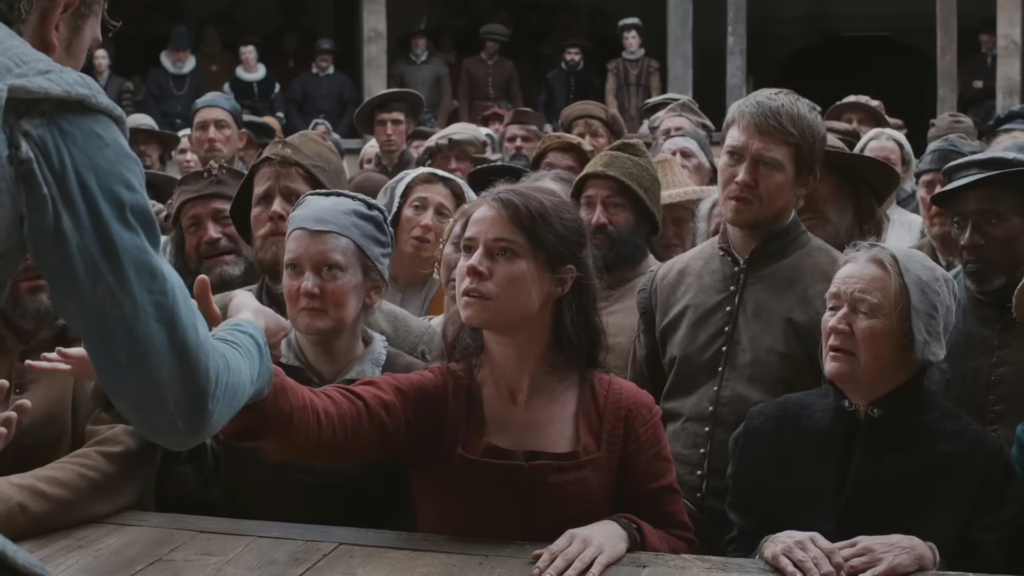
| 10. Hamnet | Chloé Zhao |
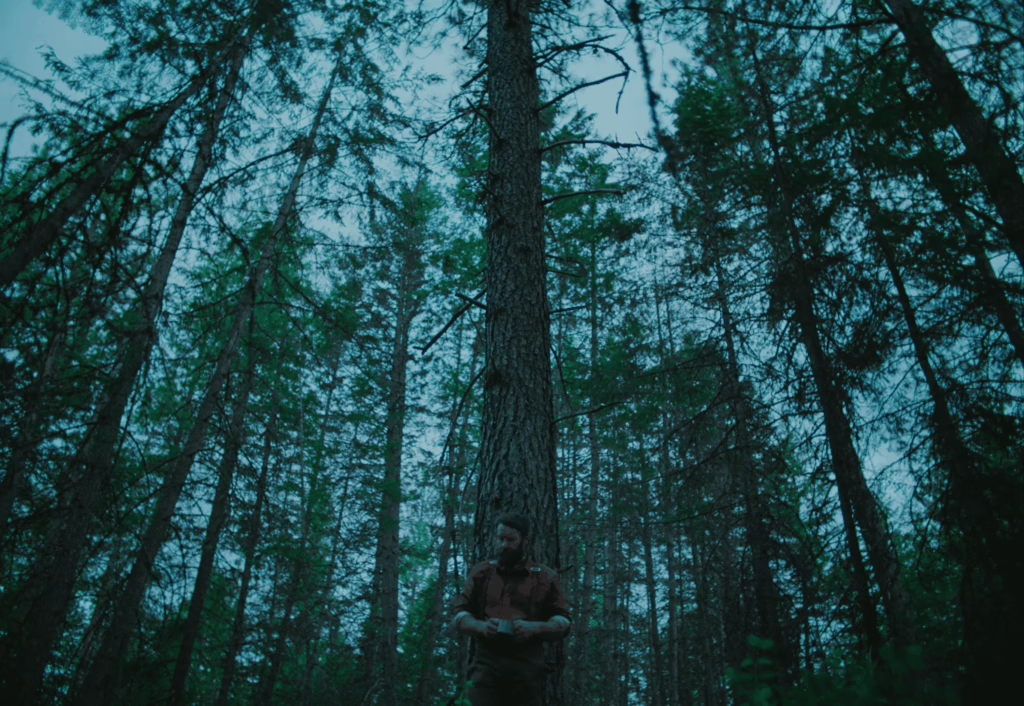
Best Film – Resurrection
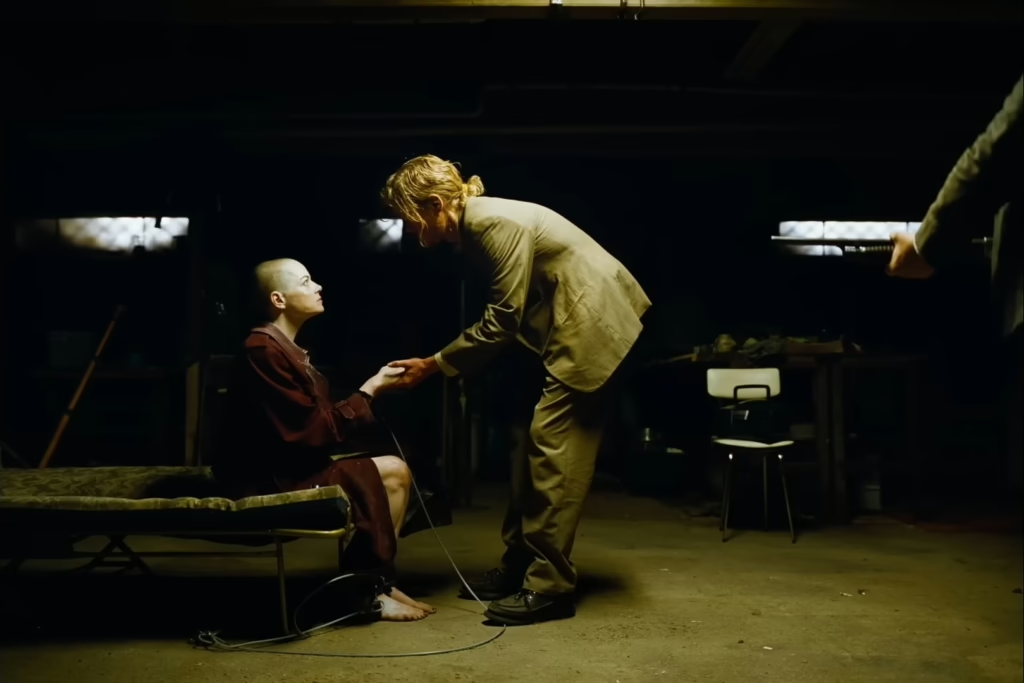
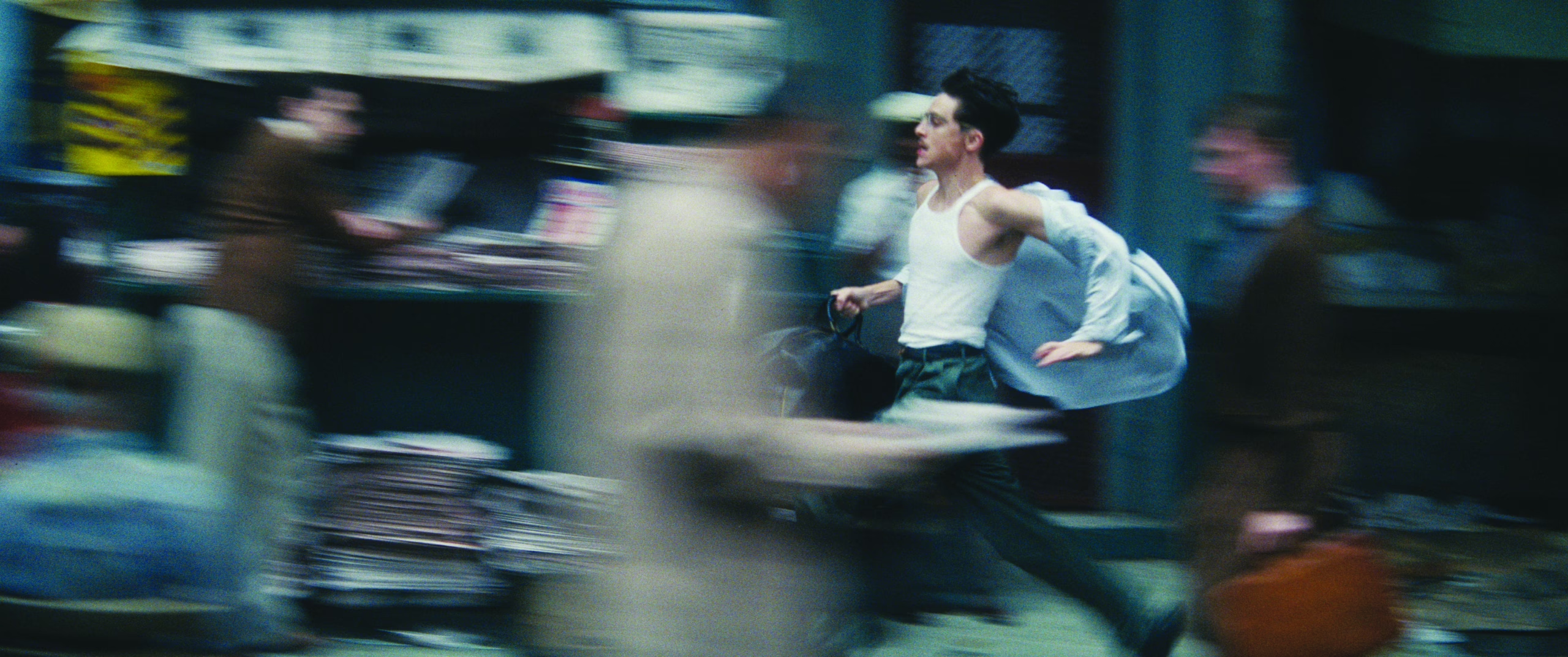
Many have cried “Cinema is dead” in the 2020s, and perhaps rightfully so. It often feels as though 2019 was the the last truly great year for the art form, and that the industry has been in the wilderness ever since, failing to produce any films that truly reach its upper echelons. Bi Gan’s response to such pessimism transcends mere nostalgia or blind hope. Resurrection adopts ancient Taoist and Buddhist philosophy in its meditation upon cinema’s death, guiding us through decades of Chinese and film history as envisioned by a dying monster, and locating him in a future where humanity has exchanged the ability to dream for immortality. It no doubt flows from the same visionary filmmaker who channelled Andrei Tarkovsky’s poetics in Kaili Blues and Long Day’s Journey into Night, though Bi’s shift away from evocations of personal memory to a broader collective consciousness is profoundly apparent.
Formally, Resurrection is also one of the most ambitious films ever made. It touches on silent cinema, film noir, folk storytelling, crime drama, and supernatural romance, constantly reinventing its visual language as decades slip by, yet cryptically tying each story into the broader framework of illusions, perception, and mortality. Its abstract set pieces are almost impossible to describe without visual reference, and the long, wandering take through city docks on New Year’s Eve may be the single greatest shot the decade so far. Bi’s metamodern autopsy of cinema may be formally elusive, yet by asserting itself as one of the medium’s most transcendent accomplishments in recent years, Resurrection majestically enacts the intersection of art and reality as a transient, bittersweet exchange.
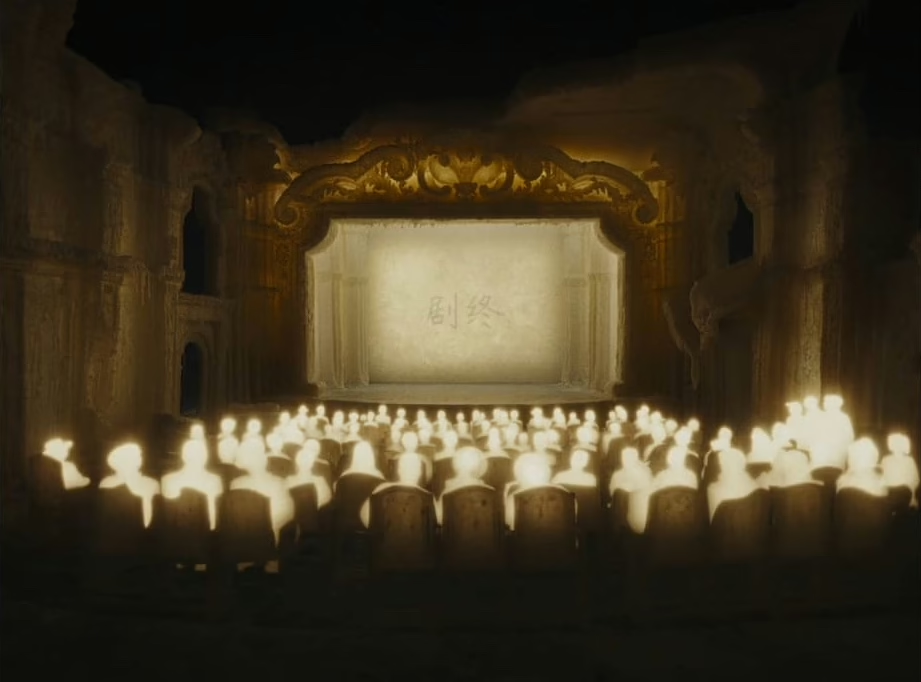
Most Underrated – Ballad of a Small Player
Neither this, Train Dreams, nor Frankenstein appear among the top 50 films of 2025 as determined by the TSPDT critical consensus, though Ballad of a Small Player received particularly severe backlash with a Metacritic score of 46. Still, it signals a dazzling step forward for Berger, sharpening his visual command following the bleak desolation of All Quiet on the Western Front and the procedural ascetism of Conclave. This is his most flamboyant, operatic work so far, and he approaches it with a razor-edged precision, plunging us into the gambling underworld of Macau where one disgraced high roller runs from past transgressions. The city’s gaudy excess shamelessly outdoes Las Vegas, bleeding city lights into a lurid wash of neon blues and toxic reds, yet even he recognises how damaging it is to the human soul. Western moralism and Eastern spirituality merge in this hyper-stylised study of compulsion and ruin, driving him to an endless consumption that will inevitably consume him too.

Most Overrated – The Mastermind
Kelly Reichardt’s subdued portrait of pride and self-delusion does not quite warrant its #2 placement among TSPDT’s ranking of 2025 films. Reichardt’s more uninteresting compositions struggle to justify their onscreen duration, leaving the free jazz score to carry much of the film’s cool, noir-inflected atmosphere, but her visual storytelling is at least rigorous as we observe Josh O’Connor’s narcissistic art thief slyly calculate rooms and relationships. Vietnam War news reports, recruitment posters, and Nixon-era rhetoric are dotted through The Mastermind, and although J.B. Mooney rarely engages with this political reality, his detachment becomes its own statement on apathy in the face of historical reckoning. Under Reichardt’s sobered realism, no one truly opts out of social consequence – least of all those who maintain an air of aloof indifference.

Best Directorial Debut – Opus
Emerging from the world of upmarket lifestyle journalism, Mark Anthony Green intimately understands curated cultural prestige and its insidious machinations, situating Opus in a lineage of recent films that trap naïve outsiders within cultlike communities. Here, celebrities and reporters are bound to each other in a parasitic co-dependency, feeding on the same curated controversies which spur engagement and reproduce as a cultural corrosion. Green’s vibrant world is richly textured in its design, visually manifesting the hierarchical duality which lies at the heart of its central pop star’s elitist philosophy – red representing a performative aristocracy, while blue is reserved for commoners. Opus may not be the most formally assured debut of the year, especially with Sorry, Baby in contention, but its sheer confidence of vision marks it as the boldest.

Gem to Spotlight – Weapons
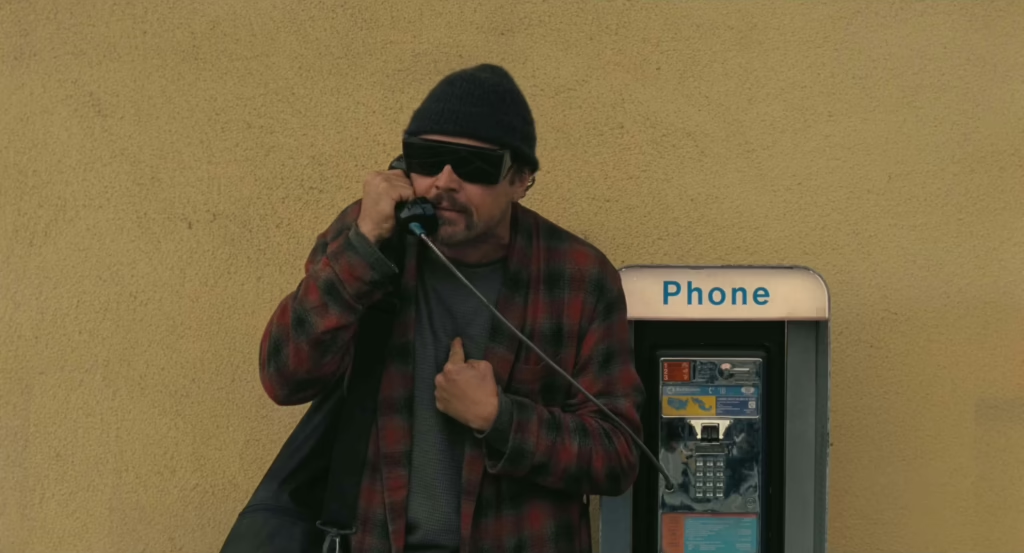
Following on from his debut Barbarian in 2022, Zach Cregger once again exposes the terrors hidden beneath America’s suburban façade in Weapons, though this time he offers a far more confident, distinctive voice that makes his career ahead all the more exciting. What begins as a suburban mystery concerning seventeen missing school students eventually transforms into a twisted fairytale, splitting its narrative structure into six pieces that reflect various perspectives – the bewildered teacher, the bereaved parent, the unassuming principal, the feckless police officer, the homeless witness, and the single, surviving child from the decimated class. Each segment offers answers to questions raised in others, though due to their non-linear arrangement, it is the act of piecing them together which reveals the full scope of this collective nightmare. Unlike so many other contemporary horror films, Weapons cannot be pinned down to a straightforward allegory, yet its disquieting, fractured storytelling makes it a remarkably fresh entry into the genre.
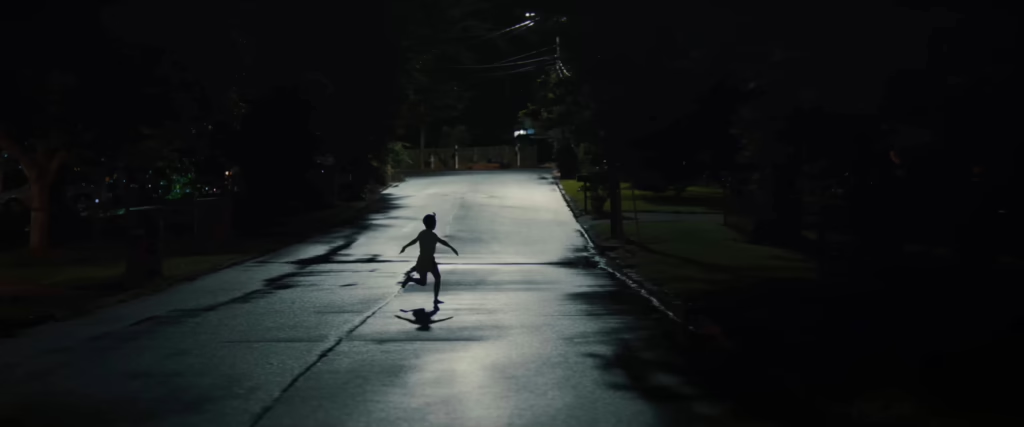
Best Male Performance – Jacob Elordi in Frankenstein
2025 is loaded with excellent male performances, though a few stand above the rest. In Frankenstein, Jacob Elordi proves that he has thoroughly moved on from The Kissing Booth movies, carving out a career of eccentric reinvention. Far from the hulking, moaning brute that was Boris Karloff’s portrayal of the Creature, his is a pale, sinewy patchwork of parts, clumsily stumbling through a hostile world with a primal vulnerability. He depicts the full life cycle of this tragic outcast from trembling infancy to an inevitable loss of innocence, and is quick to learn the cutthroat hostility of a world that preys on weakness. Elordi’s voice emerges in a deep, resonant stutter as he learns to speak, and eventually breaks into a guttural roar when overcome with rage – this is undoubtedly a role of remarkable transformation.
Timothee Chalamet in Marty Supreme and Michael B. Jordan in Sinners are also worth shouting out here. Marty Mauser is perhaps Chalamet’s prickliest character, and he holds the film’s whirlwind drama together with discomfortingly captivating charisma and emotional volatility. We love to watch him fall down over and over due to his own hubris, yet we can’t help find a sliver of sympathy in his unbridled ambition. Meanwhile, Jordan’s dual roles as twins Smoke and Stack draw a clean but uneasy divide, reflecting hostility and grief in each other like dark, distorting mirrors.
| Actor | Film |
| 1. Jacob Elordi | Frankenstein |
| 2. Timothee Chalamet | Marty Supreme |
| 3. Michael B. Jordan | Sinners |
| 4. Sean Penn | One Battle After Another |
| 5. Jesse Plemons | Bugonia |
| 6. Lee Byung-hun | No Other Choice |
| 7. Colin Farrell | Ballad of a Small Player |
| 8. Wagner Moura | The Secret Agent |
| 9. Paul Mescal | Hamnet |
| 10. George Clooney | Jay Kelly |
| 11. Joel Edgerton | Train Dreams |
| 12. Owen Cooper | Adolescence |
| 13. Gael Garcia Bernal | Magellan |
| 14. Bojtorján Barabas | Orphan |
| 15. Benicio del Toro | The Phoenician Scheme |
| 16. Jackson Yee | Resurrection |
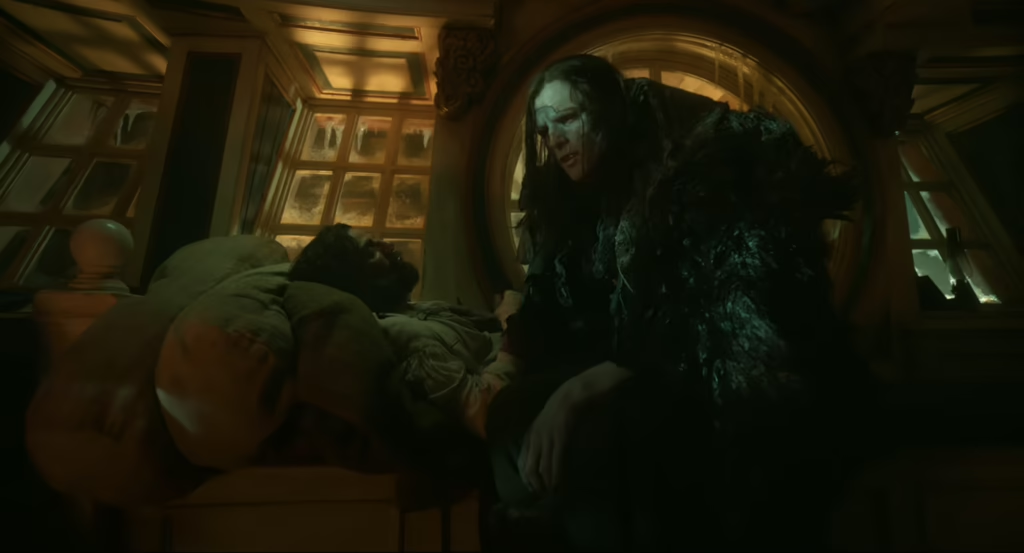
Best Female Performance – Jessie Buckley in Hamnet
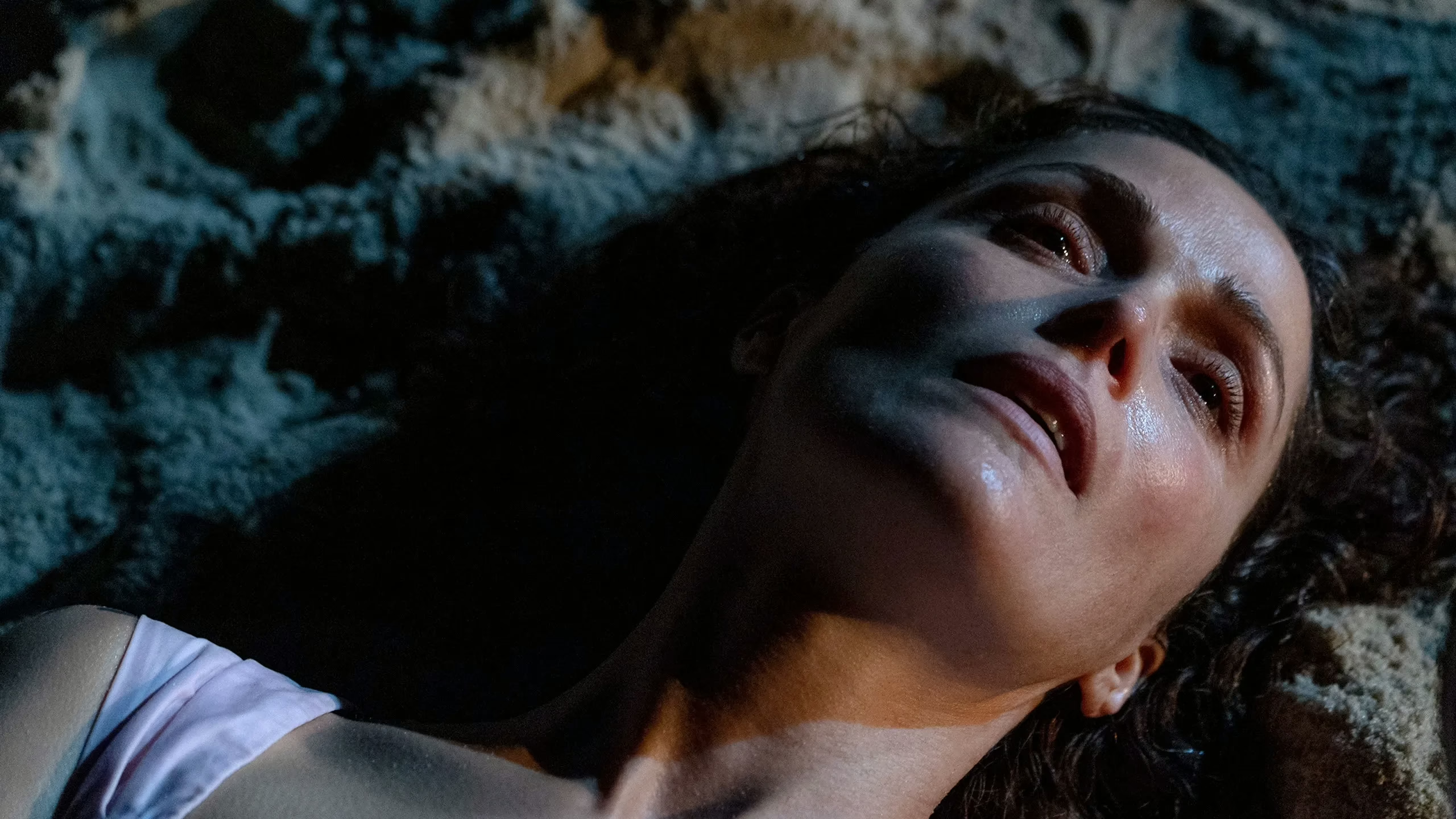
Unfortunately, the outstanding female performances this year are far scarcer than the men, and interestingly enough the top three concern struggling mothers. Although Hamnet is about the writing of Hamlet, Jessie Buckley is the most consistent onscreen presence here, navigating a similar grief as her husband William Shakespeare while filtering it through an entirely different perspective. She shoulders that solitude with aching vulnerability, grounding it in a maternal instinct so profound that the death of her son feels as though it extinguishes part of herself too.
| Actress | Film |
| 1. Jessie Buckley | Hamnet |
| 2. Rose Byrne | If I Had Legs I’d Kick You |
| 3. Jennifer Lawrence | Die My Love |
| 4. Emma Stone | Bugonia |
| 5. Mia Threapleton | The Phoenician Scheme |
Best Cinematography – Resurrection
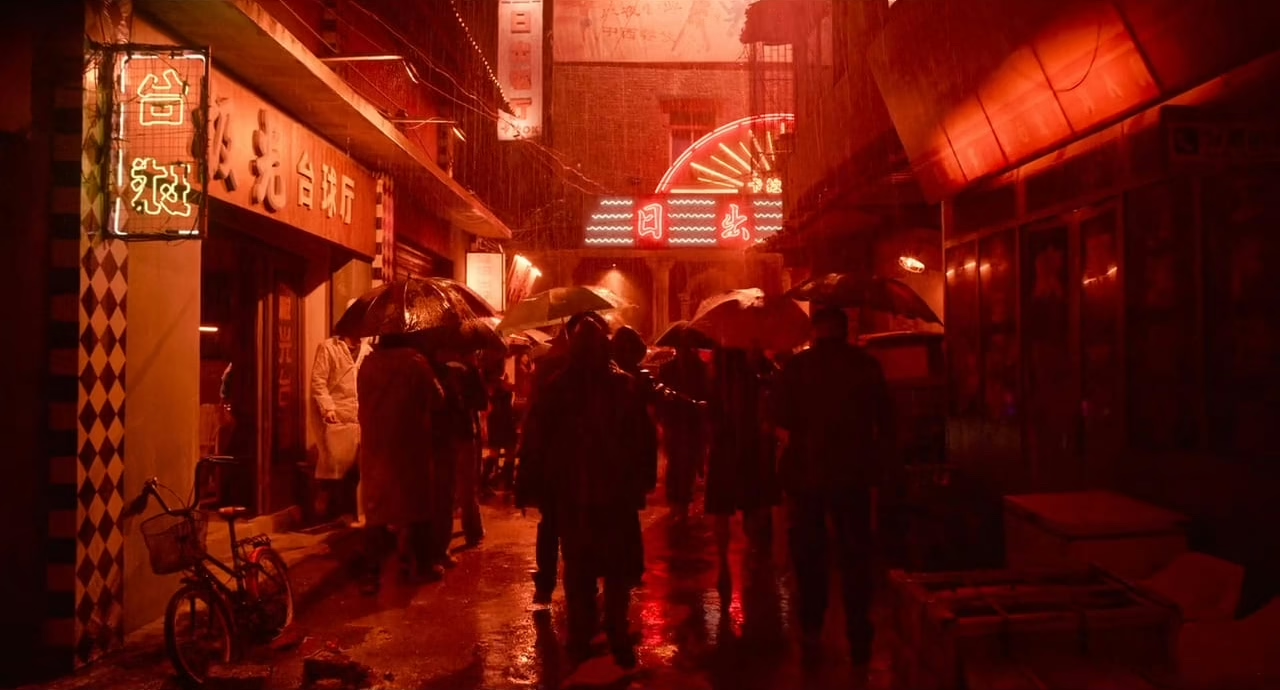
Dong Jingsong’s cinematography in Resurrection constantly reinvents its visual language across multiple dreamscapes, from expressionist tableaux to sunlit naturalism. He privileges texture and sensation over continuity, using tracking shots and shifting colour palettes to destabilise time, while immersing us in his self-contained worlds. Of course, the peak of this arrives with the long take that traverses neon-drenched docks and nightclubs in New Year’s Eve, 1999. Here, the angry red wash illuminates this littered waterfront gradually gives way to the soothing blue light of dawn, softly diffusing the unbroken, tactile immersion of Bi’s forty-minute tracking shot into a state of melancholic reflection.
| Film | Cinematographer |
| 1. Resurrection | Dong Jingsong |
| 2. Magellan | Lav Diaz, Artur Tort |
| 3. The Phoenician Scheme | Bruno Delbonnel |
| 4. Train Dreams | Adolpho Veloso |
| 5. Frankenstein | Dan Laustsen |
| 6. Ballad of a Small Player | James Friend |
| 7. No Other Choice | Kim Woo-hyung |
| 8. Sinners | Autumn Durald Arkapaw |
| 9. Avatar: Fire and Ash | Russell Carpenter |
| 10. Bugonia | Robbie Ryan |
| 11. Hamnet | Łukasz Żal |
| 12. Orphan | Mátyás Erdély |
| 13. 28 Years Later | Anthony Dod Mantle |
| 14. The Secret Agent | Evgenia Alexandrova |
| 15. Adolescence | Matthew Lewis |
| 16. Die My Love | Seamus McGarvey |
| 17. Marty Supreme | Darius Khondji |
| 18. Jay Kelly | Linus Sandgren |
Best Editing – No Other Choice
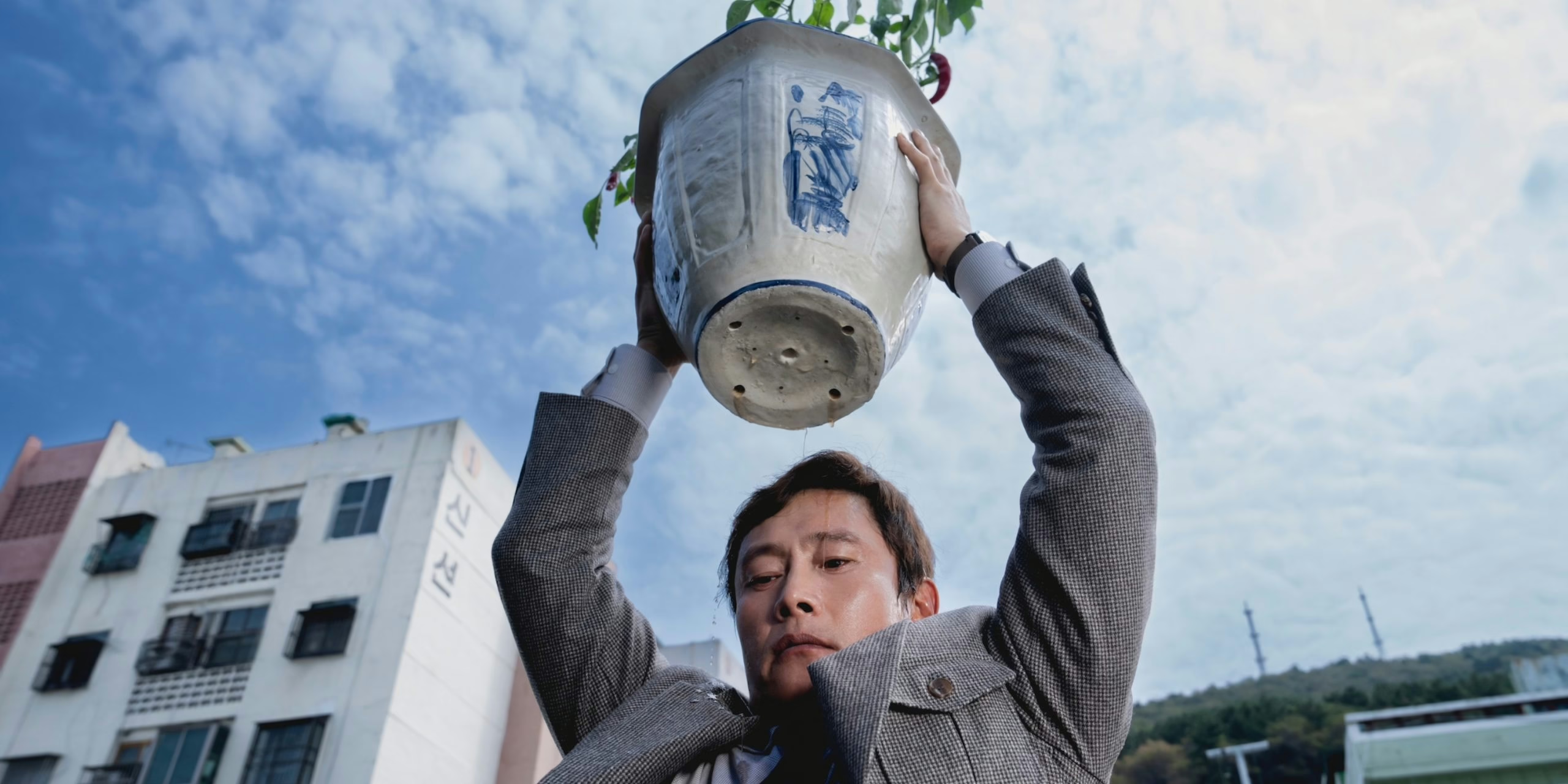
No Other Choice is built on its fluid yet unconventional editing rhythms, orchestrating narrative flow through creative scene transitions, graphic match cuts, and flashbacks, while vividly manifesting Man-su’s unsettled subconscious through an elegantly disorienting use of double exposure effects. These blended shots surface his deepest disturbances as he digs a grave, superimposing the image of Mi-ri rolling in bed as if stirred by his shovel, while elsewhere a fake job ad he places in a magazine playfully frames him speaking directly to camera.
| Film | Editor |
| 1. No Other Choice | Kim Sang-bum |
| 2. 28 Years Later | Jon Harris |
| 3. Resurrection | Bi Gan, Bai Xue |
| 4. Marty Supreme | Ronald Bronstein, Josh Safdie |
| 5. Train Dreams | Parker Laramie |
| 6. Ballad of a Small Player | Nick Emerson |
| 7. Sinners | Michael P. Shawver |
| 8. Die My Love | Toni Froschhammer |
| 9. Bugonia | Yorgos Mavropsaridis |
| 10. One Battle After Another | Andy Jurgensen |
| 11. The Secret Agent | Eduardo Serrano, Matheus Farias |
| 12. Avatar: Fire and Ash | Stephen E. Rivkin, David Brenner, Nicolas de Toth, John Refoua, Jason Gaudio, James Cameron |
| 13. The Phoenician Scheme | Barney Pilling |
| 14. Jay Kelly | Valerio Bonelli, Rachel Durance |
| 15. Hamnet | Chloé Zhao, Affonso Gonçalves |
Best Screenplay – One Battle After Another
One Battle After Another is undoubtedly Paul Thomas Anderson’s most crowd-pleasing work since Boogie Nights, shifting the focus away from psychologically complex characters and towards a captivating narrative that keeps rolling with frictionless ease. The almost three-hour run time breezes by on the momentum of his screenplay which, true to the title, perpetually throws obstacles at former revolutionary Bob Ferguson in his efforts to rescue his kidnapped daughter. It is a stunning, effortless achievement of tonal balance, particularly with an ensemble this huge and stakes this volatile.
| Film | Screenwriter |
| 1. One Battle After Another | Paul Thomas Anderson |
| 2. No Other Choice | Park Chan-wook, Don McKellar, Lee Kyoung-mi, Lee Ja-hye |
| 3. Marty Supreme | Ronald Bronstein, Josh Safdie |
| 4. Sinners | Ryan Coogler |
| 5. Bugonia | Will Tracy |
| 6. Jay Kelly | Noah Baumbach, Emily Mortimer |
| 7. The Phoenician Scheme | Wes Anderson |
| 8. The Secret Agent | Kleber Mendonça Filho |
| 9. Adolescence | Jack Thorne, Stephen Graham |
| 10. Weapons | Zach Cregger |
| 11. Train Dreams | Clint Bentley, Greg Kwedar |
Best Original Music Score – Sinners
Music is a supernatural force capable of piercing the veil between life and death in Sinners, so there is much resting on Ludwig Göransson’s adventurous, genre-defying score. Tension rises in the smouldering blues instrumentations of the first hour, before sprawling into a genre-spanning fusion of rock, hip-hop, bluegrass, and global traditions, collectively celebrating Black musical expression across time.
| Film | Composer |
| 1. Sinners | Ludwig Göransson |
| 2. One Battle After Another | Jonny Greenwood |
| 3. Marty Supreme | Daniel Lopatin |
| 4. Bugonia | Jerskin Fendrix |
| 5. Ballad of a Small Player | Volker Bertelmann |
| 6. Resurrection | M83 |
| 7. Hamnet | Max Richter |
| 8. Frankenstein | Alexandre Desplat |
| 9. Train Dreams | Bryce Dessner |
| 10. Jay Kelly | Nicholas Britell |
| 11. No Other Choice | Jo Yeong-wook |
| 12. Avatar: Fire and Ash | Simon Franglen |
| 13. The Phoenician Scheme | Alexandre Desplat |
| 14. Weapons | Ryan Holladay, Hays Holladay, Zach Cregger |
| 15. The Secret Agent | Tomaz Alves Souza, Mateus Alves |
Year Breakdown
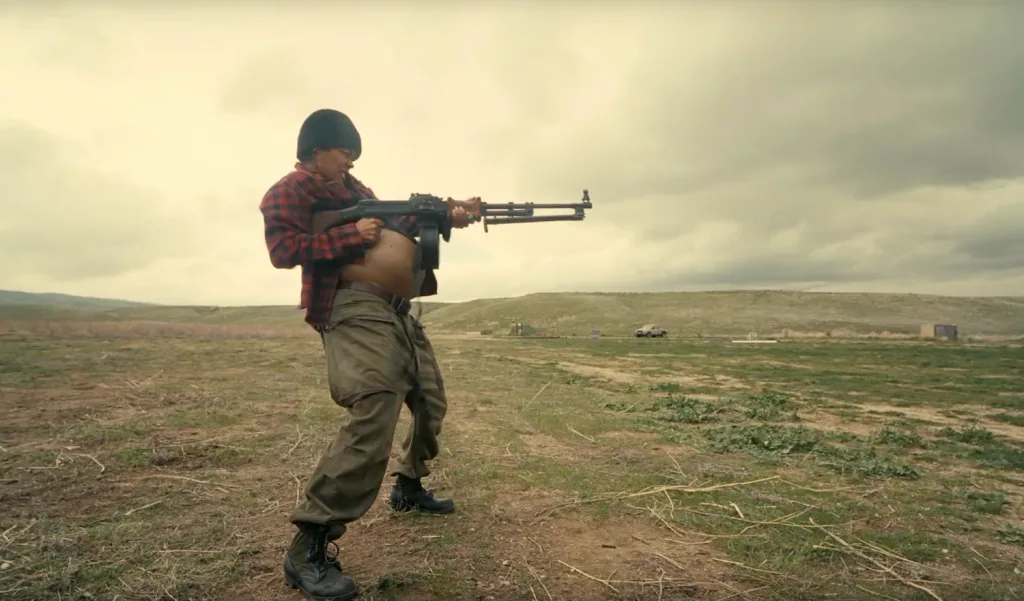
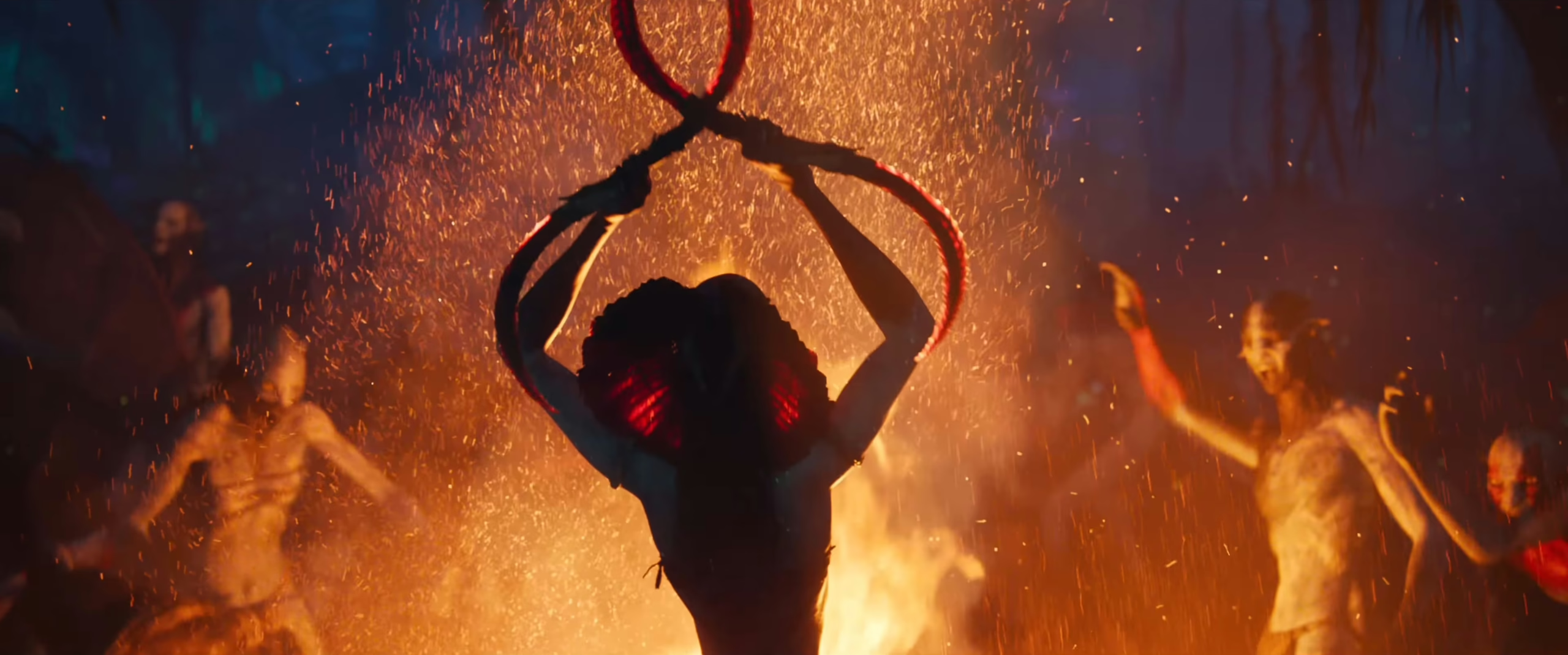
Perhaps the greatest unifying trend of 2025 is the reanimation of horror icons – not so much reinventing their mythologies than refreshing familiar monsters with sharper psychology and aesthetic textures. Guillermo del Toro resists subversion in his sweeping adaptation of Frankenstein, rather leaning into its tragic romanticism, while Zach Cregger hides a witch at the centre of Weapons’ supernatural mystery and demonstrates a marked evolution in his command of narrative structure. Even Danny Boyle’s return to his post-apocalyptic zombie world in 28 Years Later reconsiders the infected as a new species unto themselves, with rituals, family units, and social hierarchies giving shape to their otherwise chaotic existence.
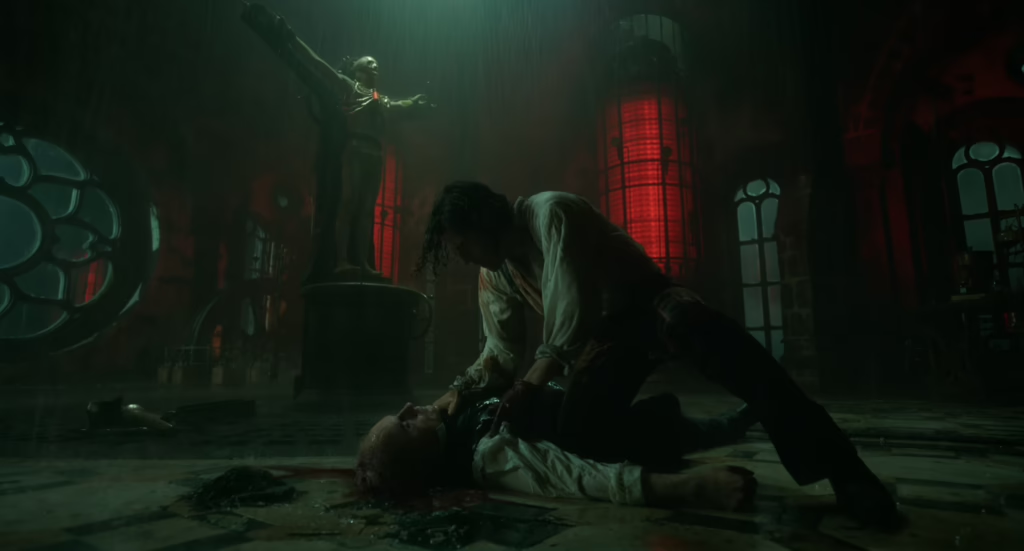
Most notable of all though is the creative deployment of vampires in Sinners, playing by the usual rules that they cannot enter an establishment without invitation, and then turning that social contract into a metaphor for racial and cultural assimilation. This film elevates Ryan Coogler to a new level of auteur, as he brings his typically gorgeous lighting and floating camerawork to a blues-soaked, Southern gothic mode. To a lesser extent, this vampire imagery is also abstractly echoed in Resurrection, as Bi Gan philosophically considers the relationship between the mortal and immortal – though more significantly, his breathtaking meditation on cinema as a medium in perpetual reinvention outstrips almost every other film of 2025 by a wide margin.
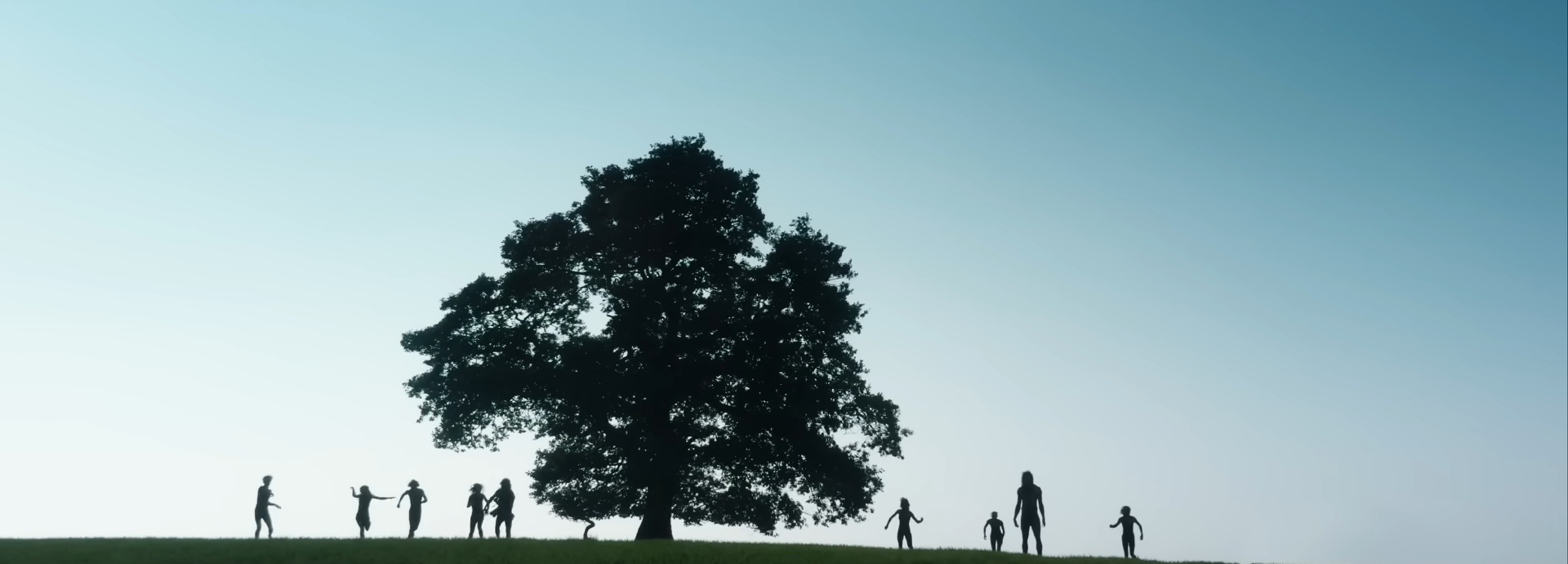
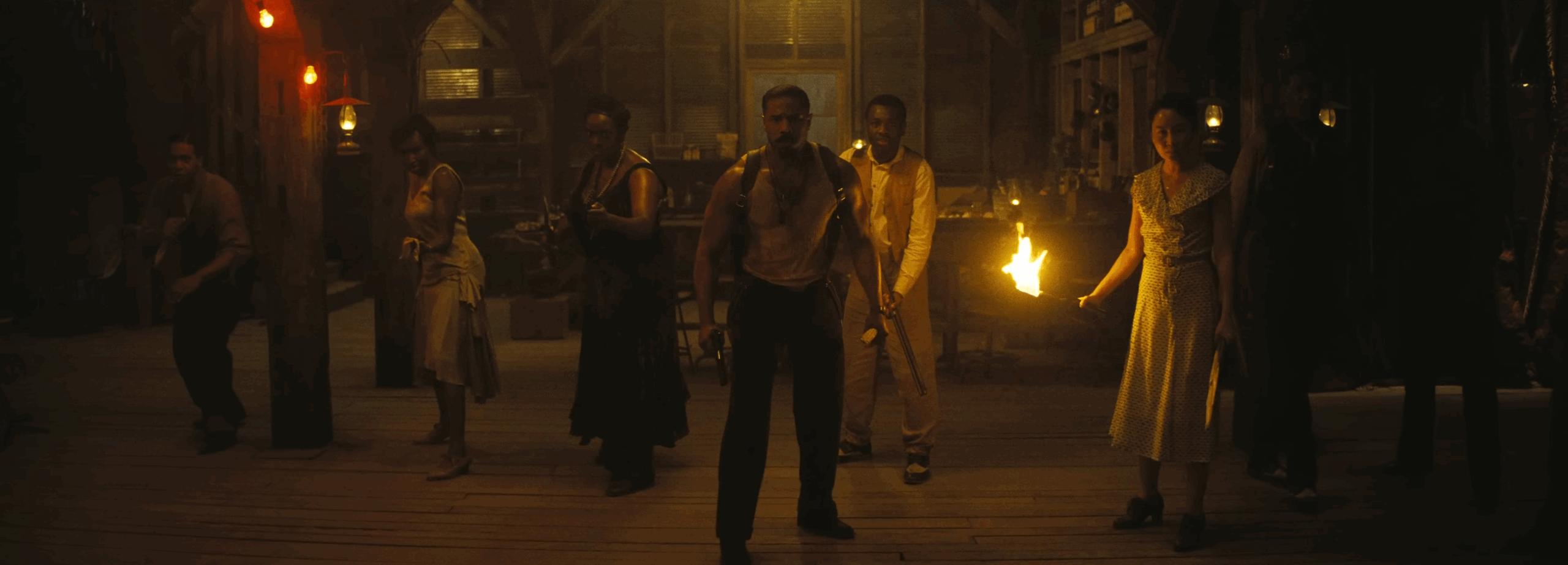
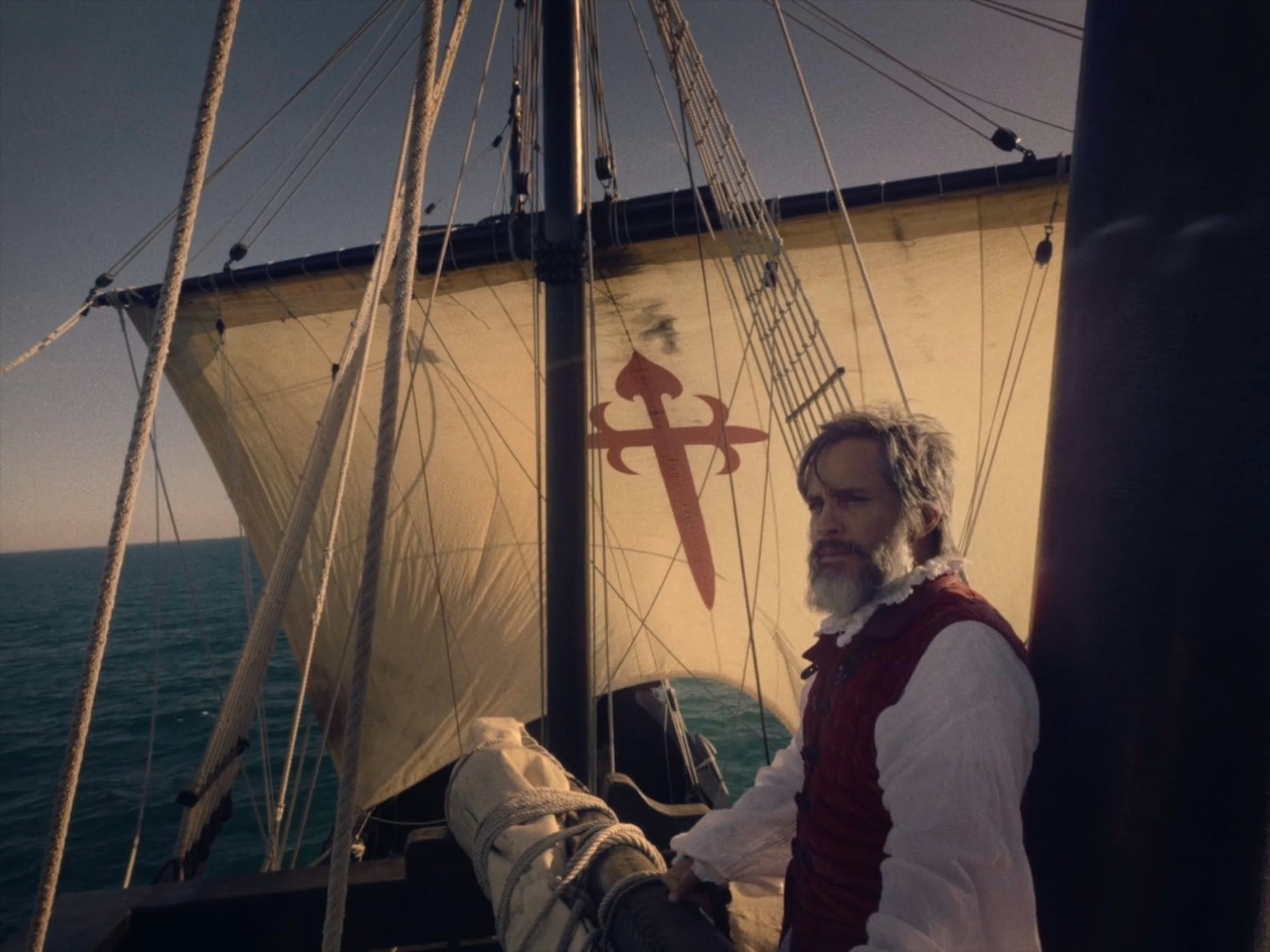
The main exception here is Magellan, Lav Diaz’s rigorous deconstruction of the titular Portuguese explorer’s imperial conquest. This epic is a rigidly formal exercise in historical interrogation, stripping its protagonist of whatever heroism may be attached to his name, and suspending him in an exhausted, existential drift. More than simply draining this maritime expedition of dramatic momentum, Diaz’s long takes diminish Magellan’s commanding presence, languishing in meticulously composed tableaux filtered through an austere, postcolonial lens.

Besides a small win at Cannes Film Festival for Resurrection, both Bi and Diaz are unfortunately overlooked across awards season. Instead, Jafar Panahi clinches the Palme d’Or for his sharp indictment of Iranian state power in It Was Just an Accident, while Paul Thomas Anderson finally earns the Academy’s long-overdue recognition by winning Best Picture for One Battle After Another.

At the box office, it isn’t F1, Superman, or even Avatar: Fire and Ash that comes out on top. Chinese animation Ne Zha 2 has remarkably become the fifth highest grossing film of all time, driven overwhelmingly by massive domestic demand in the Chinese market. If we’re talking pure cultural domination though, it is hard to look past the streaming sensation of KPop Demon Hunters, which has become the most viewed film on Netflix and crosses Korean culture over into a fully globalised, pop cultural vernacular.

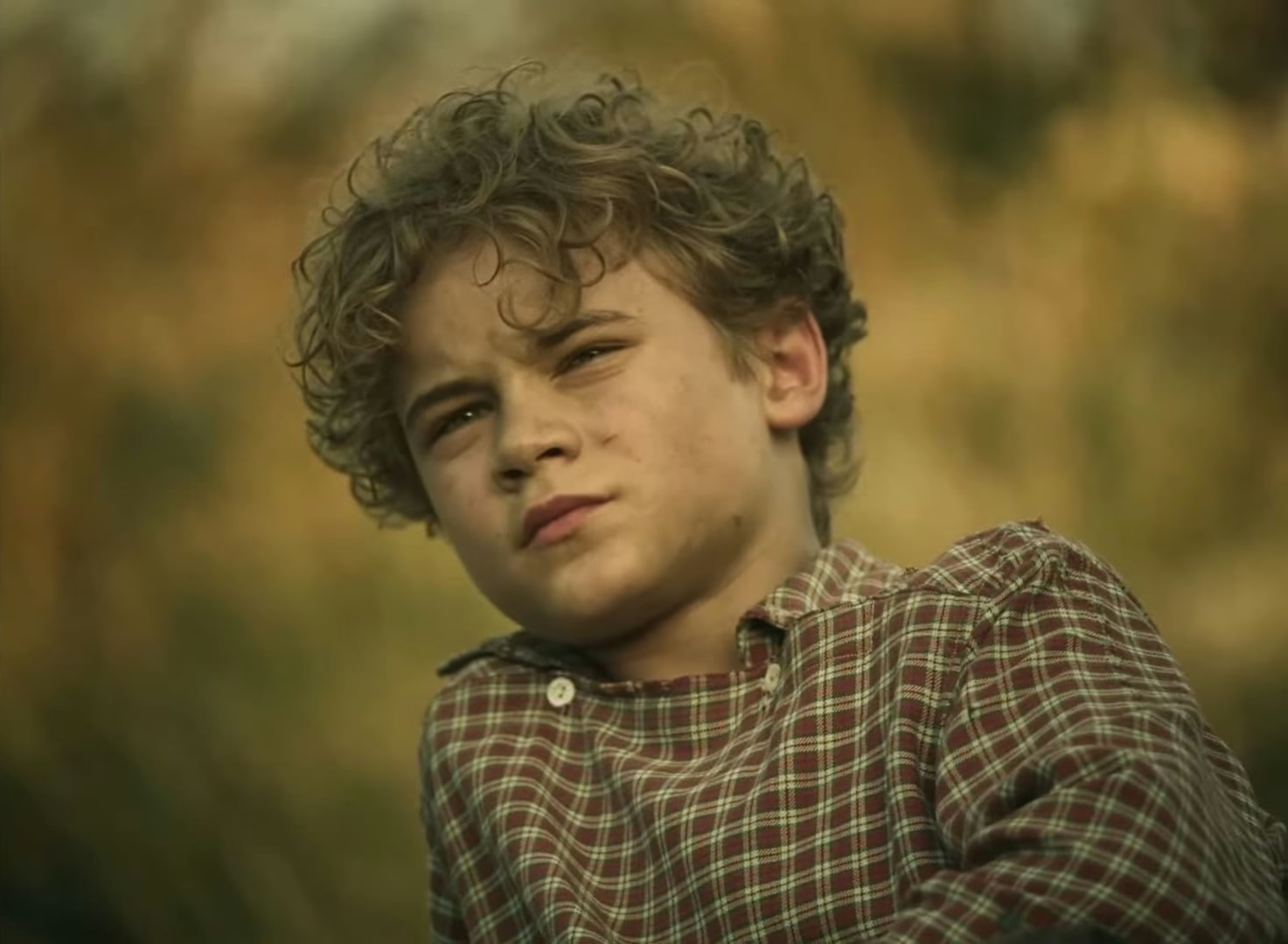
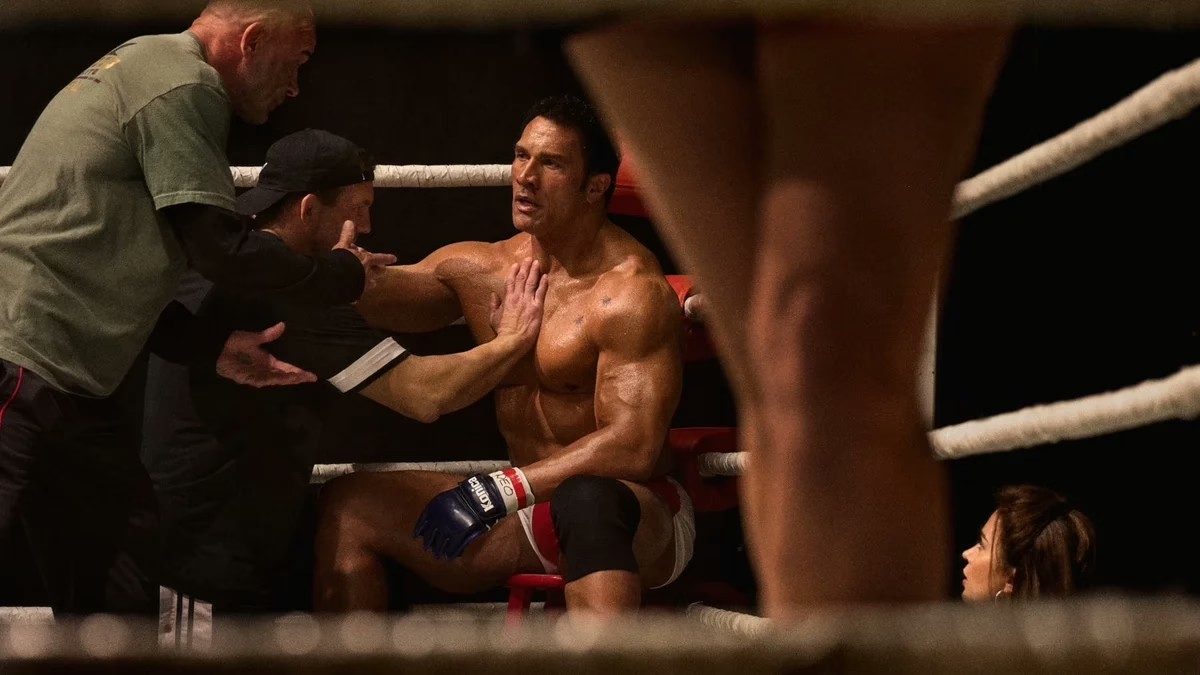
At this point in Wes Anderson, Park Chan-wook, and Yorgos Lanthimos’ careers, it almost goes without saying that they each continue their tremendous runs, so it’s worth spending just a little longer marvelling at the healthy crop of more fresh-faced directors continuing their upward trajectories in 2025. Chloé Zhao solidifies her growing stature with Hamnet, László Nemes probes deeper into 20th century Hungarian history in Orphan, and now that Edward Berger has established himself with two relatively conventional awards season contenders, he exercises a more brazen style with Ballad of a Small Player. Clint Bentley is the unexpected name to watch here though – the formal brilliance of Train Dreams seems to have come out from nowhere, offering a lyrical, melancholy meditation on humanity’s surrender to time.
Josh Safdie sits comfortably among this class of thriving auteurs, though his career takes a particularly interesting turn in 2025 as he splits with his brother Benny Safdie. Both respectively pursue sports films through Marty Supreme and The Smashing Machine, but the disparity in quality reveals who was always the primary creative force. Marty Supreme is the superior achievement on every level, and even finds a natural companion piece this year in If I Had Legs I’d Kick You, which feels deeply indebted to Safdie’s anxiety-ridden character studies. It’s no surprise that it is directed by Mary Bronstein, who is married to Safdie’s long-time co-writer and editor. This creative circle is flourishing, and its formal obsessions continue to ripple outward through independent cinema.
Film Archives
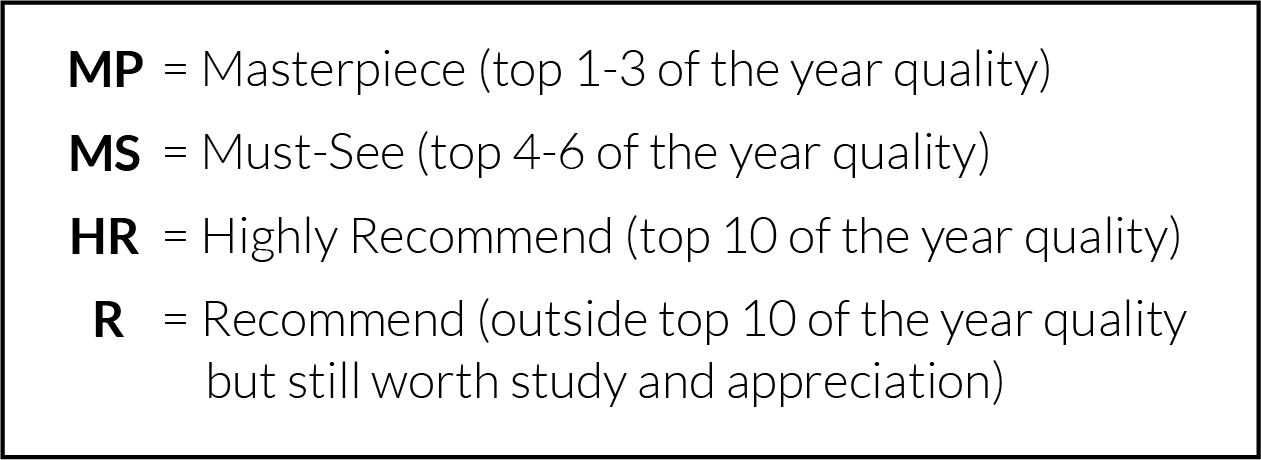
| Film | Director | Grade |
| 28 Years Later | Danny Boyle | HR |
| A Big Bold Beautiful Journey | Kogonada | R/HR |
| Adolescence | Philip Barantini | HR |
| Avatar: Fire and Ash | James Cameron | HR |
| Ballad of a Small Player | Edward Berger | MS |
| Ballerina | Len Wiseman | R/HR |
| Black Bag | Steven Soderbergh | R |
| Blue Moon | Richard Linklater | R |
| Bring Her Back | Danny and Michael Philippou | R |
| Bugonia | Yorgos Lanthimos | MS |
| Caught Stealing | Darren Aronofsky | R |
| Die My Love | Lynne Ramsay | HR |
| Eddington | Ari Aster | R |
| F1 | Joseph Kosinski | R |
| Eternity | David Freyne | R |
| Frankenstein | Guillermo del Toro | MS |
| Hamnet | Chloé Zhao | HR/MS |
| If I Had Legs I’d Kick You | Mary Bronstein | R/HR |
| It Was Just an Accident | Jafar Panahi | R |
| Jay Kelly | Noah Baumbach | HR/MS |
| KPop Demon Hunters | Maggie Kang, Chris Appelhans | R |
| Little Amélie or the Character of Rain | Maïlys Vallade, Liane-Cho Han | R |
| Magellan | Lav Diaz | MP |
| Marty Supreme | Josh Safdie | HR/MS |
| Materialists | Celine Song | R |
| Mickey 17 | Bong Joon-ho | R |
| Mission: Impossible – The Final Reckoning | Christopher McQuarrie | R |
| Ne Zha 2 | Jiaozi | R |
| No Other Choice | Park Chan-wook | MS |
| Nouvelle Vague | Richard Linklater | R |
| One Battle After Another | Paul Thomas Anderson | HR |
| Opus | Mark Anthony Green | R |
| Orphan | László Nemes | HR/MS |
| Predator: Killer of Killers | Dan Trachtenberg | R |
| Resurrection | Bi Gan | MP |
| Sentimental Value | Joachim Trier | R |
| Sinners | Ryan Coogler | MS |
| Sirāt | Óliver Laxe | R |
| Sorry, Baby | Eva Victor | R |
| Steve | Tim Mielants | R |
| Superman | James Gunn | R |
| The Mastermind | Kelly Reichardt | R |
| The Phoenician Scheme | Wes Anderson | MS |
| The Roses | Jay Roach | R |
| The Running Man | Edgar Wright | R |
| The Secret Agent | Kleber Mendonça Filho | HR |
| The Smashing Machine | Benny Safdie | R |
| The Voice of Hind Rajab | Kaouther Ben Hania | R |
| Thunderbolts | Jake Schreier | R |
| Train Dreams | Clint Bentley | MS |
| Wake Up Dead Man | Rian Johnson | R |
| Warfare | Ray Mendoza, Alex Garland | R |
| Weapons | Zach Cregger | HR |
| Wicked: For Good | Jon M. Chu | R |
Wow, this might honestly be your best post ever in the “blank in Cinema” category. Really hope I can get a chance to watch most of these as I only watched a a good chunk from this year: 28 Years, Ballad, Blue Moon, Bugonia, Captain America (out of the ones I’ve watched, this is an easy P) one of the DreamWorks movies (think it was Dog Man), Fantastic Four, Frankenstein, Hamnet, Jay Kelly, Mickey 17, Sinners, Thunderbolts (nice to see it being archived) Train Dreams, and Wake Up Dead Man.
Thanks dom, glad to see you’ve added a few to your watch list! I’m going to be updating all my previous year pages soon so they are more like this, as well as adding years 2000-2009. It’s been a much longer process than I expected since they are much denser with detail now, but I think it will be worth it. Should hopefully start releasing them within the next few months.
Have you seen Anemone, the Daniel Day Lewis film?
I have not, but would really like to. Do you have any thoughts on it?
Yes I thought the screenplay and action was fantastic actually. Will have to watch again to really judge the directing. It was great to see Daniel Day Lewis in a performance again. I would say it’s a film many critics missed the mark on this year