
David Lowery | 1hr 52min

It has been years since pop icon Mother Mary and her former costume designer Sam fell out, though it is only during a terse reunion that these old friends discovery they are both haunted by the same red, billowing ghost. For Sam, it arrived not long after their separation, manifesting as an ethereal fabric dancing at the end of her bed. The wisdom tooth she cracked earlier that night feels like a remnant of Mary herself, and as that ghost slips away as quickly as it came, it seems to carry that pain with it.
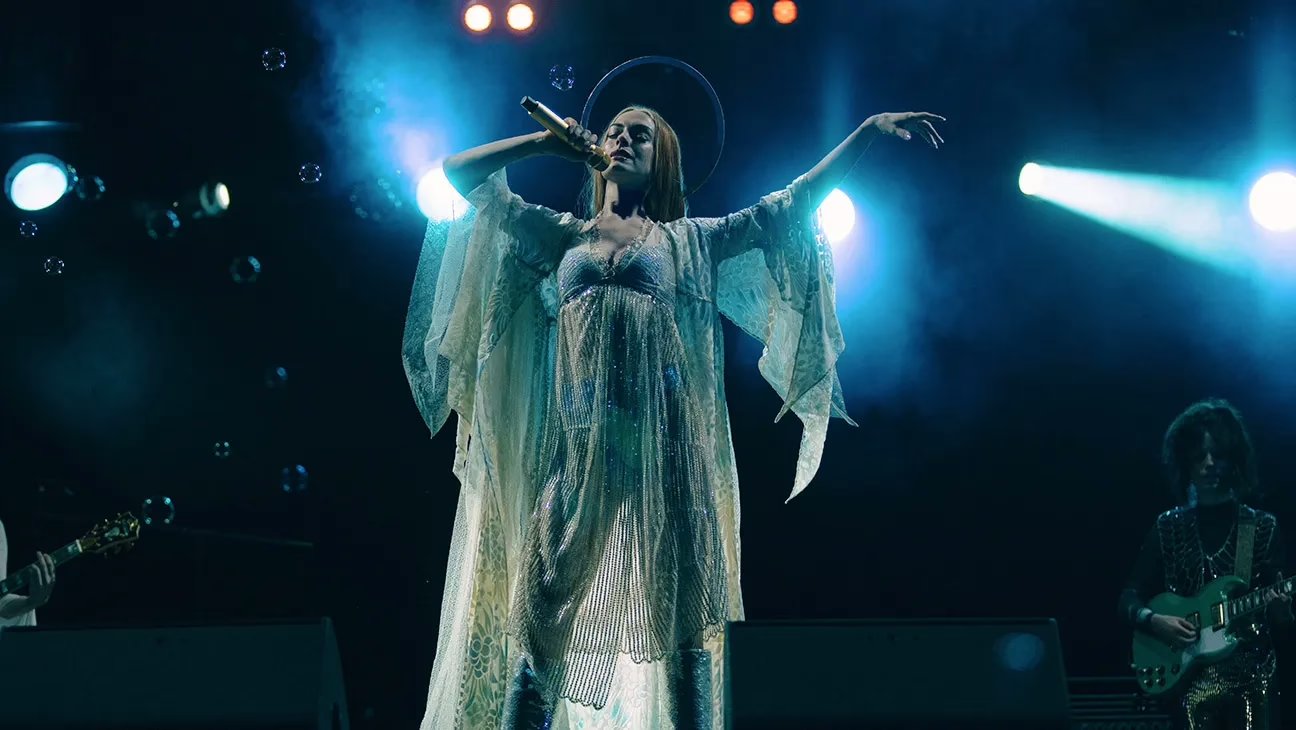
For Mary, its appearance is far more traumatic. After a séance leaves her injured and shaken, it descends upon her as she soaks in the bath, swirling through the dark void like blood in water. Although she narrowly escapes, it is not quite done, returning during a live concert as she sings atop an elevated platform. Frightened, she takes a wrong step and falls, and for a moment she is bathed in a red wash as it enters her body. Mary has since recovered from the ordeal, yet this ghost’s presence lingers within her, seemingly pulling her toward the English country estate where Sam has withdrawn from the pop star’s suffocating orbit.

David Lowery has explored the realm of spectres before in A Ghost Story and The Green Knight, though they have never taken the same form twice, becoming ever more abstract in Mother Mary. Here, the crimson ghost which haunts Mary and Sam is distinctly inhuman, appearing more like a drifting, atmospheric phenomenon than a sentient being. It is at once shapeless and tactile, seemingly woven of the same material that Sam uses to fashion Mary’s many costumed identities. Guilt and resentment simmer between these estranged artists, yet in the absence of resolution between them, this apparition refuses to release them from each other’s lives.
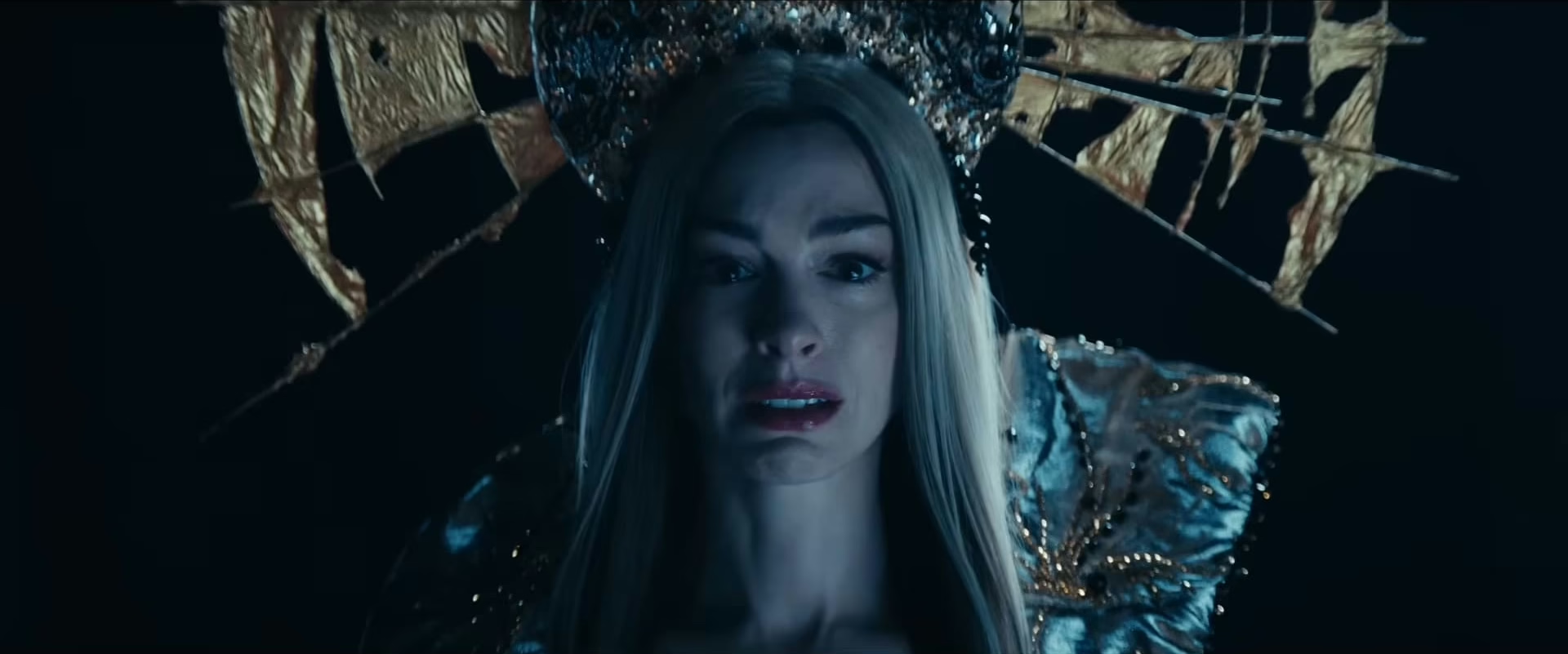
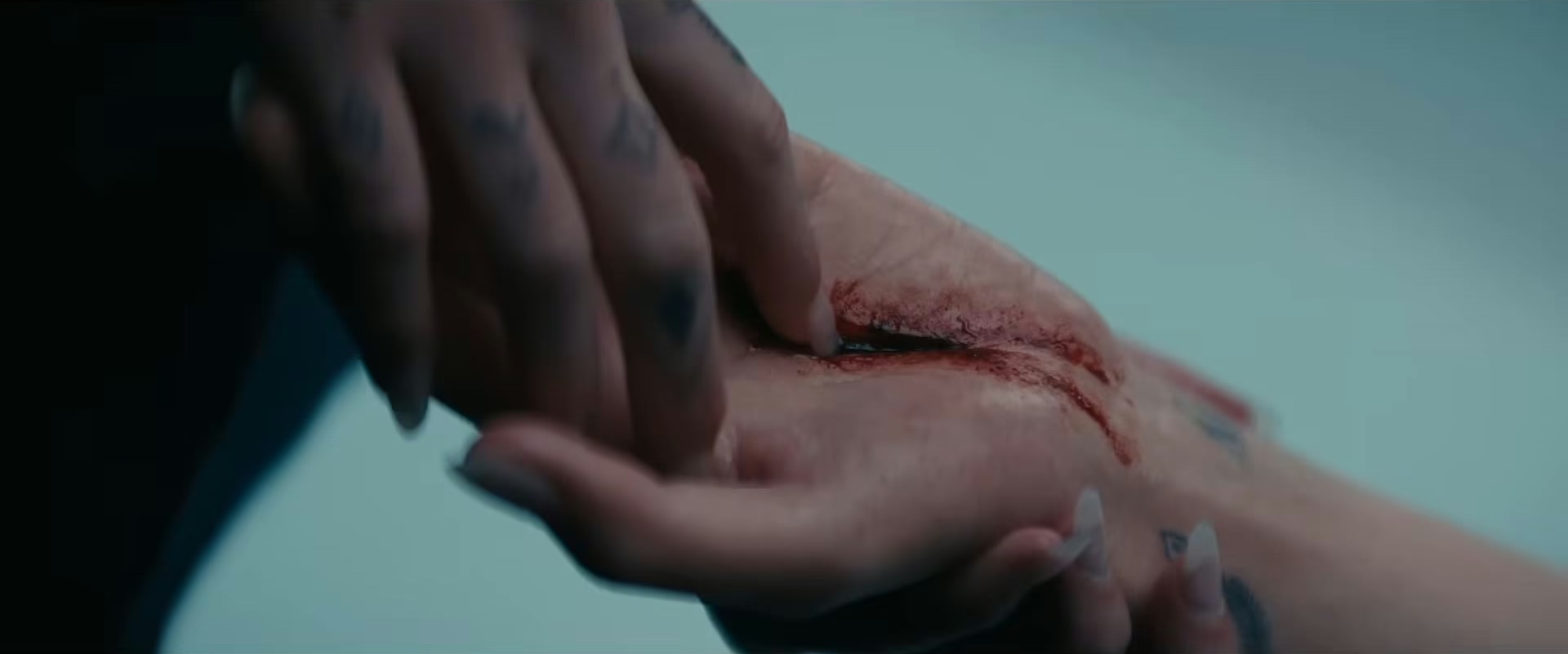
Naming her stage persona after the mother of Christ, Mary effectively invokes Gothic religious iconography, rebranding sainthood as modern celebrity. Her head is often framed in elaborate haloes, her songs adopt biblical imagery, and even her wounded palm resembles stigmata – though this sacred symbolism is somewhat double-edged. While it casts live music as a transcendent communion, it also holds Mary to an impossible standard of graceful, virtuous femininity, slowly crumbling behind the scenes. Much of Lowery’s staging is built on seamless transitions, and in one particularly expressionistic depiction of Mary’s exhaustion, a parallel tracking shot follows her silhouette ascending and descending a series of staircases as she wearily drags herself between shows.
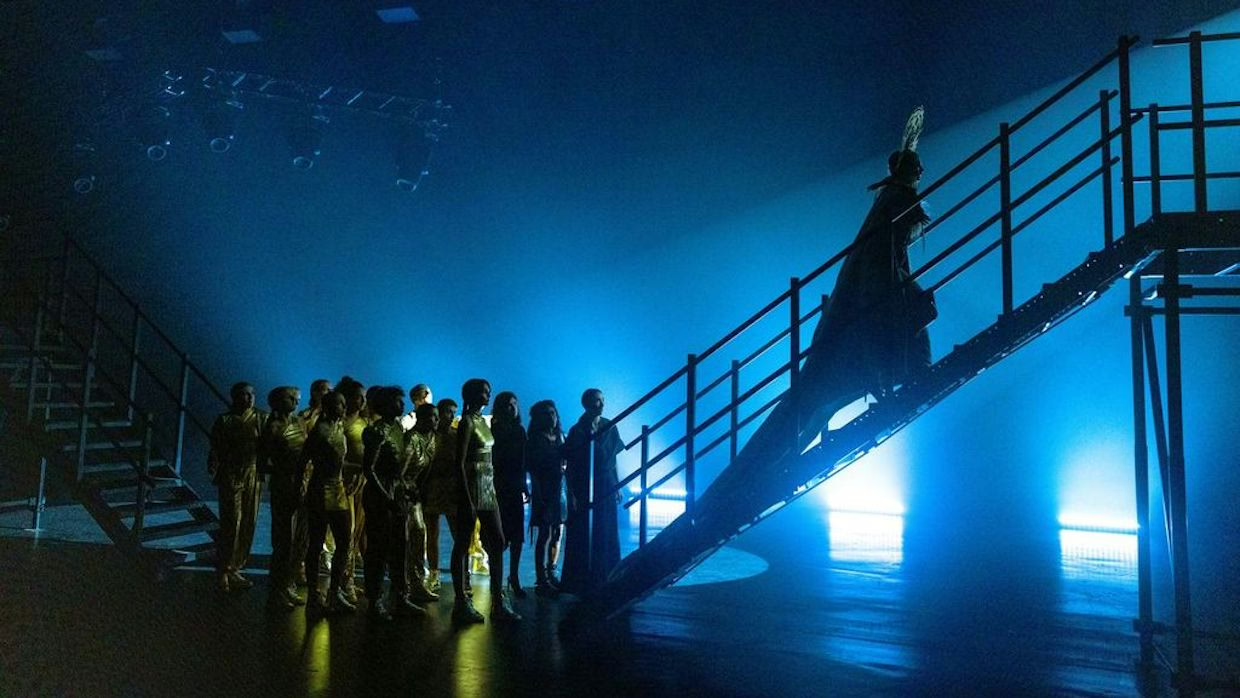
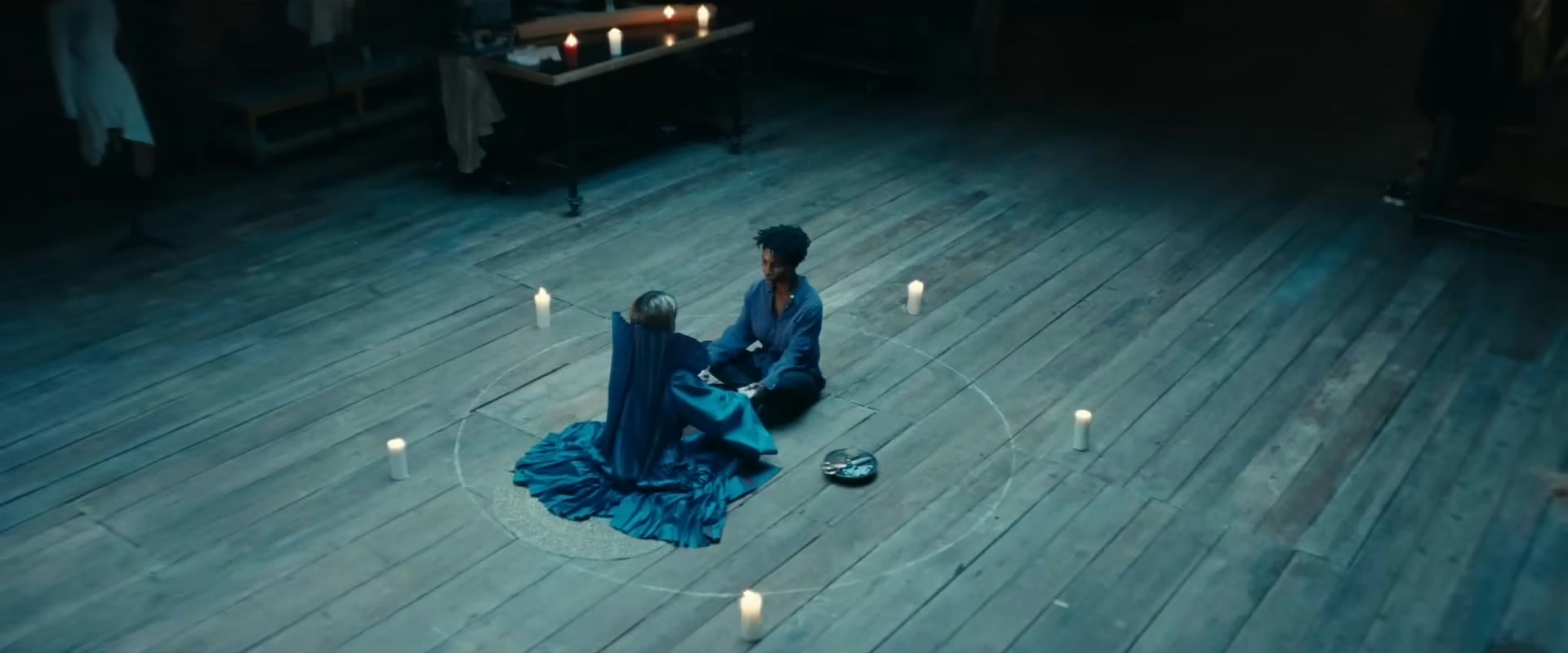
Given that much of Mother Mary is also set within Sam’s rustic textile studio, unravelling her grievances and Mary’s guilt through lengthy discussions, such fluid blocking around its flashbacks elevates Lowery’s direction into theatrical, hallucinatory choreography. As these bitter creative partners reminisce on their most painful memories, they often witness and inhabit them at the same time, visually bleeding the past into the present. Wooden doors swing open into crowded arenas, living rooms are conjured in the workshop, and when Lowery does choose to cut, dissolves carry close-ups of faces across dreamy, disorienting passages.
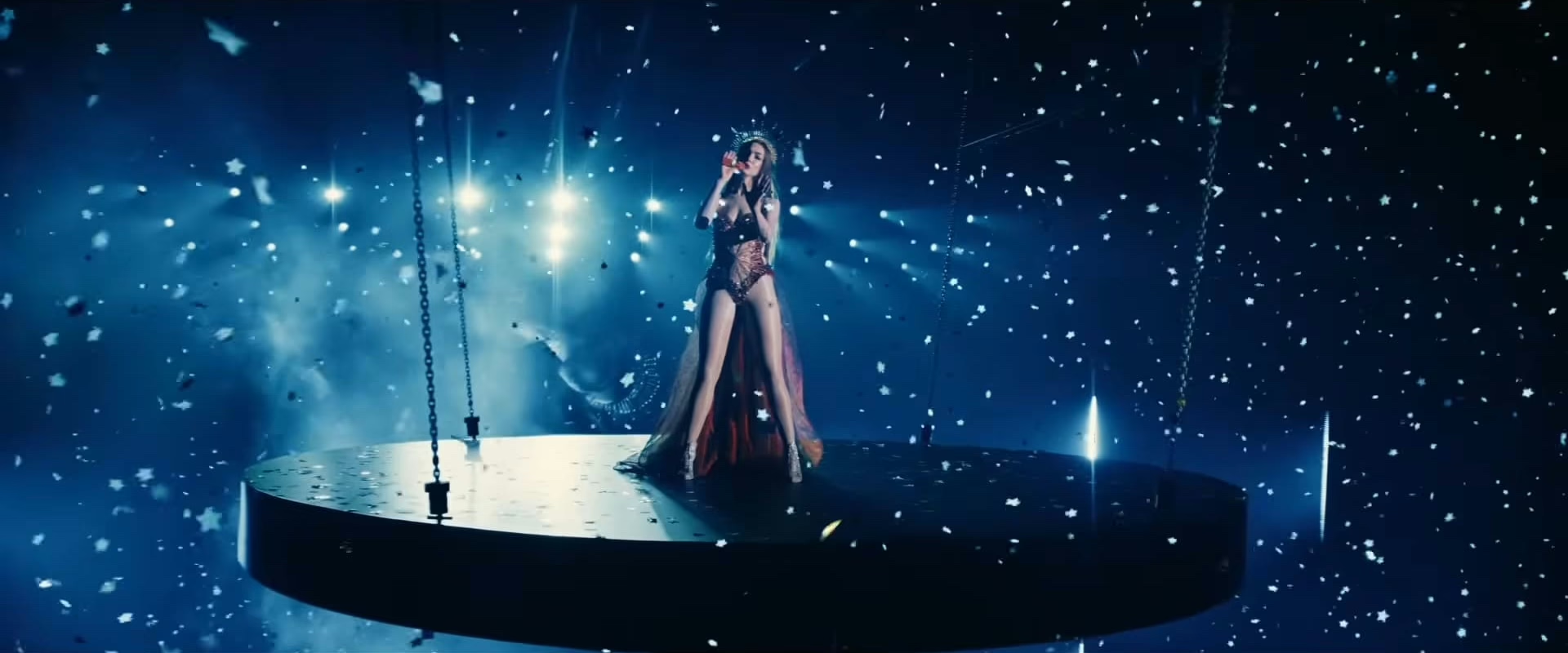
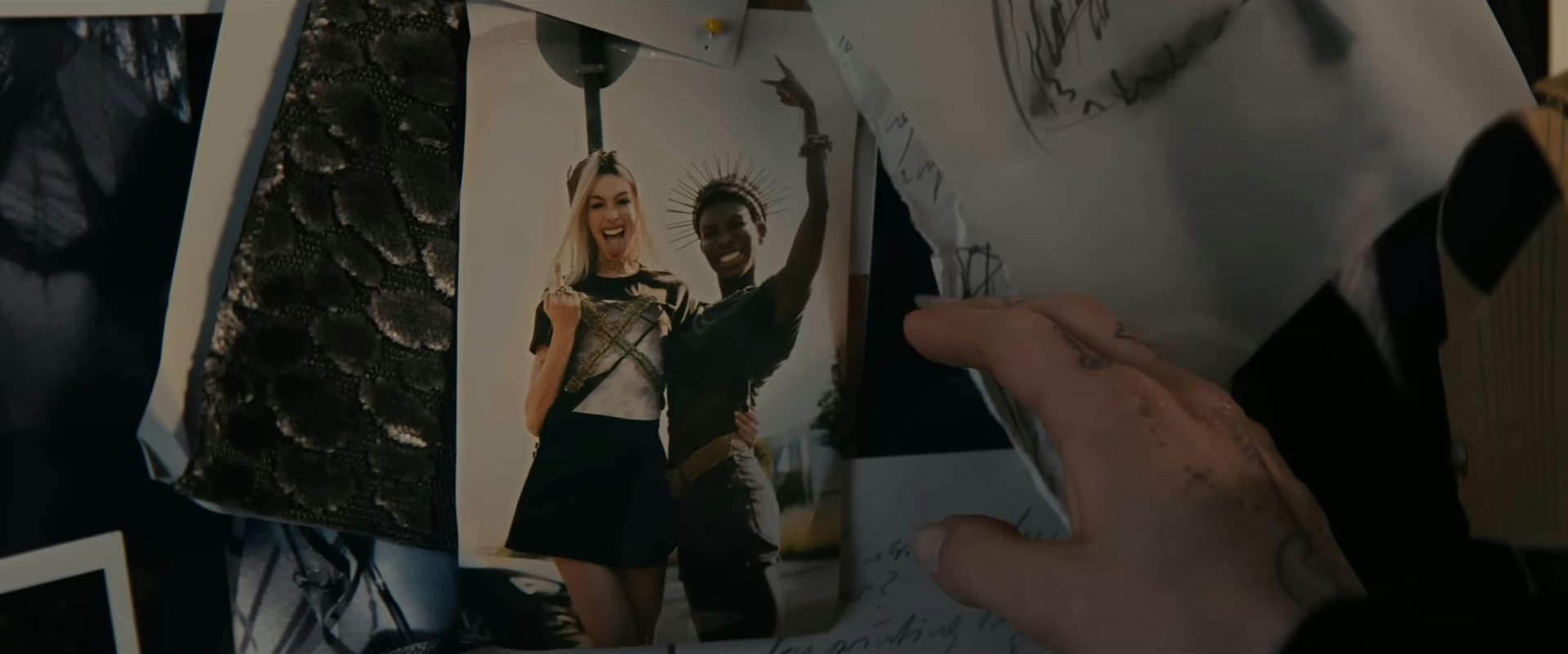
For Sam in particular, memories of their once-fruitful partnership are especially potent. Visions of Mary wearing past outfits stand motionless around the studio, modelling Joan of Arc-inspired vestments and glittering bodysuits, and consequently revealing a deep sorrow beneath the fashion designer’s resentful barbs. Next to Anne Hathaway’s diminished, withdrawn pop star, Michaela Coel cuts a more volatile figure with her sardonic wit and pragmatic efficiency, casually poking at old wounds while taking measurements, drawing sketches, and picking out fabrics.
Sam may not have moved past Mary’s betrayal, yet she readily takes on the performer’s new commission – to design a dress that sheds every persona she has ever worn, and which reveals something fully clarified. This is not a reinvention for Mary, but a holistic renewal, as even in her latest dance she similarly abandons embellishment for raw, bodily expression. Performed without music at Sam’s punishing request, Hathaway’s heavy breathing and grunts become audible, while she viscerally throws her body across the ground as though it is no longer hers. Such relentless self-excavation would render anyone emotionally vulnerable, and as Mary seeks a more instinctive truth within herself, it is no coincidence that this is precisely where the blood-red ghost now resides.
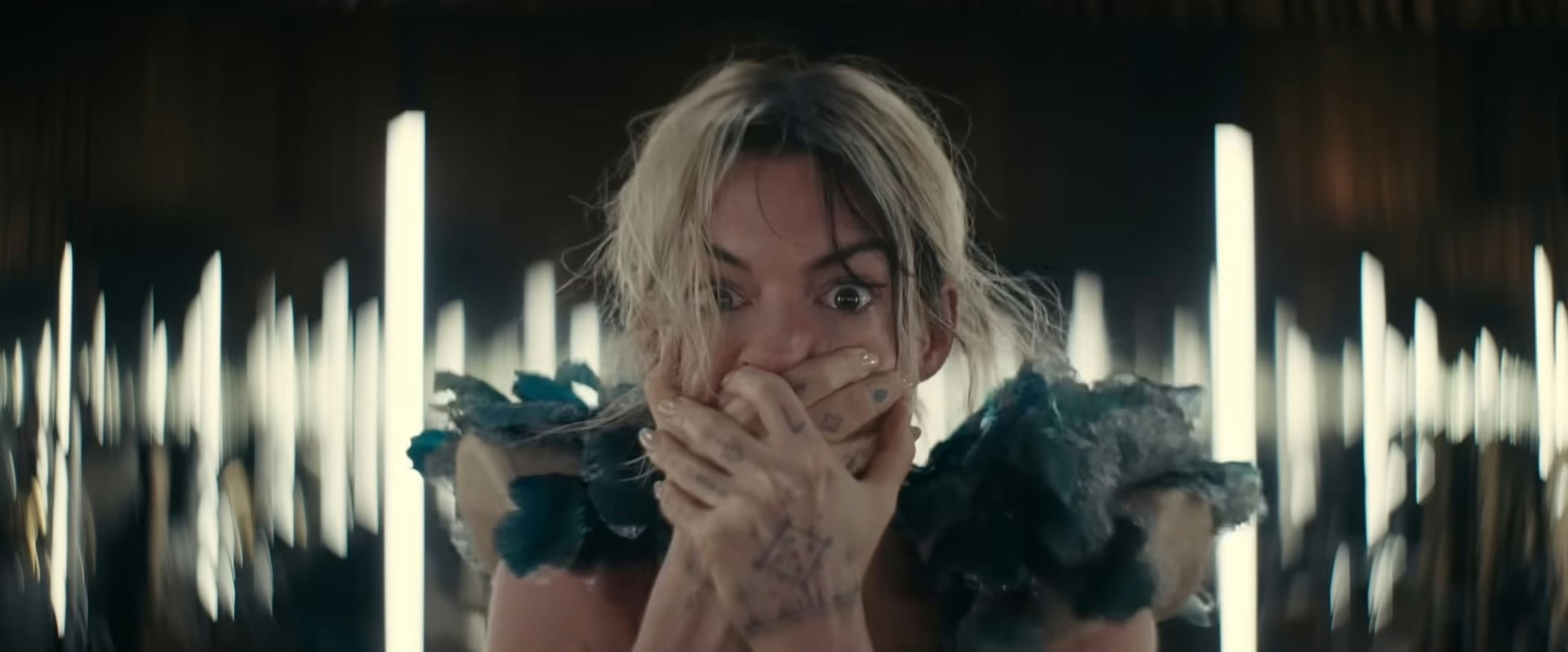

Live performance may be an act of collective euphoria after all, and Lowery certainly recognises its intoxicating potential through his dazzling musical set pieces, yet its capacity to overwhelm the self is dangerous without counterbalance – and there lies the crux of Sam and Mary’s symbiotic relationship. Where one invites possession, the other performs exorcisms. Where one gives material form to shapeless emotions, the other wears them proudly, and both are united within a shared, artistic expression. Neither may function alone in Mother Mary, and through Lowery’s interweaving of surreal spectacle and psychological rupture, both complete each other in a ritual of creative, purifying catharsis.
Mother Mary is currently playing in cinemas.
How was Peter Pan & Wendy, Lowery’s previous movie?
I haven’t seen it, but I have heard it’s a little lacklustre. He seems to be doing the ‘one for the studio, one for me’ model, alternating between highly ambitious and run-of-the-mill films.