
Len Wiseman | 2hr 5min

While one assassin cuts his way up the ladder of international crime lords in the John Wick franchise, a younger, more naïve killer seeks her own vengeance in Ballerina. This world of contractual violence is treacherous, and even for a woman raised in the ways of the enigmatic Ruska Roma, its threats overwhelm familiar rules of survival. She possesses neither the experience nor the reputation of the legendary hitman known as the Baba Yaga, yet in place of either, she holds a conviction that justice must be paid in full. Twelve years of her life have been spent training in martial arts and firearms, though the kinaesthetic foundation upon which her technique rests is far more graceful than the industry’s conventional brutality.
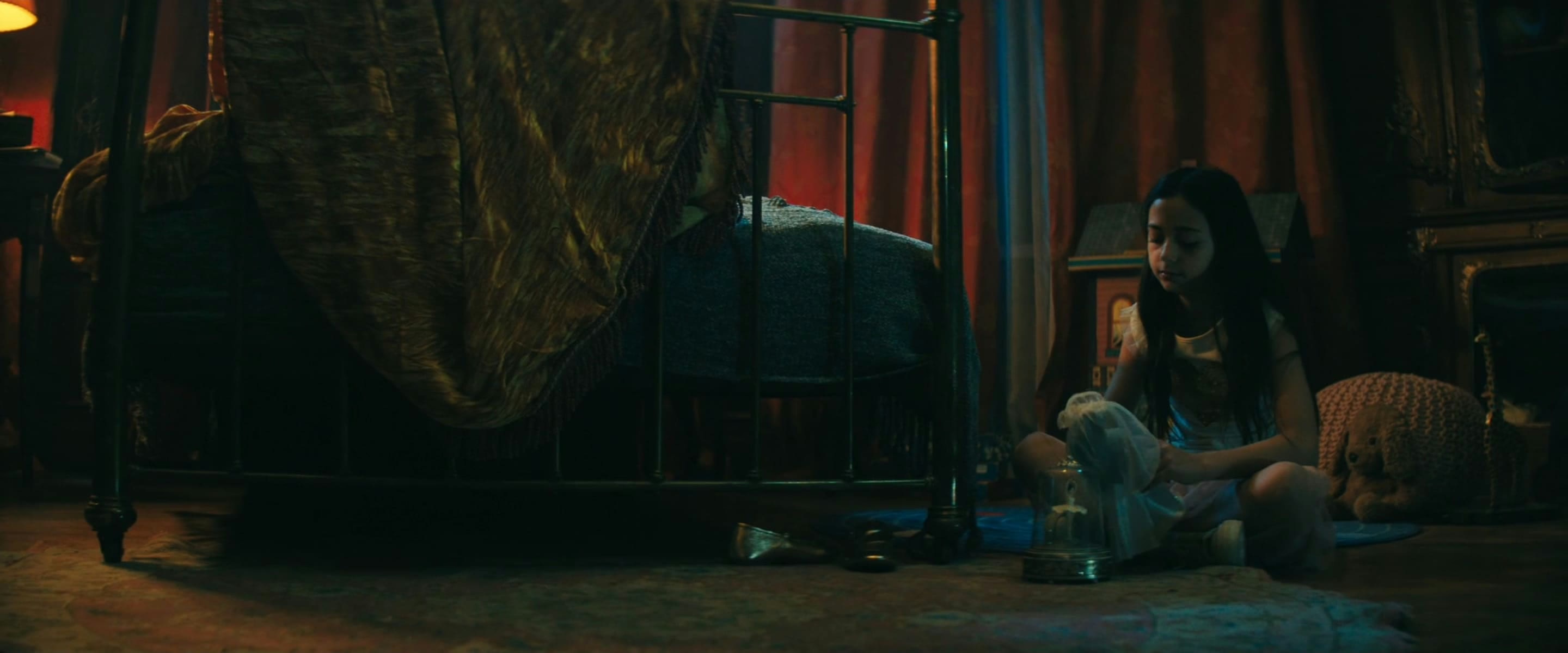
Ballet has become an ideal metaphor for weaponised femininity in the 21st century, even if its roots belong to Cold War espionage fiction. The duality of aesthetic fragility and fierce discipline sits at the heart of Black Widow and Red Sparrow, though in the Swan Lake motif that resonates through Ballerina, it faintly recalls Black Swan as well. For Eve, this conditioning of her body into an instrument of violence began at a young age after she was orphaned and left in the care of the Ruska Roma, who raise girls equally in the art of dance and murder. Now as she pursues the cult responsible for her father’s death, she carries on a tradition that requires obedience to choreographed form – yet this path will soon return her to deep-seated instincts rooted in family, grief, and the violence that first defined her world.
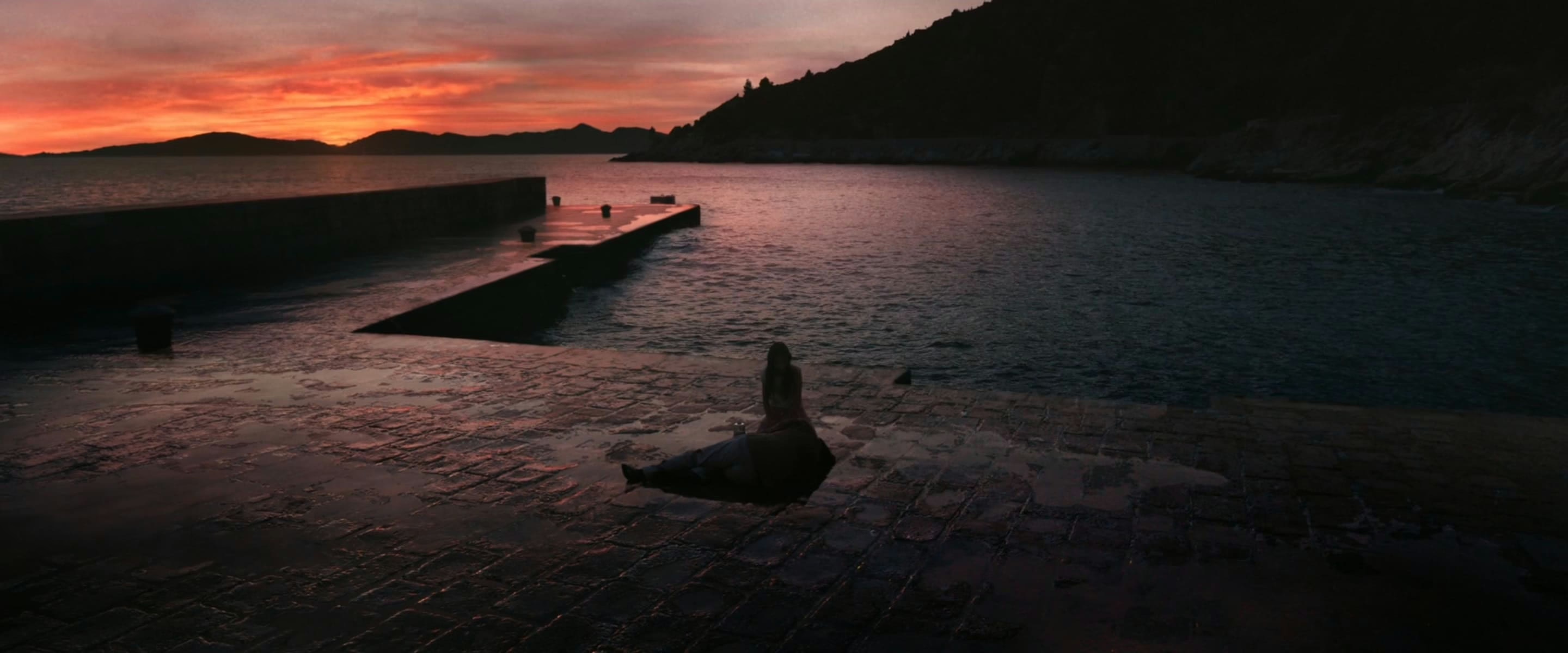
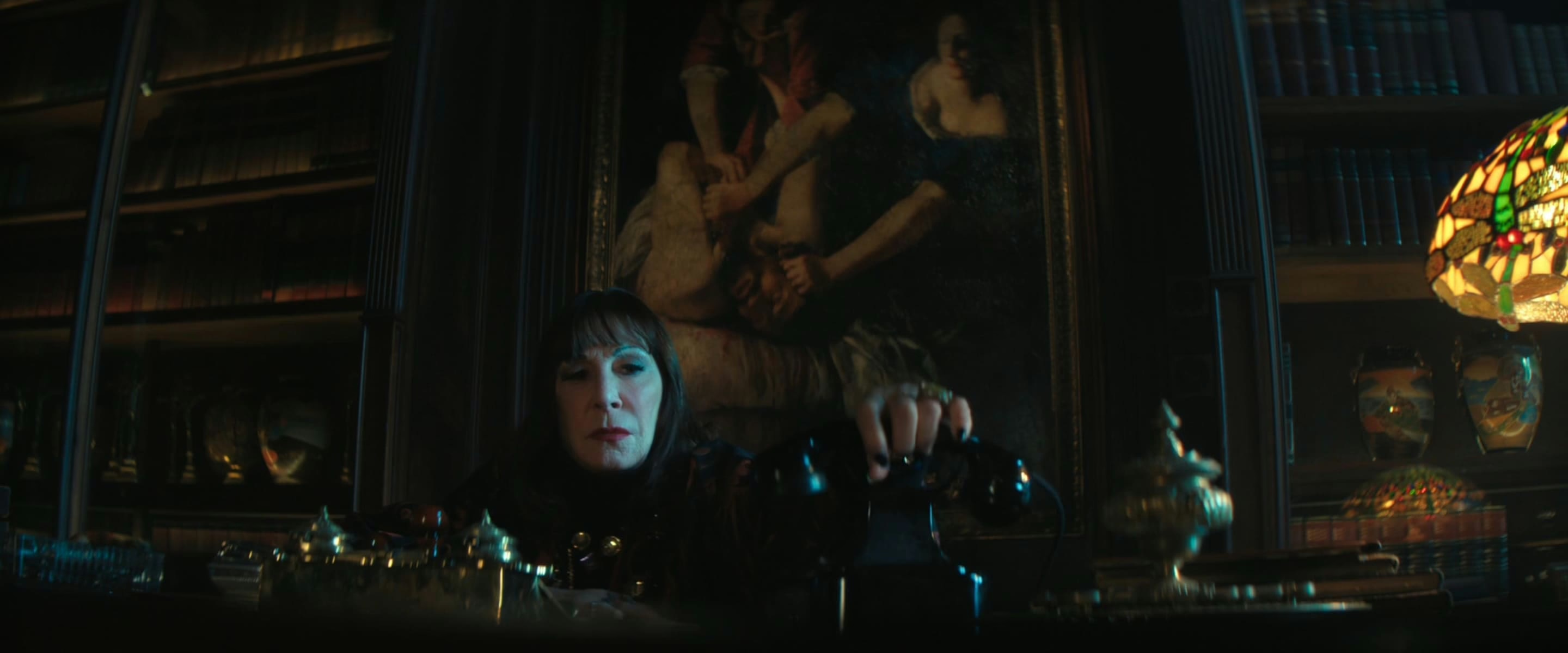
As a spin-off of the John Wick series, Ballerina is situated between the events of Chapter 3 and Chapter 4, during which Wick hid underground to plot his retribution against the High Table. Though Keanu Reeves is present in this film, that storyline is merely incidental to Eve’s mission, which takes her from New York City to the alps of Austria. Still, there is a likeness in their grief-fuelled pursuits, and this doesn’t go unnoticed by Wick when their paths eventually cross. He is not necessarily an ally, as few people are in this ledger-bound world, yet neither is he a total threat – she would barely survive a few seconds if he were. As a reluctant adversary, he rather allows her every opportunity to succeed, poignantly recognising their parallel paths while duty binds them to conflicting ends.
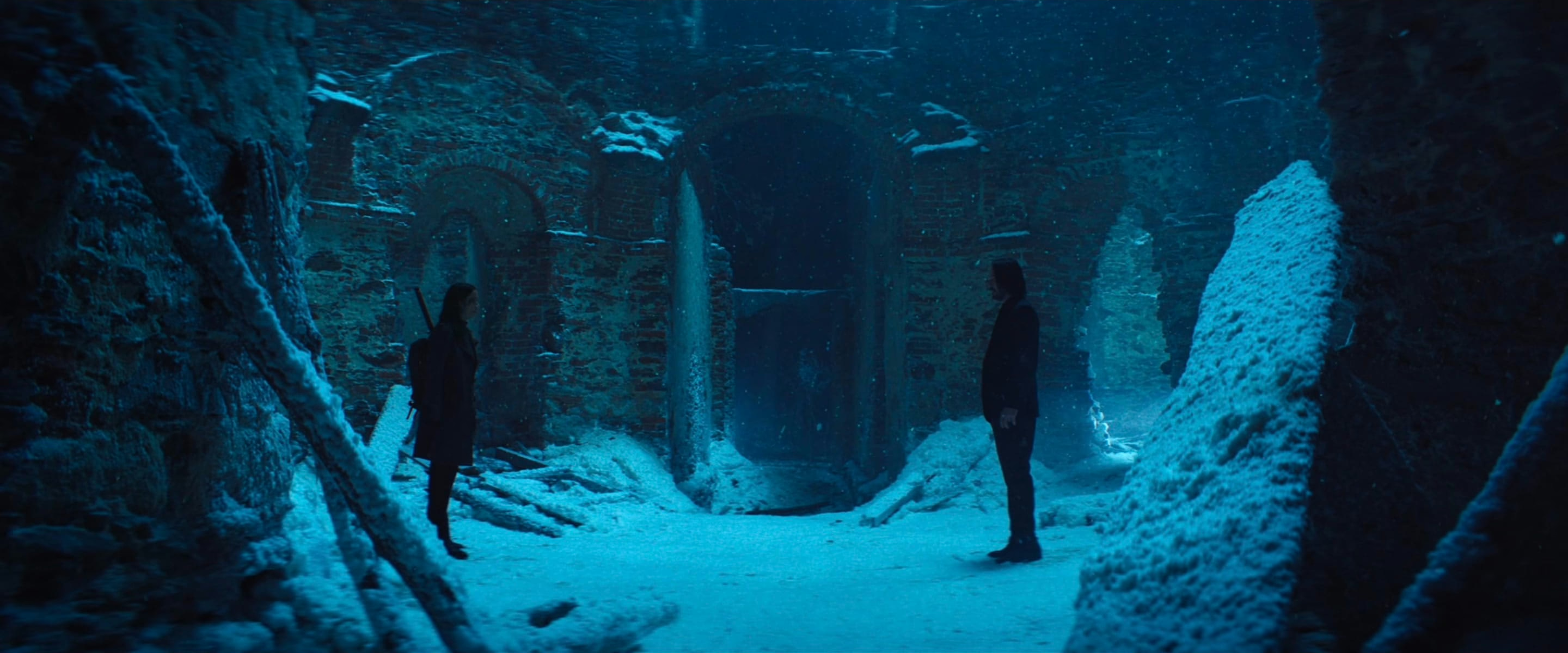
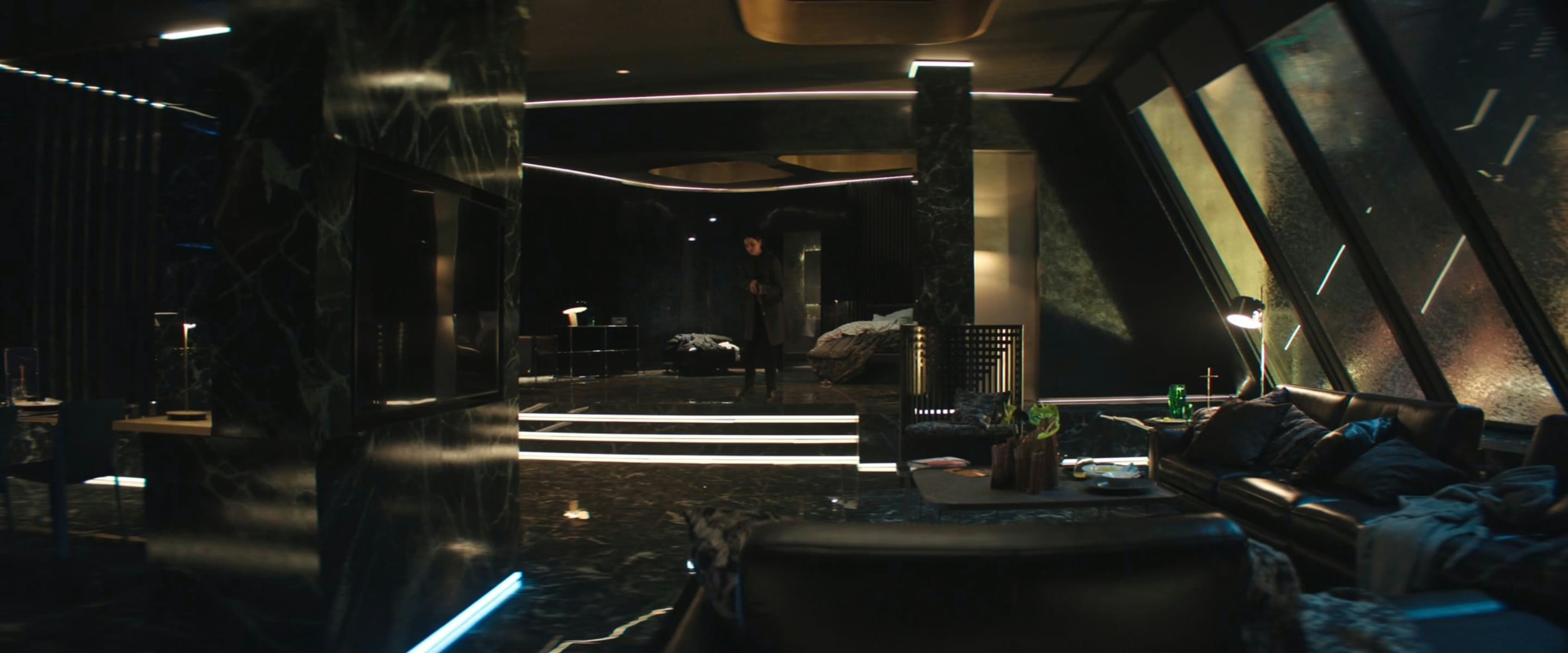
Even more crucially, Eve and Wick’s fighting styles mark a major point of divergence between these characters, and therein lies the justification for expanding the franchise in Ballerina. Though both have trained under the Ruska Roma, Wick fights beneath the heavy shadow of his mortality, while Eve moves with a reckless vitality that resourcefully adjusts to her surroundings. As a woman, she will always be smaller and more vulnerable than the enemy, she is taught. She must improvise, adapt, and cheat if she is to overcome the odds – and that she does, wielding each environment as a makeshift arsenal.
At times Eve is granted situational advantage, leaning heavily on grenades and armoured doors as she fights cultists in a weapons shop, though even in a simple restaurant she readily wields trolleys and ceramic plates against assailants. Pickaxes and ice skates are repurposed as tools of combat too, ferociously slashing at rival assassins who fall to her inventive assault – though perhaps most ingenious of all is her dousing of a flamethrower with a pressure hose, creating an opening to close in on her target.
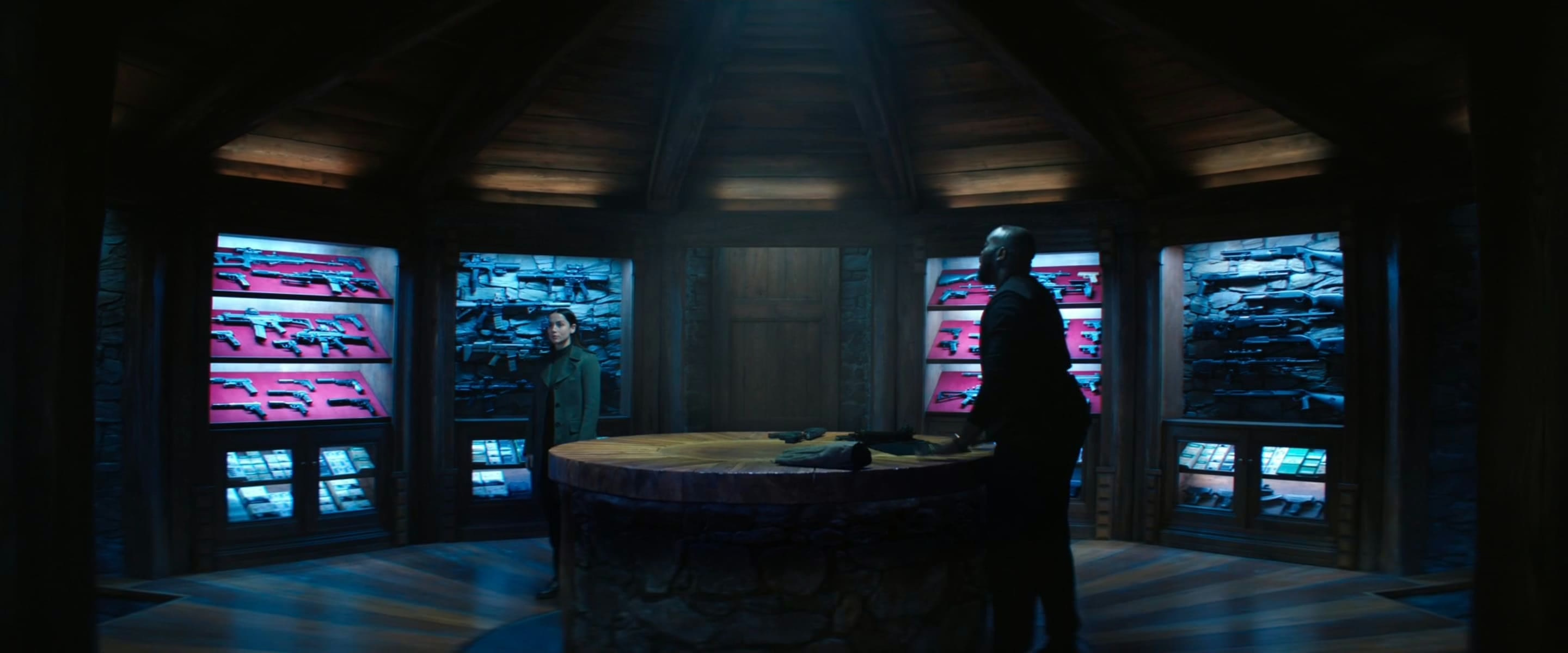
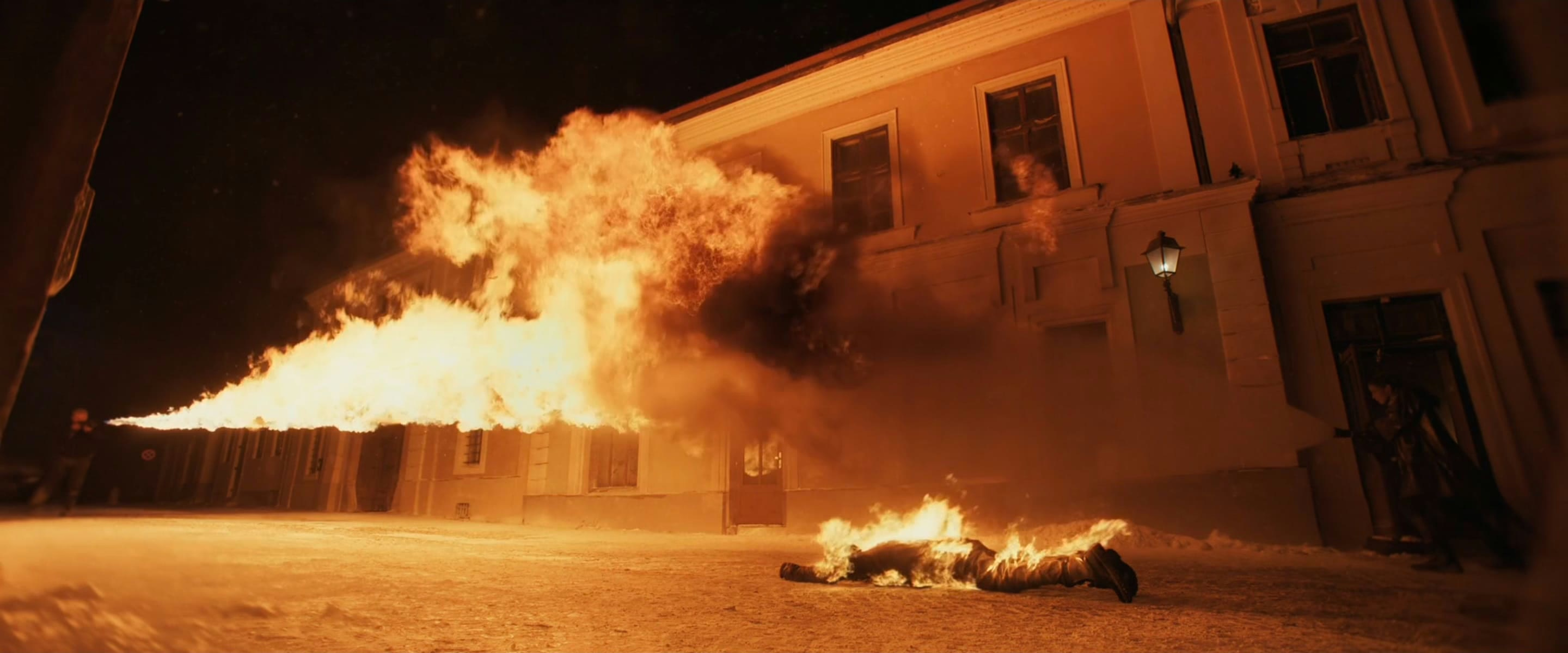
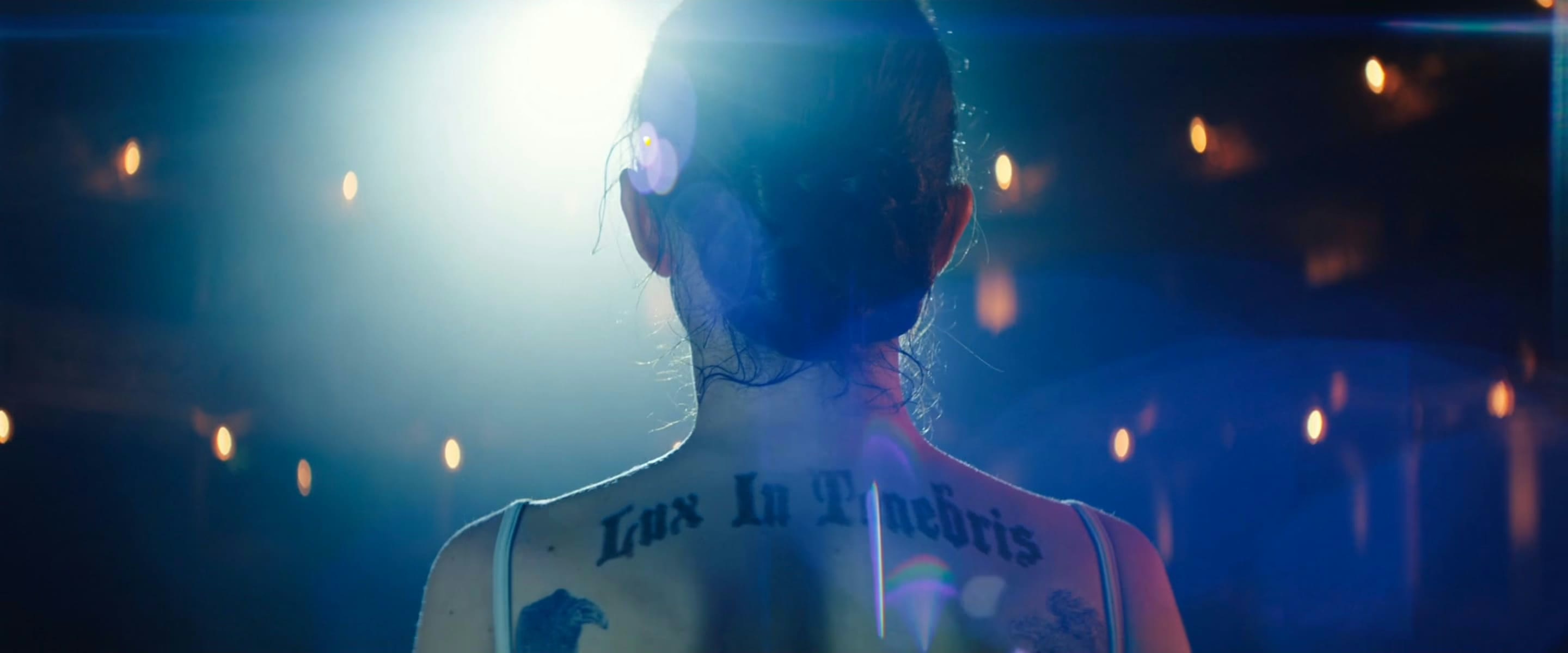
There is no doubt that Ballerina carries the same imaginative approach to stunt choreography and spectacle as the other John Wick films, even if it never quite matches the extraordinary craftsmanship of Chapter 4. Although Len Wiseman is credited as director, Chad Stahelski likely deserves greater credit for the film’s dynamic visual style, particularly given his oversight of its action set pieces and the reportedly extensive reshoots. The lighting is especially a major strength here, bathing a Ruska Roman ceremony in candlelight while an ice-themed nightclub pulses with neon strobes and LED screens, yet it is specifically Ballerina’s pink and blue colour palette which recasts its violence through a feminine-coded affect.
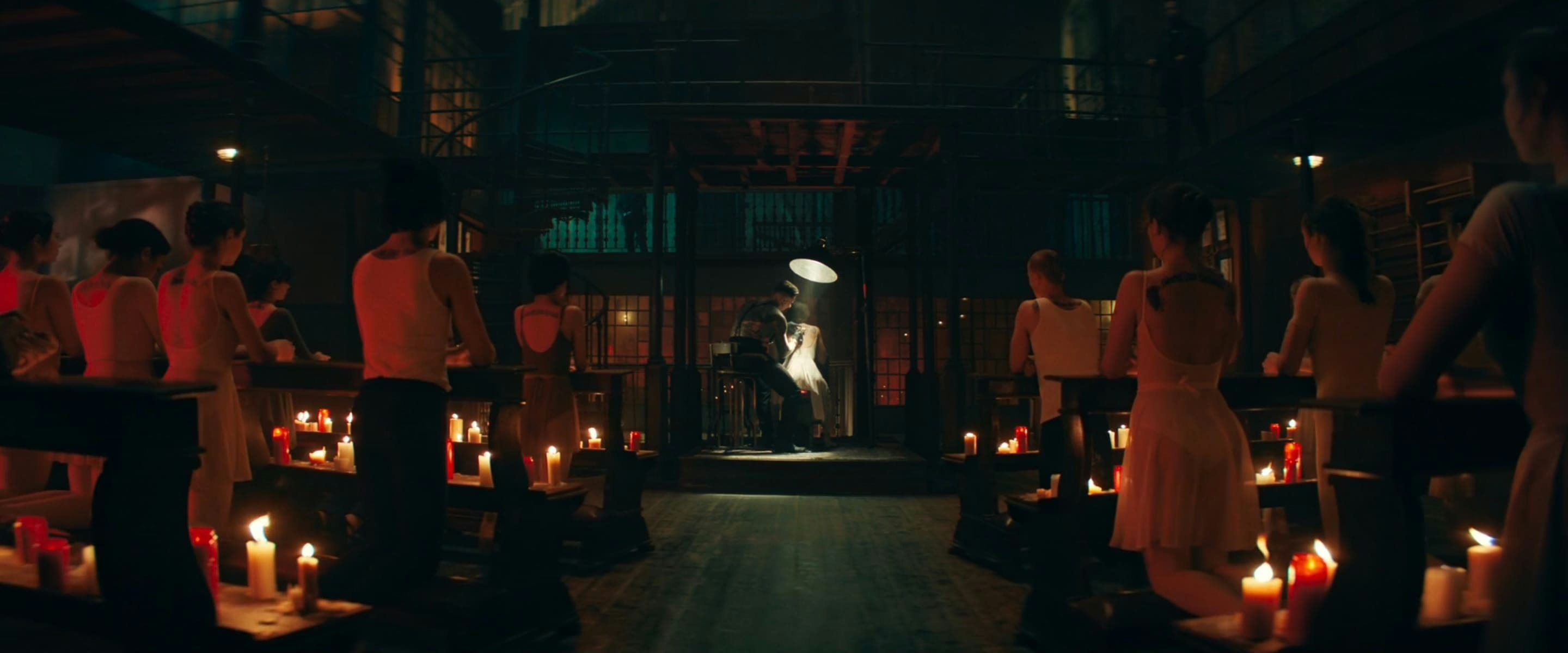
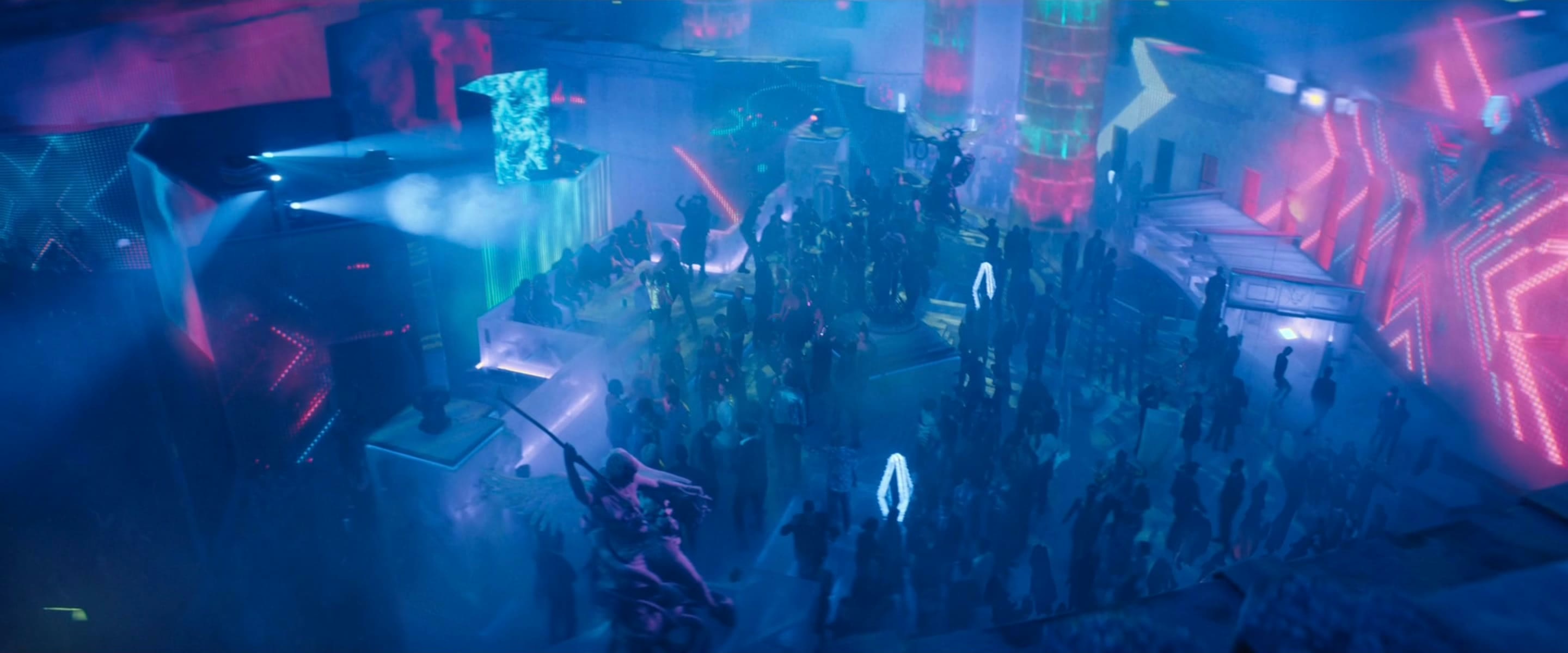
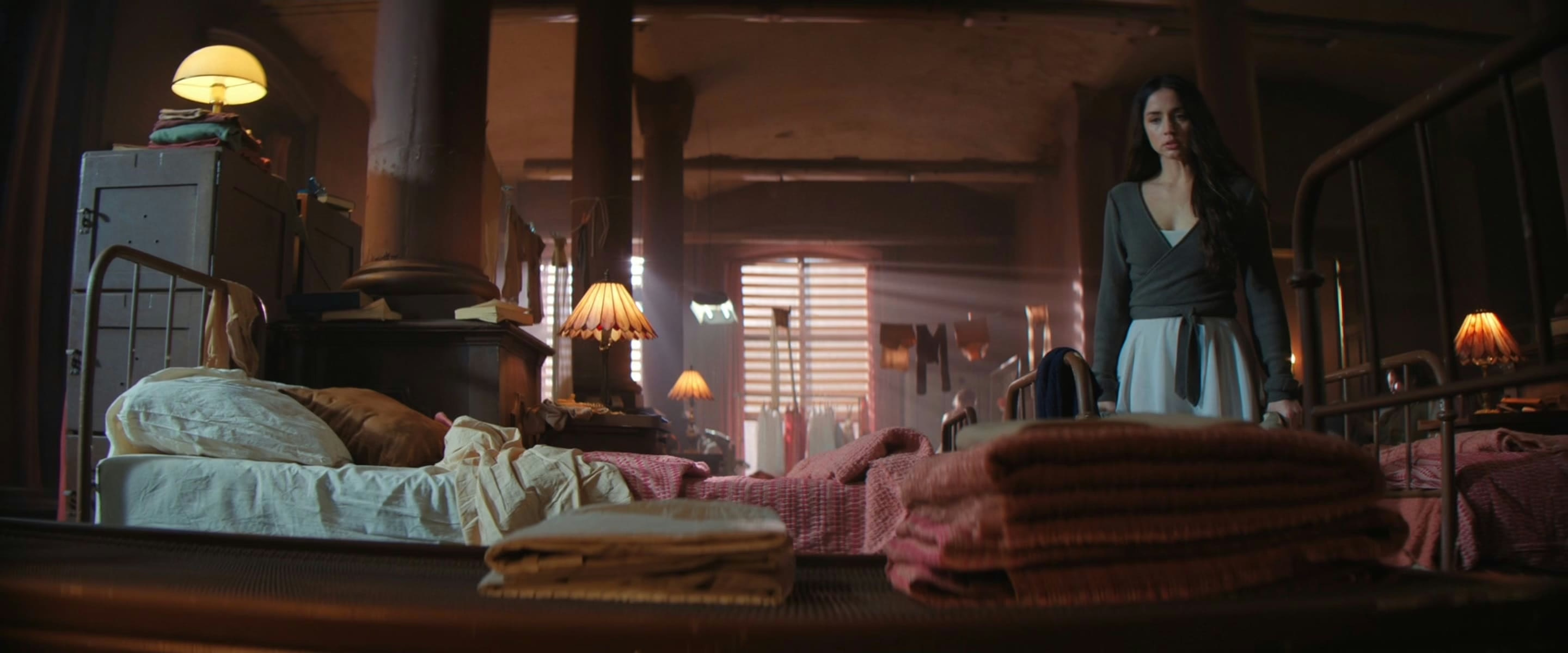
Having previously appeared as a Bond girl in No Time to Die, there is no surprise that Ana de Armas proves herself a particularly adept action heroine here, yet this performance showcases her talent in a far more sustained, demanding role. Both in the theatre and on the streets, Eve is tested physically and psychologically, learning her true capability in the heat of the moment and frequently faltering in the process. Caught between her loyalty to the Ruska Roma and her hatred of the Cult, her navigation of both institutions exposes their oppressive constraints, coercing members into obedience through discipline and violence. To escape, she must carve her own uncertain path through these overlapping systems of control, yet there is no guarantee of survival in any bid to break free.
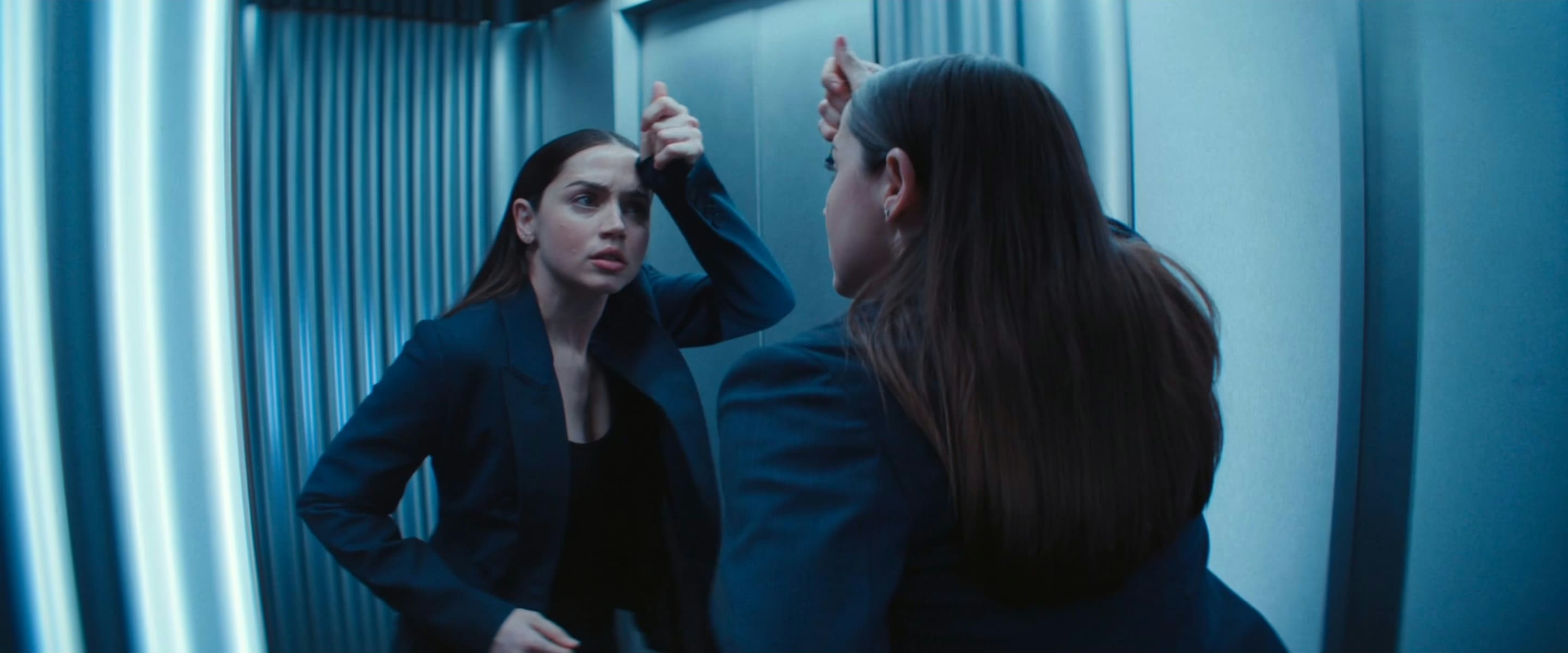
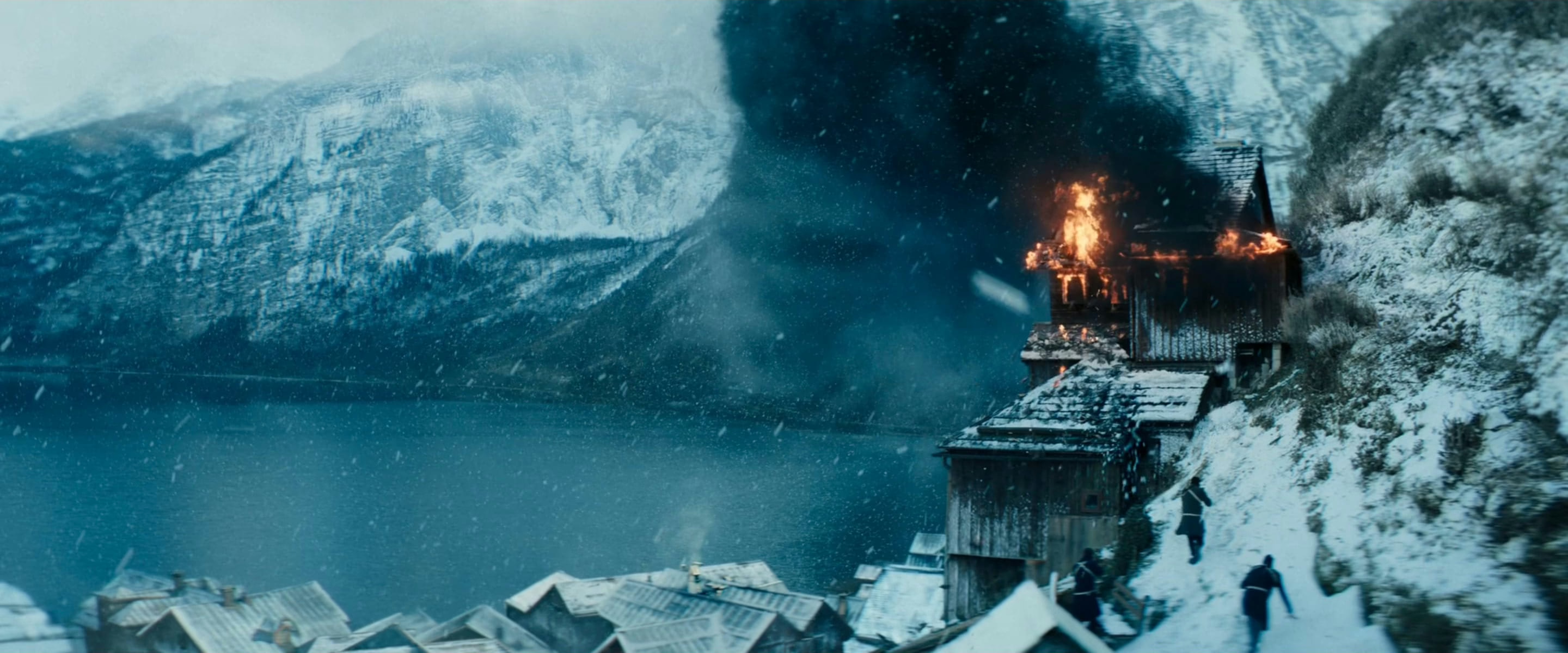
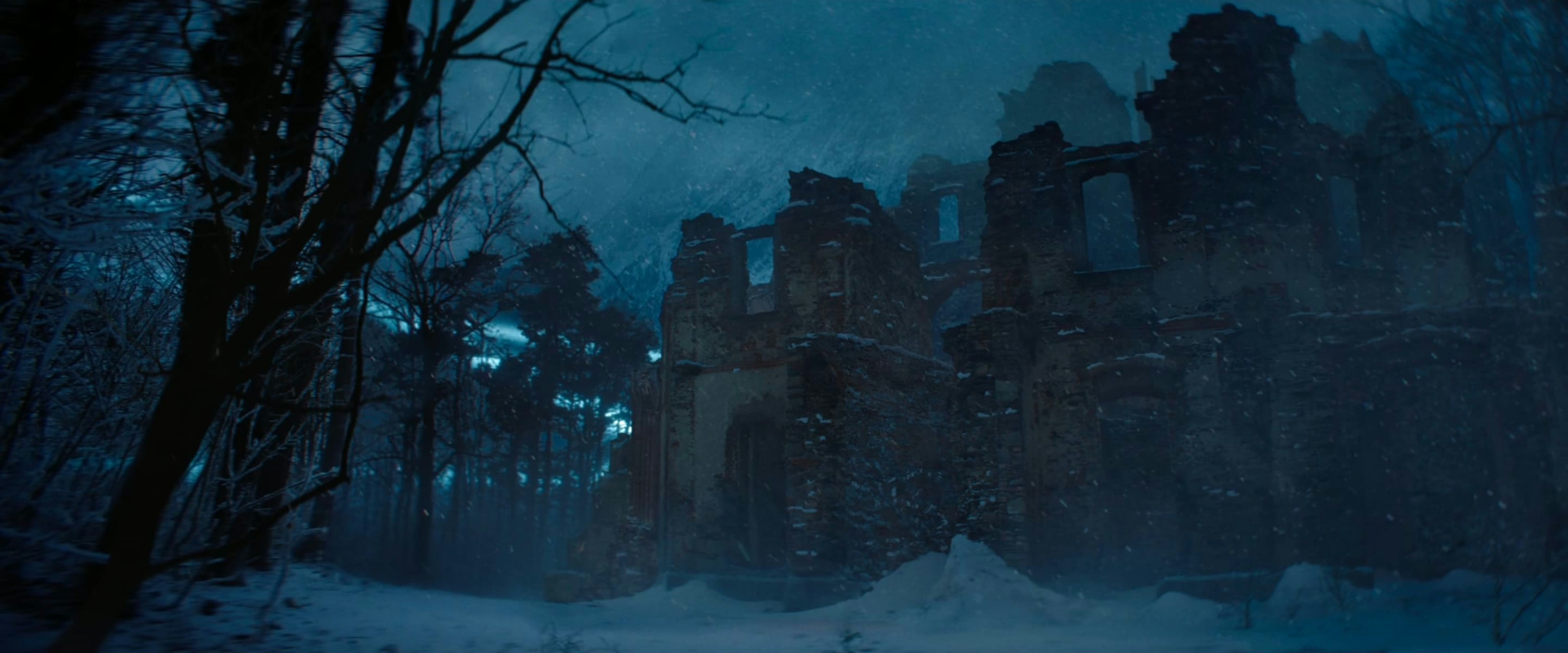
Though it is far from the colourful neon lights and monolithic architecture of any urban centre, the alpine town of Halstatt where the Cult bases its operations makes for an arresting location in Ballerina’s final stretch, its violence unfolding against snowy vistas of mountains and lakes. Just beyond its outskirts, the crumbling ruins of a medieval palace test her limits against an impossible challenge, though it is within the town’s nest of conspiracies where Eve demonstrates the full extent of her training. Among its residents, she not only meets the indoctrinated woman she might have become had her life taken a different turn – she is also drawn to protect a young girl whose path could still split in either direction.
Ballerina may be a step back from previous chapters in the John Wick franchise, though Wiseman nevertheless offers a compelling addition to its lore here, expanding a criminal underworld which seems boundless in its creative potential and international scope. Its shifting codes of loyalty, contracts, and betrayal come into sharper focus through Eve’s journey, filtered through the perspective of a novice still learning its secrets, yet fully capable of holding her own against its most dangerous operatives. Violence is an inevitability for those chosen by fate to become killers, and as she traverses the hidden, codified systems which govern it, Ballerina recognises that survival depends on moving within their constraints rather than beyond them.
Ballerina is currently streaming on Prime Video.