
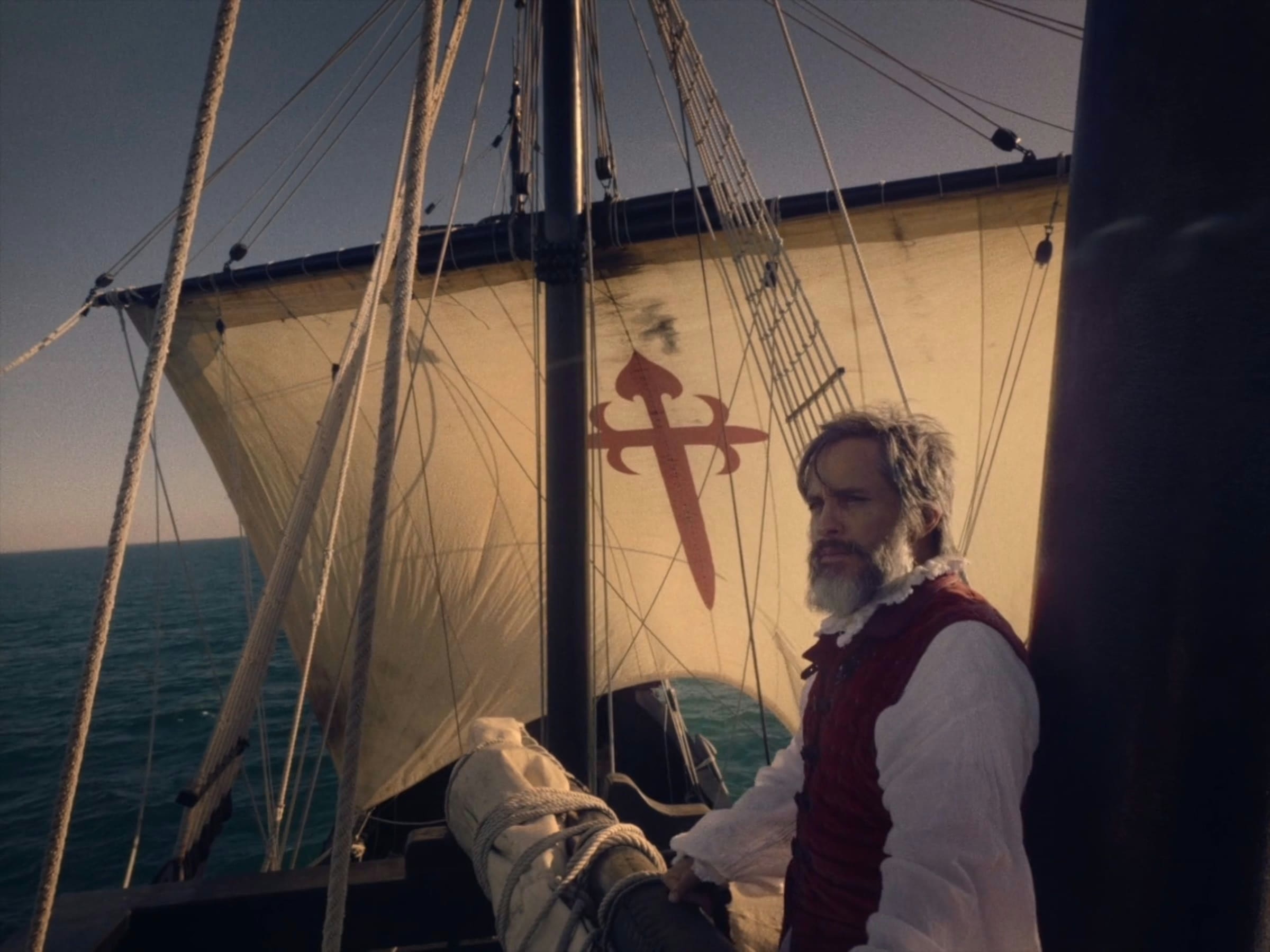
Lav Diaz | 2hr 44min

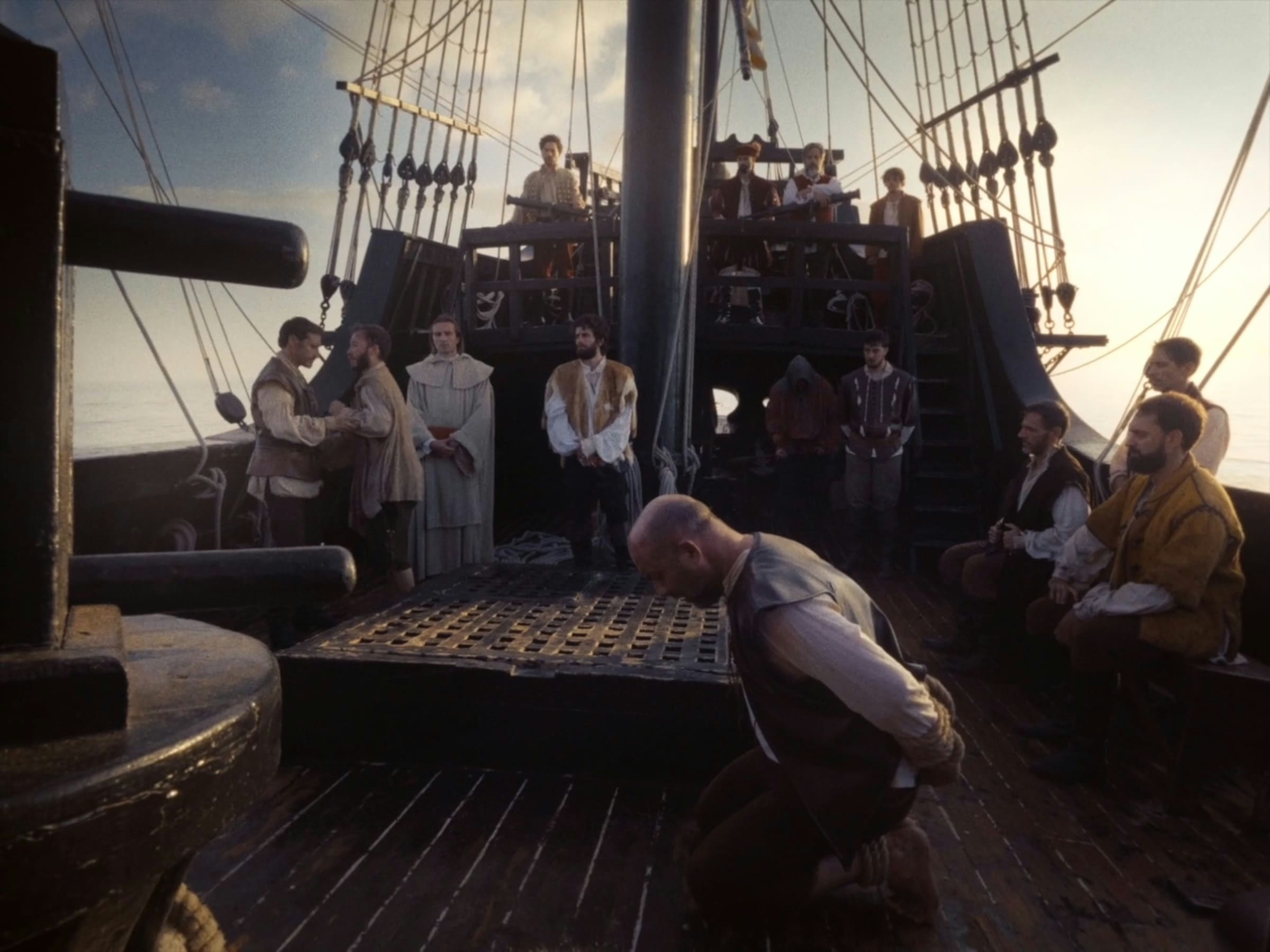
After departing Spain for Indonesia in 1519, it doesn’t take long for Ferdinand Magellan’s voyage to descend into bloodshed and mutiny. His execution of two men caught in the act of sodomy stokes dissent among his crew, many of whom claim he is defying King Manuel I’s orders, though Magellan cares little for their protests – he possesses total authority in this holy quest to spread Christianity across the world.
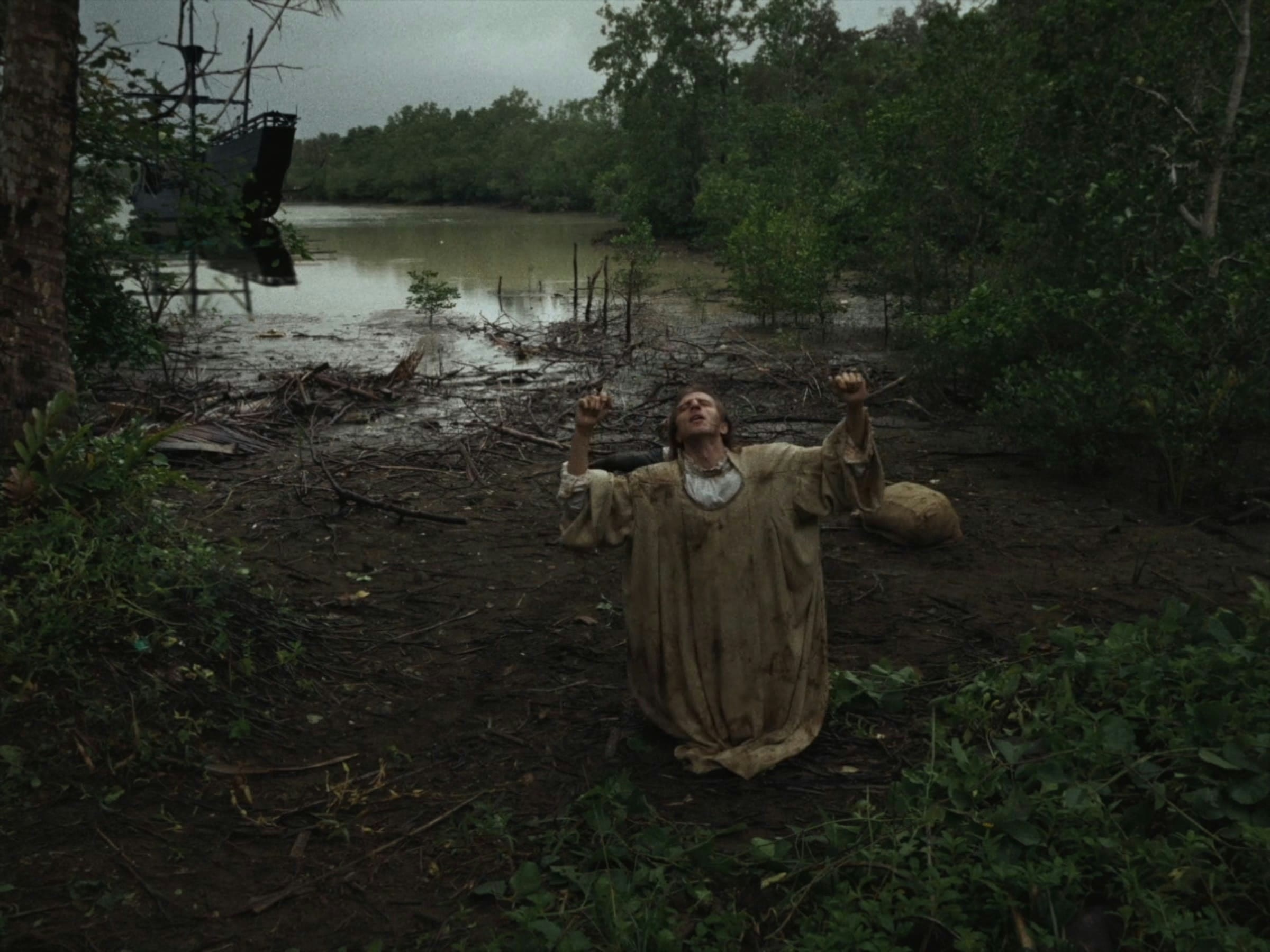
Still, it is clear that faith is not so much conviction than convenient justification for Magellan’s colonial objectives. Sitting down for confession with the ship’s priest, he insincerely requests absolution for killing his crewmen, before pressuring him to violate the sanctity of the rite and reveal who else was involved in the attempted takeover. To betray them would be to profane God himself, the priest insists – and without so much as a flicker of anger from Magellan, he is dispassionately exiled on a swampy, Patagonian coastline. “You have abandoned God’s grace!” the holy man screams, damning them to hell.
“You are at the mercy of the dream of a madman!”
Indeed, without even a spiritual basis to guide this expedition, its only governing principle is a single explorer’s vain, self-serving ambition. His figure looms large in Portuguese and Spanish history, having famously set out to circumnavigate the globe during the Age of Discovery, though his legacy in Southeast Asia is far more contested. As such, it is no wonder why Lav Diaz has chosen to rigorously deconstruct his story in Magellan, particularly given the voyager’s eventual death on the Filipino island of Cebu. Through a corrective, postcolonial lens, Diaz pointedly reclaims this imperial mythology, and in doing so exposes the hubris which underlies such violent acts of conquest.
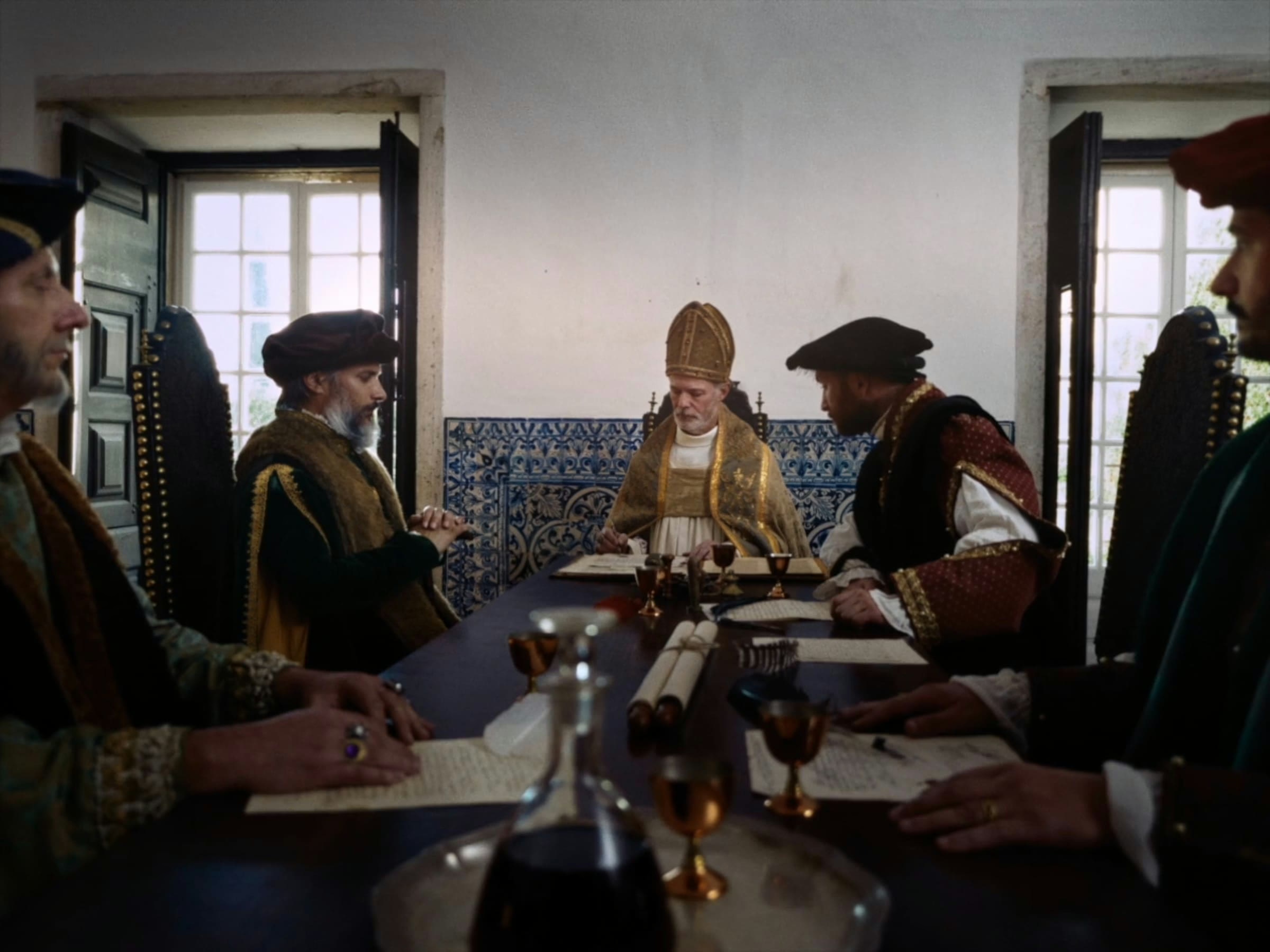
Magellan does not hide its historical reconfiguration behind illusions of realism or embellishment either. This epic is a rigidly formal exercise in historical interrogation, stripping its protagonist of whatever heroism may be attached to his name, and suspending him in an exhausted, existential drift. Although it is Diaz’s shortest film, coming in at just under three hours, it nevertheless typifies the art of slow cinema which his name has become synonymous with. More than simply emptying this expedition of dramatic momentum, his long takes diminish Magellan’s commanding presence, languishing in static images as deliberately paced as a procession through an art gallery.
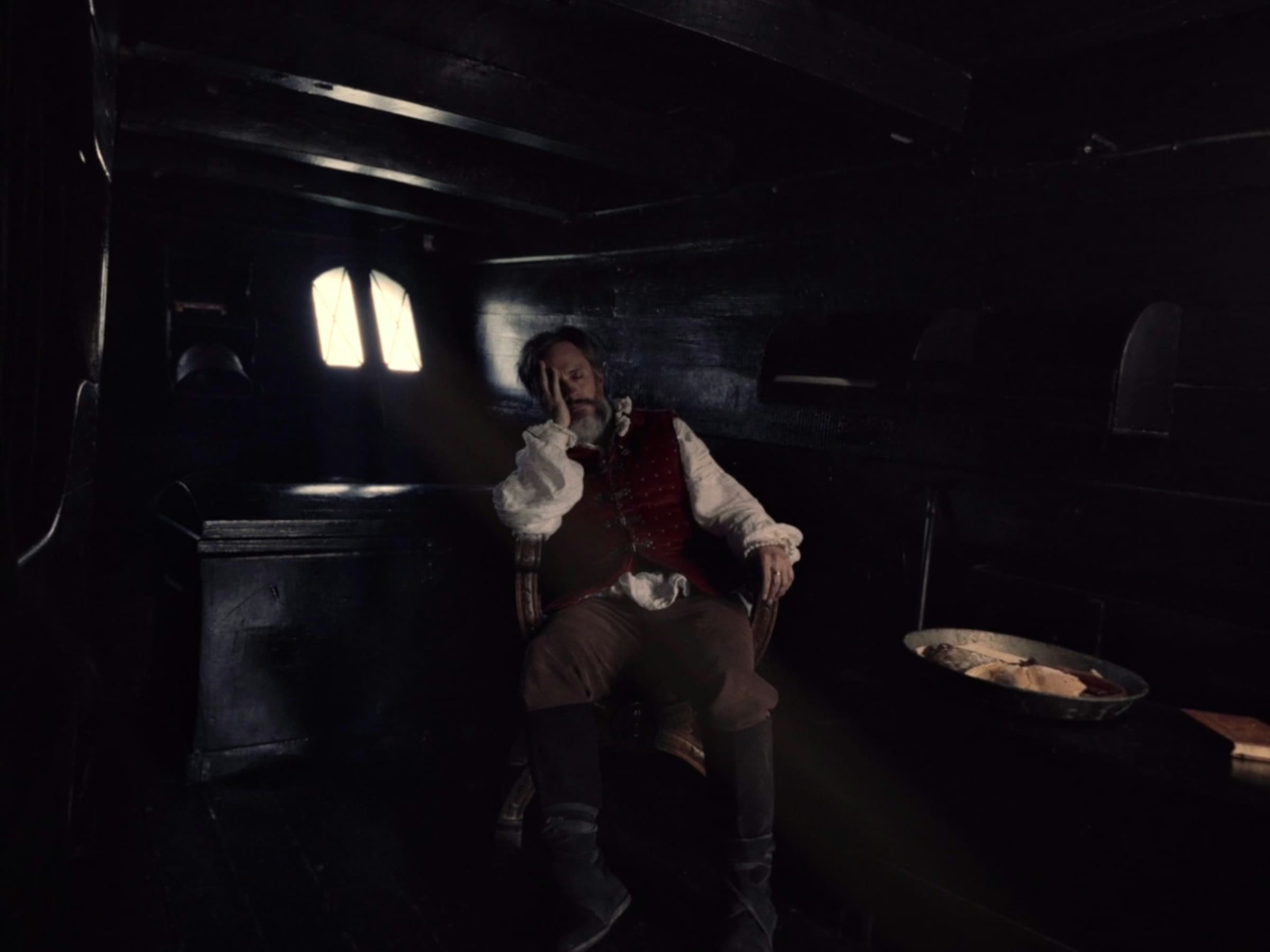
Using wide-angle lenses and a crisp depth of field too, Diaz economically condenses Magellan’s vast domain into each shot, meticulously blocking bodies through handsomely layered foregrounds and backgrounds. By compressing the frame into a narrow aspect ratio however, he refuses any sense of horizontal expanse, containing its vast scope within dense, claustrophobic compositions. Horizons may draw our eyes to the distance where characters enter and exit scenes, yet whether we are among the verdant overgrowth of Malacca or aboard Magellan’s cramped carrack ship, we feel physically stranded in his enclosed, stratified world.
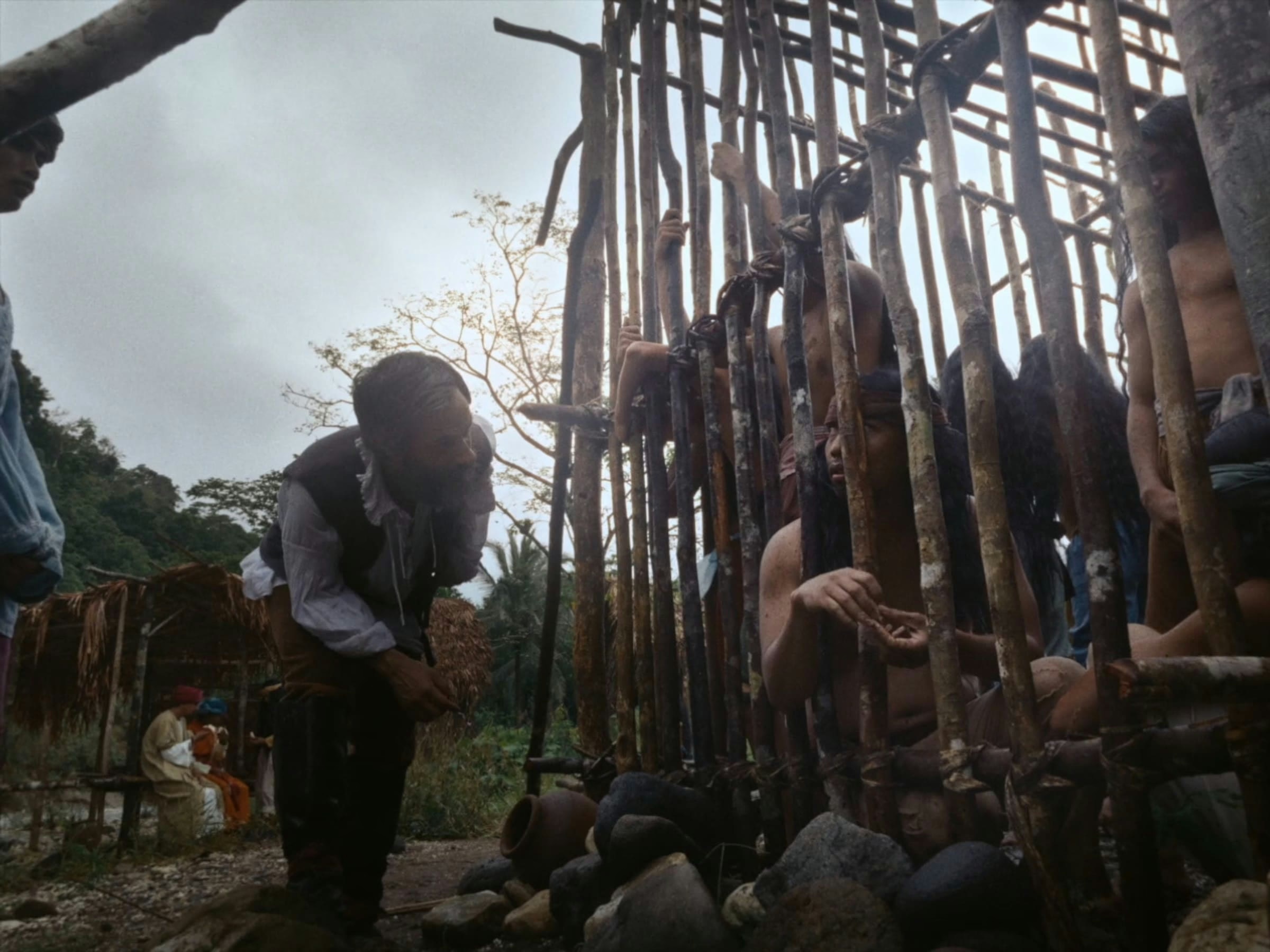
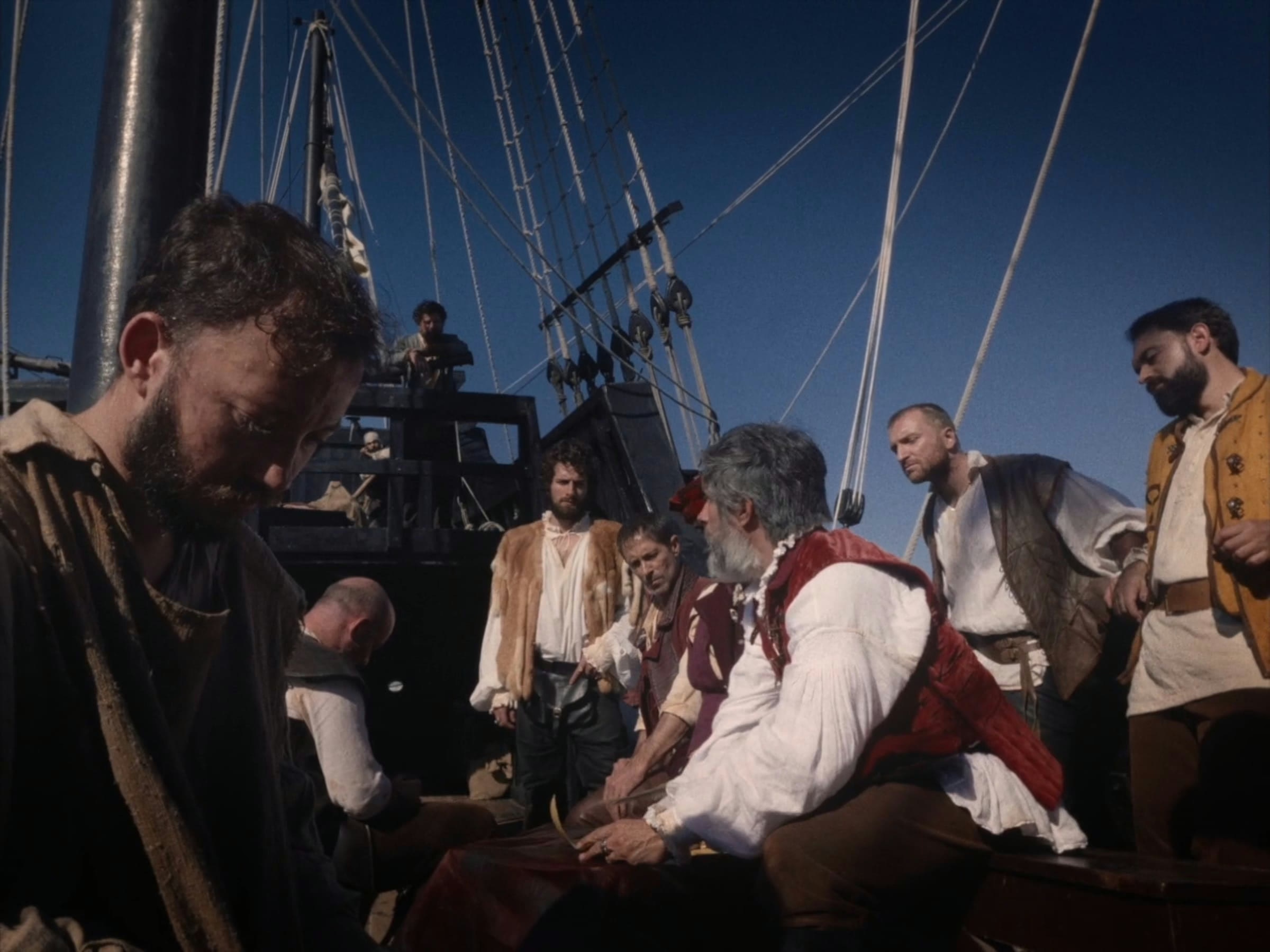
The visual storytelling contained in these tableaux no doubt recalls the deadpan formalism of Roy Andersson, though given the film’s Portuguese backdrop, Pedro Costa seems just as significant an influence in its lethargic rhythms and constructed confinement. The only times that Diaz frees his camera at all from its stasis is upon water, initially floating down Malacca’s calm, misty rivers, and later rocking with Magellan’s ship upon the open sea.
Here on the Victoria, he frequently obstructs and shapes compositions using beams, masts, and ropes, though it is when he captures the entire vessel in long shots that he reveals its frail insignificance. As it bobs up and down against a low horizon, it might almost appear to be a miniature were it not for Diaz’s use of a replica to preserve its material detail. Rather than mythologising maritime conquest, Magellan ironically diminishes the scale of this epic, pitting its self-important protagonist against a world far beyond his delusional control.
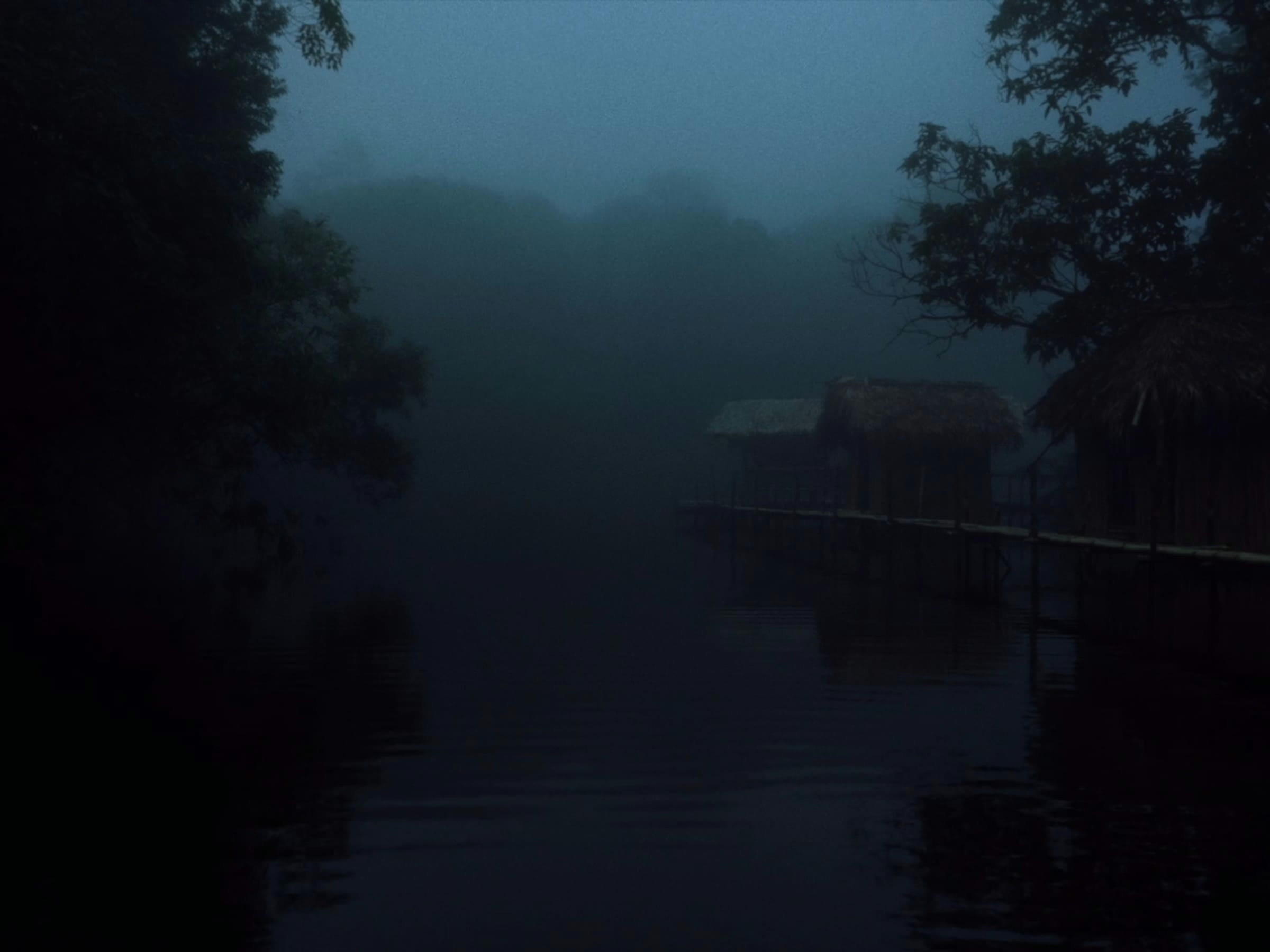
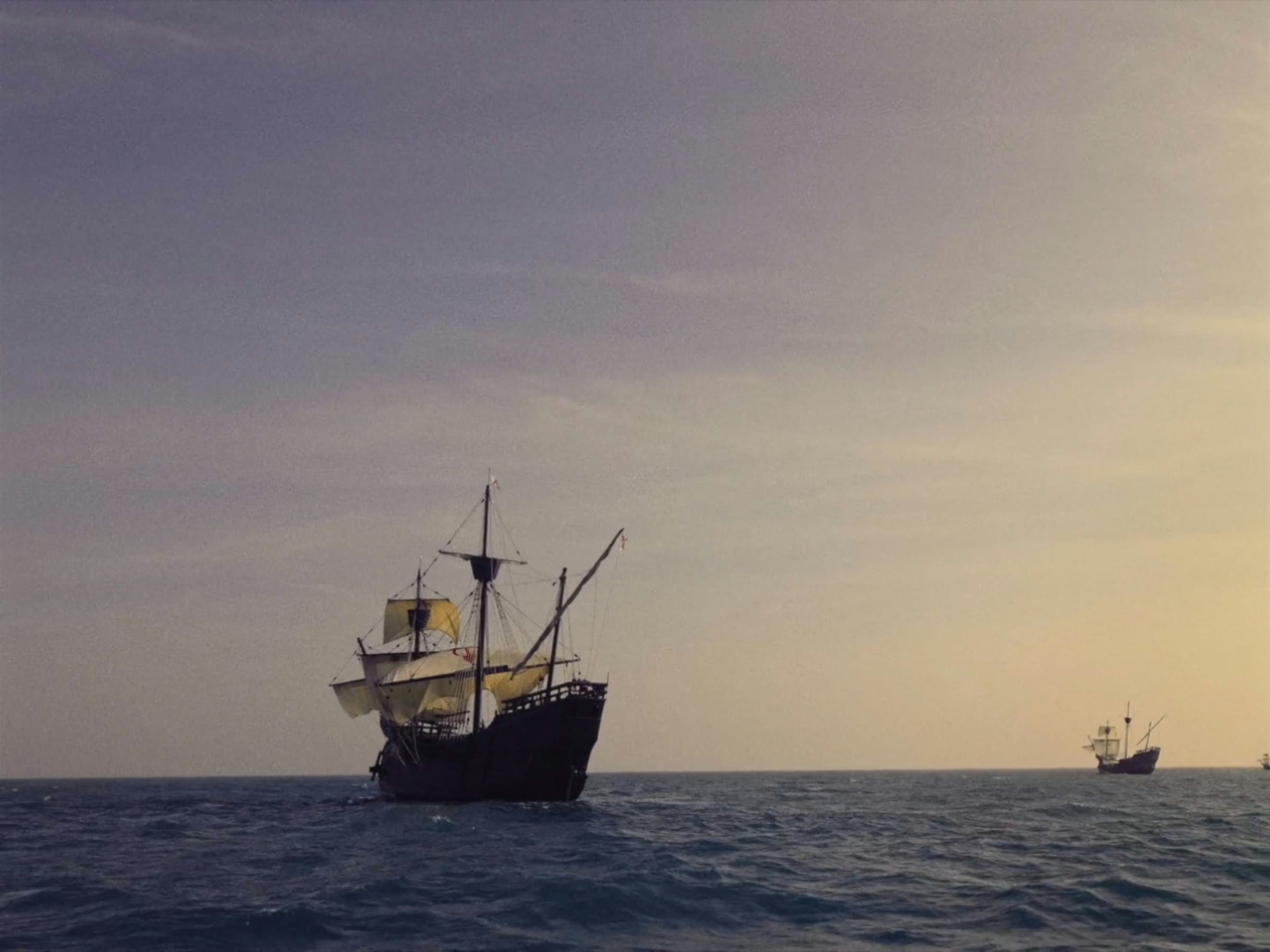
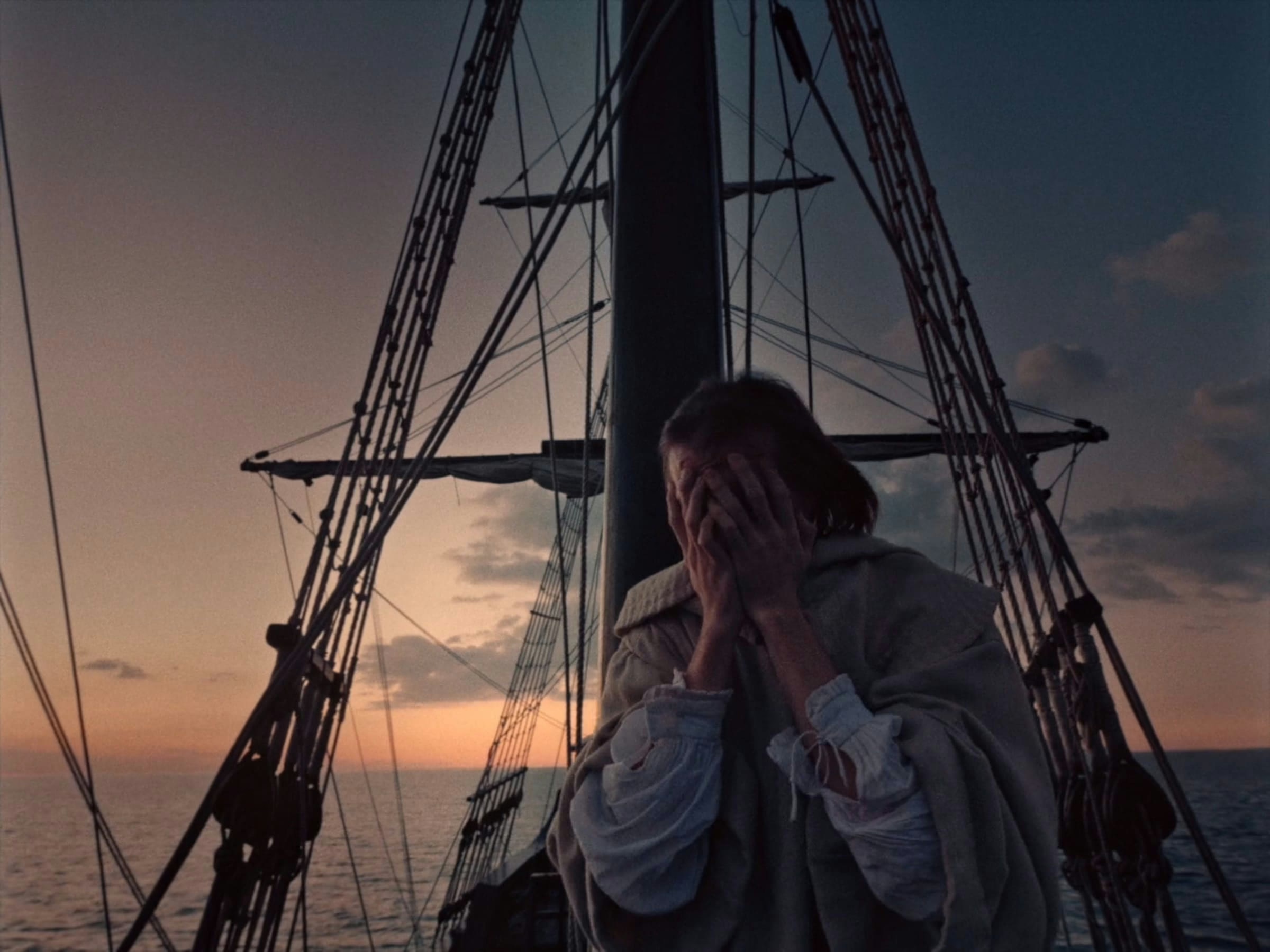
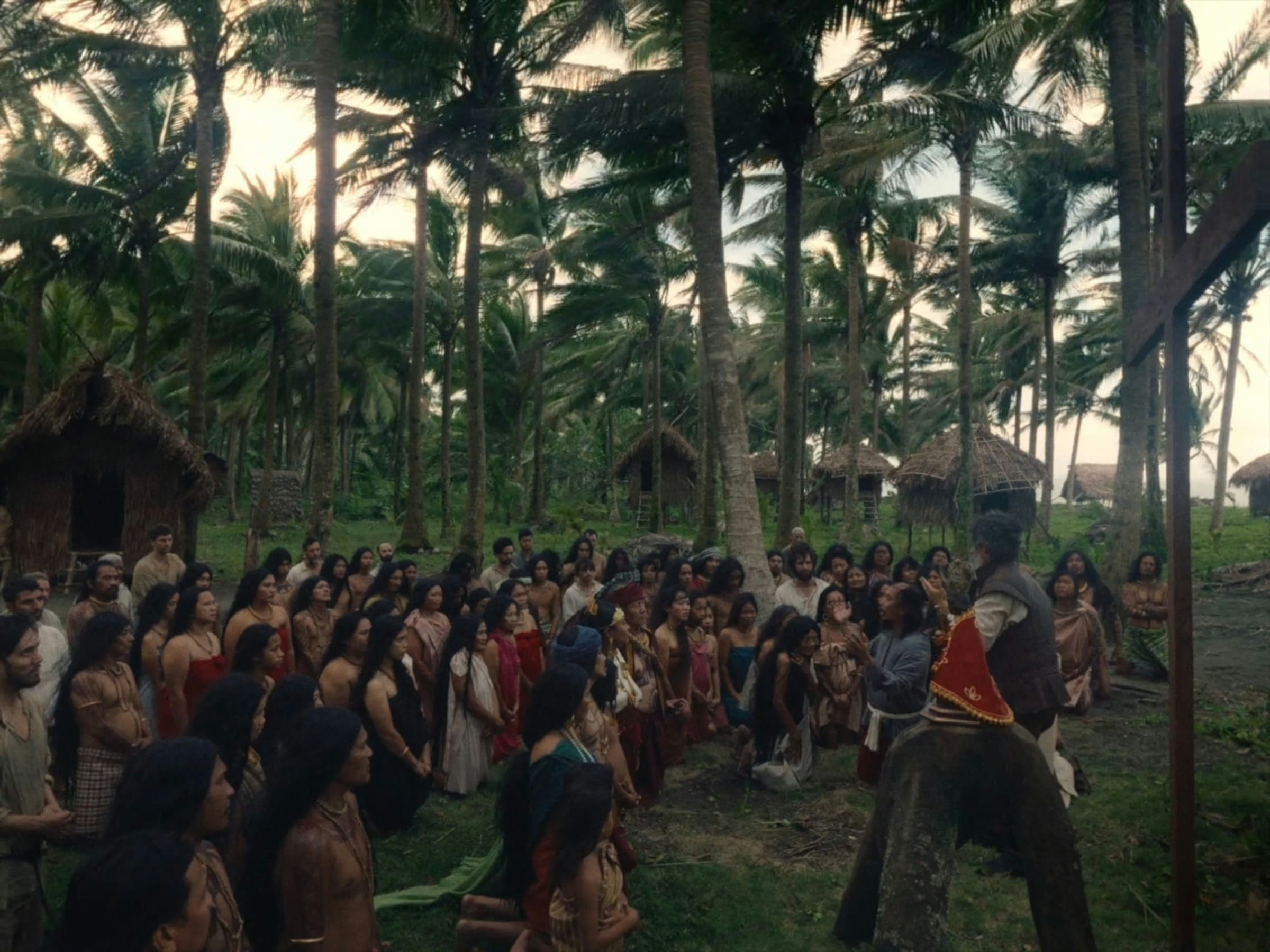
Diaz’s use of natural light and shifting weather patterns similarly places Magellan at the mercy of the elements, alternating between radiant splendour and merciless exposure. The sun often sits low in the sky, softly illuminating architectural wonders such as Lisbon’s Belém Tower or the Victoria itself, though it just as easily casts a harsh, unforgiving light upon starving sailors and dead bodies. Conversely, Magellan’s arrival on Cebu brings ominous winds that stir the island’s palm trees, and Diaz precisely entwines his fated trajectory with the gradual onset of rain and thunder.
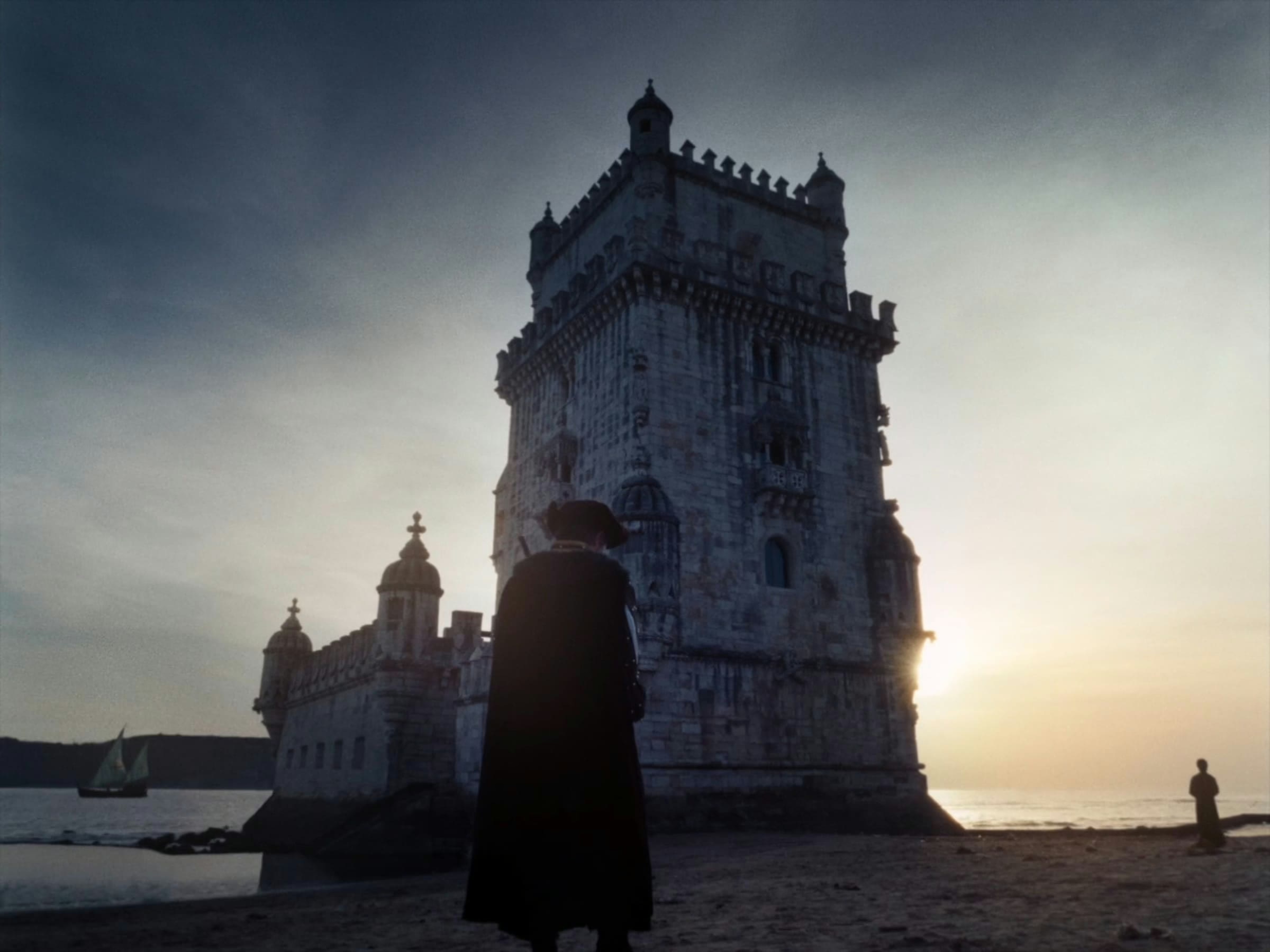
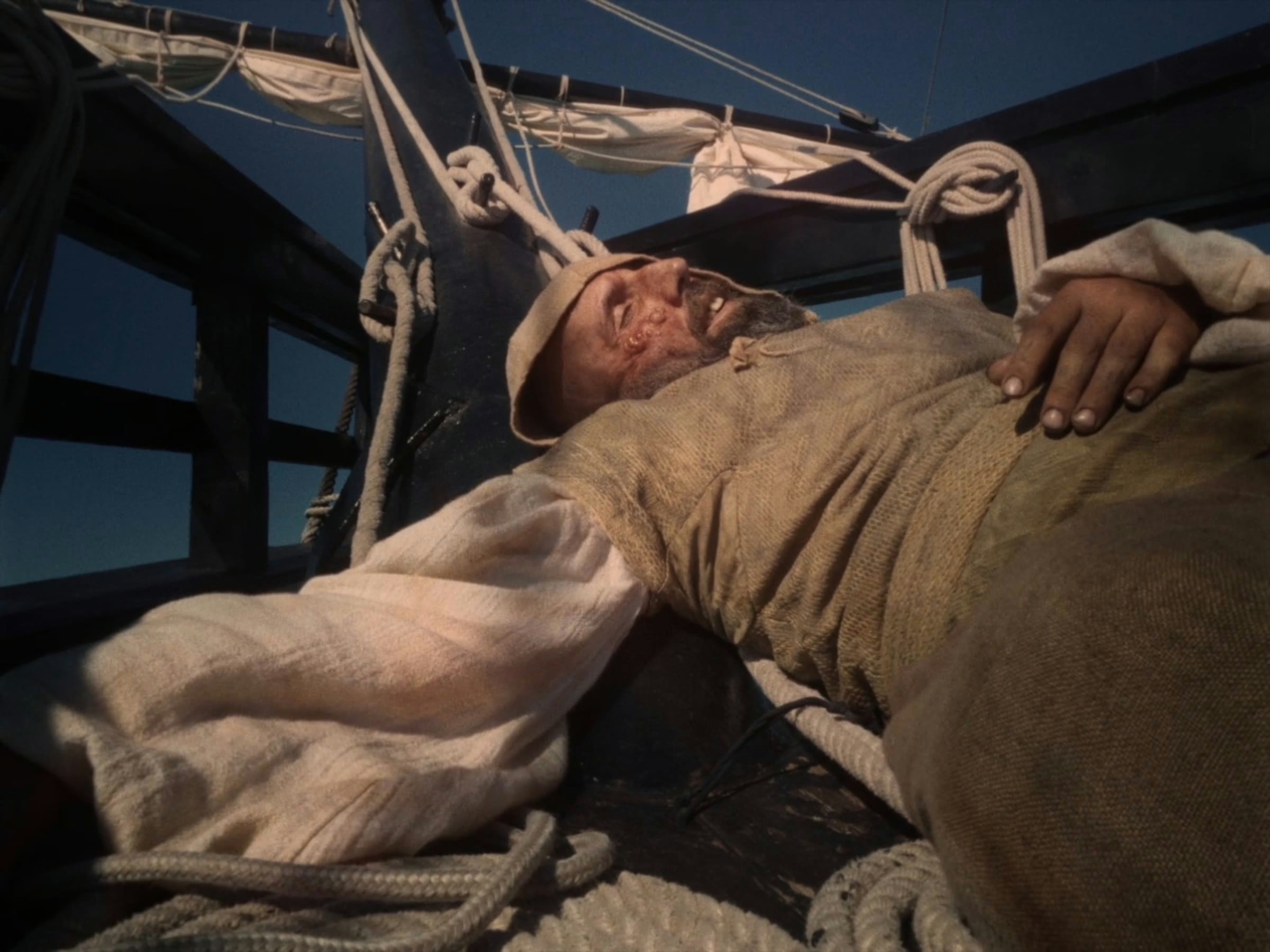
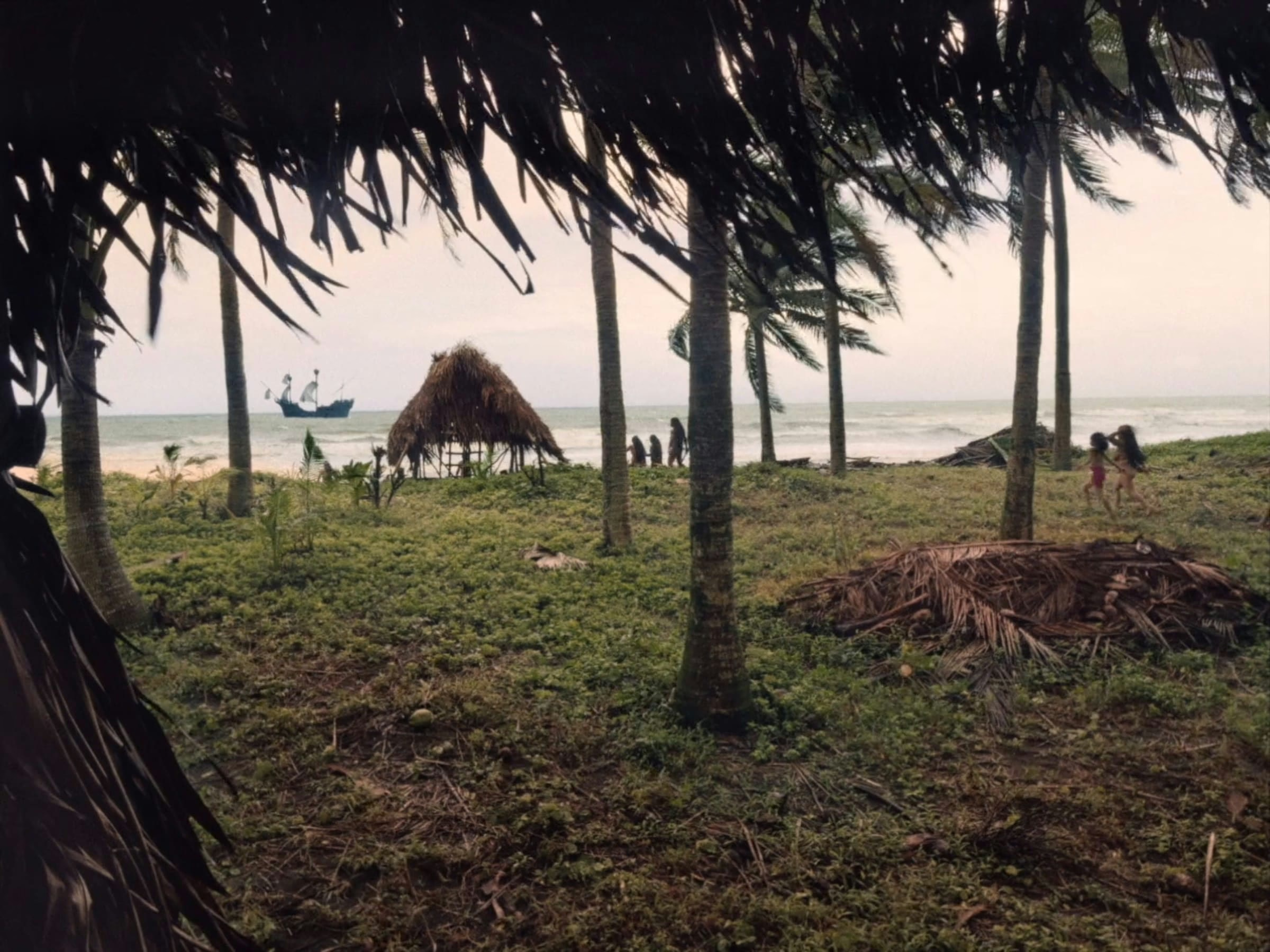
This expedition is thoroughly subsumed by the primal indifference of the natural world, and through its location shooting in remote, tropical environments, further echoes Werner Herzog’s awed terror at its sublime power. Comparisons to Aguirre, the Wrath of God are apt, particularly in their shared portrayal of infamous colonisers undone by self-consuming arrogance, alongside their brutal depictions of conquest. As a cinematic undertaking though, Diaz’s procedural patience tempers Herzog’s delirium, rendering such atrocities as a slow, accumulative erosion.
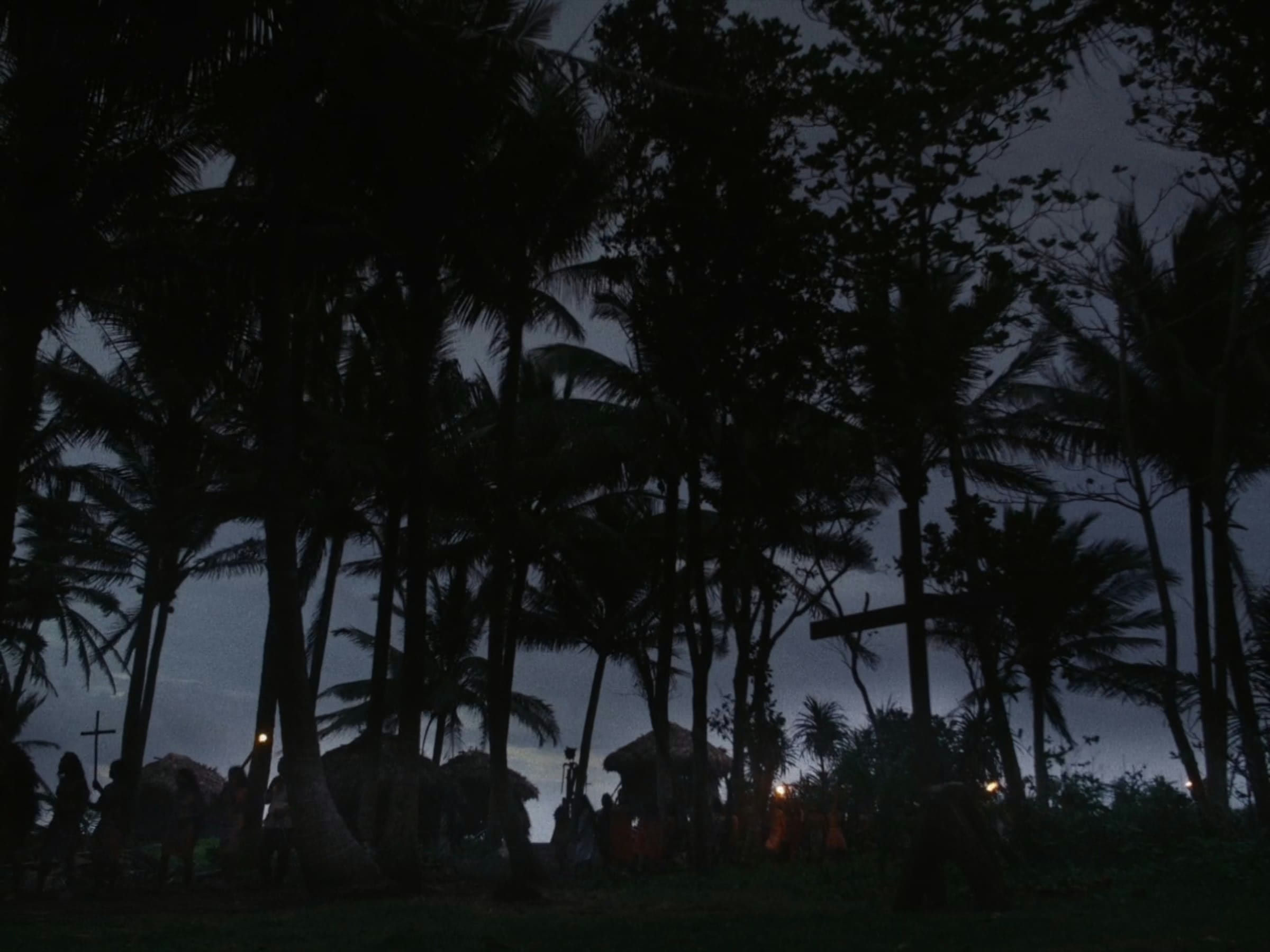
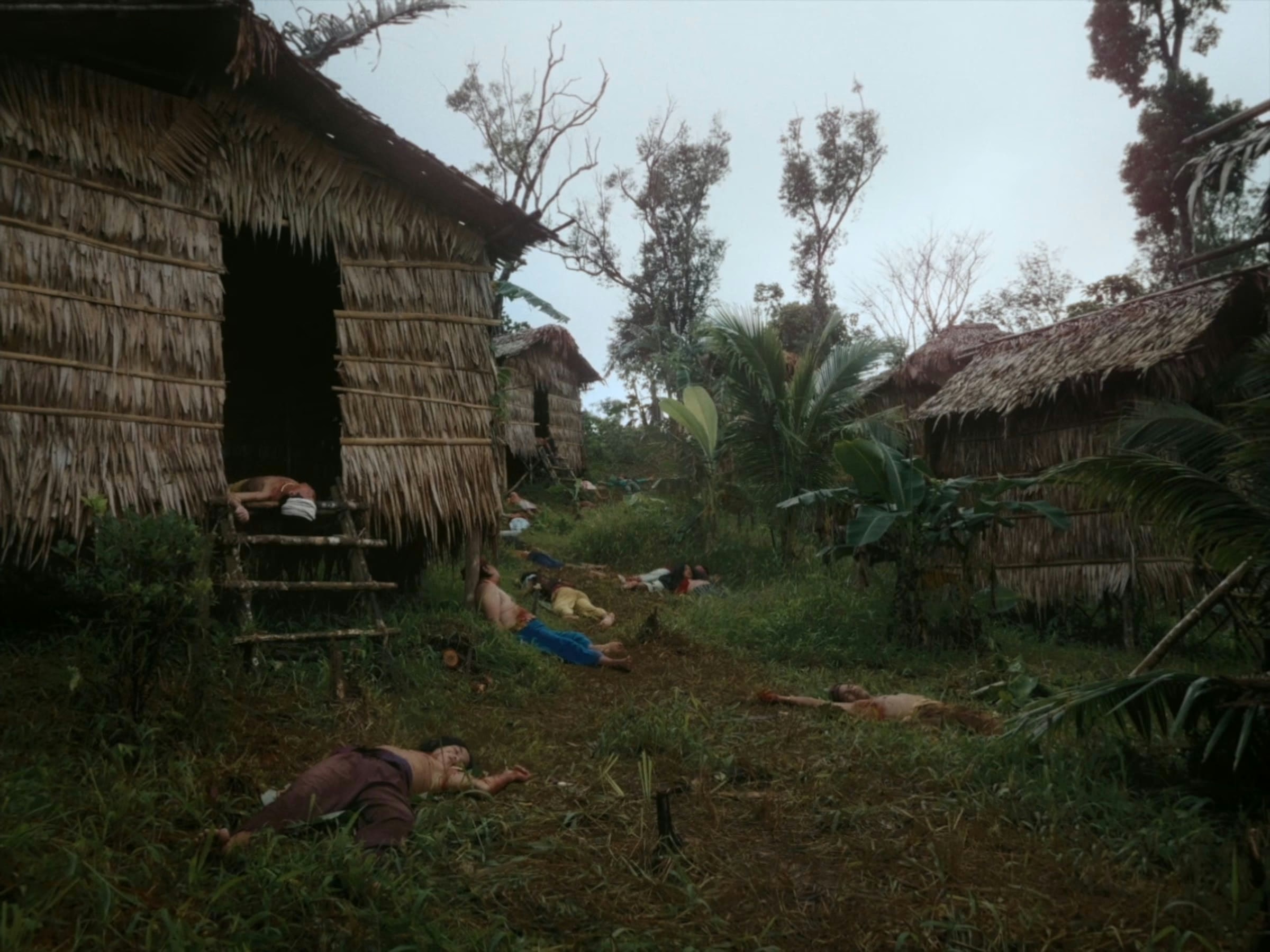
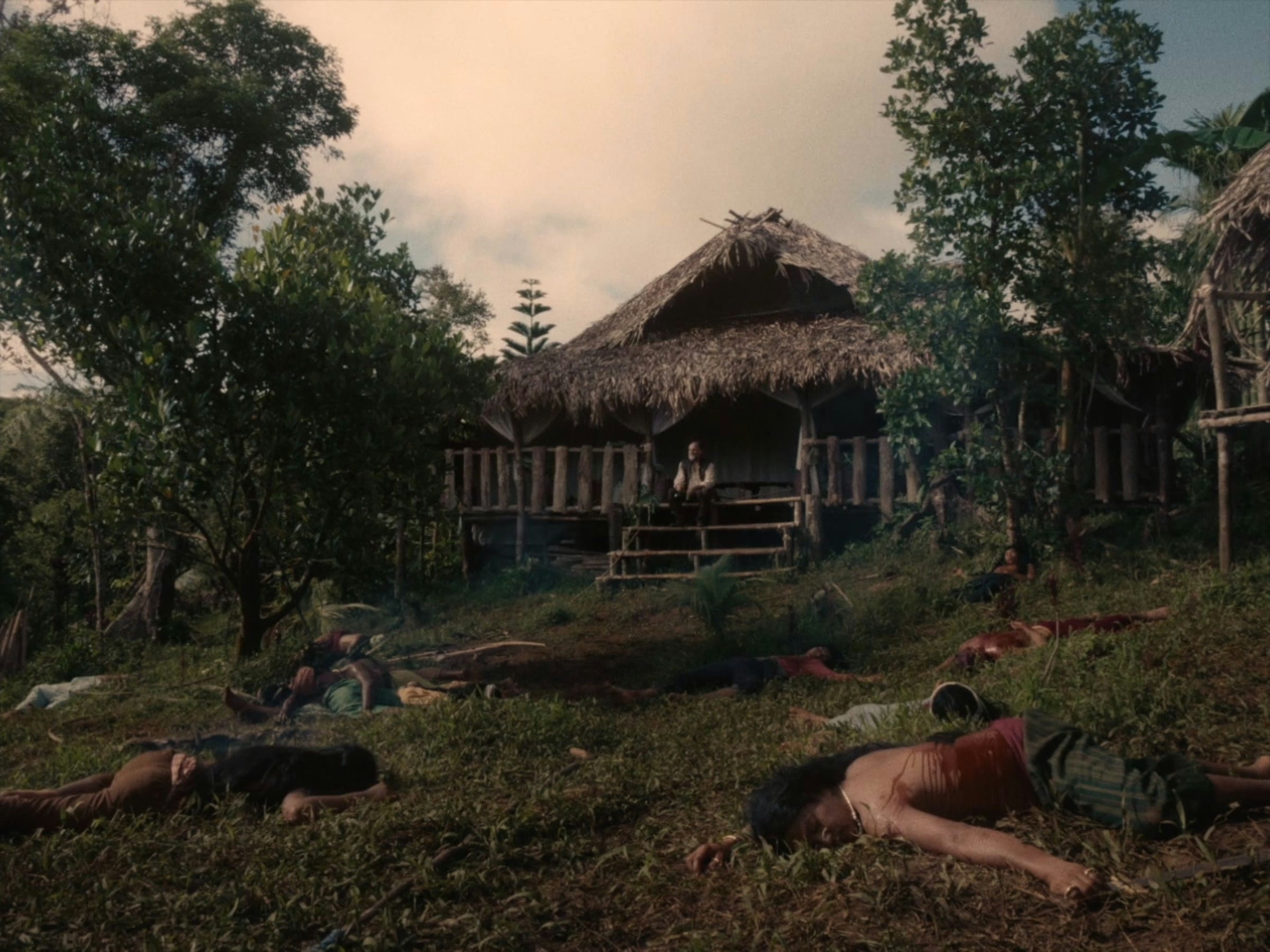
Especially through the villages, forests, and shorelines of Malacca, there is a bleak geometry to Diaz’s arrangement of dead bodies across the frame, treated almost like ornamental décor by the invading forces. By avoiding explicit depictions of violence and representing Magellan’s vicious assault purely through its bloody aftermath, Diaz completely eschews sensationalism, and instead discomfortingly sits with the lingering consequences. More than a mere quest for territorial expansion, his imperial venture stands an affront to nature itself, imposing a barbaric order upon cultures that otherwise live in harmony with the land.
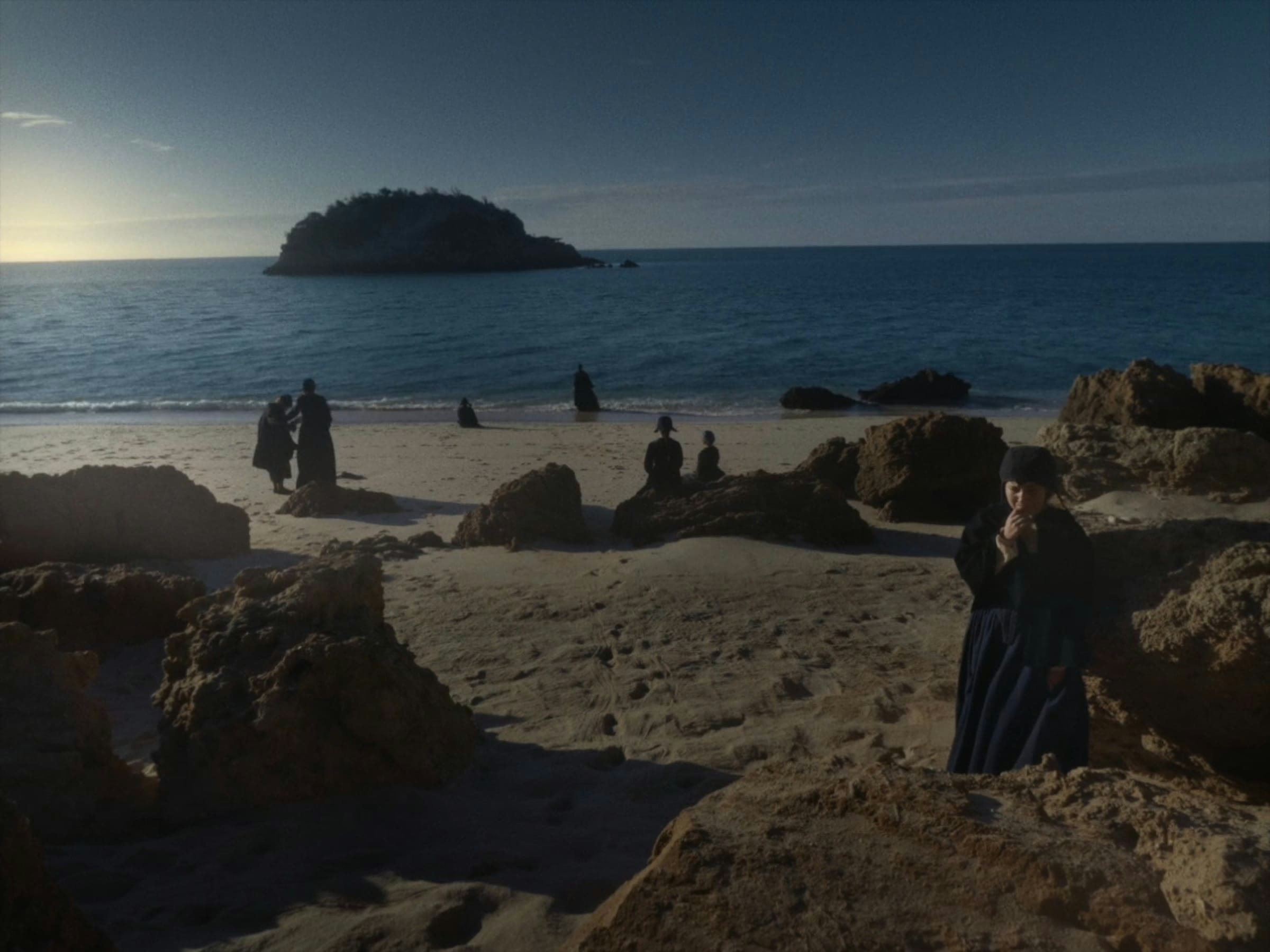
As a result, so too is Gael Garcia Bernal forced to inhabit the same residual disquiet in his portrayal of Magellan. From a distance, he occupies Diaz’s frame as a self-important agent of empire straining to assert his authority, though we begin to sense doubt and fatigue behind his pale eyes as the expedition wears on. Ghostly visions of his wife Beatriz veer the film towards the surreal, and although she carries news of suffering from home, Magellan still clings to her glowing, maternal presence. Indeed, the pain felt by wives waiting for their husbands’ return is inscribed in shots that stagger their dark figures across beaches, though this grief is nevertheless disregarded by men who consider their families a necessary sacrifice for colonial ambition.
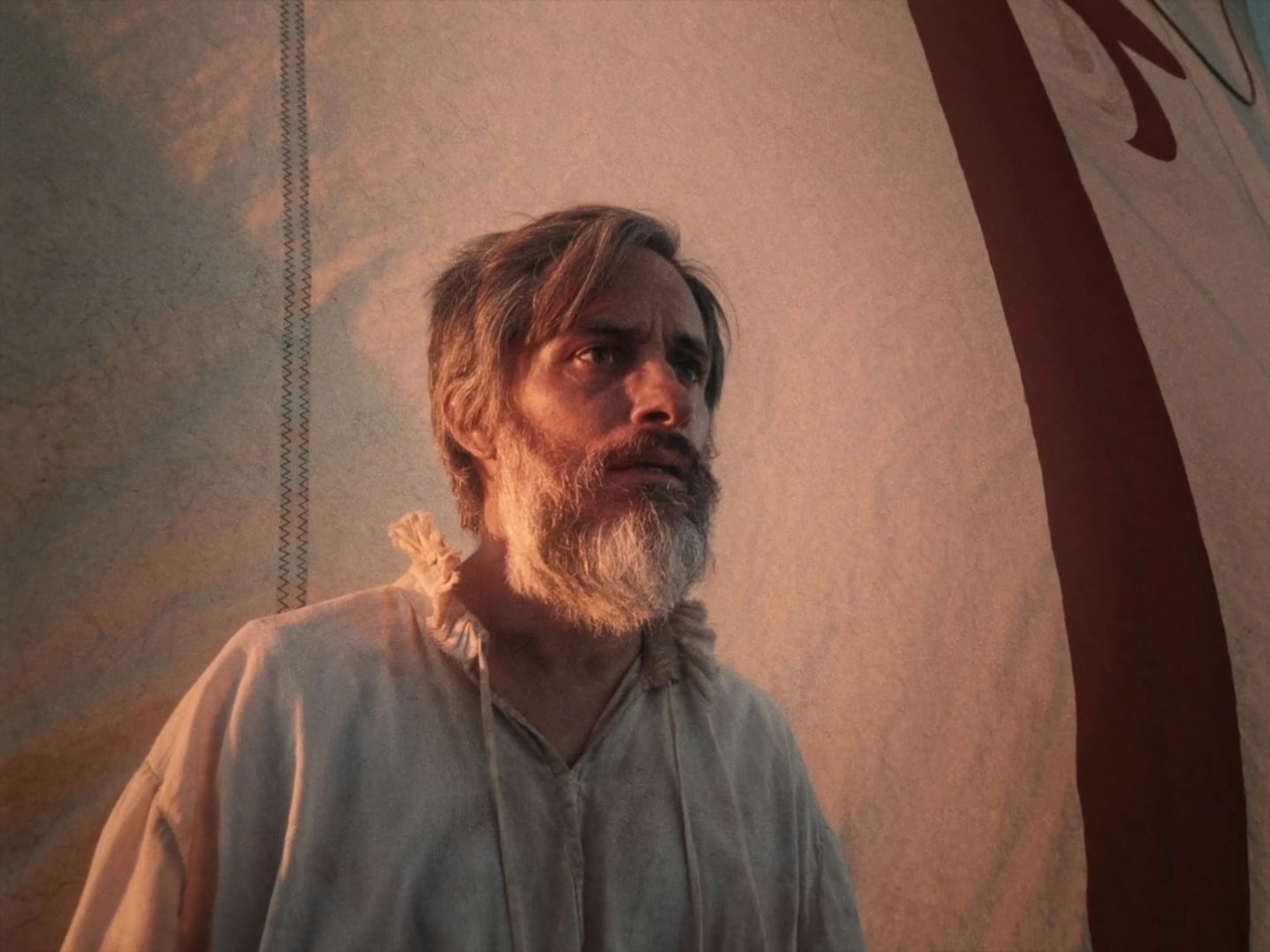

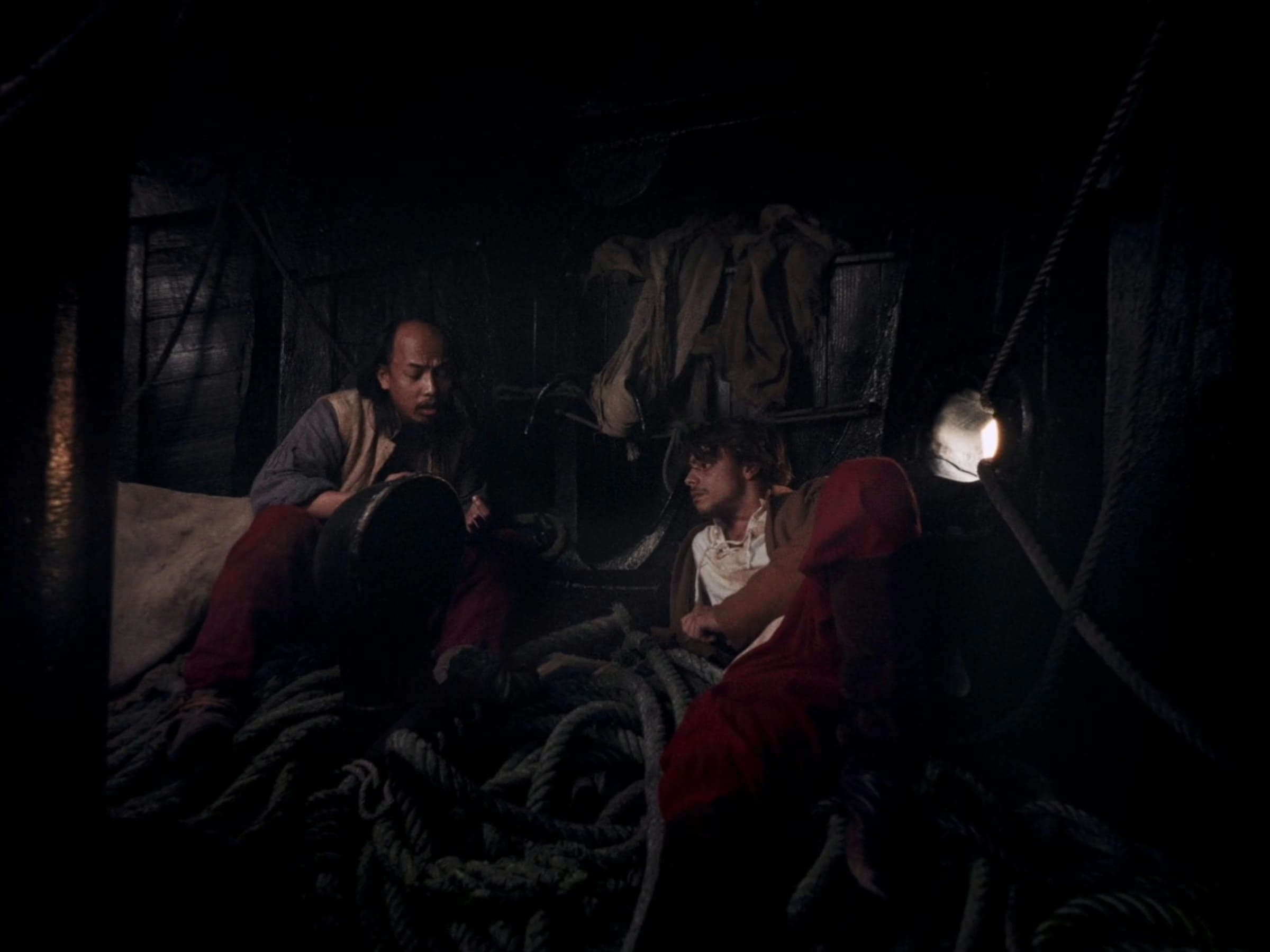
On the other side of this domestic horizon, Magellan’s most constant companion through his voyage is not any fellow explorer, but rather the Malay slave he purchases in Malacca. Enrique largely plays the role of witness to his master’s exploits, though he also possesses a tension between his indigenous faith and forced Westernisation, dressing in European clothes while crying out for the sun god Apolaki to save him. He has passed through the hands of many merchants from many nations, he recounts to Magellan’s illegitimate son Cristóvão, and eroded of stable identity. As the ship lands on Cebu however, his role in this expedition becomes far more active, casting him as a translator between Magellan and the Cebuano-speaking natives.
Here, this holy mission appears to finally realise its objective, as Magellan finds a village struck by illness and driven to panic-stricken prayer. Conveniently brushing over the life-saving medicine he administers, he offers them his ornate statuette of Christ, the Santo Niño, and credits the Christian God for their healing. In response to this wondrous miracle, the natives are quick to submit to baptism, though Magellan is foolish to replace their idols with crucifixes so abruptly. Vengeance must be taken, their leader Rajah Humabon decides, and thus a crafty rumour is spread to lure the colonisers into battle.

Neighbouring chieftain Datu Lapu-Lapu is a wak-wak, Humabon informs Magellan – a creature which drinks the blood of its victims and moves only in darkness. Even worse, he refuses to convert his village, and that is enough for the Portuguese explorer to set aside his suspicions and order an assault. It is no real surprise that hubris is his undoing, culminating in a crushing defeat when Humabon’s tribe unexpectedly ambushes him instead. In a severe tableau that scatters fallen men along the beach, Diaz recalls the foreboding lifelessness of his opening shot, observing an injured Magellan stagger through a field of bodies, lay next to Cristóvão, and finally meet his end.
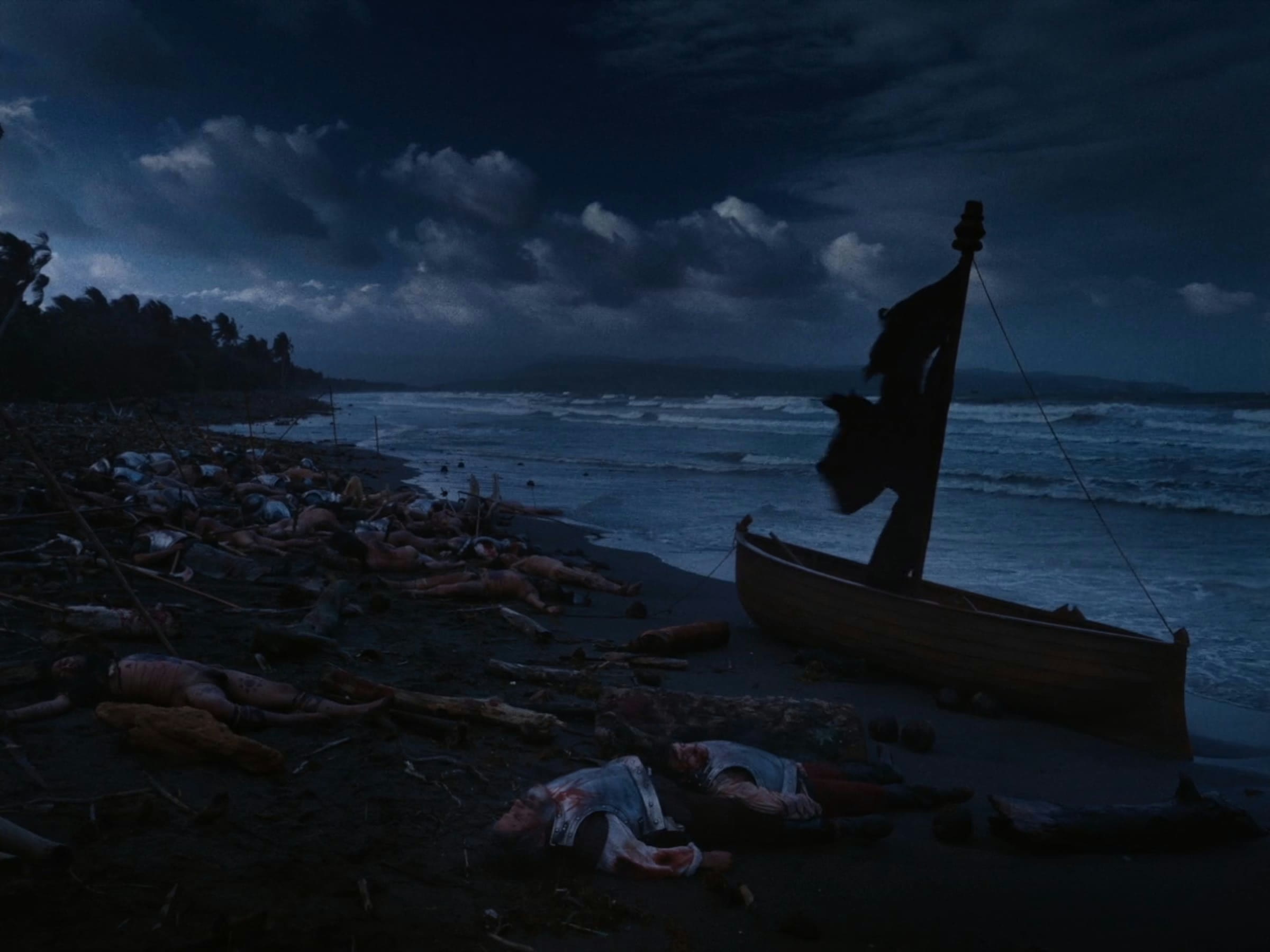
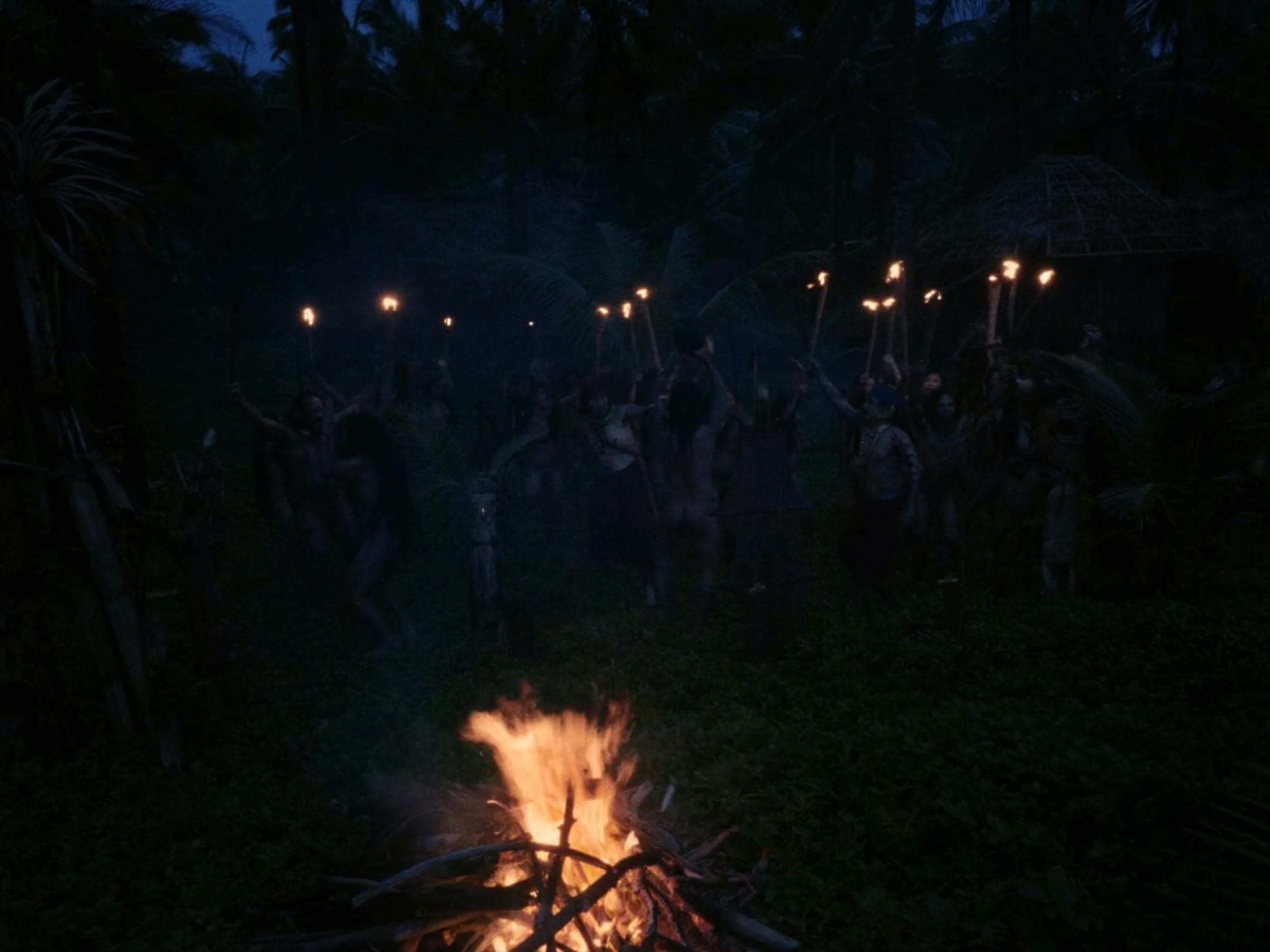
Of course, Beatriz’s silent, spectral presence continues to mourn the rupture of domestic life back home, though this is starkly displaced by the natives’ celebration with Magellan’s decapitated head and body. The winds that stirred Cebu ever since the ship’s arrival has calmed into a light breeze, and in the film’s final minutes, the surviving Enrique assumes a far more assertive role.
“I was an accomplice to the violence that happened,” the former slave’s voiceover ruminates, reasoning that he betrayed Magellan for his freedom. Emancipation from colonial rule is not clean or redemptive here, and certainly not purchased through accommodation to Western power. Instead, Magellan is crushed by the very terrain he once sought to dominate – equally relentless, yet far more patient in its reckoning. Still, even in this apparent closure, his imprint persists in the desolation strewn along his transoceanic voyage. Humanity’s urge to catalogue and conquer the world endures, and through Diaz’s austere, methodical dismantling of imperial myth, the sediment of these campaigns uncomfortably settles into an unfinished history.
Magellan is currently streaming on The Criterion Channel.
may i just say that seeing your posts related to 2025 movies with the addition of me watching almost 20 movies from the year has me convinced that it’s the best year for cinema in this decade so far
2023 is a strong challenger to 2025, but I would pick Resurrection and Magellan over Oppenheimer and Poor Things, so I think that secures it.
Where there as many MS tier films in 2023 ? At this point the 14th best of 2025 is gonna be HR/MS. 2025 was just an insane year, and a clear stop the “cinema is dying” argument (with a movie called freaking “Ressurection” leading the fray).
Although for 2023 I had Oppenheimer as MS (several scenes were I’d say the writing was plain bad) and poor things closer to HR (I have a lot of problems with it) but Asteroid City was a MS/MP for me and Monster by Hirokazu Koreeda was that year’s MP film.
My 11th best film of 2023 is HR/MS, while it’s the 13th best for 2025, so it’s close. Masterpieces aside, 2023 also has a couple of MS’s that could tip towards MS/MP. But like I said, I still believe Resurrection wins out anyway.