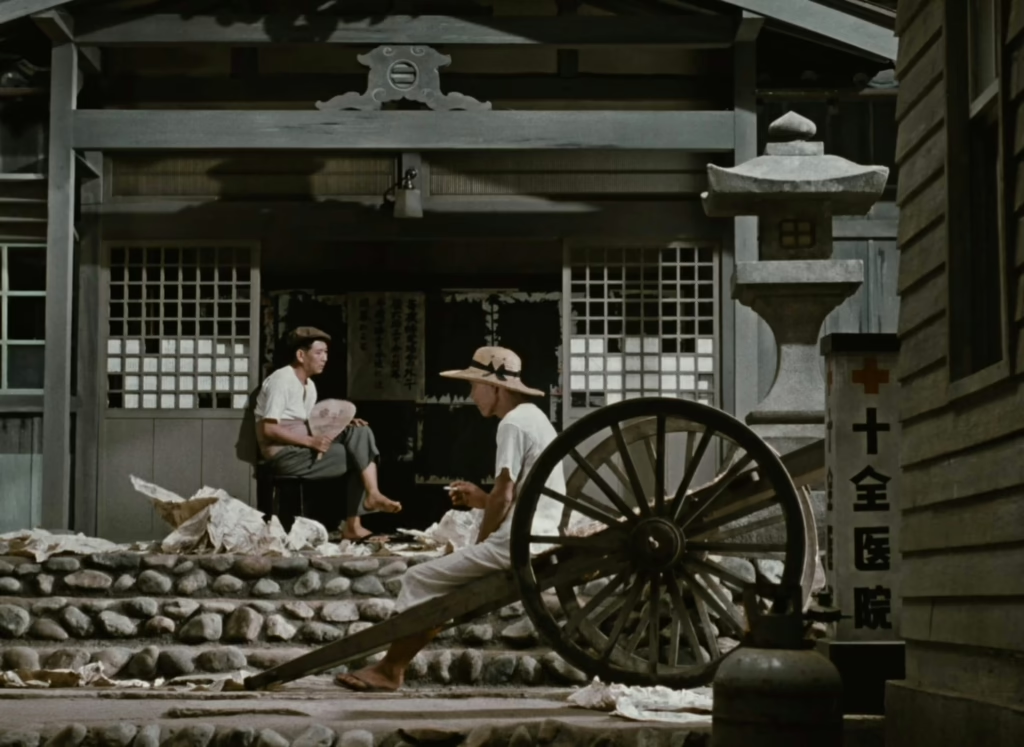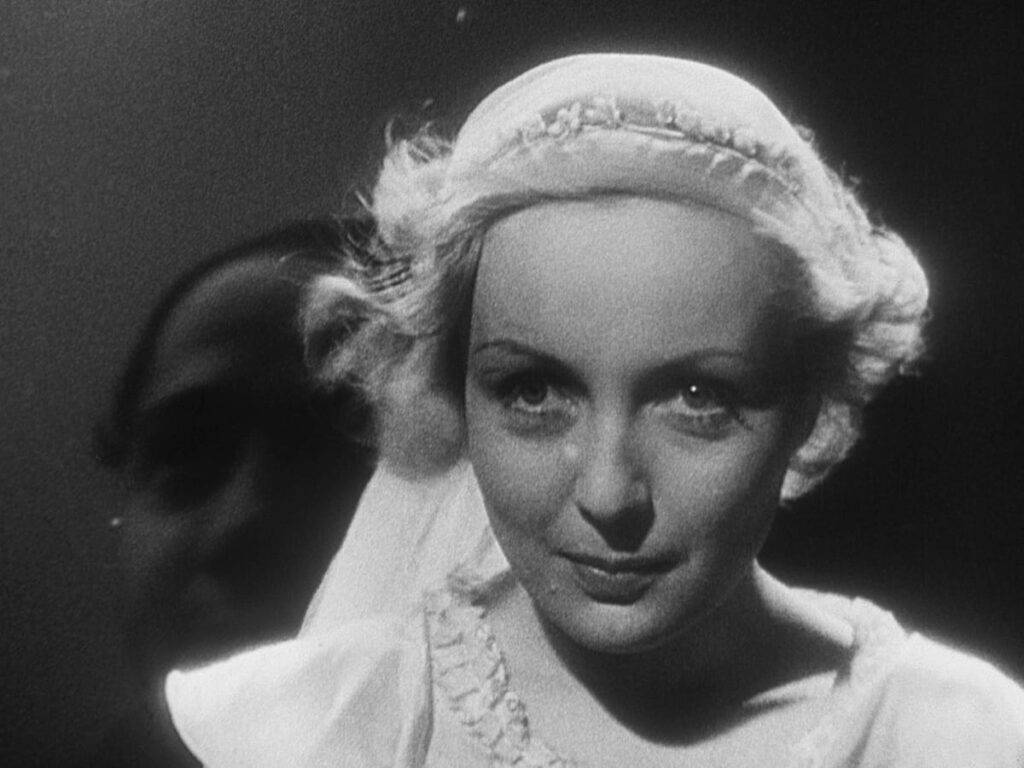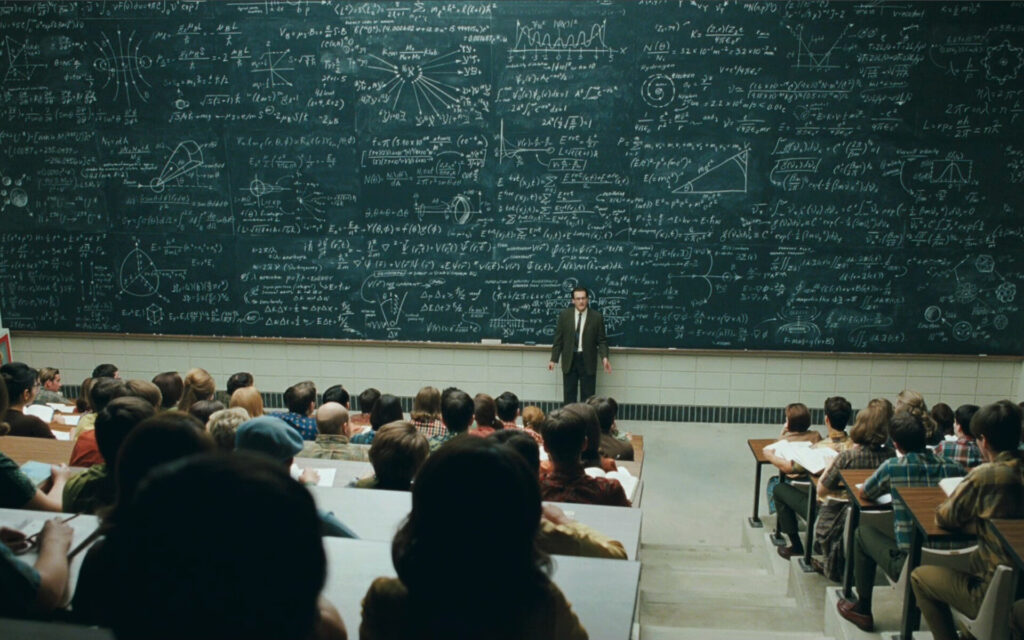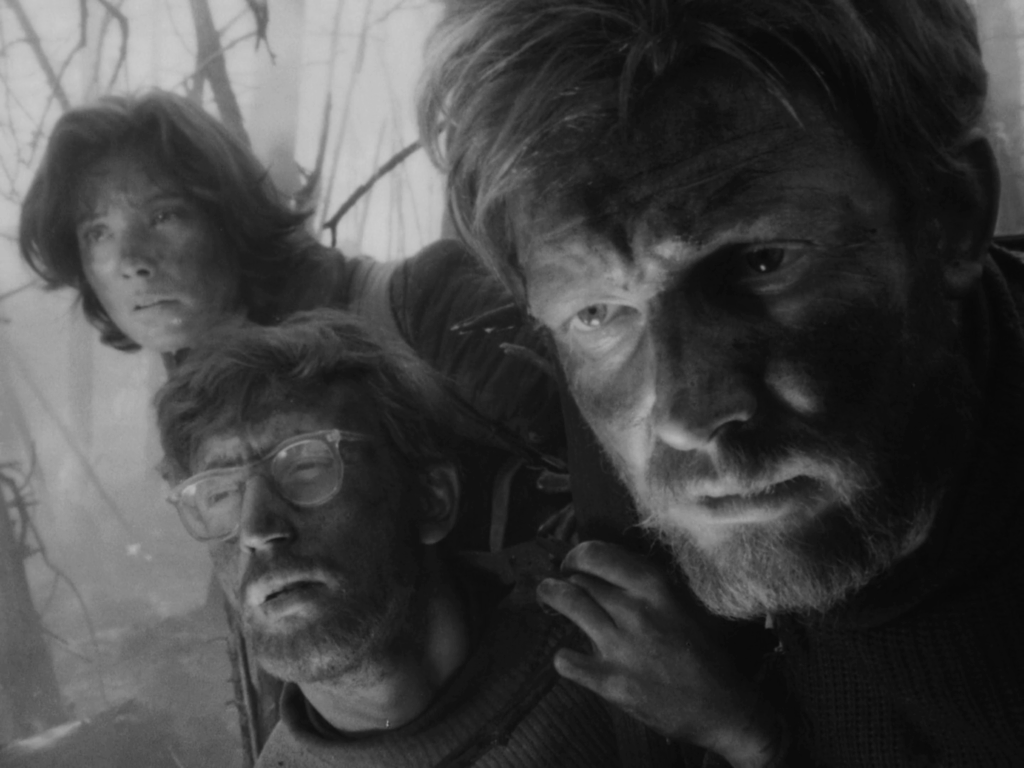
Sergei Eisenstein | 2 Parts (1hr 40min, 1hr 26min)
So rapturous was the reception that Ivan the Terrible, Part I received from Joseph Stalin, it is hard to blame Sergei Eisenstein for recklessly pushing the boundaries of state censorship in its sequel. Both films are mirrors of each other – the first revealing an idealistic ambition in the young Ivan IV which Part II withers into paranoid cruelty, and together painting a vivid portrait of Eisenstein’s own shifting relationship with the Soviet Union. This was no longer the filmmaker who sought to reflect revolutionary principles in his experimental montage theory, but rather a disillusioned artist simultaneously defying and reluctantly cooperating with Stalin’s regime. It is a little ironic that the Communist dictator should see so much of him himself in the first Tsar of Russia, yet Eisenstein nevertheless took the metaphor as a creative challenge, risking his life and liberty to compose a vision of oppressive tyranny that stands true across centuries.
The casting of Nikolay Cherkasov as the imposing central figure here is particularly fascinating given his previous role in Alexander Nevsky, where he portrayed the titular 13th-century Prince of Novgorod. As a young, newly-coronated Ivan proudly declares Moscow a “Third Rome,” his eyes glisten with tears and hope, sentimentalising a vision of Russia’s future which doesn’t sound so different from Nevsky’s own utopian promise after vanquishing the Teutonic Knights.
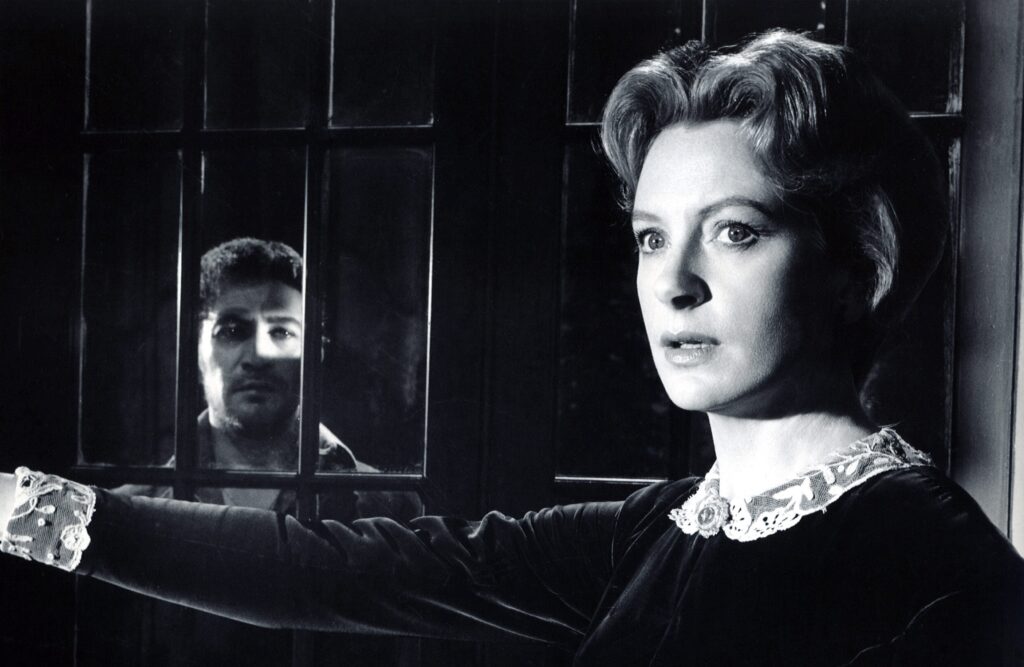
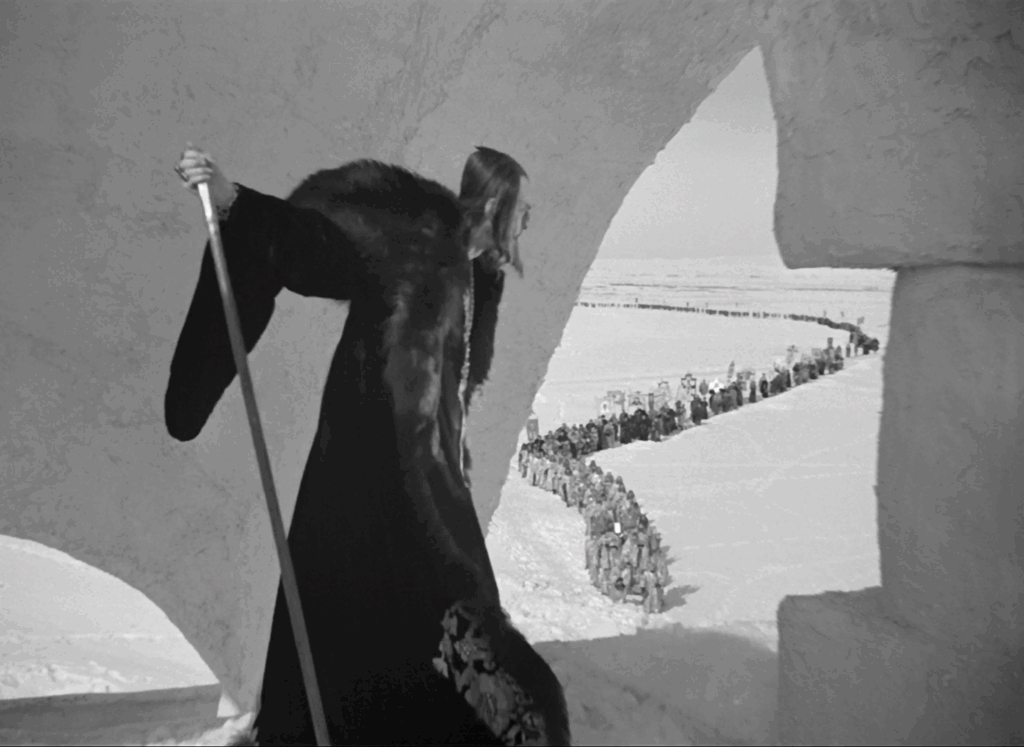
Meticulous attention to detail in Eisenstein’s staging – this could very well be one of those images painted on the walls surrounding the young Tsar at his coronation, immortalised in history.
This is the ruler that Stalin admires, yet who is never viewed in such a pure light again after this moment, soon developing a distinctively hunched posture and angular facial features that become living extensions of Eisenstein’s majestic production design. Ivan’s bushy eyebrows, pointed beard, and crooked nose are virtually made for close-ups, and when his distinctive profile is cast in giant shadows upon the walls, he becomes a dark, physical embodiment of 16th century Russia’s formidable spirit.
An extraordinary performance from Nikolay Cherkasov, physically transforming into a hunched, crooked tyrant.Meticulous framing in Eisenstein’s deep focus, imposing Ivan’s visage upon the Russian people.An incredibly recognisable profile, cast against walls in darkened shadows.
Only the Kremlin’s lavish interiors can match his awe-inspiring majesty with religious iconography painted across arches and columns, reliefs carved from its stonework, and collectively resting the Tsar’s legacy upon centuries of culture and history. Eisenstein’s rich depth of field especially flourishes here, sinking the masses to the bottom of frames that revel in the overhead architecture, and symmetrically positioning Ivan at their centre. These vast, intricate halls of power may very well mark Eisenstein’s greatest achievement in mise-en-scene, borrowing heavily from F.W. Murnau’s expressionistic imagery to cloak characters in chiaroscuro lighting, and underscoring their constant psychological tension between good and evil.
Remarkable achievements in production design, sinking his actors to the bottom of the frame to bask in the murals painted all across these halls and arches.Wonderful symmetry through framing, blocking, and production design, projecting power and control.In the absence of formally innovative editing, Eisenstein turns his focus to composing magnificent shots like these through lighting and staging, marking Ivan the Terrible as his most beautiful work to date.
It is evident here that Eisenstein is far more than just an editor, though he nevertheless showcases those talents as well in the explosive siege of Kazan, where Ivan and his sprawling armies claim a stunning victory against the Khanate. As soldiers wait patiently upon hillsides with their cannons and banners, sappers furiously dig tunnels beneath the walled city to plant gunpowder, and Eisenstein clearly relishes the practical effects granted by his enormous budget when the time comes to blast brick, mortar, and smoke into the air. Rather than wielding his editing for intellectual purposes, here he dedicates it purely to the vast scale of his action, building Ivan’s grand authority upon the conquest of those who dare oppose his rule.
Eisenstein uses the natural terrain to block huge crowds of extras across hills, stretching their formations deep into the background.Eisenstein proves he still has his knack for action editing, lingering on the burning fuse before unleashing a series of spectacular explosions around the city walls.
For the most part though, the greatest political threats to the Tsar are located within his own ranks, as conspirators plot to install his simple-minded cousin Vladimir as Russia’s true sovereign. The political intrigue carries a Shakespearean gravity to it, modelling Ivan after the likes of Macbeth or Richard III, and watching his games of manipulation unfold with treacherous delight. When he falls deathly ill and names his son Dmitri as heir to the throne, his aunt Yefrosinya is quick to whisper into the embittered Prince Kurbsky’s ear, perniciously encouraging him to announce her son Vladimir as the rightful successor instead. Kurbsky is smart to sniff out Ivan’s test of his loyalty here, as almost immediately after carrying out his wishes, the recovered Tsar emerges from his chambers and rewards his allegiance.
Shakespearean power struggles, treachery, and intrigue – perhaps Eisenstein’s strongest pure narrative to date.
Yefrosinya, on the other hand, is not so restrained. Though she prefers to pull strings from the shadows, she isn’t above getting her hands dirty, going so far as to weaken Ivan’s rule by poisoning his wife Anastasia. Later when he makes an enemy of Metropolitan Philip by overruling his religious authority, Yefrosinya again leaps on the opportunity to stir dissent among his followers, only this time rallying them behind an assassination plot that targets Ivan himself.
The murder is to take place after a banquet and theatrical performance, where Ivan the Terrible suddenly departs from the black-and-white photography which has dominated Eisenstein’s career thus far and catches aflame with hellish red hues. This vibrant burst of colour is a shock to the senses, accompanying Ivan’s final and perhaps most despicable act. Having plied Vladimir with alcohol and extracted the conspiracy from his lips, he mockingly dresses him in his own royal regalia, and lets him lead his entourage to the cathedral in prayer. Black, hooded figures trail behind Vladimir like spectres of death, and from the shadows the killer pounces, sinking his dagger into the flesh of the disguised prince.
An avant-garde eruption of blazing red hues as Ivan prepares to commit his most despicable act yet – a shock to our senses.Shadows, candles, and hooded figures as Ivan’s plan is seen through to fruition, making for an outstanding visual and dramatic climax.
Yefrosinya’s celebration is critically premature. “The Tsar is dead!” she joyfully proclaims, before recognising the tragic turn of events which has befallen her son. Ivan cares so little for these traitors, he does not even bother to have them executed. After all, they are the ones who killed his worst enemy, and who have effectively destroyed themselves in the process.
With Ivan’s greatest threats in Moscow eradicated, the time has thus come for him to turn his attention to those on the outside – yet it is at this tantalising climax that we are left wondering what a third part to Eisenstein’s Ivan the Terrible trilogy might have looked like. Stalin’s fury at Part II’s tyrannical depiction of the Tsar not only kept the sequel from being released until 1958, but immediately ended production on Part III, destroying all but a single fragment of its footage. Even without completion though, the legacy of this truncated series is nevertheless secured in Eisenstein’s daring ambition. Through bold, inflammatory strokes, waves of Russian despotism are painted out in striking detail, reaching across centuries to impose familiar cruelties on this nation’s long-afflicted people.
Ivan the Terrible is currently streaming on The Criterion Channel.
When spoiled heir Dickie Greenleaf catches Tom Ripley trying on his expensive clothing, the assumption that his new friend might be gay is only half-correct. Queer readings of Patricia Highsmith’s novel The Talented Mr. Ripley are nothing new, and Steven Zaillian is not ignorant to them in his television adaptation, though the icy contempt and admiration that are wrapped up in Tom’s repression also paint a far more complex image of class envy. Tom does not wish to be with Dickie, but to become him, and the depths to which he is willing to sink in this mission reveal a moral depravity only matched by his patience, diligence, and cunning.
Of all the qualities that vex Tom about Dickie, it is his complete lack of personal merit that is most maddening, deeming him unworthy of the lavish lifestyle funded by his wealthy father. While Dickie admires the cubism of Picasso and even proudly owns his artworks, his attempts at recreating that distinctive, abstract style fall short, just as his girlfriend Marge displays little talent in her writing and his friend Freddie is no great playwright. Money might buy the bourgeoisie false praise, yet no amount of riches can endow upon them the ingenious intuition that history’s greatest artists naturally possess, and which Tom nefariously manipulates to earn what he views as his unassailable right.
Tom arrives in Dickie and Marge’s life as a looming shadow, ominously cast over their bodies relaxing on the beach.Few television series in history look like this – Zaillian draws on the expertise of cinematographer Robert Elswit to capture these magnificent visuals, making for some of their best work.
It takes the sharp, opportunistic mind of a con artist to conduct a scam as multifaceted as that which Tom executes here, murdering and stealing Dickie’s identity while carefully navigating the ensuing police investigations. Though Tom adopts his victim’s appreciation of Picasso for this ploy, Zaillian also introduces another historic painter as an even greater subject of fascination in Ripley. The spiritual affinity that Tom feels for Baroque artist Caravaggio is deepened in the parallels between their stories, both being men who commit murder, go on the run, and express a transgressive attraction towards men. Though living three centuries apart, these highly intelligent outcasts are mirrors of each other – one being an artist with a criminal background, and the other a criminal with a fondness for art.
A graphic match cut deftly bridges historical time periods, bringing Tom and Caravaggio’s formal connection to a head in the final episode.Gothic expressionism in the Caravaggio flashback, revealing the murder which has tainted his name.Caravaggio’s artworks are strewn throughout Ripley, most notably drawing Tom to the San Luigi dei Francesi cathedral where his three St. Matthew paintings are on display.
At the root of this comparison though, perhaps Tom’s appreciation may simply stem from the aesthetic and formal qualities of Caravaggio’s paintings, portraying biblical struggles with an intense, dramatic realism that was considered groundbreaking in Italy’s late Renaissance. When Tom gazes upon three companion pieces depicting St. Matthew at the grandiose San Luigi dei Francesi cathedral in Rome, they seem to come alive with the sounds of distant, tortured screaming, blurring the thin boundary between art and observer. With this in mind, Zaillian’s primary inspiration behind Ripley also comes into focus, skilfully weaving light and shadow through his introspective staging of an epic moral battle as Caravaggio did four hundred years ago.
Though the rise of cinematic television in recent years has seen film directors take their eye for photography to the small screen, one can hardly call Zaillian an auteur. This is not to take away from his impressive writing credits such as Schindler’s List, Gangs of New York, and The Irishman, but the spectacular command of visual storytelling in Ripley is rare to behold from a filmmaker whose directing has often been the least notable parts of his career.
An Antonioni approach to photographing Italian architecture, using wide angle lenses to frame these shots that raise structures far above the tiny people below.Immaculate framing and lighting in the canals of Venice, trapping Ripley in a labyrinth built upon his greatest fear – water.Tom’s wandering through labyrinthine Italian cities offers both beautiful mise-en-scène and excellent visual storytelling, applying a photographer’s eye to the detail of each shot.
Robert Elswit’s high-contrast, monochrome cinematography of course plays in an integral role here, rivalling his work on Paul Thomas Anderson’s films with superb chiaroscuro lighting and a strong depth of field that basks in Italy’s historic architecture. Elswit and Zaillian’s mise-en-scène earn a comparison to Michelangelo Antonioni’s tremendous use of manmade structures here, aptly using the negative space of vast walls to impede on his characters, while detailing the intricate, uneven textures of their surroundings with the keen eye of a photographer. The attention paid to this weathered stonework tells the story of a nation whose past is built upon grand ambition, yet which has eroded over many centuries, tarnishing surfaces with discoloured stains and exposing the rough bedrock beneath worn exteriors.
Lichen-covered brick walls fill in the negative space of these shots with visual tactility, giving each location its own distinct character.Visual majesty in the cathedrals that Ripley ventures through, captured with astounding symmetry in this high angle.History is baked into the discoloured stains and weathered stonework of Italian architecture, dominating these compositions that push Tom to the edge of the frame.
Conversely, the interiors of the villas, palazzi, and hotels where Tom often takes up residence couldn’t be more luxurious, revelling in the fine Baroque furniture and decorative wallpaper that only an aristocrat could afford. The camera takes a largely detached perspective in its static wide shots, though when it does move it is usually in short panning and tracking motions, following him through gorgeous sets tainted by his corrosive moral darkness.
Baroque interiors designed with luxurious attention to detail, reflecting the darkness that Tom carries with him to each hotel and villa.Divine judgement in the unblinking gaze of these historic sculptures, following Tom all through Italy.
In effect, Ripley crafts a labyrinth out of its environments, beginning in the grimy, cramped apartment buildings of New York City and winding through the bright streets and alleys of Italy. Zaillian’s recurring shots of stairways often evoke Vertigo in their dizzying high and low angles, with even the flash-forward that opens the series hinting at the gloomy descent to come as Tom drags Freddie’s body down a flight of steps. Elsewhere, narrow frames confine characters to tiny rectangles, while those religious sculptures clinging to buildings around Italy direct their unblinking gazes towards Tom, casting divine judgement upon his actions.
Tom emerges from the cramped apartments in New York City – a cesspool of grime and darkness before he heads to the bright, sunny coast of Italy.Zaillian’s stairway motif arrives as a flash-forward in the very first shot of the series, which returns in its full context four episodes later.Dizzying high and low angles of stairway litter this series, forming spirals out of rectangles, hexagons, and arches.Distant doorways and windows place Dickie and Marge under an intense, microscopic lens from Tom’s voyeuristic perspective.Precision in Zaillian’s framing, trapping Tom in confining boxes.
As oppressive as these tight spaces may be, they are where Tom is most in control, though Zaillian is also sure to emphasise that the opposite is equally true. The only place to hide when surrounded by vast, open expanses of ocean is within the darkness that lies below, and Tom’s phobia is made palpable in a visual motif that plunges the camera down into that suffocating abyss. This shot is present in nearly every episode of Ripley, haunting him like a persistent nightmare, though Zaillian broadens its formal symbolism too as Tom seeks to wield his greatest fear as a weapon against others.
The dominant aesthetic of static shots is broken up by this sinking camera motif, appearing in most episodes as a persistent nightmare of drowning.The dark, churning water beckons Tom as he sails between destinations, threatening to pull him into the abyss.
Most crucially, Tom’s murder of Dickie upon a small boat in the middle of the ocean marks a tipping point for the con artist, seeing him graduate to an even more malicious felony. Zaillian conducts this sequence with taut suspense, entirely dropping out dialogue from the moment Tom delivers the killing blow so that we may sit with his discomforting attempts to sink the body, steal Dickie’s coveted possessions, and burn the boat. From below the surface, the camera often positions us gazing up at the boat’s silhouetted underside with an unsettling calmness. Equally though, the sea is also a force of unpredictable chaos, threatening to drag Tom into its depths when his foot gets caught in the anchor rope and knocking him unconscious with the out-of-control dinghy.
Zaillian’s execution of Dickie’s murder is cold, calculated, and passionless, the entire sequence unfolding over 25 patient minutes.Daunting camera placement from deep within the ocean, calling upon Tom’s phobia at the peak of his brutality.
Even when Tom manages to make it out alive, his continued efforts to cover his tracks bear resemblance to Norman Bates cleaning up after his mother’s murder in Psycho, deriving suspense from his systematic procedures of self-preservation across 25 nerve-wracking minutes. Within a two-hour film, a scene this long might otherwise be the centrepiece of the entire story, yet in this series it is simply one of several extended sequences that unfolds with measured, focused resolve.
Unlike most commercial television, there are no dragged-out plot threads or over-reliance on dialogue to push the narrative forward either. As such, Zaillian recognises the unique qualities of this serial format in a manner that only a handful of filmmakers have truly capitalised on before – Ingmar Bergman’s Scenes from a Marriage comes to mind, or more recently Barry Jenkins’ The Underground Railroad. By structuring Patricia Highsmith’s story around roughly hour-long episodes, each scene unfolds with a patient attention to detail, unencumbered by the constraints of limited run times while maintaining a meticulous narrative economy.
Zaillian borrows this use of colour from Schindler’s List – a film he wrote – leaving behind evidence of murder in these red, bloody paw print, and breaking through Elswit’s severe, black-and-white photography.Exposition is brought alive as letters are read out directly to the camera.
Specifically crucial to the development of Ripley’s overarching form are Zaillian’s recurring symbols, woven with sly purpose into Tom’s characterisation. The refrigerator that Dickie purchases in the second episode is a point of contention for Tom, representing a despicably domestic life of stagnation, while the precious ring he steals is proudly worn as an icon of status. After Freddie starts investigating his mysterious disappearance though, the glass ashtray which Tom viciously beats him to death with becomes the most wickedly amusing motif of the lot, laying the dramatic irony on thick when the police inspector visits the following morning and taps his cigarette into it. Later in Venice, Tom even goes out of his way to purchase an identical ash tray for their final meeting, for no other reason than to gloat in his deception.
Tom eyes Dickie’s ring off early, and from there it becomes a fixation for him, representing the status he seeks to claim for himself.An unassuming ash tray becomes the murder weapon Tom wields against Freddie, and continues to appear in these close-ups with sharp dramatic irony.
This arrogant stunt speaks acutely to Andrew Scott’s sinister interpretation of Tom Ripley, especially when comparing him against previous versions performed by Alain Delon and Matt Damon. Scott is by far the oldest of three at the time of playing the role, and although this stretches credulity when the character’s relative youth comes into question, it does apply a new lens to Tom as a more experienced, jaded con artist. He does not possess the affable charisma of Delon or Damon, but he delivers each line with calculated discernment, understanding how a specific inflection or choice of word might turn a conversation in his favour. He realises that he does not need others to like him, but to merely give him the benefit of the doubt, allowing enough time to review the situation and recalibrate his web of false identities. After all, how could anyone trust those onyx, shark-like eyes that patiently scrutinise his prey when they aren’t projecting outright malice?
Andrew Scott’s take on Tom Ripley is far from Alain Delon’s and Matt Damon’s, turning in charisma for sinister, calculating discernment.
Scott’s casting makes even more sense when considered within the broader context of Zaillian’s adaptation, leaning into the introspective nature of Tom’s nefarious schemes rather than their sensational thrills. The question of what exactly constitutes a fraud is woven carefully through each of Ripley’s characters, mostly centring around Dickie’s class entitlement and Tom’s identity theft, though even manifesting in the police inspector’s passing lies about his wife’s hometown. The rest of society wears false masks to get ahead, Tom reasons, so why shouldn’t he join in the game?
It is no coincidence that the disguise he wears when pretending to be the ‘real’ Tom Ripley so closely resembles the representation of Caravaggio that we meet in the final episode. If anything, this is the truest version of Tom that he has played thus far, and Zaillian’s magnificent conclusion brings that comparison full circle with a dextrous montage of mirrored movements and graphic match cuts. Our protagonist is not some demon born to wreak havoc on the world, but rather a man who has always existed throughout history, seeking to climb the ladder of opportunity with a sharpened, creative impulse and moral disregard. As Ripley so thoroughly demonstrates in studying the mind of this genius, there may be no profession that better captures humanity’s enormous potential than an artist, and none that sinks any lower than a charlatan.
Zaillian sticks the landing with this tremendous montage of match cuts between Tom and Caravaggio, their weapons, and their victims, clearly inspired by The Usual Suspects while integrating his own sinister flair.Tom’s disguise as the ‘real’ Tom Ripley bears striking resemblance to Caravaggio, authenticating the connection between artist and criminal.
In the Les Deux Magots café where intellectuals and artists of Paris gather, Alexandre tries a little too hard to blend in with the crowd. He speaks eloquently of the May 68 protests, classic filmmakers, and the state of modern relationships, yet he never quite drops the tone of cynical self-importance, barely masking the lack of substance in his political philosophising. When invited to dance at a club, he justifies his refusal with two excuses – “It bores me, and I have no money” – though it is plain to see the self-consciousness which underlies his haughty indifference. As long as he is in control of his environment, then he can maintain the hypocritical pretence that compartmentalises his misogyny, sexuality, and desperate desire to be taken seriously – an effort which is severely threatened by the meeting of his two girlfriends.
Sigmund Freud’s infamous Madonna-whore complex is baked right into the title of The Mother and the Whore, calling out the male psychological desire to pursue both love and sex, but never with the same woman. To Alexandre, Marie is the reliable caretaker who he shares a small, shabby apartment with, spitefully tolerating his affairs. Meanwhile, Veronika is the promiscuous paramour whose no-strings-attached attitude fools him into thinking she lacks any greater depth than what she presents on the surface. Where both women overlap is in Alexandre’s flattening of their identities, believing they only exist to serve his conflicting desires for stability and excitement while rendering their emotional needs inconsequential.
“You don’t love me. You love Marie. You live and sleep with her, you wash with her, you shit with her. You love a woman and fuck another.”
Alexandre frequents Les Deus Magots café, trying to blend in with its intellectual clientele yet clearly lacking the substance to hold a thoughtful conversation that isn’t hinged on his ego.
The extent to which the director based this character study on his own youth is clearly defined by Jean Eustache himself, who openly named the real-life people that these women were based off. Though he admitted more freely to his weaknesses than Alexandre, he nevertheless shared similar passions and anxieties, drifting around the edges of the French New Wave during its peak with featurettes and documentaries before falling victim to creative block. The concept for The Mother and the Whore struck him very suddenly in 1972, at which point there was no holding back his immense ambition for his first feature film, using its nearly four-hour runtime to apply an intensive focus to the lives of three young adults and their juvenile struggles in love.
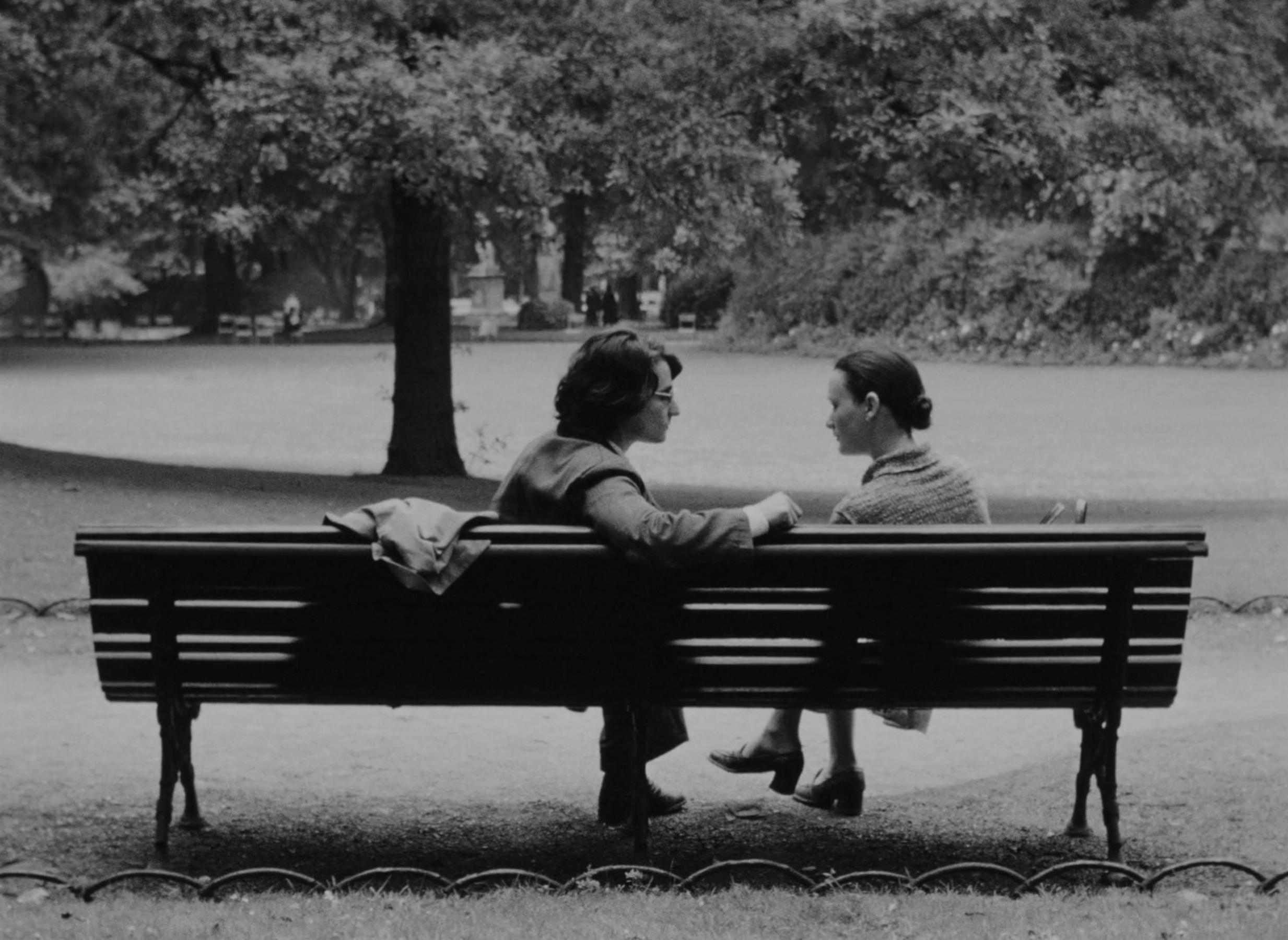
Like Truffaut before him, Eustache shoots on location through the streets of Paris, often with a handheld camera that underscores the film’s raw naturalism.Grim, shabby minimalism in Alexandre’s apartment, which also happens to be the same apartment where Eustache lived – the autobiographical connection is strong.City lights bounce off the Seine, forming a muted backdrop to this conversation between Alexandre and Veronika on a park bench at night.
Production for Eustache’s epic drama lands firmly outside the span of time that the French New Wave covers, yet it still couldn’t be more aligned with the movement’s subversive ideals. Shot in the streets and cafés of Paris on grainy black-and-white film stock, Eustache achieves a gritty, urban naturalism in his compositions and handheld camerawork, and even lets the noise of passing cars occasionally drown out his characters’ conversations. City lights bouncing off the Seine become a muted backdrop to Alexandre and Veronika’s meeting on a bench, and their threadbare apartments are completely empty of shelves, bed frames, and decorations, leaving clutter to gather on the floors instead. Eustache’s long takes prove to be crucial in appreciating the minimalist beauty here, as well as the dedicated performances of his actors, whether it is Bernadette Lafont crying to the entirety of Edith Piaf’s song ‘Les Amants de Paris’ or Françoise Lebrun commanding a powerful close-up in Veronika’s climactic eight-minute monologue.
The entirety of Edith Piaf’s song ‘Les Amants de Paris’ plays through this static shot as we sit with Marie in her misery, drawing a deep melancholy from the mundanity.Françoise Lebrun commands an eight-minute close-up with a shattering monologue, shedding her carefree image to lament the emptiness of her sexual pursuits.
Ultimately though, Jean-Pierre Léaud’s thorny portrayal of our two-faced hero marks the greatest acting accomplishment in The Mother and the Whore, with his casting nodding to Eustache’s colossal influences Jean-Luc Godard and François Truffaut. As insufferably verbose as he may be, it is telling that the only thing he listens to other than his own voice is his vinyl collection of French classics and British rock, offering those artists a respect that he never affords anyone else. When Veronika notices his fondness for music and sings a poignant love ballad in a rare moment of vulnerability, it is comical just how jarringly he changes the topic by turning on his favourite radio station, landing right in the middle of a segment railing against the laziness of modern society.
Eustache uses close-ups masterfully to forge a connection with his actors, giving Jean-Pierre Léaud the platform to deliver one of his best performances.
Smugness evidently goes hand-in-hand with insecurity for Alexandre, and it isn’t hard to see how his loquacious brand of intellectual pretence would later go on to shape the characters of Woody Allen and Richard Linklater films, especially considering the gaping chasm that lies between his narcissistic ego and feeble masculinity. It is much easier for him to blame women at large for his romantic struggles than to turn a critical eye inwards, as he shallowly longs for an era with old-fashioned values while remaining ignorant to the fact that he still would have been just as undesirable back then.
“I wish I had known the days when girls, in the streets of our cities, on our country roads, swooned over soldiers. The prestige of the uniform. These days they swoon over sports cars. These days, young businessmen, young executives, professionals, have replaced the military. I’m not sure we’re better off.”
Eustache’s screenplay is introspective, using Alexandre as a surrogate to put all his anxieties and shortcomings on display – and then tear them apart.Eustache’s camera especially loves this brief shift to a high-end establishment in Paris, relishing its fine décor and lighting.
The cognitive dissonance needed for a radical leftist like Alexandre to make such a conservative statement is staggering, though clearly his politics are as fickle as his choice in women. Neither Marie nor Veronika have entirely figured out who they are yet either, but at least within The Mother and the Whore they develop a self-awareness that their common boyfriend never quite finds the courage to face. When the three of them enter a polyamorous relationship, Marie and Veronica are united in a mutual understanding that leaves Alexandre deeply discomforted, helplessly watching his psychological division between love and sex slowly erode. As it turns out, these women are far more complicated than the neat boxes he has designed for them. With Marie’s façade of stability fading, she not only finds the freedom to explore her sexuality, but also unleashes a pent-up rage she had previously contained. Similarly, Veronika’s claim that she is only after sex from men completely disappears when she reveals her jealousy towards Marie and tearfully laments the emptiness of her carnal pursuits.
“If people understood, once and for all, that fucking is shit. That the only thing that’s beautiful is to fuck because you’re so in love you want to a conceive a child who looks like you, or else it’s something sordid. We should fuck only if we’re in love.”
Alexandre gets exactly what he wants – both the mother and the whore – and yet it is at this point that he also unravels, helplessly watching his psychological division between love and sex slowly erode.
Alexandre is lucky to have two girls who love him and like each other, Veronika declares, but still happiness eludes him. After all, if he were to accept this state of affairs then he must also relinquish control of a dynamic that preserves his simplistic world view and protects his ego. Perhaps this is why Veronika’s unplanned pregnancy spurs such a rapid, uncharacteristic change of heart, sending him impulsively running back to her apartment to propose, and hopefully reduce this complicated love triangle to a traditional two-way relationship.
Predictably, his regret is almost instantaneous. For as long as his arrogance keeps him from addressing his own inhibitions, he will never find fulfilment in romantic intimacy, especially when it is contained within an institution as rigidly traditional as marriage. As Alexandre sinks to the floor in the final seconds of The Mother and the Whore, he has no lengthy monologue or deflection to steal back control. Eustache simply concludes this film of endless verbal debate with bleak, dampened silence, cynically anticipating the birth of a dysfunctional family, and its fathering by an infantile egoist who cannot understand the fundamental virtue of selflessness.
A foolish snap decision that would be framed in any other film as a romantic gesture, and an ambiguous resignation to the bathroom floor as he realises what he has done. Eustache’s ending is both dryly funny and totally hopeless.
The Mother and the Whore is currently streaming on The Criterion Channel.
Through the lens of our contemporary world, the past often looks like an alien civilisation, abiding by absurd customs and exotic fashions conceptualised by some bizarre foreign entity. Though Federico Fellini acutely identifies traces of modern decadence in his distorted refraction of Ancient Rome, this is the position he maintains throughout Fellini Satyricon, while slowly revealing an even more audacious statement at the heart of its manic weirdness. It is not merely our distant ancestors who are aliens to an impartial outsider, but humanity itself, bound to the same trivial obsessions and primal impulses across history. This age of decadence we live through today is merely an echo of many others that have come before, Fellini posits, each time heralding a socioeconomic decline brought about by gluttonous appetites and egos.
This landscape of widespread moral corruption is of course not unique in his filmography, especially given that Satyricon and La Dolce Vita both trace the journey of two lone men through episodes exposing Rome’s shameless depravity. Where Catholic iconography and ethics guided the narrative of Fellini’s 1960 masterpiece though, Satyricon’s tales draw directly from ancient pagan beliefs, and specifically the eponymous novel penned by Roman writer Petronius as a satire of Greco-Roman mythology. More specifically, this text directly parodied the majestic heroism and fantastical adventures of Homer’s Odyssey, which by the 1st century AD was several hundred years old. While its lost segments somewhat hinder Fellini’s interpretation from mustering up much formal rigour, there is still an immense dedication to epic storytelling on display within the picaresque narrative chaos, reassembling the remains of a decaying world that is only barely hanging together.
Fellini’s mise-en-scène in Satyricon stands with some of his best, using his ludicrously theatrical set designs and blocking to compose off-kilter landscapes of moral debauchery and suffering. In effect, this is an ancient apocalypse – the downward slide of the once-powerful Roman Empire.
In place of the brave, charismatic hero that Odysseus typified in the Epic Cycle, Encolpius represents a far more ambiguous protagonist in Satyricon, motivated more by epicurean pleasure than love or honour. This is a man who will slaughter a temple of worshippers and kidnap a hermaphroditic demigod in hope of a obtaining a ransom, and yet who is also incompetent enough to carelessly let them die of dehydration in a scorching desert. He does not stand out from this moral cesspool, but rather blends in with its depraved surroundings, feebly falling into the off-kilter orbit of egocentric patricians, lecherous merchants, and bloodthirsty spectators who seek nothing but their own gratification. Given the self-indulgent behaviour of the Roman gods, it is fitting that their followers should celebrate them with such blatant acts of hedonism, transforming their once-glorious empire into a carnival of violence and debauchery.
Murals and graffiti become stunning backdrops to Encolpius’ journey, rendering him as another two-dimensional figure next to those painted on walls.
Now fully consumed by his love of Technicolour photography, Fellini doesn’t hold back either in his frenetic visual recreation of Satyricon’s Rome, especially with genius cinematographer Giuseppe Rotunno joining his troupe. This is expressionistic world building at its most imposing, based around colossal, anachronistic sets that might almost belong in a theatre were it not for their vast expansion in all directions. The giant ziggurat of apartments where Encolpius lives with his slave and lover Gitón towers menacingly in the darkness above a grey courtyard, and of course to reach it from the other side of the city one must pass through a brothel where strange sexual acts unfold in full view of the public. Where 8 ½ and Juliet of the Spirits once blended reality and surrealism in fragmented dreams, Fellini immerses Satyricon in a feverish hallucination that has taken over the lives of the Roman people, and even infected the skies with a deep red that casts the land below as an infernal underworld.
The giant ziggurat where Encolpius lives with Gitón towers menacingly above a grey courtyard, appearing strikingly apocalyptic with its darkness and crowds.Red skies shed a hellish glow over the infernal underworld of Ancient Rome, damning its lost souls to endless torment and suffering.Fellini indulges in the artifice of his lighting, sets, and costuming. This is not an authentic recreation of Ancient Rome, but an anachronistic refraction of a satirical text, underlining the hypocrisies which led to its downfall.
It is no coincidence that some of Fellini’s most demented imagery arrives with the novel’s most famous episode, set at a banquet held by wealthy freeman Trimalchio for the entertainment of the commonfolk. Encolpius has been invited by his new friend, the eccentric poet Eumolpus, and as they venture towards the meeting place they come across an absurdly confronting sight – a hundred nude men and women waiting outside in a giant, steamy bath, surrounded by an even greater number of candles. The erotic of nature of Fellini’s blocking here is crucial to the carnal madness of Satyricon, bringing together bare bodies in uncomfortably intimate arrangements which simultaneously satiate and disturb the senses.
Satyricon signals a shift in Fellini’s surrealism, moving away from depictions of dreams and fully bombarding us with maddening, expressionistic landscapes without narrative explanation.
Inside Trimalchio’s gaudy manor, he continues this staging as guests lounge around the edges of the room in extravagant costumes and makeup, imprinted against red walls and enveloped in thick clouds of steam. Insanity reigns when the crowd frenetic dances to dissonant live music and organs spill across the floor from a giant roast hog, yet Fellini’s focus never wavers from the codependent relationship between the narcissistic host and his guests. Supposedly based on Emperor Nero, the insecure Trimalchio holds these lavish parties for no other purpose than to be adored by the commonfolk. He is evidently little more than a talentless, egotistic fraud using his wealth to gain respect, though his patience is short when they do not play according to his rules, even having Eumolpus tortured in the furnace for calling out his plagiarised poetry.
“In my house, I’m the poet!”
Insanity reigns in Trimalchio’s gaudy manor, where Fellini stages guests lounge around the edges of the room in extravagant costumes and makeup, imprinted against red walls and enveloped in thick clouds of steam. This is the novel’s most famous episode, and is given a bold cinematic treatment.
These characters are not actively engaged with the political climate of Ancient Rome, yet at every turn Fellini is placing Encolpius’ fate in the hands of more powerful men. The few times he does take an active role in his own story, his efforts are rapidly undercut by the turmoil of a crumbling world, whether depicted literally in the earthquake that violently tears down his home or the insurgents who install a usurper as their new emperor.
That Encolpius is the closest thing to a Greek hero that Imperial Rome has to offer is pathetic indeed, making for a comparison that only cuts deeper in Fellini’s bastardised recreation of King Minos’ Labyrinth and its fearsome Minotaur, seeing our protagonist escape only by begging for his life and confessing that he is no Theseus. Through Satyricon’s retelling of the Widow of Ephesus myth, Christian doctrine does not entirely escape Fellini’s scathing satire here either, though his most direct parody is reserved for the final minutes where Eumolpus requests for his body to be devoured by the beneficiaries of his will.
Bloodthirsty crowds recreate the myth of Theseus and the Minotaur for their own cheap entertainment – Fellini draws on powerful iconography in these myths and legends.A pair of moral fables further embed the notion of storytelling and its rich history into this tale, and even take aim at the still-nascent form of Christianity in the 1st century AD.
True to the source material which records this as the final scene, missing segments notwithstanding, Fellini abandons his narrative mid-sentence with Encolpius leaving on Eumolpus’ ship to Africa. It is difficult to label this an anticlimax when we were never promised a great catharsis to begin with, though by taking a step back to reveal Satyricon‘s characters painted in frescoes upon ancient ruins, Fellini breaks the immersion to acknowledge that plot was never paramount in this absurd dreamscape. Cinematic surrealists like David Lynch and Alejandro Jodorowsky would later centralise this tenet in their own filmmaking too, adapting archetypes and allegories with a subversive, Felliniesque irreverence that believes greater truth lies in the fanciful stories we fashion from skewed perceptions of our past rather than history itself. Through its surreal blend of modern art and classical antiquity, Fellini Satyricon not only examines this grand paradox of truth and fiction – it becomes a direct embodiment of our most maddening psychological conflict, farcically recognising the indelibly primal self-contradictions of humanity across all ages.
Fellini ends his narrative exactly where the text finishes – mid-sentence – before revealing the film’s characters painted in frescoes upon ancient ruins. If Satyricon is a surreal interrogation of historical legends, then we must look to their artifice and limitations to understand the true nature of the people who composed them.
Fellini Satyricon is currently available to purchase on Amazon.
Every so often, something genuinely interesting happens in the coastal Italian village where idle womaniser Fausto stirs trouble with his friends, and Federico Fellini eagerly latches onto those fleeting breaks from the monotony. As for the moments in between, I Vitelloni’s mysterious narrator has no issue condensing entire months into a few seconds, briefly noting the facial hair that Fausto’s friends grow as the most exciting thing to happen between their ringleader’s momentous return from his honeymoon and his first scandalous affair. This first-person voiceover is tinged with nostalgia, assuming the perspective of the entire group looking back on their youth, while largely resisting being pinned down to any individual. Still, it very gradually becomes apparent which of them in particular its attitude most aligns with – the only one to have broken free from those small-town constraints, and whose reflections come from a poignant distance.
Moraldo is not the main character in I Vitelloni, let alone his own story, though he is clearly the most introspective of his friends. While the others are chasing women, fame, and glory with a middle-class arrogance, he finds himself wandering the town’s cobbled stone streets at night, recognising his immediate surroundings as the source of his listless discontent. The trivial drama of Fausto’s sleazy escapades can only keep one entertained for so long before they grow wearisome and the call of grander adventures become louder, fading his formative years into memories kept alive through stories like these.
I Vitelloni was Fellini’s Mean Streets long before Martin Scorsese would break through with his own plotless hangout film in 1973, dwelling in vignettes languidly strung together in the lives of young, immature men.
It would be incorrect to label I Vitelloni as an autobiographical film for Fellini, though the essence of his own youth lived by the Adriatic Sea visibly carries from life into fiction. The meandering plotlessness of this hangout narrative would go on to influence everyone from Richard Linklater to the Coen Brothers, but first and foremost it left its mark on the global New Wave movements of the 1960s and 70s. The resemblance between Fellini’s work and Martin Scorsese’s breakout Mean Streets is especially striking, with Fausto’s philandering and Johnny Boy’s troublemaking both building towards a pair of crises that erupt with brutal consequences. Outside of these climactic reckonings, vignettes are also effortlessly strung together into landscapes of celebration and struggle, trapping characters in loops that continuously cycle between both.
Even if it diverges from Roberto Rossellini’s examinations of post-war destitution, I Vitelloni is a film to make Fellini’s neorealist mentor proud, resourcefully shooting on location in small Italian towns and crafting tremendous visuals from their historic stonework.
Much like Scorsese’s film, I Vitelloni similarly marked the first true work of cinematic brilliance from Fellini as well, though the introduction of characters through a floating camera and descriptive voiceover is purely Goodfellas. Even if it diverges from Roberto Rossellini’s examinations of post-war destitution, this is a film to make his neorealist mentor proud, resourcefully shooting on location in small Italian towns and crafting tremendous visuals from their historic stonework.
The heightened emotions of classical Hollywood are nowhere to be found here, replaced by day-to-day interactions and complex relationships that are consistently developed in Fellini’s naturalistic blocking. There is also no external conflict in our characters’ walk down to the town’s deserted beach on a windy afternoon where they playfully consider of how much money they would jump into the water for, and yet the bleak beauty of his coastal scenery, the uneven arrangement of their bodies, and their impassive expressions reveal an unspoken, disenchanted aloofness. Fellini’s staging in such moments often illustrates the indolence of these men who are described in the film’s translated title as layabouts, and yet never quite so explicitly as his magnificent shot of them lounging across chairs outside a café, alternating directions far into the background.
A wealth of meaning packed into the staging of bodies along the edge of a pier, staggered into the background as the men passively gaze out at the ocean – the sheer edge of the only society they have ever known.Bleak coastal scenery set beneath an overcast sky, with jagged metal wires foregrounded to the left. Fellini never simply throws away his frames.
At least the small routines and traditions of this community connect them to some sense of cultural identity, even if they don’t quite keep them out of trouble. Whether they are attending the annual Miss Mermaid beauty contest or preparing for the chaotic carnival season, these festivities simultaneously break up the monotony of everyday life, and yet paradoxically become part of that predictable annual cycle. It is often during these events that Fellini’s camerawork, editing, and mise-en-scène grow busier too as extras fill his scenery, enveloping Fausto in intoxicating atmospheres that spur him on to make poor decisions.
Traditions, rituals, and celebrations bring some excitement as they periodically break up the monotony of everyday life, and yet they also paradoxically become part of its predictable cycles.Fellini designs the frame at festivals like Josef von Sternberg before him, cluttering the mise-en-scène with extravagant, maximalist detail and streamers.
Not that it takes much for the playboy to rush headfirst into impulsive exploits and affairs, even after his shotgun wedding to Miss Mermaid contest winner, Sandra Rubini. His disloyalty borders on sociopathic, seeing him slyly flirt with another woman at the cinema while his wife curls up on his arm, before abruptly leaving and following the beautiful stranger home. Later when he is forced to finally get a retail job, he even tries on multiple occasions to seduce his boss’ wife Giulia, and retaliates with petty vengeance when he is fired in a far more gracious manner than what he deserves.
Fausto is easily the greatest character of I Vitelloni – a man his friends call their spiritual guide, yet who is completely devoid of responsibility and shame, leaving his wife at the cinema to cheat on her with a fellow moviegoer. As such, he becomes a complete representation of masculinity at its most immature and self-serving.
Of course, Fausto’s friends aren’t entirely blameless in all of this. They are enablers of the worst kind, convincing him to steal Signore Michele’s angel statue to compensate for the weeks of work he has lost, and directly lying to the hopelessly naïve Sandra about his cheating. They call him their “spiritual guide,” but it is clear that they are young men simply electing the coolest, most confident peer in their vicinity as their leader. Only when Sandra discovers his infidelity and runs away from home with their baby is Fausto forced to accept responsibility for his family, having thoroughly humiliated himself by crying to his old boss and being belted by his father. Whether or not he will fall prey to his lustful impulses in the future remains uncertain, and yet his illusion of self-composure has nevertheless begun to weaken, loosening his grasp over those who once held him as a paragon of masculinity.
Fausto is a fitting name for the playboy of the group, constantly seeking out hedonistic excitement at the ultimate cost of his own freedom.
The time has come to move on, these men realise, and yet only Moraldo has the motivation to set himself free from the past. He doesn’t know where his train will take him, but as he looks back for the last time, Fellini rapidly cuts through a montage of his friends lying in bed and becoming little more than distant memories. They too will grow old and perhaps even find success, but within I Vitelloni’s ruminations they are frozen in an eternal, static youth of idle recreation and empty pleasure, lazily hoping for the day that the world might finally give their lives greater purpose.
A poignant ending, flitting through a montage of each friend asleep in their bed, before farewelling the only one among them with the courage to leave town and make something of his life.
I Vitelloni is currently streaming on The Criterion Channel, the Blu-ray is available to purchase on Amazon.
“Power over Spice is power over all,” chants an unseen Sardauker priest in the opening prologue of Dune: Part Two, though what exactly that signifies varies drastically depending on who wields it. For the native Fremen, Spice is a key component of everyday products, while its value as the rarest commodity in the universe guarantees wealth and status to whichever Great House rules Arrakis. As for Paul Atreides, its implications are far more mystical. It is through Spice that he is granted the prescience to see himself leading a Holy War as a Messiah destined to lead the Fremen towards liberation, as well as the means through which he may control an even greater resource – the zealous faith of millions.
As tremendous as Denis Villeneuve’s epic achievement was in the first instalment of Dune, it is clear with the context of Part Two just how much of that was simply setting up Paul’s subverted monomyth, where we witness his evolution into one of cinema’s great antiheroes. Lawrence of Arabia is the clearest comparison to draw given its challenging of a ‘white saviour’ who leads foreign civilisations through unforgiving deserts and into battle, though The Lord of the Rings trilogy seems more fitting. When entering production, both Peter Jackson and Villeneuve were respectively met with the obstacle of adapting ‘unfilmable’ material, but with sharpened instincts for strong visual storytelling and a recognition that such expansive narratives cannot be confined to a single movie, both also defied the scepticism of critics.
Extraordinary world building in Villeneuve’s grand establishing shots, capturing masses arranged in formations across otherworldly scenery.
To draw the similarities closer, the foundations of these grand narratives are rooted even deeper than Frank Herbert or J.R.R. Tolkien’s writing. These are stories of theological significance, interrogating notions of spirituality through symbols of prophecies, resurrections, and salvation, especially with Dune framing Paul as a saviour descended from the skies of Arrakis to cleanse the world – or the universe – of evil.
Timothee Chalamet’s return in this role only continues to prove why he is one of the most promising actors of his generation as well, mirroring Anakin Skywalker’s descent into darkness, though with a far firmer grip on his character than Hayden Christensen. Beautifully fragmented dreams of the war and starvation he will wreak haunt him in ethereal slow-motion, cautioning against his journeying south, and yet the pull of fate eventually proves to be too strong. By the time he is standing upon platforms and delivering rousing speeches to followers and enemies, his voice has shifted down to a deeper, gravelly register not unlike the Baron’s, and he exudes a megalomania that leads us to mourn the humbler Paul we met in Part One.
Both Dune films are magnificent achievements for Timothee Chalamet, but it is especially in this second part that he flexes his villainous screen presence and range, becoming one of cinema’s great antiheroes.Fragments of dreams haunt Paul with unsettling prescience, envisioning a Holy War that will lead to starvation and suffering across the universe,
Villeneuve’s build to this apotheosis is carefully paced in Part Two, confronting Paul with a series of challenges he must complete to meet his destiny. The iconic sandworm ride arrives about an hour into the film as his first major milestone, and Villeneuve doesn’t waste its potential as a defining moment of his directing career, anxiously building anticipation as currents of sand ripple through the desert like waves before it is kicked up into a furious, dusty tempest. The lack of detail in Herbert’s book around how one rides these sandworms gives Villeneuve the freedom to creatively imagine the act with hooks and ropes, bringing a tactility to the scene that is magnified by the camera’s immersion in the thick of the action, while only occasionally cutting back to the Fremen who distantly watch in reverent awe. The guerilla warfare Paul wages with them against invading Harkonnen forces similarly gives shape to their customs and practices, as even with limited resources, their stealthy manipulation of the natural terrain allows them to easily overpower their armoured enemies.
Villeneuve imagines Paul’s sandworm ride with ropes and hooks, immersing us in the thick of the sandstorm it kicks up and building to a magnificent climax.
Freed from Part One’s pressure of setting up this epic narrative, it is clear in instances like these that Villeneuve feels more comfortable experimenting with a greater sense of visual wonder and terror. Silhouettes set against blinding white landscapes and close-ups of Spice glistening upon the sand are carried over here from the first film, while the burnt orange magic hour lighting calls back to the radiation polluted Los Angeles of Blade Runer 2049, yet Dune: Part Two especially excels when it begins exploring more far-flung lands. The fundamentalists who live in the south of Arrakis are acutely distinguished from their northern counterparts, not only by their barren plains of dark rock, but Villeneuve also captures their culture of devout worship in a dazzling overhead shot that loses their Paul in a sea of pale headdresses.
The burnt orange light of a rising and setting sun is diffused through the dusty air of Arrakis.The south of Arrakis is distinguished from the north by its dark, barren plains, and a fundamentalist culture of zealots ready to exalt Paul as their saviour.Villeneuve composes an astonishing birds-eye view of Paul wandering into a crowd of worshippers, lost among the pale scarves adorning their heads.
Even more astonishing though is our extended stay on Giedi Prime, home of House Harkonnen, whose desaturated exteriors are as splendidly severe as their brutalist interior architecture. Where Arrakis’ skies are distinguished by their double-eclipsed, crescent sun, here the land is cast under a black sun, absorbing any colour that falls beneath its rays. Cinematographer Greig Fraser’s decision to shoot these scenes with a black-and-white infrared camera accomplishes an eerie monochrome aesthetic, and stylistically sets the austere tone for the psychopathic, reptilian Feyd-Rautha, youngest nephew of the Baron. Within the gladiator arena filled with bloodthirsty spectators, he viciously slaughters a trio of survivors from House Atreides for his birthday celebration, and from there is effectively set up by the Bene Gesserit sisterhood as a foil for Paul in contest over the sovereignty of Arrakis.
Arrakis’ crescent sun double eclipsed by two moons is visually inspired by the twin suns of Tattooine in Star Wars – a full circle moment considering the influence that the novel Dune had on George Lucas.A breathtaking sequence on Giedi Prime beneath their Black Sun, shot with black-and-white infrared cameras that drain the exterior scenery of colour and life.
After playing Elvis Presley in Baz Luhrmann’s biopic, Austin Butler couldn’t have chosen a more different character to follow that up with than Feyd-Rautha, stripping away his natural charisma and replacing it with pure derangement. He stands among the strongest of the supporting cast, right next to Rebecca Ferguson whose dark journey as Lady Jessica in Part Two mirrors Paul’s Messianic ascension, and Javier Bardem whose comic beats as Stilgar miraculously do not hamper the weight of Villeneuve’s drama. Zendaya meanwhile leaves slightly less of an impression as Chani, though it is Christopher Walken who delivers the weakest performance of the lot, lacking the presence needed to play the Emperor.
Rebecca Ferguson is not in as much of Dune: Part Two as the first film, and yet her performance continues to evolve in menacing directions, spurring Paul on towards his destiny.Austin Butler is a new addition to the cast as Feyd-Rautha – pale, hairless, and utterly terrifying as a foil to Paul.
Still, each of these parts play an integral role in Villeneuve’s strategic manoeuvring of his pieces towards a roaring climax, supplemented by a score from Hans Zimmer that intrepidly builds on the war cries and blaring electronic orchestrations from Part One. As the Emperor’s enormous ship drifts over Arrakis, Villeneuve’s low angle anxiously gazes up at its metallic underside distorting reflections of the mountains below like an ominous warning of colonial subjugation, and leads into an explosive battle which has us questioning Dune’s hazy divide between good and evil. So brilliant is Villeneuve’s direction here though that the smaller-scale duel which follows can’t help but feel like a step down in stakes, and perhaps would have been better positioned earlier as part of the rising tension.
Spectacular action between the Fremen and the Emperor’s forces, as Villeneuve manoeuvres his pieces with tactical shrewdness towards a predestined confrontation.Paul’s duel against Feyd-Rautha does not have the same weight as the battle which preceded it, but it is still worth appreciating these still frames of their silhouettes set against a rising sun.
If the Dune series is to end here with a gutting fulfilment of Paul’s hero’s journey, then it would at least be a complete story unto itself, though Villeneuve’s teasing of Dune Messiah certainly remains a tantalising prospect. His ability to build on existing science-fiction material was already evident in Blade Runner 2049, and now his work committing Herbert’s unfathomably vast imagination to film additionally demonstrates his own, pushing the limits of big-budget spectacle to extraordinary lengths. When it comes to fully realising its elemental iconography and grand narrative on a cinema screen, Dune’s insurmountable parable of fanatical hubris deserves nothing less.
Caught in the transition from silent to sound film, Carl Theodor Dreyer constructs a peculiar aberration of a horror film in Vampyr, absorbing us into a waking nightmare that only occasionally disrupts its eerie quiet with isolated lines of dialogue. Though it is a work of primal, symbolic imagery, it still presents exposition to us through intertitles, lifting passages from the book that occult fanatic Allan Gray is given at the start of the film – “The Strange History of Vampires.” Accounts of these creatures’ enslaved victims and mortal weaknesses are divulged here, guiding Allan through a supernatural conspiracy located in the castles and villages of rural France, and weaving an astoundingly cryptic allegory of European fascism.
Still, Vampyr cannot be so easily reduced to its plot or politics, both being relatively minimal compared to Dreyer’s hallucinatory dreamscape of shadows and shapes. While directors like James Whale and Tod Browning were establishing genre conventions within 1930s Universal monster movies, Dreyer’s horror was holding his audience at an obscure distance, calling on existential fears of violated self-agency repressed deep in our subconscious. If any stylistic comparison is to be made, then Vampyr draws on a heavy influence from F.W. Murnau’s silent expressionism, referencing the Gothic iconography of Nosferatu and traversing intricate sets in steady, measured camera movements like Sunrise: A Song of Two Humans. Conversely, the dark spirituality interrogated here would also prove foundational to Ingmar Bergman’s severe minimalism a couple of decades later, sinking the warped souls of humanity into a lifeless, misty greyscale.
Vampyr was caught in the transition from silent to sound film, and with such little dialogue Dreyer’s visual storytelling excels, following Allan Grey through his investigation of supernatural conspiracies.There is an air of historic French nobility in the paintings and wallpapers of Vampyr’s interiors, using iconography as backdrops to the horror.
As for Dreyer himself, Vampyr marks an odd follow-up to The Passion of Joan of Arc, shifting from an aesthetic primarily consisting of close-ups to intricate wide shots composed with haunting precision. Interiors come alive with dancing shadows cast by invisible beings, while spoked wheels, curved scythes, and clawed angels imprint geometric shapes on giant canvases of negative space. Being shot on location in the pastoral commune of Courtempierre, much of the architecture here is authentically carved from stone and wood, and the sparsely patterned wallpaper of fleur-de-lis subtly infuses the setting with an air of historic French nobility too.
Shadows are like ghosts, moving independently of humans as if with lives of their own.Dreyer’s stark, minimalist mise-en-scène is an enormous visual achievement, using simple shapes and lighting to compose his frames.Expressionism in darkened silhouettes and angular shapes, setting in a psychological horror through haunting iconography.
Even Dreyer’s characters frequently appear ornamental to his mise-en-scène, striking vivid poses and expressions in true silent cinema fashion. Our two main villains, the vampire Marguerite Chopin and the ghostly Lord of the Manor, are both withered old crones preying on the vitality of youth, which Dreyer archetypally represents here in the innocent Léone and her virginal white robes. After she is found wandering the castle grounds in a daze with a pair of bite marks on her neck, she begins acting erratically, baring her teeth in a sinister grin as her gaze mysteriously drifts across the ceiling. For our leading man Allan, it is his wide, curious eyes that capture our attention, and which also become the filter through which Vampyr’s second half is distorted into surreal visions of skeletons and corpses.
Quite unusually, Dreyer’s primary vampire is not a man but an old woman – a decrepit being preying on the vitality of youthIt’s not quite The Passion of Joan of Arc, but the close-ups used here are powerful, lingering on the possessed Léone’s face as her eyes drift across the ceiling with a creepy, toothy grin.A landmark of early surrealism, bringing the dead to life in Allan’s dreams.
It is here that the influence on Bergman becomes even more apparent, particularly in Allan’s nightmarish discovery of his own body in a coffin which mirrors a strikingly similar dream in Wild Strawberries. Dreyer’s avant-garde experimentations express a deep mortal terror, lifting our hero outside of his body through an eerie double exposure effect, and directly taking his point-of-view from inside a coffin as he is carried to a grave and buried.
A clever and fitting use of double exposure when Allan undergoes an out-of-body experience, encountering his own corpse as it is carried away in a coffin.Heavily subjective camerawork as we peer out the top of Allan’s coffin from the point-of-view of his dead body.
If there is any hope to be found in this bleak scenery, then it is smothered by the dense, grey clouds observed in Dreyer’s formal cutaways, holding back the daylight from reaching the village. Only when Allan eventually drives a large, metal stake through Marguerite’s heart do sunrays begin to pour through, beckoning him across a foggy river with a rescued Léone to a bright clearing on the other side. At the end of a long, dubious path of existential horrors, Allan finds love, heroism, and salvation, and yet it is only by exploring his nightmares that any of this was made possible to begin with. Whether Dreyer’s horror is to be interpreted as a political allegory, a spiritual fable, or merely a hypnotic progression of expressionistic images, Vampyr is designed to lull us into the same impressionable state as its victims, eerily calling upon our own subconscious desire for complete, psychological submission to the darkness.
Excellent parallel editing in the climactic defeat of the villain, evoking the torture room scene from The Passion of Joan of Arc with the spinning wheels and cogs.Formal cutaways to a cloudy sky, concealing the sunlight trying to break through.Allan finally makes it to a bright, sunny clearing – a holy sanctuary within the natural world.
Vampyr is currently streaming on The Criterion Channel, and the Blu-ray can be purchased on Amazon.
Though Pier Paolo Pasolini imbues Teorema’s structure with the same rigidity as the bourgeoisie’s arbitrary social conventions, his fleeting cutaways to Mt Etna’s chaotic, elemental landscapes are never far away. The volcano is a natural catalyst of transformation and destruction, with its fissures blowing sulphurous steam across slopes of black dust and threatening to erase any semblance of social order within its reach. It wreaks turmoil and madness, both predating and outlasting the entire span of time that humans have lived on Earth. When a mortal being truly grasps a force as primordially unfathomable as this, the effects are wildly unpredictable, though the entropic family portrait that Pasolini paints here captures the complexity of such a world-shifting spiritual experience with mystifying acuity.
The barren, steamy landscapes of Mt Etna make for inspired formal cutaways, punctuating this rigorously structured film with visions of wild chaos.Sunlight accompanies the Visitor in divine lens flares, framing him like a Renaissance sculpture.
In the case of Teorema’s lonely aristocrats, it is not the secrets of God’s earthly creation which they must grapple with, but rather a mysterious figure who seems to come from another realm altogether. The Visitor’s eyes are a bright blue that seems to pierce the defences of whoever gazes into them, and at times he is even accompanied by a blinding sunlight forming a halo behind his head. The ease with which he falls into the family’s life is surprisingly intimate, but also offers them a strange emotional healing from their private insecurities.
When Emilia the maid attempts suicide with a gas hose, the Visitor rescues and consoles her. As Pietro the son lies in bed at night, his new roommate soothes his fears. Outside on the grass, he approaches the sexually frustrated mother Lucia sunbathing in the nude and wraps her in his arms. The immature young daughter Odetta invites him into her virginal white room, opening herself up to new experiences. And finally, the ailing father Paolo finds a comforting peace in his guest’s presence, as both walk along a misty river and talk among wild, overgrown bushes.
Terrence Stamp’s Visitor is often found sitting with his legs open – is he a Christ figure, or is he just sexy? The bourgeoisie could easily mistake one for the other.Picturesque long shots of the Italian countryside, misty and cold.
These are not merely innocent encounters, but Pasolini connects these characters’ spiritual awakenings to physical self-discoveries through explicit sexual seductions. As a result, each family member is individually bound to parallel journeys, methodically unfolding in the same, formulaic sequence established in the first act, and referenced in the film’s title Teorema – or ‘theorem’ in English.
Following the announcement of the Visitor’s imminent departure, it is according to this order that Pasolini subsequently moves through their confessions in their respective locations. They have all faced the transmutation of their own souls, and now all they can do is contemplate the irrelevance of their old lives, and the uncertainty of their futures. “I no longer even recognise myself,” Pietro reflects in his bedroom. “I was like everyone else, with many faults, perhaps, mine and those of the world around me. You made me different by taking me out of the natural order of things.”
Out on the lawn, Lucia reveals the “real and total interest” the Visitor filled her life with during his stay, and inside Odetta expresses thanks for helping her grow up and explore her sexuality. As for Paolo, who has always believed “in order, in the future, and above all in ownership,” this guest has destroyed everything he understands about himself and the world. The only way he can imagine rebuilding his identity would be through “a scandal tantamount to social suicide,” separating himself from the materialism and ego of the modern world to seek a deeper truth in his existence.
A green lawn, green furniture, green gates – Pasolini is committed to the colour in his mise-en-scène that slightly lifts this world out of reality.
As for Pasolini’s stance on the sanity of it all, he approaches the matter with both delicate consideration and savage criticism. This wealthy family have been living a superficial lie for many years, consumed by worldly distractions and capitalist privilege, and so cinematographer Giuseppe Ruzzolini infuses these scenes at their Milanese estate with a pristine fragility. Characters are blocked in rigorous arrangements worthy of paintings as they lounge on the lawn and seat themselves symmetrically around the dinner table, though these meticulous visuals carry a strange tension with Pasolini’s naturalistic, handheld camerawork. The stylistic contrast is unsettling, subtly detaching the family from the reality of the working class witnessed in the opening scene’s documentary footage, while containing them within a dream of sepia filters and ethereal green hues weaved through the mansion’s gates, lawn, cars, and décor.
Rigid symmetry in the house of the bourgeoisie, holding together a pristine, fragile facade of order.And in contrast to the curated blocking is the documentary footage of the opening, associating the working classes with a more naturalistic aesthetic of handheld camerawork.The sepia filter Pasolini occasionally applies is otherworldly and alien, setting up this bourgeoisie family as people we cannot relate to.
Not that the extremity of their spiritual conversion is any less insane than the absurdity of their bloated privilege. Pasolini heavily implies that these nobles are so emotionally repressed they may simply be confusing the ecstasy of intercourse for divine revelation, further suggesting that the only two forces capable of tearing down oppressive class structures are sex and God – or at least, the unadulterated belief in them. Theological art and texts thus become ornamental in Teorema’s satire, displacing Ennio Morricone’s gloomy jazz score with Mozart’s haunting Requiem, and pondering Bible verses in contemplative voiceovers. Even here though, Pasolini is quoting the Book of Jeremiah to consider religion’s erasure of identity through sexual metaphors.
“You have seduced me, O Lord, and I have let myself be seduced. You have taken me by force, and you have prevailed. I have become an object of daily derision, and all mock me.”
Christian icons torment Lucia following the Visitor’s departure, stranding her in spiritual emptiness.
On one level, Pasolini is adopting the transcendent awe of Carl Theodor Dreyer’s films, gazing at impossible miracles of fasting, healing, and levitation performed by Emilia when she returns to her hometown. As the only main character here who belongs to the working class, she alone has the capacity to truly perceive and absorb the sacred, being unattached to the bourgeoisie’s material lifestyle. Her eventual sacrifice through live burial and self-immolation is even shot with an astounding beauty against the orange Italian sunset, capturing a glimpse of the sacred as she humbly resigns her body to the Earth.
Only the maid’s transformation truly intersects with the divine, performing astonishing miracles that cannot be explained.Emilia’s hair also turns green, tying her into the ethereal colour palette.Pasolini uses magic hour exquisitely in Emilia’s self-burial and immolation, resigning her body to the Earth.
Pasolini’s rigorous blocking of the family around Odetta’s catatonic state also visually alludes to the tragic funeral of a devoted believer in Dreyer’s Ordet, but there is no profound resurrection to be found here. The rest of this newly inspired family is as lost as ever, seeing Lucia aimlessly search for fulfilment through affairs with younger men, and Pietro express his lustrous longing for the absent Visitor through abstract painting. Art may be elevated in the eyes of upper-class society, but the son’s internal self-worth is thoroughly degraded as he recognises the lowliness and misery of any honest creator.
“Nobody must realise that the artist is a poor, trembling idiot, a second-rate hack who lives by taking chances and risks, like a disgraced child, his life reduced to the absurd melancholy of one who lives debased by the feeling of something lost forever.”
Odetta’s physical decline evokes the visual solemnity of Carl Theodor Dreyer’s Ordet. Rather than a divine resurrection though, Pasolini cynically displays a spiritual death in this superbly blocked composition.Lucia goes searching for the physical intimacy that the Visitor once provided, only to find emptiness in carnal pleasures.Pietro is driven to abstract artistic expression in the absence of the Visitor, trying and failing to capture the essence of the sublime. Each family member’s reaction to realising the desolation of their own souls is diverse and indicting.
This extends further to the other members of this family who now spend their lives searching for an irrecoverable connection to a higher purpose, though perhaps Paolo understands the insanity of it more than anyone. Driven mad by his own empty existence, he enters a train station and strips himself completely nude, before handing the entire factory over to his workers. A victory is secured for Pasolini’s Marxist politics, returning the means of production to the industrial proletariat, while the black, desolate dunes of Mt Etna which have appeared intermittently throughout Teorema beckon a demented Paolo away from civilisation.
Unfortunately, whatever secrets the ancient volcano holds are inaccessible to this former capitalist, whose renunciation of all material possessions has only exposed his own hollowness. He runs through these landscapes in agony, as if trying to find some justification for his total sacrifice, but there is no power great enough to heal those souls eroded by pride and entitlement. Finally seeing themselves for what they are, all the bourgeoisie of Teorema can do is scream into a void that even God dare not touch, devolving into a state of repulsive, primal desperation that Pasolini knows can never be fulfilled.
Paolo’s reaction to losing the Visitor is the most insane of the lot, shamefully bearing his naked to the public and exiling himself to the wilderness.A brilliantly mystifying formal pay-off to the Mt Etna cutaways as Paolo screams into the void, unable to find the answers he seeks.
Teorema is currently streaming on The Criterion Channel, and the DVD and Blu-ray is available to purchase on Amazon.
Over the course of a few hours on one hot summer day, crowds congregate around the First Brooklyn Savings Bank in New York City, with journalists and television crews eventually joining the mix. Inside, a failed heist has turned into a police stand-off, with the two robbers taking the entire building hostage, and incidentally providing a bit of light entertainment for the masses. A pizza delivery guy milks his time in the spotlight when he brings lunch around, and the head teller excitedly flirts with the cameras while being used as a human shield, momentarily putting aside the present danger to feed her ego.
It appears for a time that Sonny, the brains behind the operation, doesn’t mind the attention either. Despite being out of his depth in this robbery gone wrong, he quickly learns that many viewers see him as a hero of the common man, railing against the police and throwing cash out to feverish onlookers. A small riot starts as they burst through the barricades, undermining the police’s attempts to control the situation, and yet media sensationalism is an unwieldy beast. When a more complicated portrait of Sonny begins to emerge, revealing a man desperately seeking money for his transgender wife’s gender affirming surgery, audiences aren’t quite sure how to reconcile that with their preconceived notions. The breaking news story soon becomes solely about his queerness, and the praises once thrown his way become nasty jabs. There is no regard here for the figure at the centre of it all, rich with flaws and personal struggles. Looking in from the outside, he is just the latest television character to capture the fleeting interest of the public.
To the general public of New York, this failing bank heist is little more than afternoon entertainment, with hostages and pizza delivery boys alike relishing their moment in the spotlight. In this context, Sonny and Sal’s humiliation is made even worse – they are victims of a ravenous media frenzy.
This is not the perspective Sidney Lumet decides to take in Dog Day Afternoon though. The real events upon which the film is based are readily available in historical records, while this fictional interpretation lends a greater sensitivity to those trapped inside the bank. The false confidence that Sonny and his friend Sal initially project dissipates almost instantly when the third part of their trio, Stevie, nervously backs out and leaves them stranded. They have clearly never done anything like this before, caving a little too easily to the demands of their hostages and even developing somewhat friendly relationships with them. These are not the heroes nor sick-minded villains that the media would like to believe – merely short-sighted victims of their own poor decisions.
The uneasy nuances of these characters offer a wealth of rich material for both Al Pacino and John Cazale to deliver two standout performances as well. In Cazale’s case, Dog Day Afternoon would be the second-last film of his short career before passing away in 1977, though he makes every minute of his screentime count as the nervous, simple-minded Sal. He partly serves as comic relief from time to time, telling Sonny that the country he would want to escape to most of all is Wyoming. Most of all though, we feel pity towards this man who takes offence at being mislabelled a homosexual, and who we come to realise is too easily exploited by both the police and his own friend.
This is not a film that gets by on visual style like so many others on its level, leaving Al Pacino to singlehandedly carry many scenes with his powerhouse performance.Pacino may be the feature, but John Cazale shouldn’t be slept on. Along with his performance as Fredo in The Godfather Part II, Dog Day Afternoon features some of his best acting as the tragically dim-witted Sal.
The true tour-de-force of acting in Dog Day Afternoon comes from Pacino though, who in 1975 was coming off a hot run of the first two Godfather films and Serpico. His portrayal of Sonny treads a fine balance between the deep, internalised performances of his early career and the loud personas he would play further down the line, generating an instability that cuts through layers of insecurity and anger. His incendiary evocation of the Attica Prison riot which saw police carelessly mow down hostages and inmates alike becomes a powerful catch cry as he furiously paces outside the bank, inciting a righteous anger in the anti-authoritarian crowds.
Still, the longer we sit with him inside, the more we understand the sensitivity of those wounds being picked at by the mass media. His trans wife Leon has been hospitalised for attempted suicide and now, despite Sonny’s good intentions, wants nothing to do with these criminal plans, while his estranged cis wife Angie laments his stubbornness and abandonment of their family. Even his mother is brought in to help the situation, though she is insistently blind to his culpability, blaming everyone in his life but him for his own mistakes. Sonny may be reckless, but he does not lack self-awareness, as Pacino’s face slowly breaks down with guilt, self-loathing, and a tragically weakened resolve over the course of the film.
Sidney Lumet may not develop a strong cinematic style, but his blocking can’t be faulted in many scenes, using the camera’s full depth of field to keep the ensemble dynamics visually alive.A tangible arc unfolds on Pacino’s face throughout Dog Day Afternoon as we watch him grow shabbier, sweatier, and increasingly anxious.
On top of all that, Lumet never quite lets us forget the physical factors of the environment that Sonny must contend with, observing the sweat form on his face from both the humid summer heat and the sheer stress of the stand-off. Though Lumet is picking up a few techniques from Hitchcock with the long camera takes and tight, suspenseful editing, he is largely committed to the authenticity of the piece. By and large, Dog Day Afternoon does not draw the same breathtaking beauty out of its New York location shooting as we see in The French Connection or Taxi Driver, and yet there is still a cumulative effect in the grounded urgency of its gritty aesthetic and pacing, pulling a highly-strung Pacino into an uncontrollable whirlpool of rapidly escalating stakes.
Solid location shooting out on the streets, grounding this story in real world stakes.Instead of shooting on a studio soundstage, Lumet converted a warehouse into the bank interior, and then slowly dims its lights as the stand-off stretches on and night begins to fall.
Paramount to Lumet’s realism is the pained sympathy he has for these complicated characters, both naively believe that some happy ending is still possible at the end of it all. When the two men finally secure a deal that will let them fly out of the country, one of their hostages takes the time to comfort a nervous Sal who reveals he has not been on a plane before. It is a small twinge of unexpected kindness in an otherwise tense sequence, enveloped by Lumet’s cutting between Pacino’s anxious face and the suspicious police activity unfolding around him.
Remarkably tense editing from Dede Allen all throughout, but especially as Sonny and Sal secure a deal and nervously make an exit while surrounded by police.
Dog Day Afternoon’s denouement unfolds rapidly from there – a fatal shot to Sal’s head ends his life before he even knows what’s going on, while Sonny is arrested at gunpoint. The shame we have seen him bear throughout the film is nothing next to the guilty anguish on his face as he watches Sal’s body taken away, recognising the role he played in the death of his far more innocent friend. Within this great tragedy though, Sonny’s delicate story of queer love and financial desperation was never going to survive the noise of sensationalist journalism. All that is left is a cheapened legacy embedded in New York’s quirky local history, destined to be recalled by strangers as that bizarre, failed bank heist they spent one hot, summer afternoon following on television.
Lumet lands a devastatingly tragic blow to end the film – robbed of hope, Sonny submits to the police, as he gut-wrenchingly watches Sal’s lifeless body wheeled away.
Dog Day Afternoon is currently streaming on Binge, and is available to rent or buy on Apple TV, YouTube, or Amazon Video.
Within the first ten minutes of Wild Strawberries, a surreal nightmare unfolds in the mind of Professor Isak Borg, prompting a sudden shift in his travel plans. The empty city streets he anxiously wanders are blown out in high-contrast monochrome, blinding us with the glare of white pavement and dissolving shadows into inky voids. A clock without hands marks the timelessness of this dream space, but also warns of Isak’s own impending death. Time is running out. A man with a seemingly painted-on, scrunched-up face melts into a dark liquid, and a driverless carriage led by charcoal-coloured horses topples over, tossing a coffin out onto the road. Inside, Isak finds himself. He wakes with terror, and a mysterious new resolution – he will not take a plane to the ceremony where he will be receiving the honorary degree of Doctor Jubilaris that evening. Instead he will drive, and with his daughter-in-law Marianne in tow, he sets out on a physical and spiritual journey of self-reckoning.
Bergman delves into surrealism in Wild Strawberries in a way he had never done before. The over-exposed photography of the professor’s unsettling dream sequence is a brilliant wordless sequence, sinking him into an existential terror of his own mortality.
This existential search for life’s answers makes for a fascinating companion piece to the other Ingmar Bergman film that came out in 1957, The Seventh Seal, with both marking a new trajectory in his career towards more philosophically minded films. Their combined success also venerated him internationally as a filmmaker not to be underestimated, and there may even be a passing of the torch here from one acclaimed Swedish director to another in his casting of Victor Sjöström. Though Bergman had previously used him in To Joy as a supporting character, he is front and centre here as the elderly physician facing up to his troubled past and unsettling future, reflecting on them with sorrowful dissatisfaction. Despite his professional achievements, Isak is a man who has steadily distanced himself from those he once held dearest, and over the course of this road trip each arrive back into his life in the most unexpected ways.
This predominantly takes place through the bleeding together of dreams, memories, and symbols, drifting by on the powerful current of Bergman’s poetic screenplay. “The day’s clear reality dissolved into the even clearer images of memory that appeared before my eyes with the strength of a true stream of events,” Isak eloquently contemplates, as Bergman quite literally dissolves the barriers between his material and psychological worlds via his graceful scene transitions. When the professor rests against the car window and considers “something overpowering in these dreams that bored relentlessly into my mind,” his voiceover is visualised with a slow fade into the past, sending a murder of crows flying across his sleeping head.
One of the film’s finest compositions arrives in this long dissolve, send a flock of crows flying across Isak’s head as we slip into his dreams.
It is especially his visit to the summer house he visited throughout the first twenty years of his life that opens the floodgates of nostalgia, playing out his romance with the beautiful Sara who would eventually marry his brother, Sigfrid. While everyone else around Isak in these flashbacks is young, Sjöström continues to play Isak as his older self, fully inhabiting his own memories. As his white-clad peers gather and pray around a table in preparation for dinner, Bergman’s camera tracks forward into the room through a dark doorframe, and Sjöström lingers shamefully on the shadowy edges in his black attire, clearly set apart from these days of romantic idealism. In the present, Isak can’t help but draw comparisons between his old sweetheart and a hitchhiker similarly named Sara – and apparently neither can we, given that both iterations are flanked by rivalling suitors and played by frequent Bergman collaborator Bibi Andersson.
A doorway opening from darkness into the light, visually drawing a threshold between Isak’s present self and his past.Bibi Andersson plays two roles in Wild Strawberries, both called Sara and both mirrors of each other. It isn’t just an impressive performance from her – it is a great piece of formal characterisation from Bergman too.
She isn’t the only modern surrogate calling back to Isak’s past either. When he picks up Sten and Berit, a married couple with a broken-down car, their mutual resentment reminds him of his own relationship with his late wife. It is a miracle that Bergman’s early scenes of Isak and Marianne alone in the front seat are so visually engaging with their piercing deep focus, but it is when he fills the car to the brim that the genius of his blocking is truly revealed, forming layered representations of Isak’s past and present. Right in the back we find Sara and her two men, calling back to his adolescence. In the middle seats, Sten and Berit’s bickering continues to fill him with raw regret over his marriage, and leaves everyone else to sit in awkward silence. And there in the front driver’s seat right by his side is Marianne, his sole connection to his estranged son, Evald.
Bergman’s blocking and marvellous depth of field serves more than just his stark aesthetic. There is so much information conveyed a single shot here, representing different layers of Isak’s memories across each row of car seats.
Gunnar Björnstrand makes minimal appearances in this role, but there are definitive resemblances between his and Sjöström’s performances, both being cynical, irritable men who care little for their wives. Clearly the sins of the father have been passed onto the son and perhaps even amplified, as Evald is quick to cut down Marianne’s desire to bear children. “Yours is a hellish desire to live and to create life,” he heartlessly proclaims in her flashback, sitting in the exact same car seat that Isak is in now. “I was an unwanted child in a hellish marriage.” To look back at this family history from the other direction, it is clear that Isak may have inherited the same prickly attitude from his own parents too – specifically his mother, who Marianne describes as “cold as ice, more forbidding than death.” During his short visit to her along the road trip, she hands him the gold watch that his father used to own, which in a disturbing turn of events is revealed to not have any hands much like those of his dream.
We cut between the present and the past in this car, and just in his staging Bergman draws comparisons between Isak and his estranged son.
Bergman had certainly dabbled in magical realism before, but surrealism as concentrated as this is new for him in 1957, penetrating the depths of his protagonist’s mind in such ways that can only be felt via absurd, impressionistic imagery. In a law court preside over by the quarrelling husband Sten, Isak is forced to read nonsense on a blackboard that he is informed translates to “A doctor’s first duty is to ask for forgiveness.” He stands charged of being incompetent, as well as many minor offences including “callousness, selfishness, ruthlessness,” each brought against him by his wife who is deceased in the reality, yet lives on in his mind. A rippling reflection in a dark pond bridges one dream world to the next, where he finds a memory of his wife carrying out an affair in the forest, and contemplating his impassive reaction back home when she eventually tells him of her infidelity. Soon, she and her consort disappear without a trace, and Sten becomes a dark reflection of Isak’s subconscious, considering the doctor’s meticulous method of emotional detachment.
“Gone. All are gone. Removed by an operation, Professor. A surgical masterpiece. No pain. Nothing that bleeds or trembles. How silent it is. A perfect achievement in its way, Professor.”
Perhaps he would have found more satisfaction in the university’s ostentatious ceremony the previous day, but now as he accepts his certificate and listens to speeches, there is a strange emptiness to the routine proceedings. Is this the legacy he has made for himself?
We can always expect an array of marvellous compositions in Bergman’s dream sequences, catching the light of reflections in a rippling pond and often obstructing the camera.
With his manifestations of old memories in his current reality though also comes second chances for all those still alive. “I can’t live without her,” Evald confesses to his father, resolutely deciding to stay by Marianne’s side through the birth of their child. Through his newfound appreciation of his daughter-in-law, he also uncovers the dormant love for his own wife that he never showed during her life. Such are the power of dreams in Wild Strawberries, mulling through decades of nostalgic and shameful memories to reveal greater truths about oneself. By turning Isak’s car into the vessel through which he navigates such fantasies too, Bergman grounds them all in a robust visual metaphor. As the elderly professor now drifts off to sleep though, his face is not tormented by dark musings, but lightened by a gentle peace. “If I have been worried or sad during the day, it often calms me to recall childhood memories,” his mind echoes, before finally slipping away into worlds untouched by bitterness and regret.
A final escape into Isak’s dreams, though this time there is much greater peace in his resignation.
Wild Strawberries is currently streaming on The Criterion Channel, and is available to rent or buy on iTunes.