
Kelly Reichardt | 1hr 50min
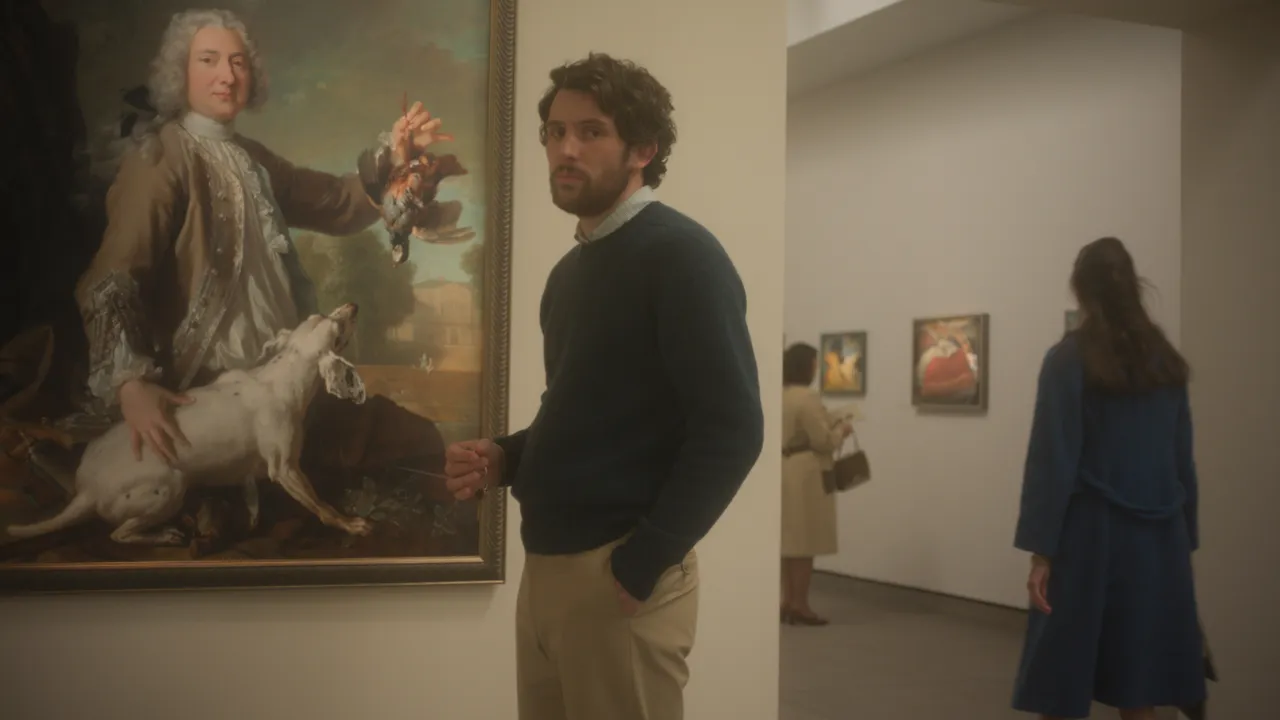
The greatest irony in J.B. Mooney’s plan to rob an art gallery sits in plain sight, mocking him with the very title he so confidently believes he deserves. The Mastermind is deeply indebted to the procedural fatalism of Jean-Melville and echoes the Coen Brothers’ self-sabotaging criminals, yet its coolly detached study of delusion belongs entirely to Kelly Reichardt’s unadorned naturalism. She does not undercut Mooney’s ambition with farce or spectacle – each point of failure is a deliberate anticlimax, denying this art enthusiast both the glory of success and the dignity of spectacular collapse. His is not an airtight scheme undone by a single weakness, but rather a loose assemblage of missteps, oversights, and improvisations that only further entangle him in a web of escalating consequence.
It isn’t hard to see why Mooney chose a crew of relatively dim accomplices to carry out his plan. It would take someone of extremely poor judgement to place any real faith in his competence, while overlooking the nervous guilt and smug arrogance that lurk beneath his calm, collected exterior. Josh O’Connor rarely loses his cool in this role, and at a certain point, we begin to question whether that composure is simply denial as the walls steadily close in around him.


From the moment Mooney foolishly decides to sub in for his getaway driver, he immediately establishes a direct link to the scene, and he is only further implicated when one of his collaborators is caught attempting a bank robbery. He plays with his wedding ring under intense questioning from the FBI, suggesting an enduring attachment to his family, though even in private he lies to both himself and his loved ones that this crime was born of necessity rather than ego. For an unemployed carpenter, he is relatively well-off in middle-class Massachusetts, particularly given his educated background and his father’s reputation as a court judge – though from such insulated privilege, restless boredom and insecurity inevitably stoke a need to prove his own worth.


After all, when circumstances spiral beyond Mooney’s control and he calls his wife with a feeble apology, its apparent sincerity is immediately hollowed out by the request that she wire him money. Over the course of Reichardt’s patient character study, this man thoroughly destroys what was once an ordinary, stable life, and its setting against the Vietnam War only further paints a bleak portrait of American overreach.
News reports, recruitment posters, and Nixon-era rhetoric are dotted through The Mastermind, and although Mooney rarely engages with this political reality, his detachment becomes its own statement on apathy in the face of historical reckoning. Just as the USA brazenly escalates its involvement in Vietnam without a clear exit strategy, Mooney scrambles to escape the fallout of his crime, and soon enough finds his path disastrously colliding with a confrontation between hippies and police. Under Reichardt’s sobered realism, no one truly opts out of social consequence – least of all those who maintain an air of apolitical indifference.


Her inclination toward long, static shots further embeds this observational minimalism within The Mastermind’s structure, slowing its pacing down to a crawl and stripping the heist itself of momentum. Although Reichardt’s more uninteresting compositions don’t always justify their duration, her visual storytelling is nonetheless rigorous as we watch O’Connor’s sly, silent calculation of rooms and relationships, constantly adjusting to shifting risks. In these moments where dialogue recedes, the soundscape gives way to a free jazz score of double bass, bright horns, and a light patter of drums, recalling the cool nonchalance of mid-century noirs. Improvised melodies smoothly riff over accompanying vamps, though as circumstances deteriorate, they eventually accelerate into frantic rhythms and drop to a solo cornet alongside Mooney’s self-inflicted isolation.

Rob Mazurek’s score carries much of The Mastermind’s hushed atmosphere, frequently compensating for Reichardt’s visual restraint, though she at least remains committed to her formal austerity throughout. Humour lands in discreet punchlines, undermining Mooney’s pretensions and exposing his fundamental selfishness, both of which erode his claims to calm control. This narcissist’s downfall is not a dramatic disaster in her steady hands after all, but rather a steady, desolate drift towards the inevitable, precipitating a chain of fatalistic repercussions that – one way or another – pull him back to an unstable reality he has long sought to ignore.
The Mastermind is currently streaming on Mubi.

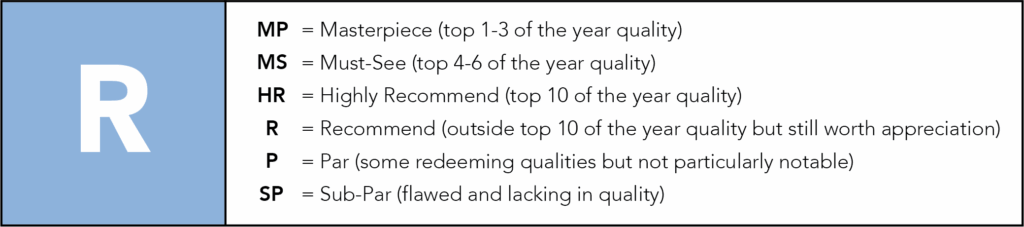
Im not sure why but these images shown here makes it look more than a R lol, really hope to watch it for myself cause it does sound interesting
I tend to pick the strongest compositions as screenshots, while my overall assessment takes into account how diluted they are throughout the rest of the film. I can see an argument pushing it up to R/HR, but I just don’t think Reichardt really swings for the fences visually as much as she does in First Cow or Wendy and Lucy.