
King Hu | 2hr 59min
This review was requested by Ravshan. Find out how to commission review of a film of your choice here.

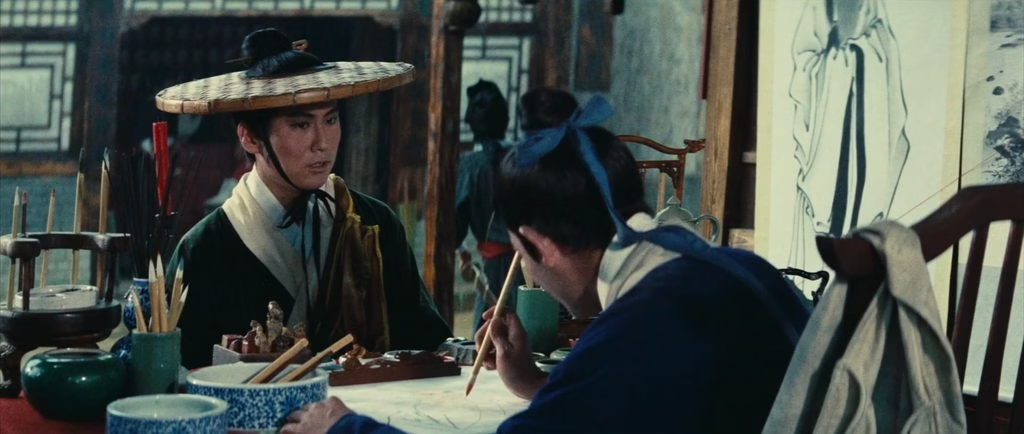
When Gu Shengzai encounters fugitive warrior Yang hiding inside the long-abandoned Jing Lu Fort, the provincial artist effectively crosses the threshold between history and legend. It is said that ghosts haunt this ancient stronghold, and mysterious outsider Ouyang even warns him as such, though the world of covert struggle and hidden power that he discovers is far more complex than any local superstition. Beyond his humble existence painting portraits in the village square, there lies a hidden realm of superhuman martial prowess, cultivated through rigorous training to overcome ordinary physical limitations. Combatants leap between trees, glide across rooftops, and deflect flying daggers with ease – yet as King Hu sensitively reveals, this is not the highest level of transcendence in A Touch of Zen.
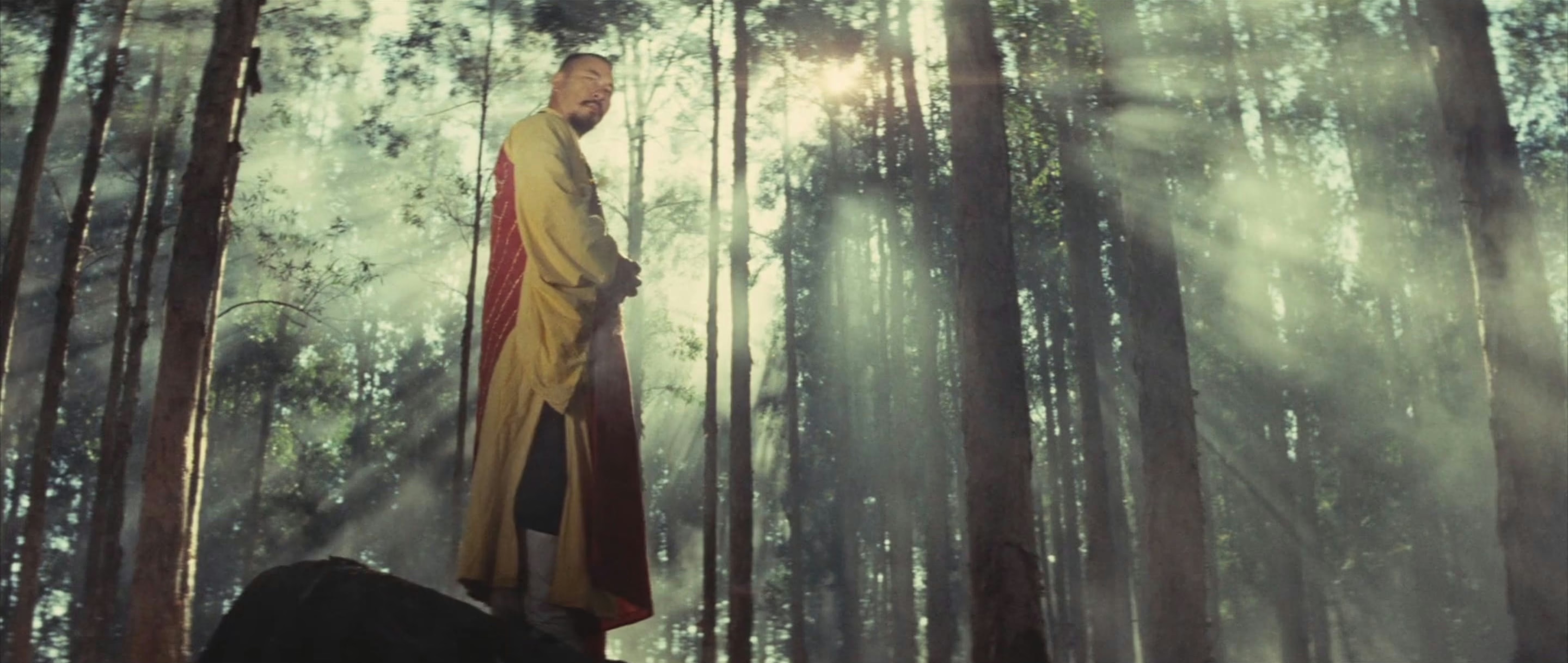
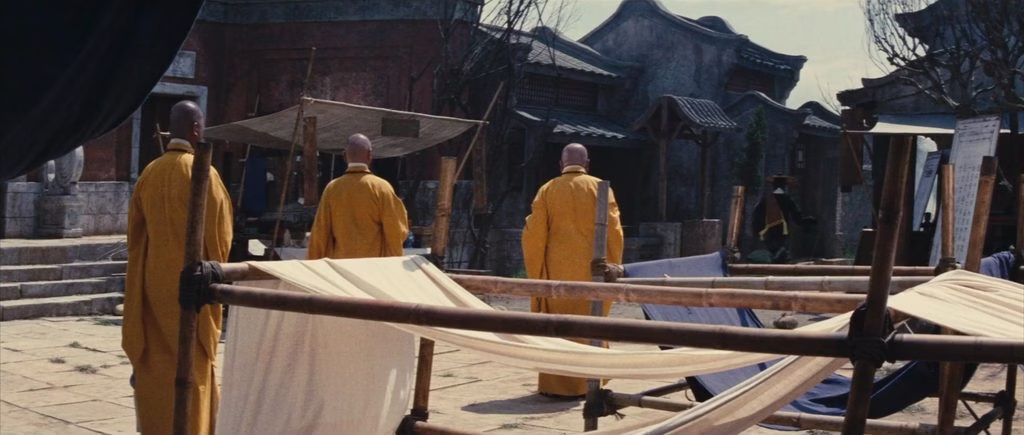
Deep in the forest outside Gu’s village, Chan Buddhist monks meditate in isolation from worldly affairs. They are not concerned with notions of desire or violence, but rather the dissolution of conflict, achieved through absolute restraint and non-attachment. To conquer one’s enemies through cunning traps or martial technique is no doubt a form of practiced mastery, yet against the non-lethal discipline of these monks, force becomes functionally futile.
Still, to first reach this Zen enlightenment, Hu recognises the necessity of first inhabiting the systems it transcends. After all, Gu’s world is large, complex, and entirely absorbing – but only to the point that it perpetuates familiar cycles of conflict. As far as he is concerned, the political intrigue and adventure that Yang has brought to town is the most elevated expression of human struggle, overwhelming and tantalising him with a spectacle that dwarfs his previous reality. Ever since her father reported the crimes of the Grand Eunuch Wei to the Chinese emperor, his family and allies have been hunted down across the land. While the eunuch’s onscreen absence reduces bureaucratic cruelty to an impersonal threat, A Touch of Zen grants its duels, romances, and acts of resistance a tangible, invigorating reality. Life is to be vividly experienced in Hu’s creation, and his kinetic style embraces that passion which the disembodied state cannot comprehend.
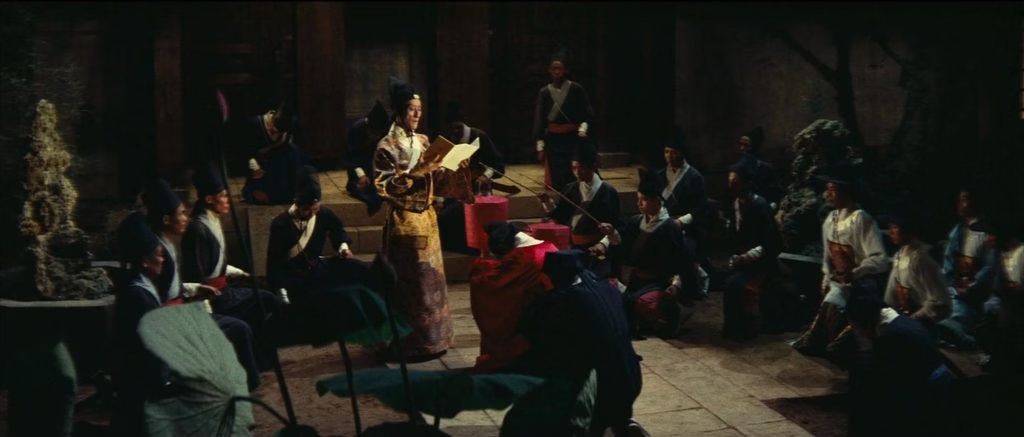
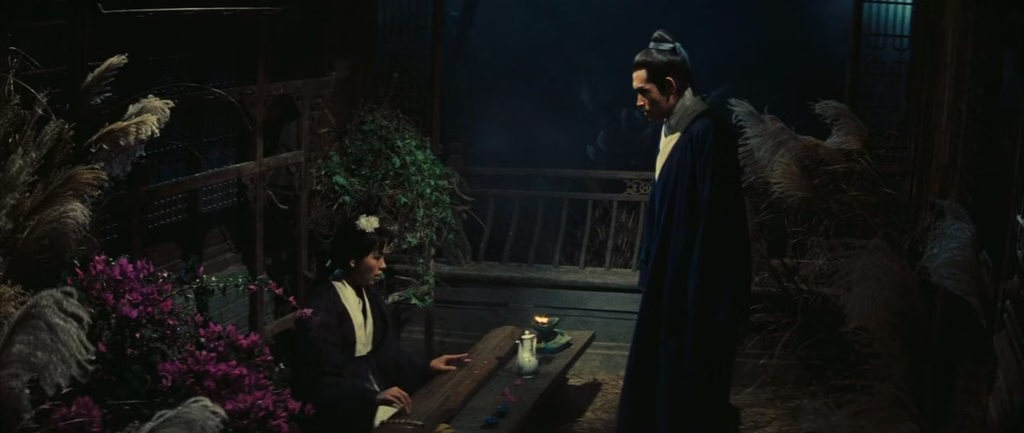
If we are to eventually transcend this material reality after all, then we must first feel its tactility and weight, and Hu’s worldbuilding does not undertake this task lightly. Rather than simply constructing decorative facades, he builds Gu’s village as a sprawling, fully functional environment, complete with a colossal gate tower, general’s mansion, and water pavilion. By scorching wood, scrubbing walls with steel wire, and leaving his sets to the elements for nine months before production, they accumulate decades of wear in remarkable detail, while crowding the square with artisans and fabrics that divide the frame into shifting layers.
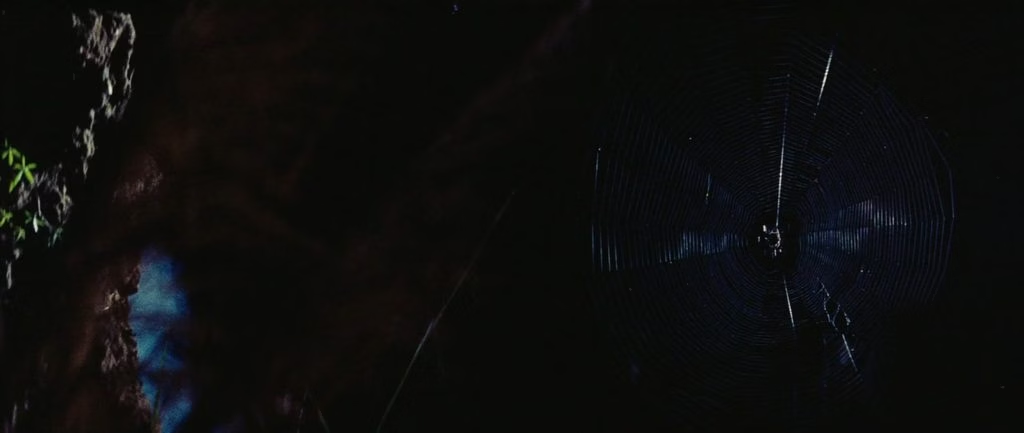
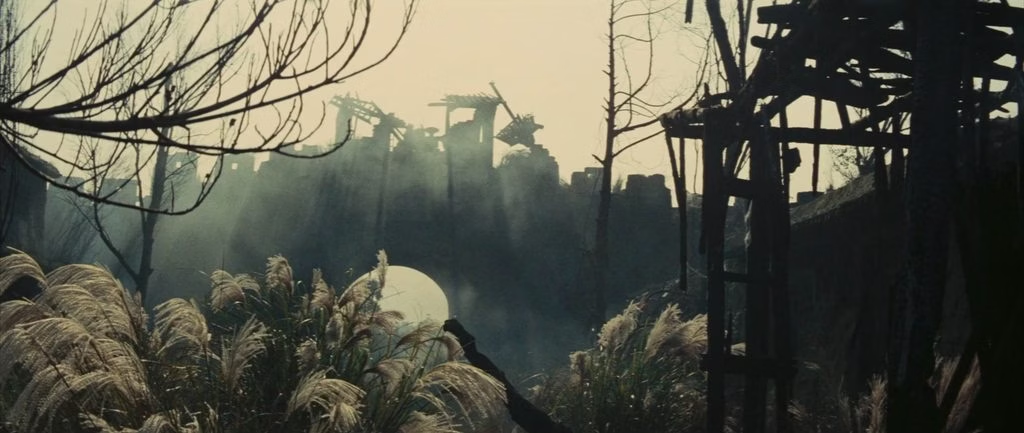
Even more impressive as a set piece though is the Jing Lu Fort, which becomes the central stage upon which Hu develops his characters and escalates conflicts. The opening montage of spiders immediately establishes it as a site of both female entrapment and Zen awareness, whereby silken webs are extensions of a sensitive nervous system, though it equally becomes a site of delicate peace in the light of day. Small birds flit by the camera, pink water lilies rest on undisturbed ponds, and the feather-like plumes of Chinese silver grass often obstruct low angles, as though returning these gardens to nature. Even the stone and wooden architecture seems to dissolve into the surrounding landscape, and it is here among the overgrowth that Gu and Yang draw closer, subverting the traditional wen and wu dichotomy of classical Chinese philosophy.
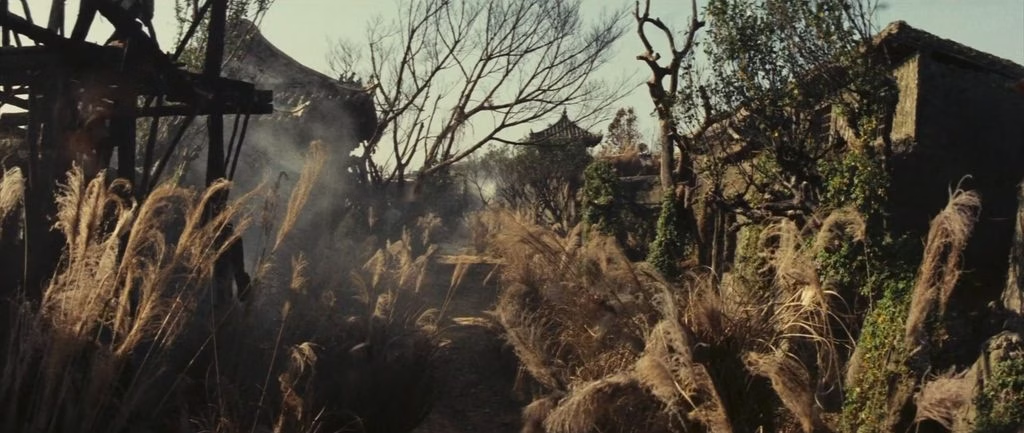
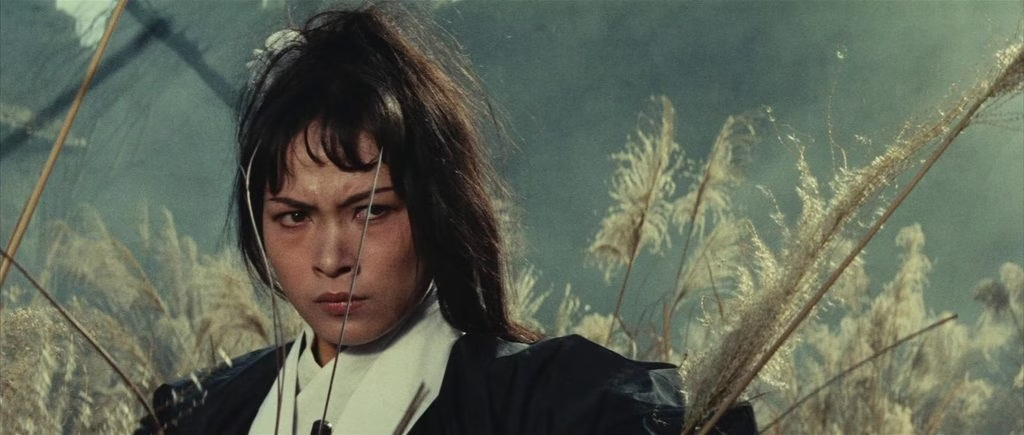
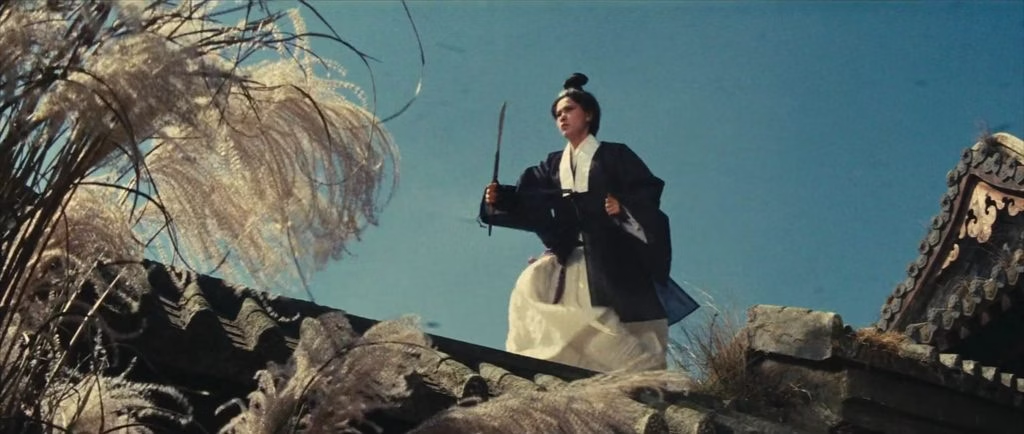
Where wen represents civil, intellectual culture, wu embodies martial force, and it is clear where Gu and Yang are positioned in this binary structure. Together, they form an idealised balance between mind and body, though somewhat unconventionally aligning the male with wen and the female with wu. Gu may not be a skilled combatant, though he grows into a skilled, perceptive strategist through A Touch of Zen, combining his cerebral strengths with warrior allies to conquer enemy forces. Meanwhile, Yang’s physically assertive characterisation pushes against traditional feminine roles of marriage and motherhood, despite her fleeting romance with Gu. When Ouyang invades the fort and threatens to execute her as a state fugitive, Hu reveals the full extent of her wuxia power too, as their silhouettes bound across battlements and duel atop walls in the thick, dusty air.
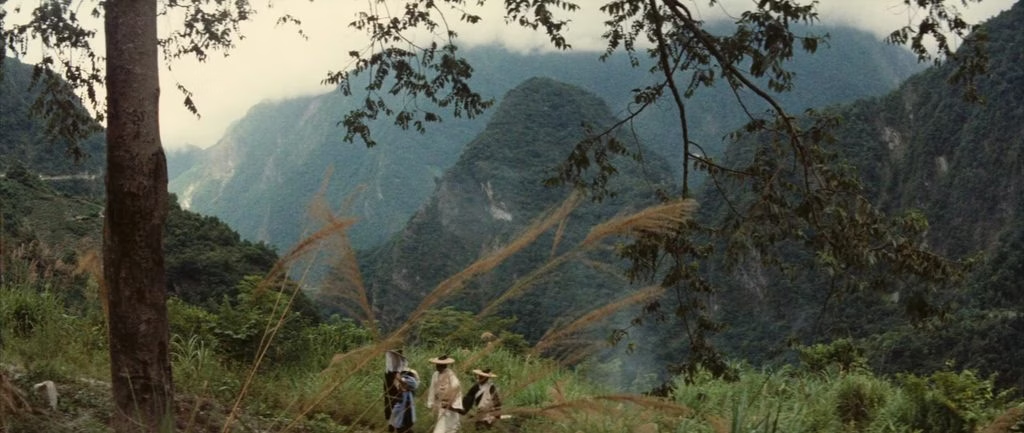
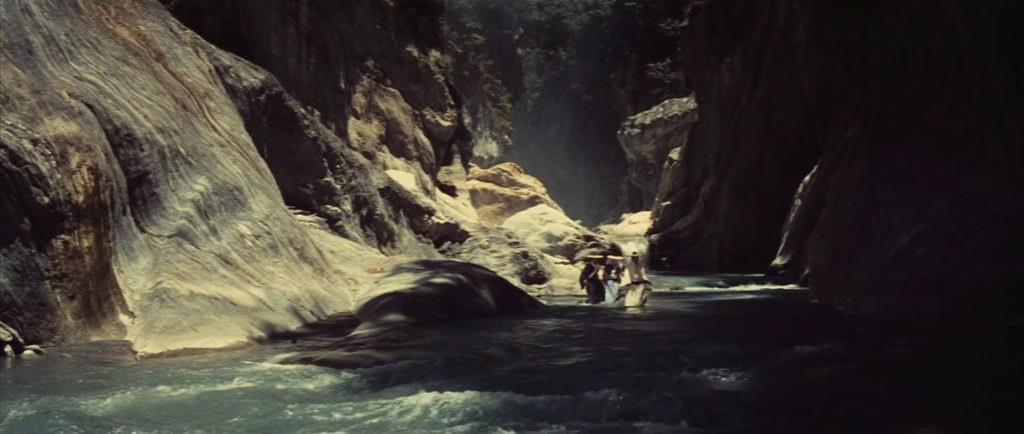
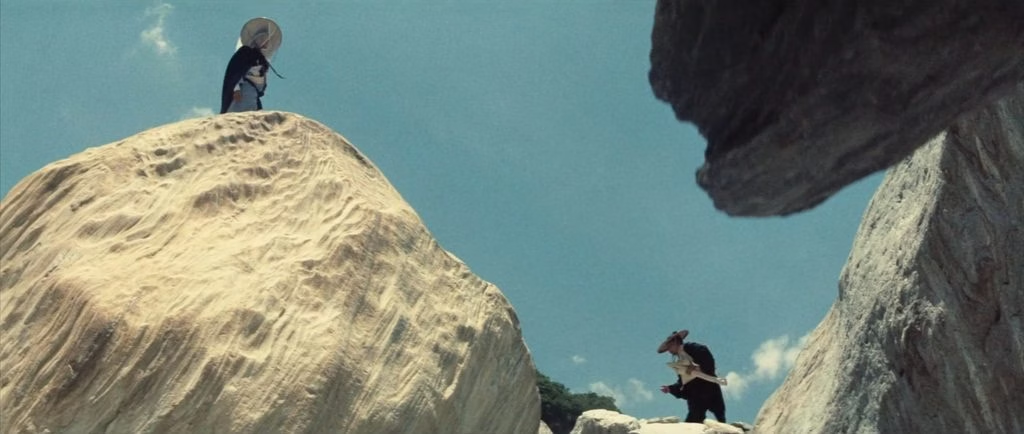
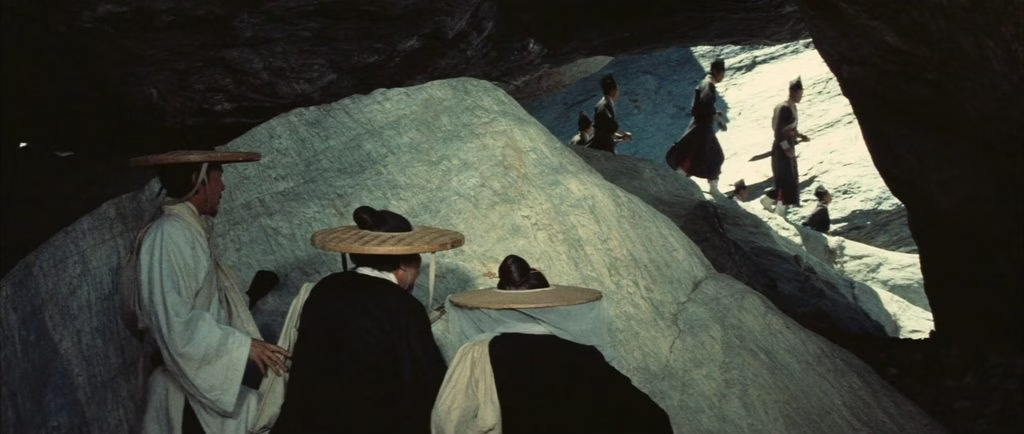
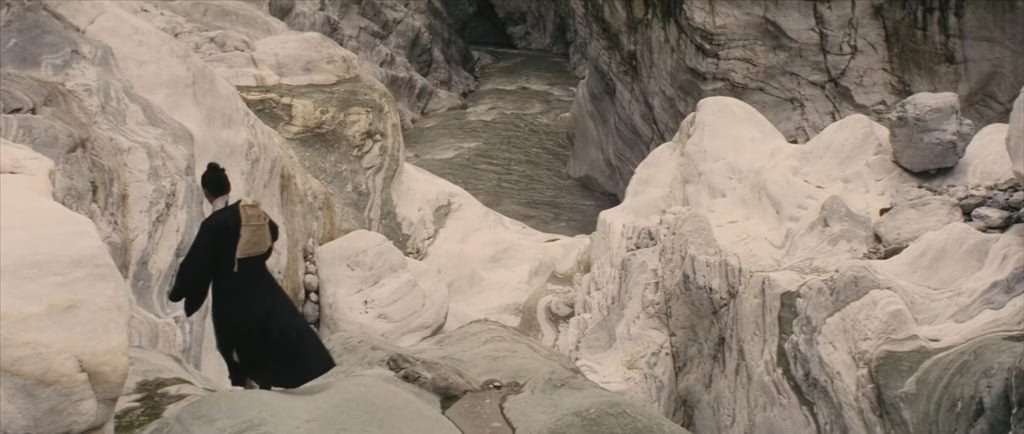
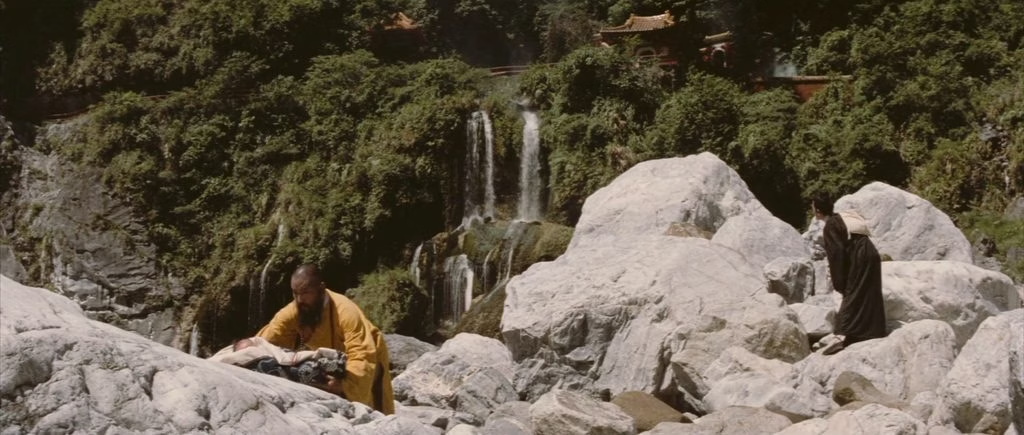
Later as Yang recounts the chain of events which led her to this abandoned fort, A Touch of Zen drifts into an extended flashback, further moving the narrative away from Gu’s village and into a lush, expansive wilderness. The local physician Lu and blind fortune teller Shi are in fact disguised generals, Gu learns, and have secretly travelled with Yang while attempting to evade Wei’s Eastern Depot party. Hu’s photography wondrously opens up here as they traverse dense forests and weathered mountain ranges, far more ancient than the villages and fortresses we have inhabited up until now, and suggesting a world that extends beyond trivial political concerns. Stony riverbanks smoothed by the flow of water gently curve across the terrain, while giant, craggy boulders frame their passage through the landscape and hide them from imperial soldiers patrolling distant trails.
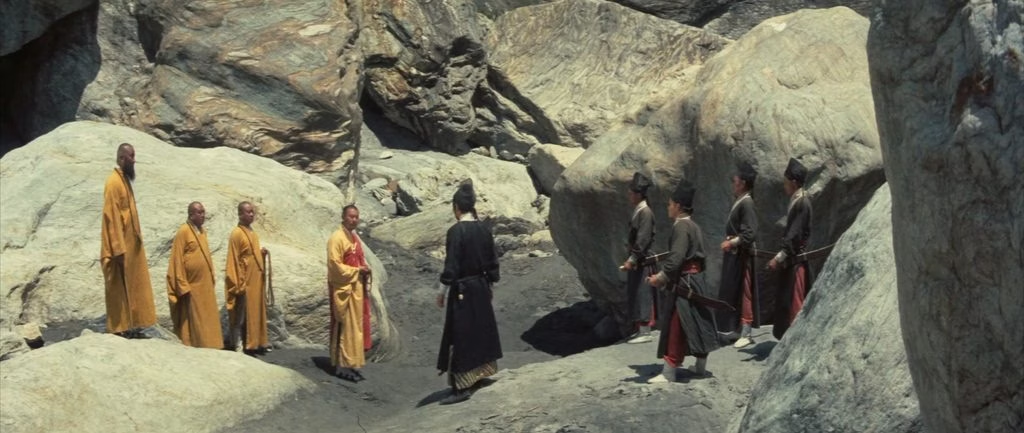
For a brief moment, violence seems inevitable as Yang, Lu, and Shi prepare to fight their pursuers, though the arrival of a third party swiftly dispels this tension. Dressed in yellow and red robes, an order of monks led by Abbot Huiyuan confront the soldiers, effortlessly disarming Ouyang and his men using nothing more than their hands and rope. “There is no place for bloodshed on Buddha’s sacred grounds,” Huiyuan proclaims, before inviting Yang and her companions to take refuge at their monastery. There, she spent two years training with the monks, she recalls, only to eventually flee when Wei’s forces returned.
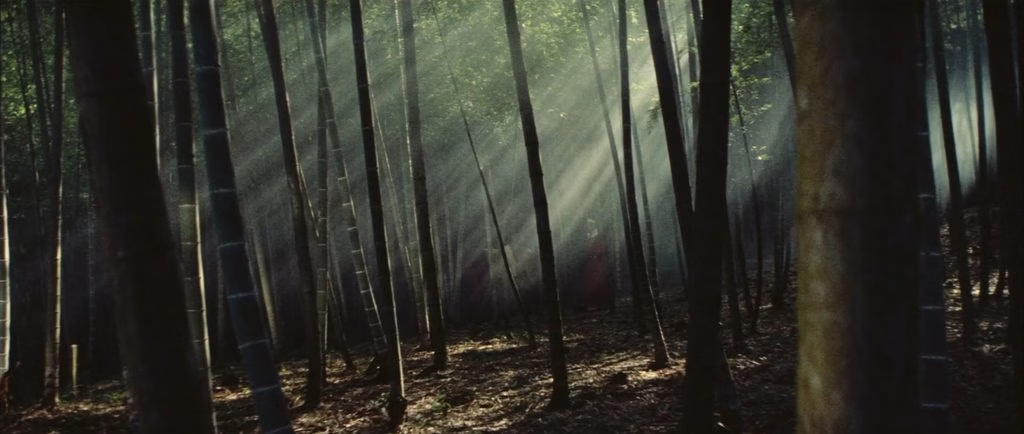
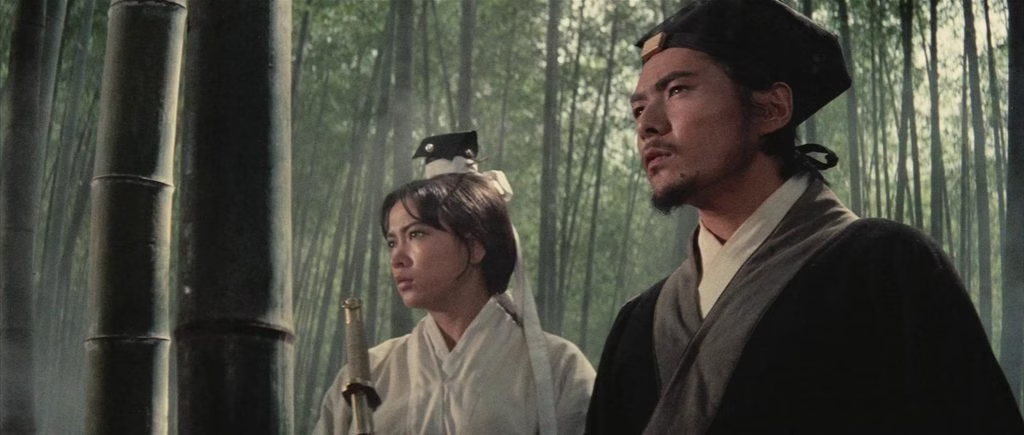
“If only the abbot would help us now,” Gu remarks, though Yang fully understands that his intervention may only extend so far. With news of Ouyang retreating to unite with Wei’s military forces, led by commander Men Da, Yang recognises that they must consequently take matters into their own hands and intercept this meeting before it can happen. Within a green bamboo forest, Hu thus unleashes a breathtaking coordination of movement, landscape, and editing, filtering sunlight through the dense canopy as Yang and her companions engage with Ouyang’s small contingent in impossibly fluid combat. Their red uniforms pierce the sanctity of this verdant thicket, and although Ouyang slices down bamboo stalks to disrupt the terrain, he is no match for these fugitives’ superior agility and precision.
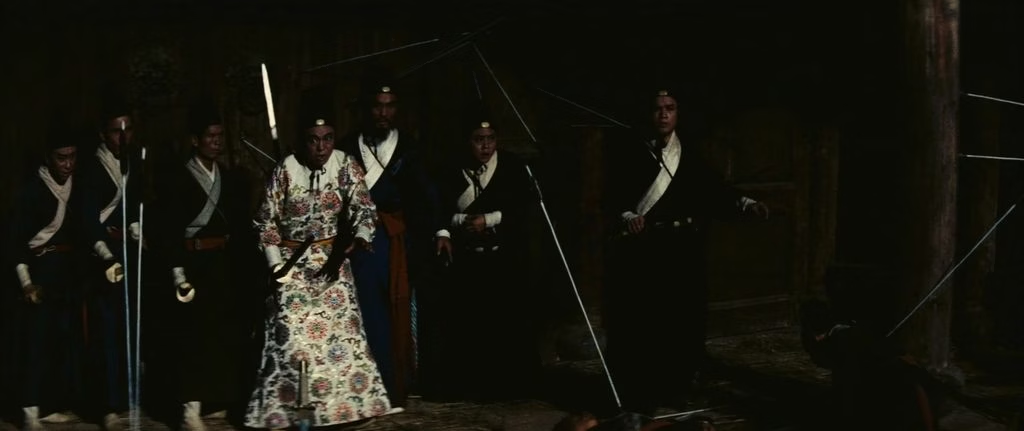
Back at the fort, Gu finally seizes the opportunity to demonstrate his own value to this battle-worn crew, contrasting Yang’s transcendent martial brilliance with a more calculated, mechanical ambush. Luring Men Da’s men into the fort and stoking rumours of its supposedly haunted grounds, Gu lays traps among its trees and parapets, settling a creeping unease over these soldiers as bells seemingly ring of their own accord. Soon enough, dummies become ghosts, fires seemingly float through the air, and all the while Gu’s allies hide in the shadows to pick off disoriented, terrified soldiers at their most vulnerable. For once in his life, Gu’s intelligence is given material consequence, and victory tastes sweet the following morning as he cackles at the bloody aftermath – at least until the full weight of this massacre truly sinks in.
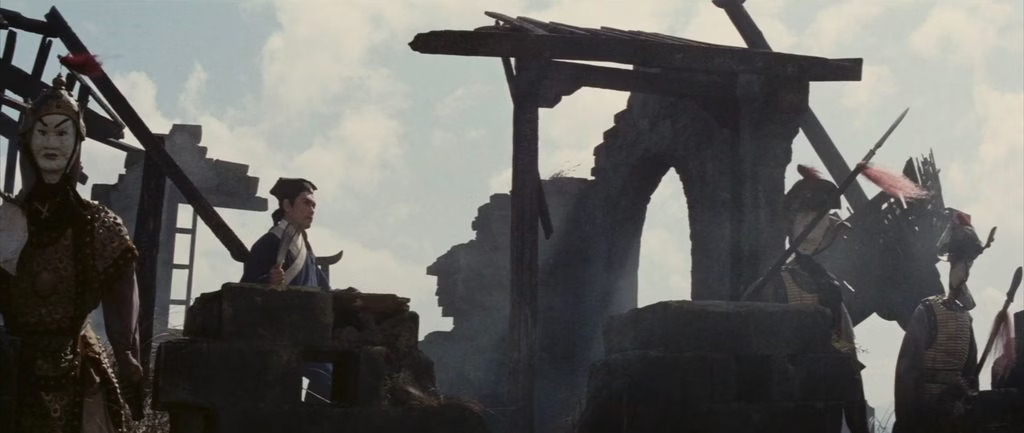
Even at a tactical distance, Gu’s ingenuity does not escape coercive force, but instead redistributes it through more indirect systems. The feat itself is undeniably impressive, even rivalling Yang’s aerial agility, yet violence is only displaced rather than transcended. That Yang has also disappeared in the aftermath only further disrupts his certainty, eventually driving him deep into the wilderness to trace her path – yet by this point, A Touch of Zen is no longer anchored in Gu’s perspective. Yang has returned to the monastery and, in the intervening months, has given birth to Gu’s child. Rather than pursuing motherhood however, she leaves the baby in his care, returning him to his worldly village life while she seeks enlightenment under Huiyuan and the monks.
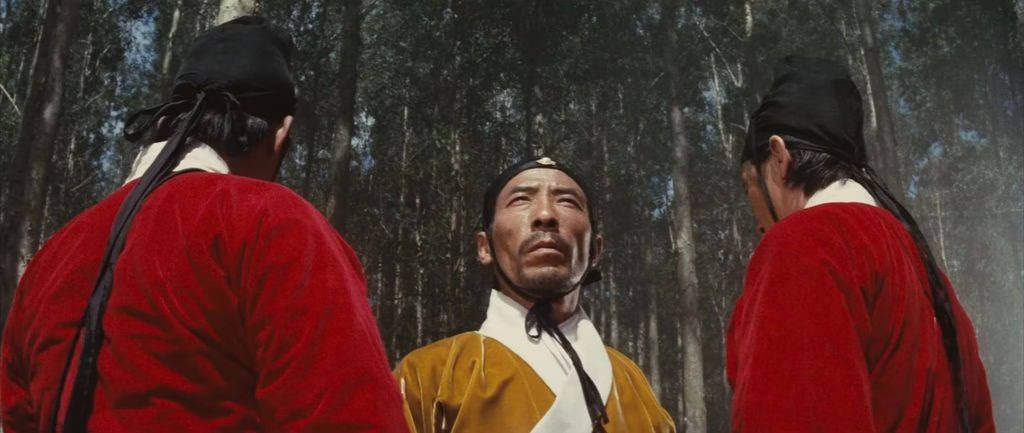
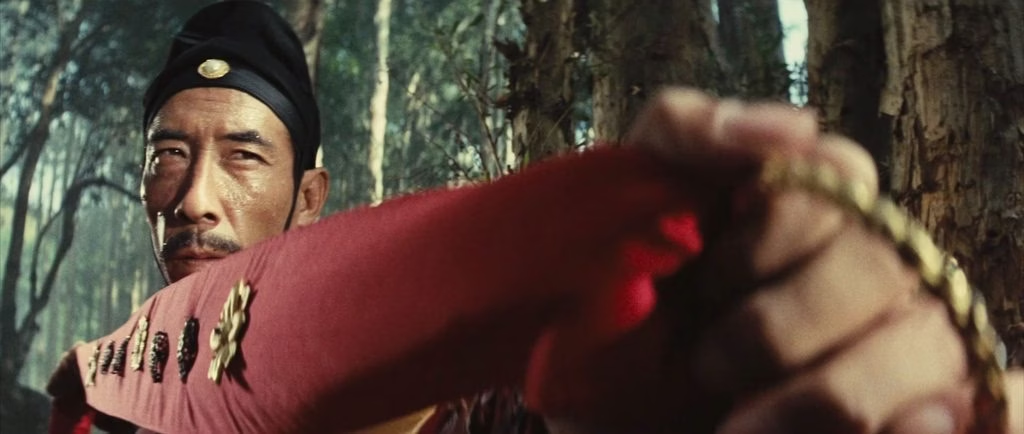
With the arrival of Wei’s deputy, the eunuch Xu, Hu’s narrative appears to mirror this philosophical transition as it too abandons clarity for a more cosmic, metaphysical framework. Initially, Xu and Yang’s duel unfolds much like her conflict with Ouyang, though Xu proves an even more formidable foe as jump cuts subtly accentuate his preternatural reflexes and he leaps through the air like a leopard. He and his men are genuinely intimidating, towering over the camera’s low angles, and Hu’s wuxia spectacle reaches its virtuosic peak – yet for the first time, such mastery feels curiously insufficient.
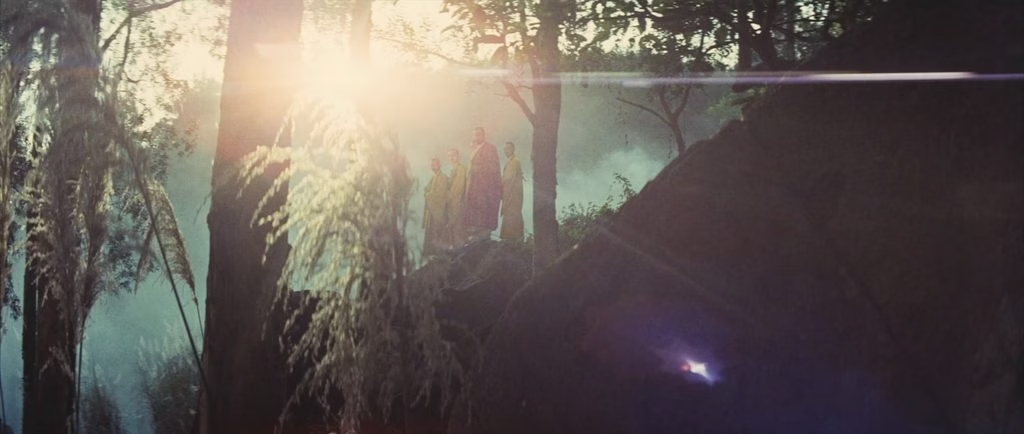
Huiyuan and his monks do not arrive in a rush of heroic intervention, but are rather revealed standing patiently atop a nearby mountain, as though they have always been there. Hu has repeatedly drawn our eye to shafts of sunlight piercing dense foliage throughout A Touch of Zen, and now as those rays diffuse through the morning mist, they almost seem to emanate from Huiyuan himself. Their presence is at once humble and majestic, showing no fear in the face of Xu’s ferocity, and even offering him the chance to withdraw before they are forced to respond.
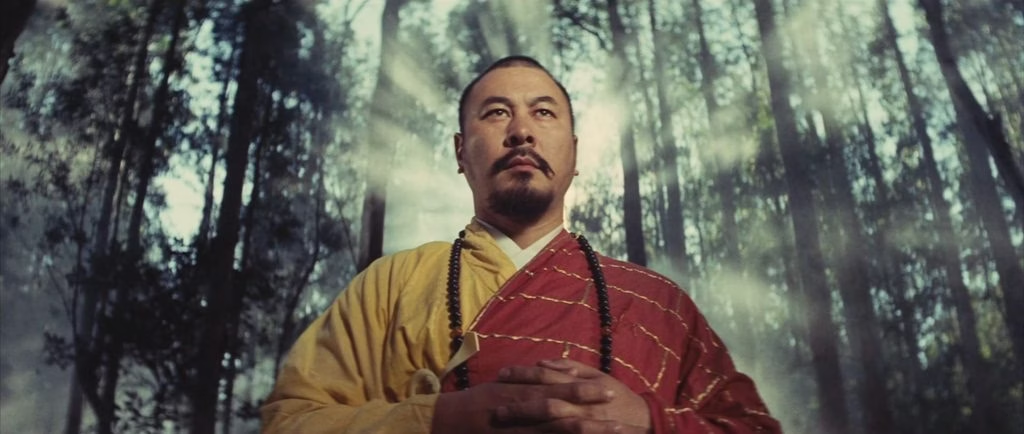
Once again, the monks exert little effort in subduing their opponents. Rather than counteracting Xu’s blades with their own, they snap his daggers with ease and swiftly ensnare him in their ropes. No longer does the score accompany swordfights with adrenalised instrumentals – alongside the Chinese woodwinds and percussion, male choirs chant in low, resonant harmony, as though transforming this battle into a sacred ritual. So too are glistening rivers and waving reeds spliced in with their movements, entirely rejecting traditional continuity editing for impressionistic montage, and subsuming the monks into the broader patterns of nature itself.
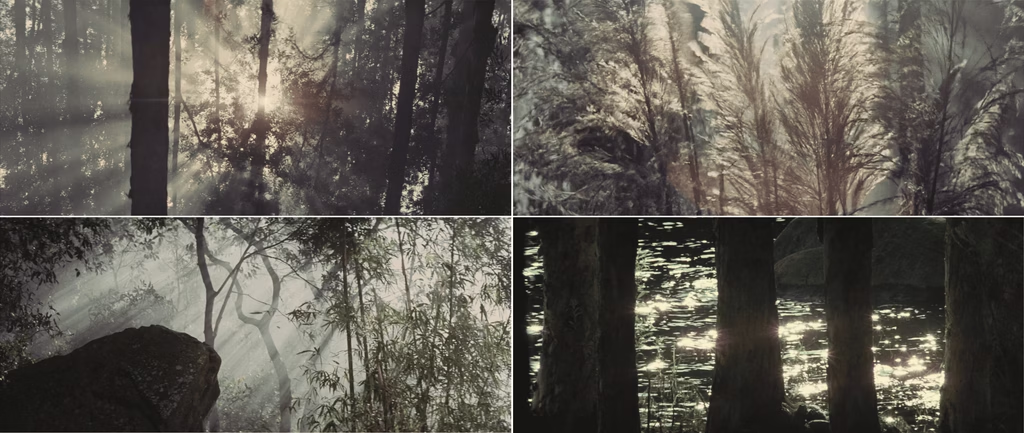
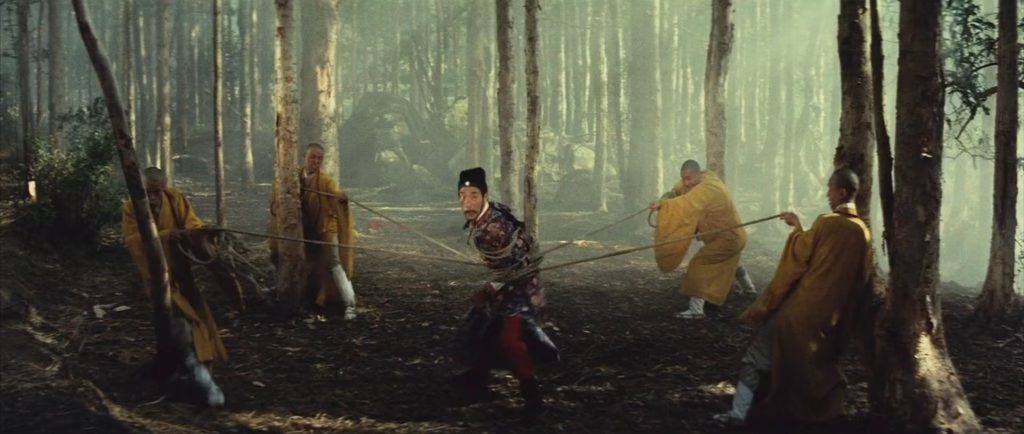
At last, A Touch of Zen reaches its spiritual apotheosis. Through the dissipation of struggle, individuality is absorbed into a greater metaphysical unity, and Hu’s final scenes only sink further into mystical wonder and ambiguity as we drift into a vast, arid desert. There, Xu attempts one last deceitful trick to gain the upper hand and stabs Huiyan, though worldly strategies no longer possess any meaning against one who has relinquished attachment to victory and defeat alike. Reeling back from a blow to the forehead, Xu is blinded by shimmering dust, while the desert itself becomes a psychedelic dreamscape of inverted, otherworldly hues through Hu’s colour-negative photography.
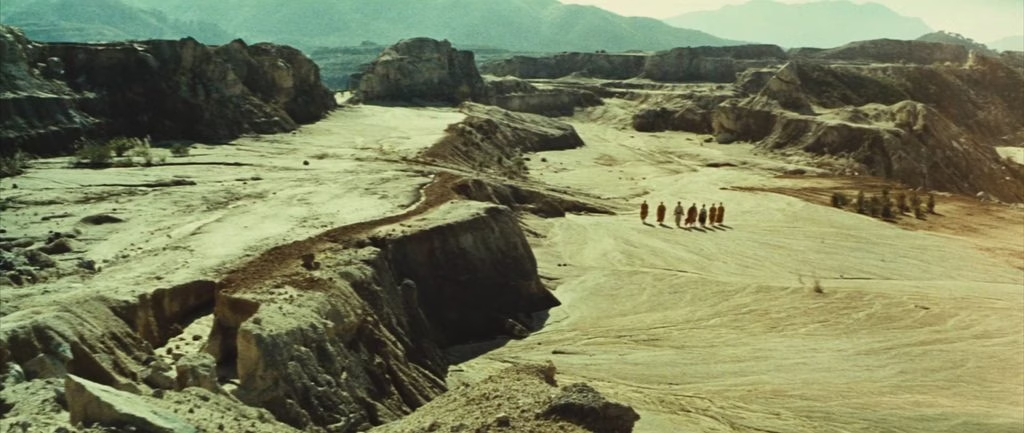
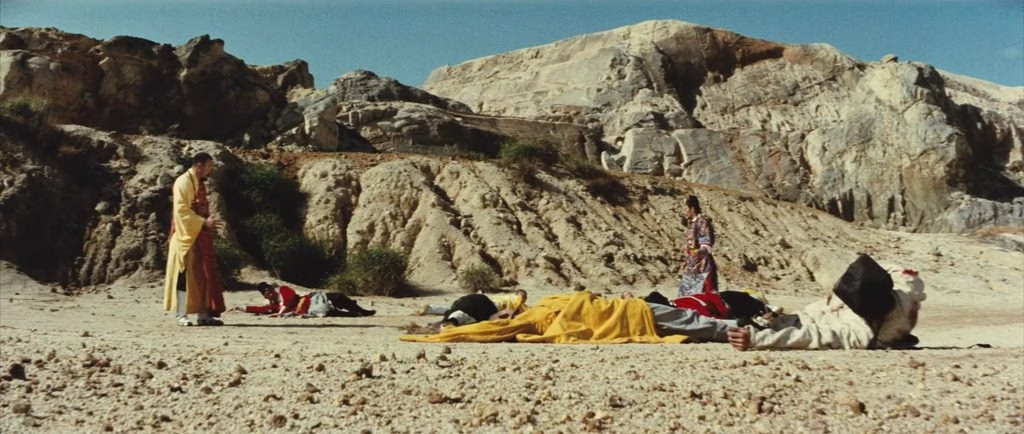
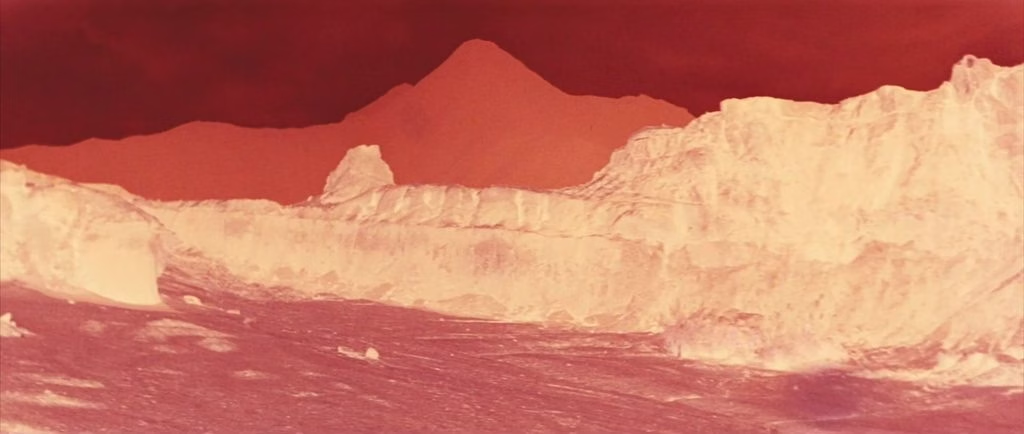
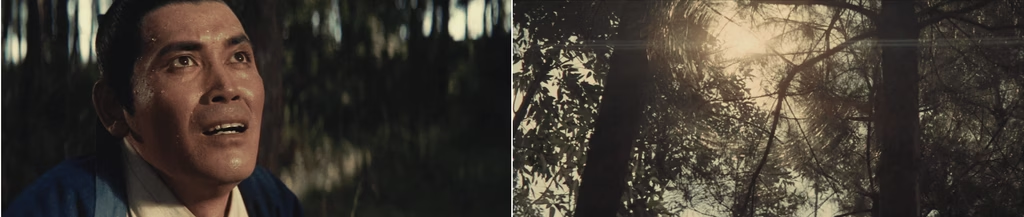
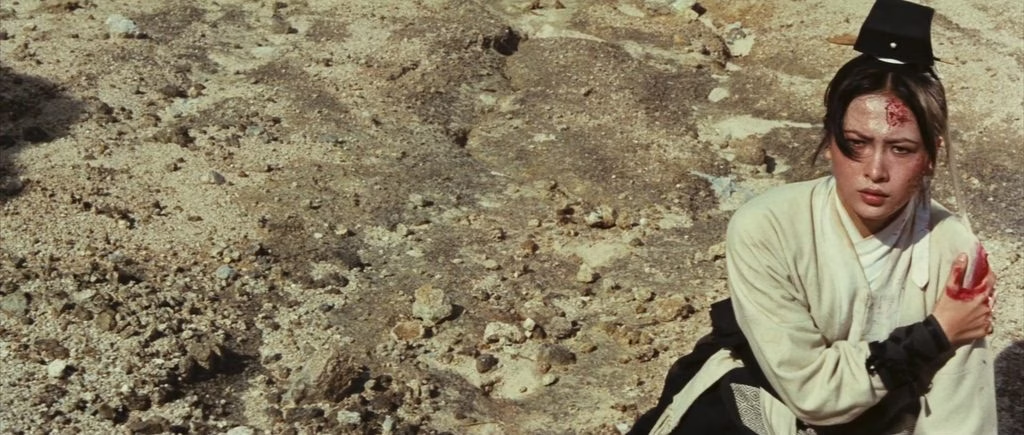
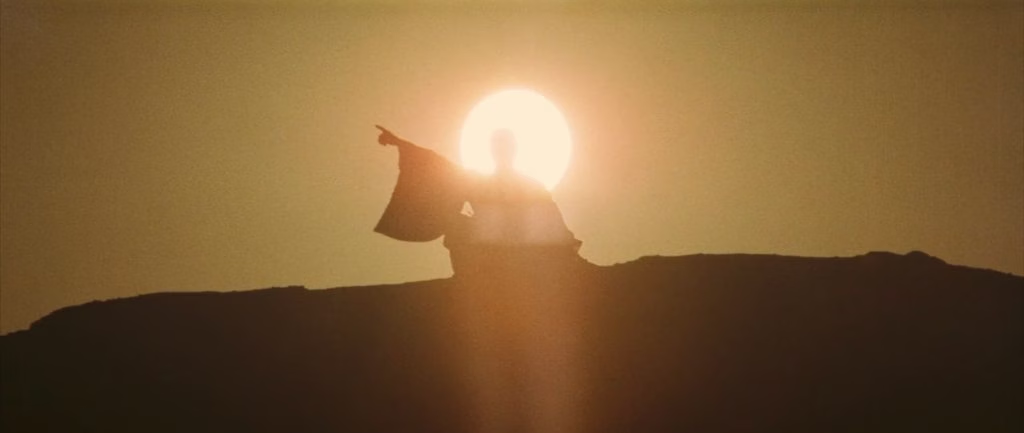
Standing atop a barren escarpment, Huiyuan reveals his stab wound, bleeding a luminous, metallic gold. Whatever remains of his attachment to mortal existence ceases in that moment, and as the sun silhouettes his body like a Buddha icon carved from light, Xu casts himself off a clifftop in shame, terror, and awe at this divine mystery. The bruised, bloodied Yang meanwhile remains unmistakably human as she gazes up at him in wonder, wordlessly embodying the limits of martial mastery before a higher spiritual awakening, and far away in a forest even Gu falls to his knees as though sensing this distant ascension. At last, A Touch of Zen surrenders to transcendence, reaching toward a soothing liberation of the soul and body which art cannot rationalise – only intuitively intimate through Hu’s evaporation of wuxia spectacle into meditative, cosmic stillness.
A Touch of Zen is currently streaming on The Criterion Channel.
Have a film you’d like me to write about next? Request a review here.