Mark Anthony Green | 1hr 44min

If celebrity is a cult in this modern media landscape of parasocial obsession, then veteran pop star Moretti crowns himself its messiah in Opus. It has been decades since he abandoned public life for his secluded estate, so news of his comeback album ‘Caesar’s Request’ is met with near-religious fervour, though its title is no empty provocation. When the Roman emperor of its namesake was kidnapped by pirates, he was insulted that the demanded ransom was so low, and insisted that it be raised to reflect his true status. Upon being freed, Julius Caesar returned to crucify his captors – not for imprisoning him, but for daring to mistake him for their equal. “Royalty, at the mercy of peasants, is still royalty,” Moretti explains, pompously regarding his artistic brilliance as proof of his innate superiority over the masses consuming it, and consequently justifying his own ego.
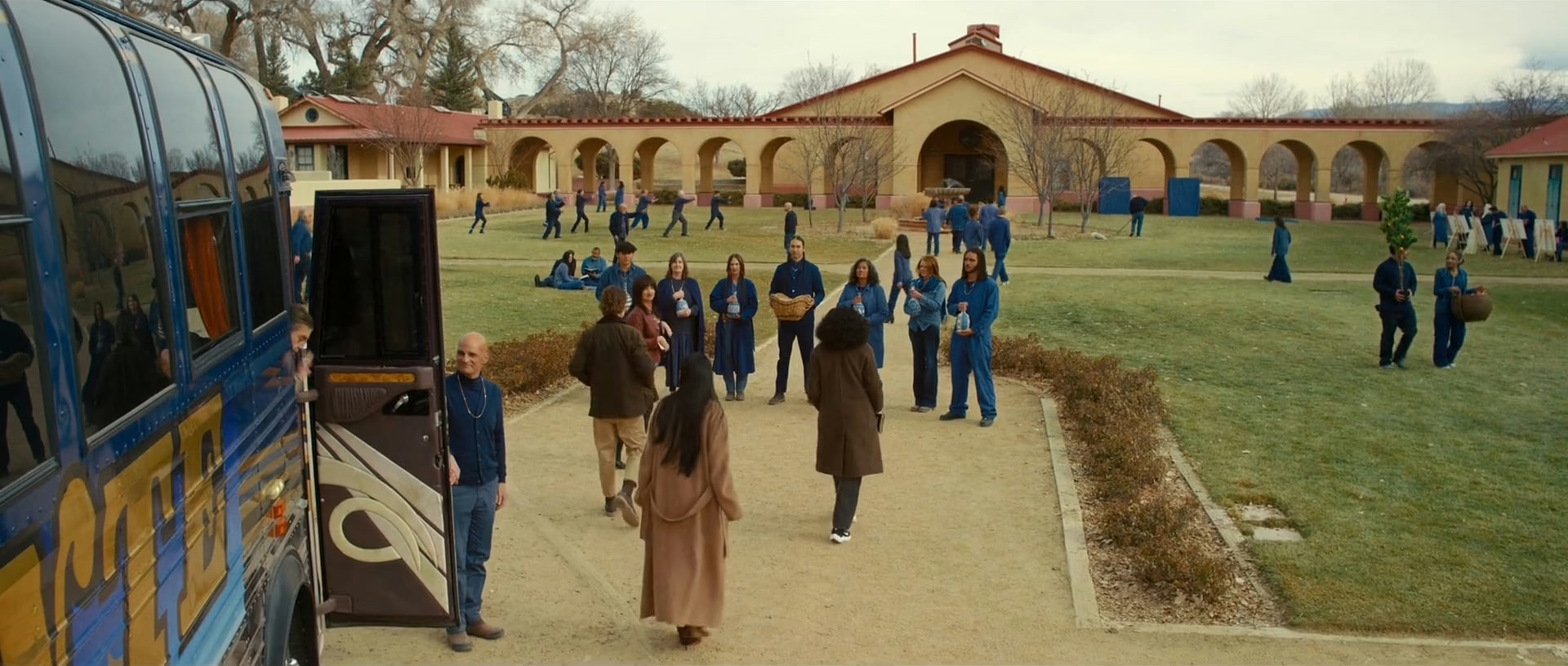
When journalist Ariel is invited to his compound along with five other high-profile media figures, it quickly becomes clear that he is not alone in his mythology. A vast congregation of followers has gravitated to this self-styled prophet over the years, transcending mere admiration of his genius and devoting their lives to his teachings. United under his philosophy of Levelism, they consider themselves disciples tasked with protecting imagination, believing that ordinary people may ascend to godhood through the act of creation. For visionaries like Moretti whose talents supposedly elevate them above the masses, authority thus becomes a divine birthright, while those who treat such royalty as common flesh are marked for retribution.
Emerging from the world of upmarket lifestyle journalism, Mark Anthony Green intimately understands curated cultural prestige and its insidious machinations, situating Opus within a lineage of recent films trapping naïve outsiders within cult-like communities. Get Out and Midsommar are the benchmarks of this subgenre, while more recent entries like The Menu and Antebellum are a little more derivative, though each interrogate social hierarchies that either destroy, absorb, or free their protagonists with renewed clarity. Opus no doubt sits alongside the more minor imitations here, even edging into Don’t Worry Darling-territory as it slips into a grab-bag of cult-horror imagery, from arbitrary traditions to unfortunate ‘accidents’. Although Green’s wavering formal control struggles to reconcile how these elements operate within the same system, Opus’ vibrant, intoxicating world proves to be richly textured in its design, visually manifesting the hierarchical duality which lies at the heart of Moretti’s philosophy.
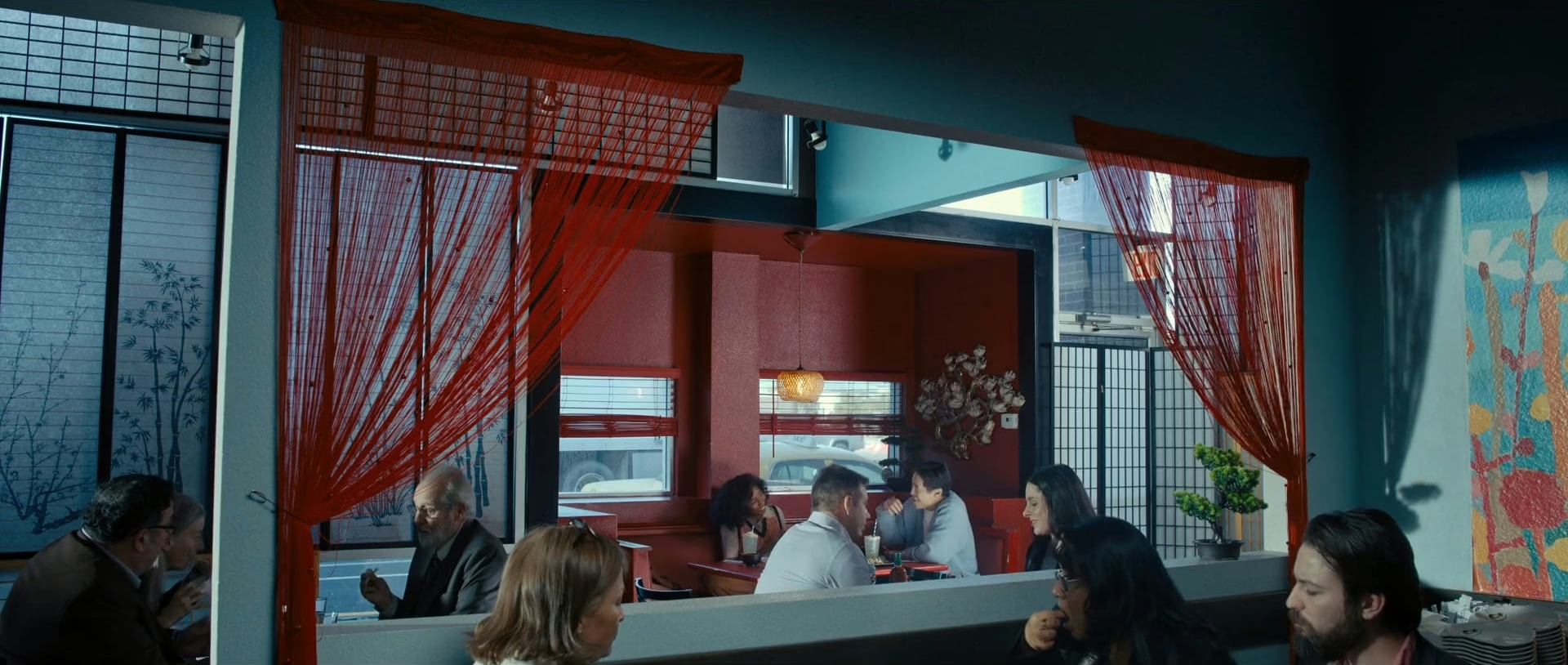
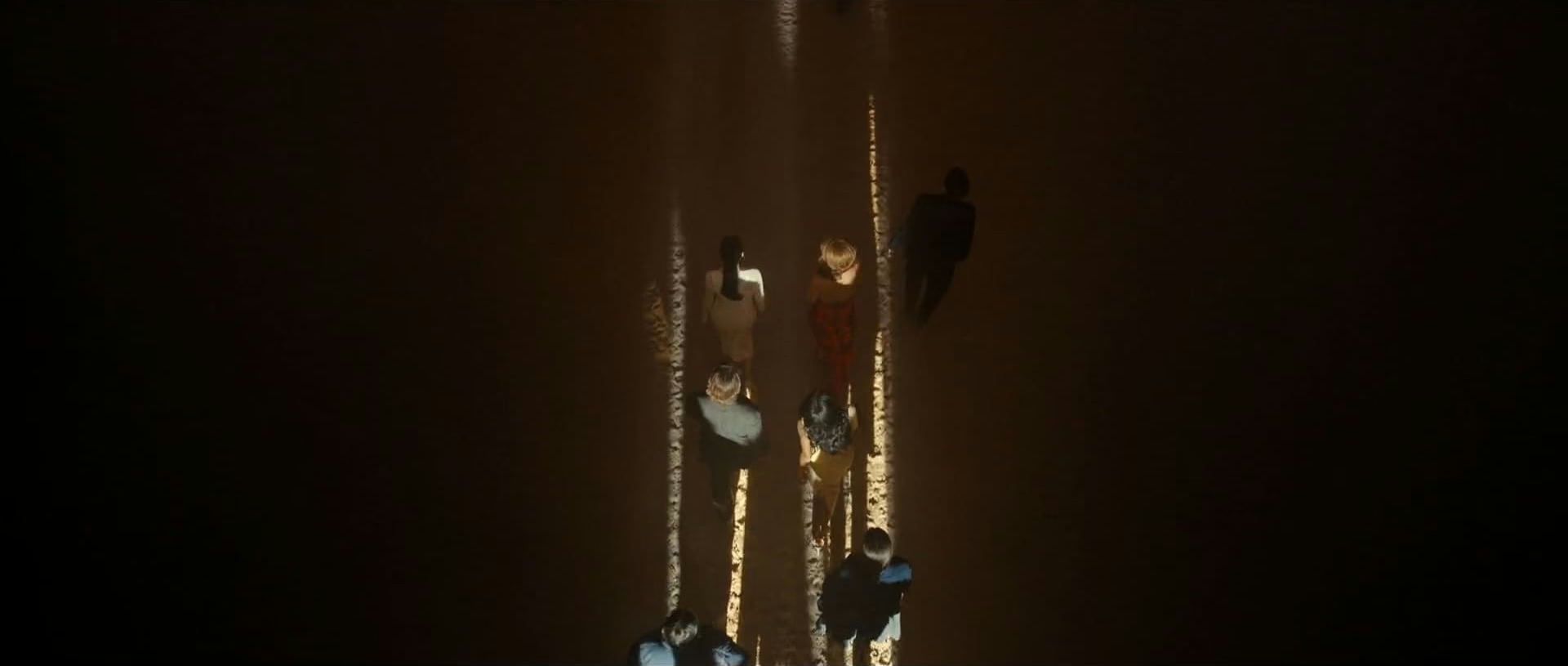
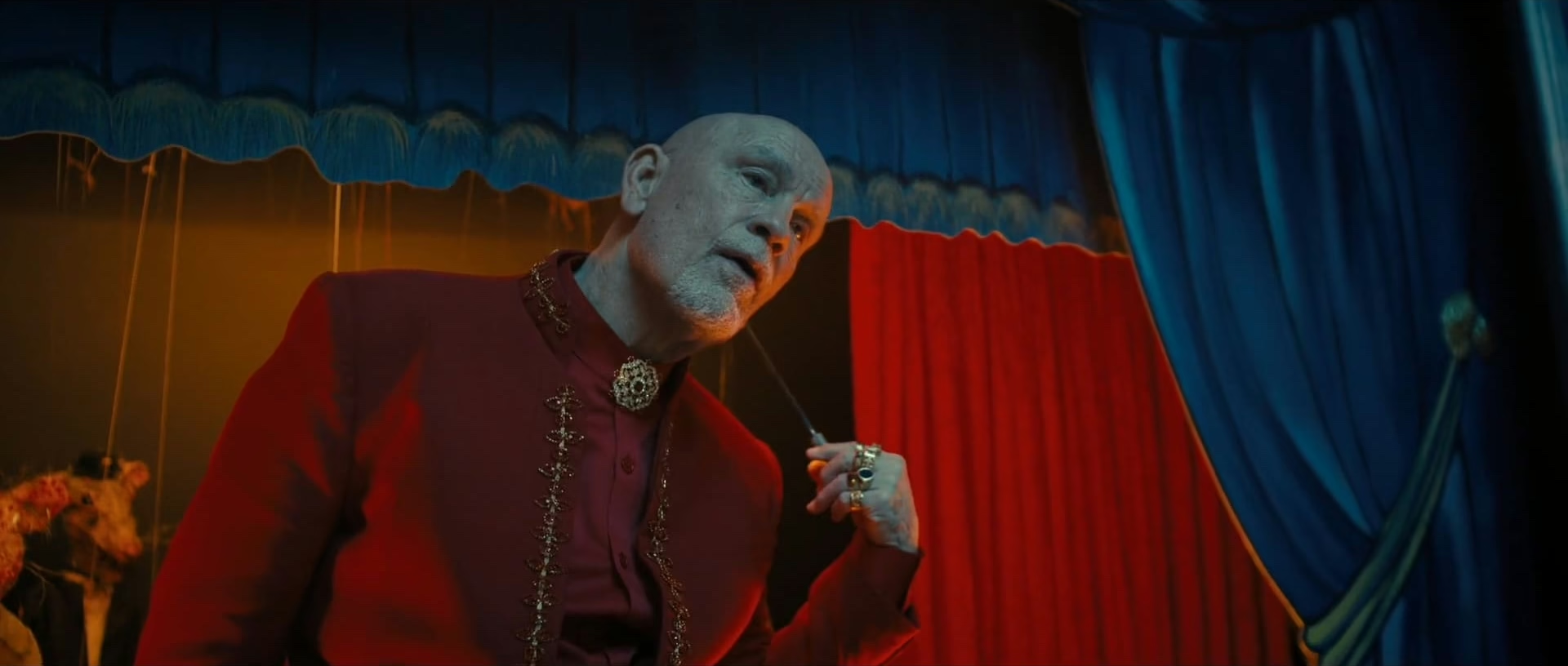
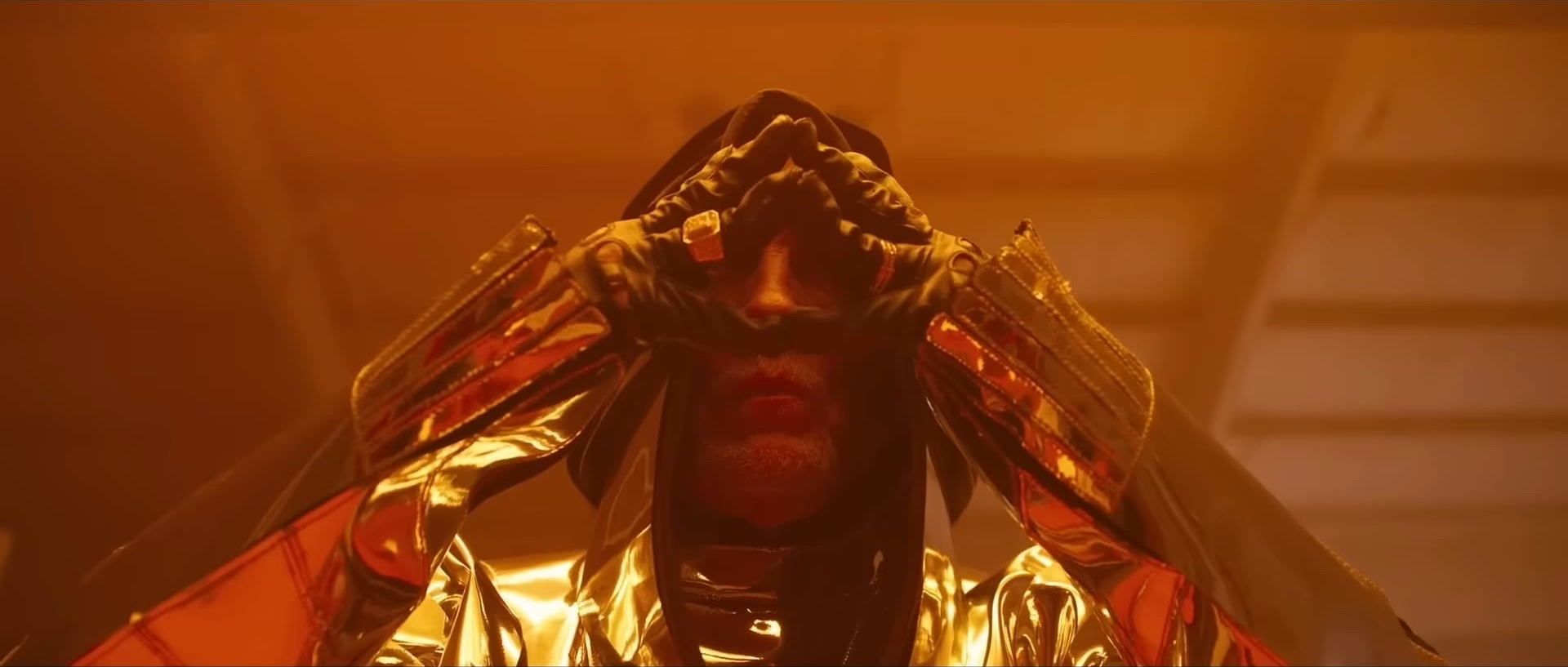
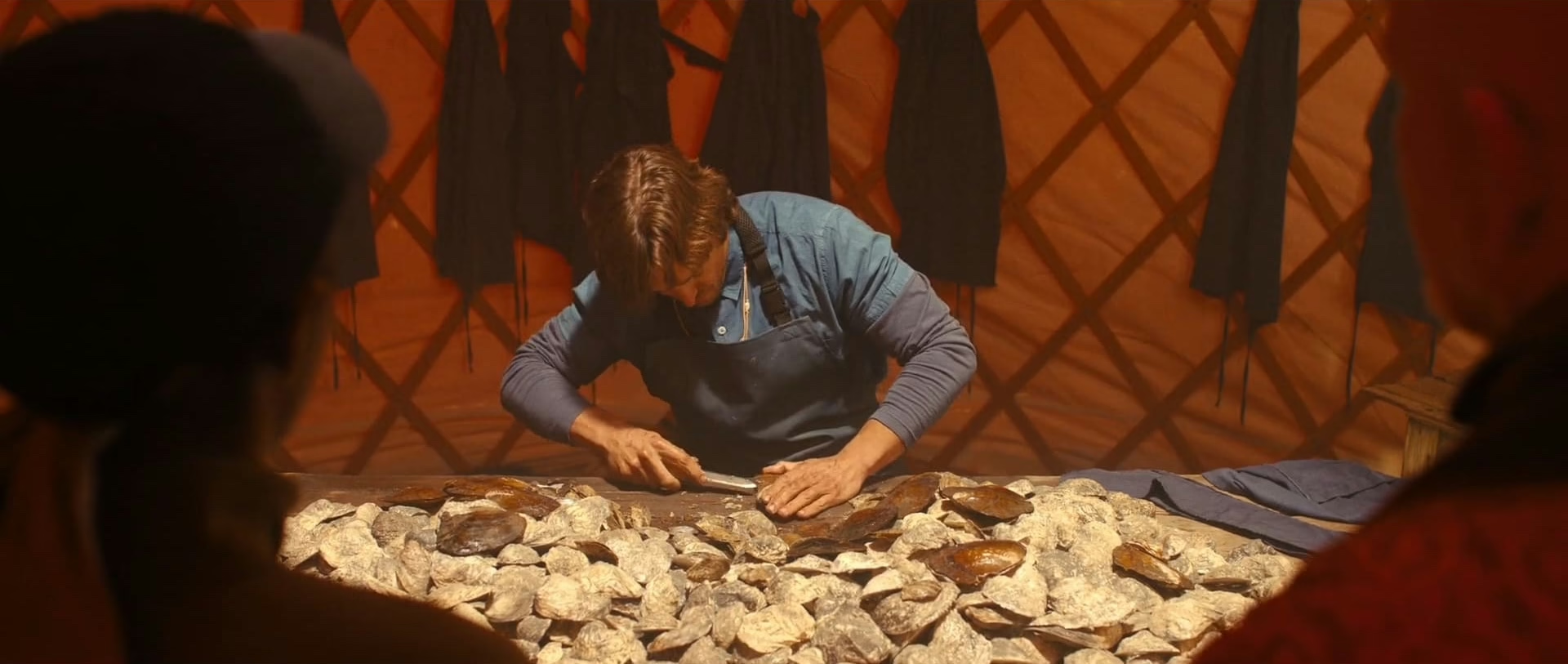
Through furniture, lighting, and this ageing popstar’s extravagant wardrobe, red palettes are fashioned as bold statements, signifying a performative aristocracy. Rarely does Moretti present himself without theatrical excess, rather sporting maroon velvet jackets, regal dinner robes, or bizarre spaceman costumes as part of avant-garde performances – a stark visual difference to the denim uniforms worn by his followers. There, blue is the colour of the commoner, and Green deploys it with symbolic rigour and vibrant chromatic contrast in his production design.
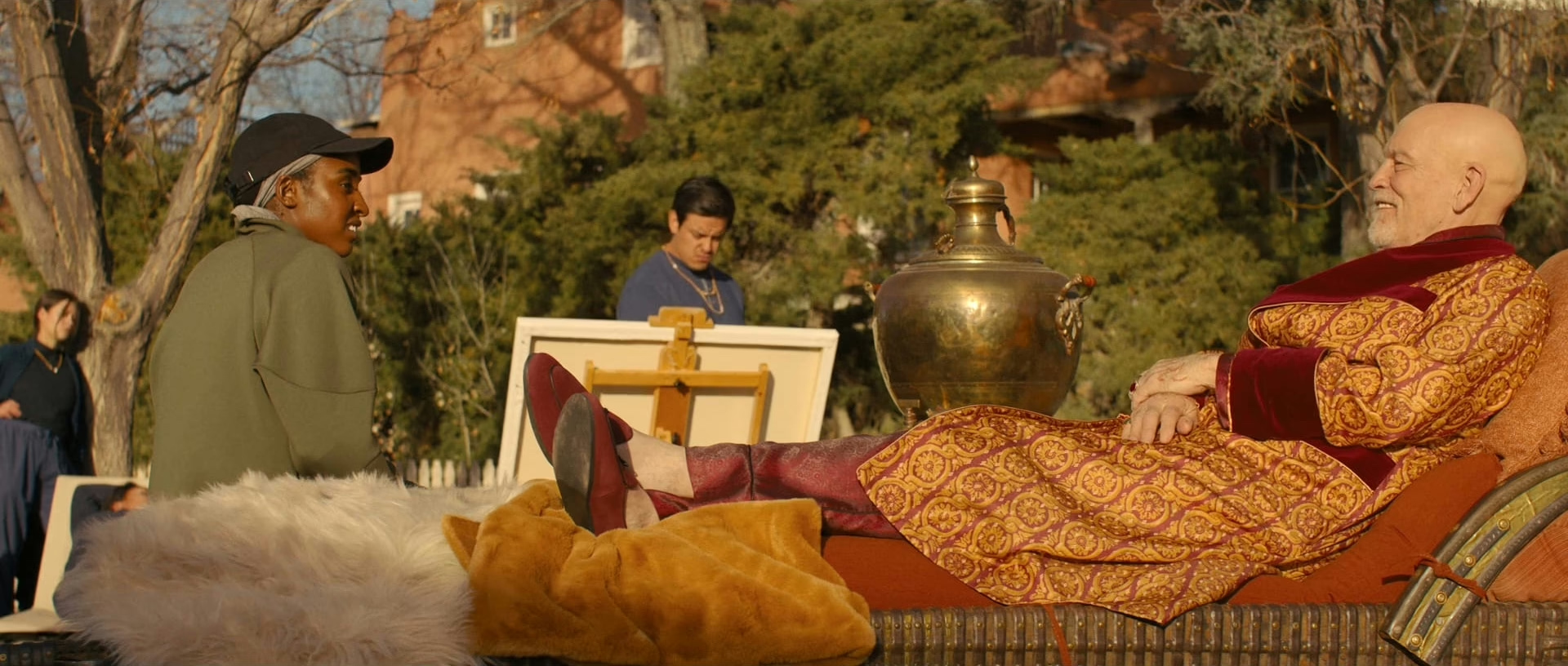
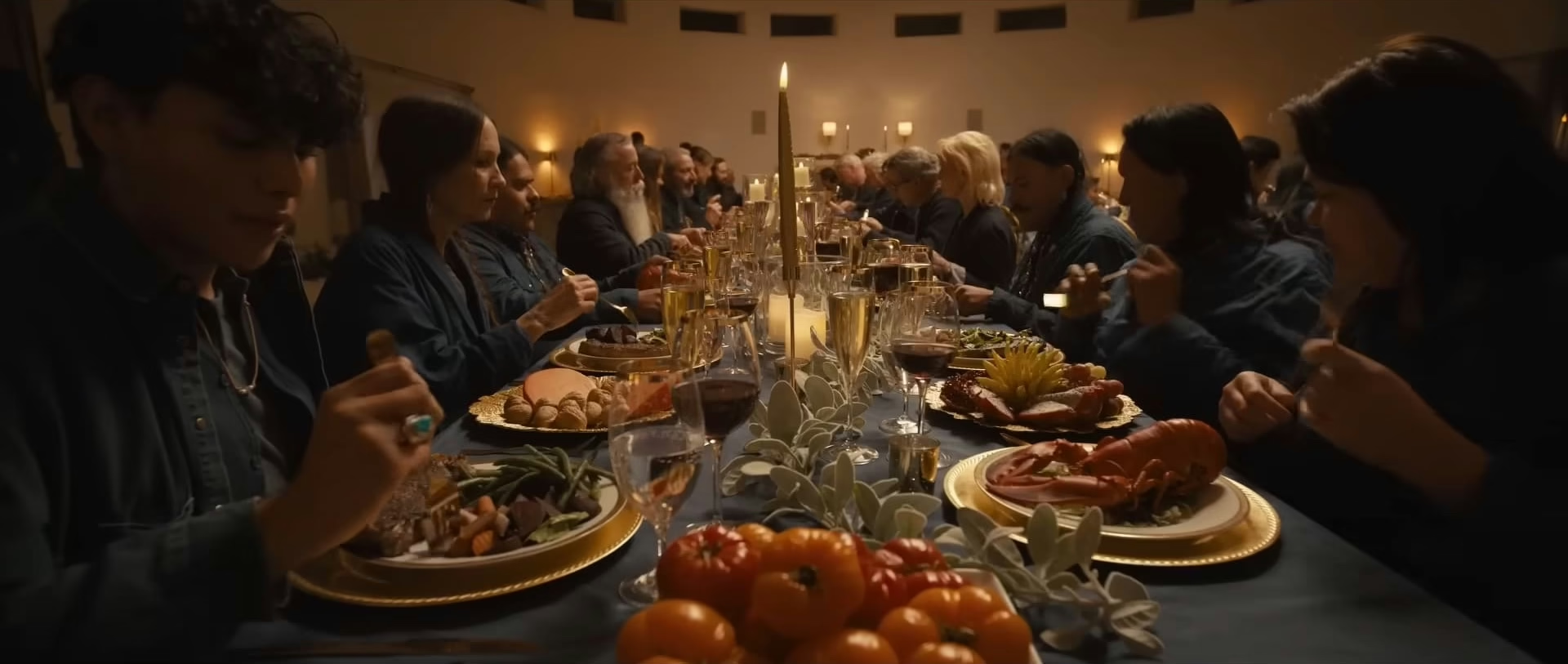
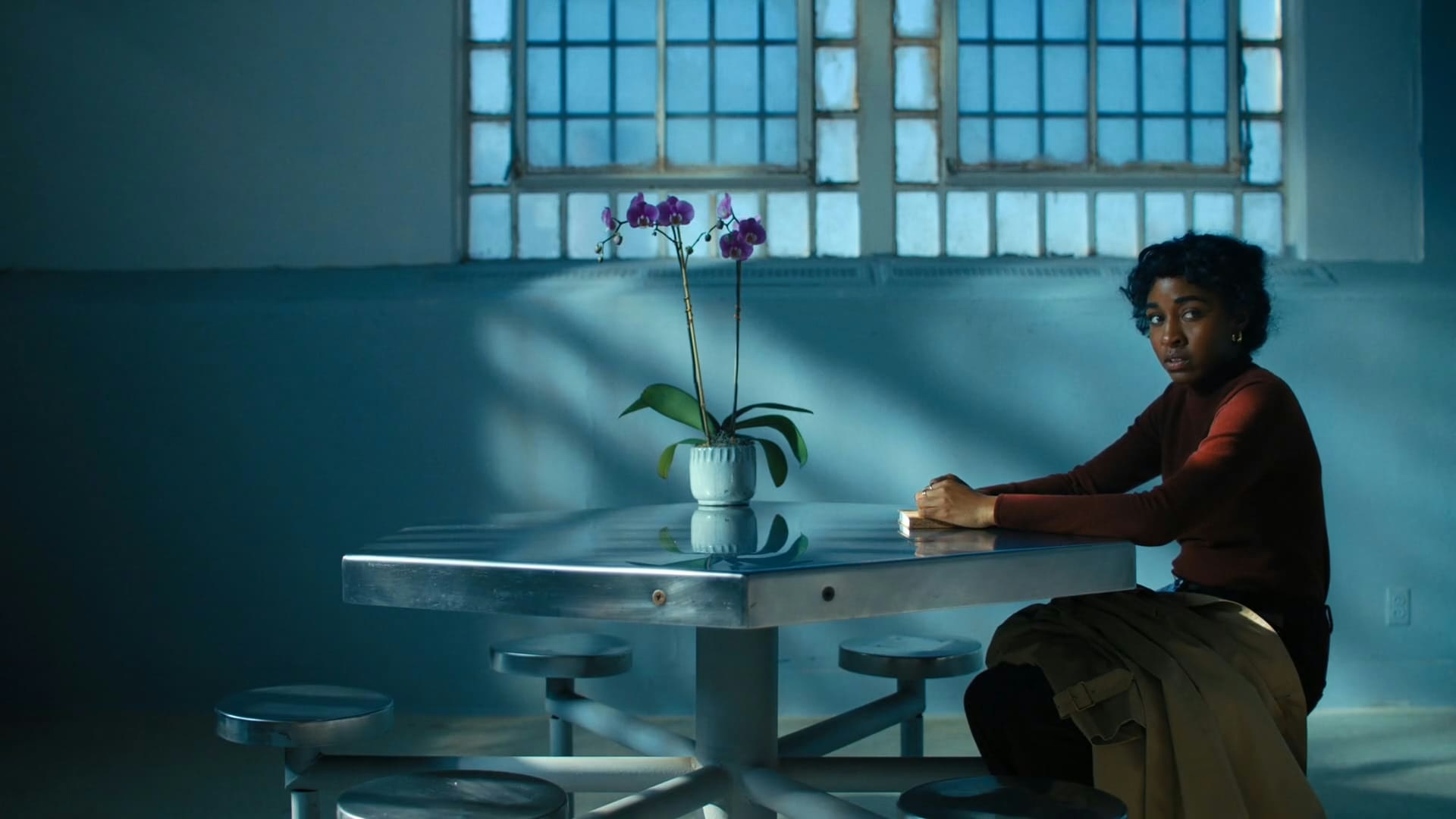
Indeed, this cult is one of many strange rules and rituals, though Ariel does not embrace the experience as eagerly as her peers. She is relatively inexperienced compared to these seasoned, opportunistic professionals, and evidently far smarter, recognising that something is deeply wrong far before anyone else. Green stretches our belief in their idiocy at certain points, while Ayo Edebiri’s measured performance expands Ariel beyond the screenplay’s schematics, lending the character a sharpened intuition through her acute emotional intelligence. As Moretti himself, John Malkovich is a little more uneven, at times pushing the comic flamboyance of stardom a little too far while elsewhere revealing a compelling capacity for insidious, calculated exploitation.

Where the two come together in theological discussions of worth and waste however, Opus uncovers a wonderful onscreen chemistry, staging their tension in the red hut where Levelists spend their days shucking oysters in search of rare pearls. “True balance exists not in the notion that all things are equal, but in the realisation that all things are not equal,” Malkovich preaches, framing a single pearl as a rare token of value extracted only through the violent dismantling and discarding of hundreds of shells. The aggressive montage which underscores this process only further amplifies the ritualistic brutality of his philosophy too, leaving Ariel with a lingering wariness toward pearls as they transform into covert, fetishised symbols of Levelist loyalty.
It is one thing to spread an ideology through formal doctrine after all, but another for the mass media to ingrain it in the mainstream, and even the most observational journalist cannot escape complicity in its circulation. Celebrities and reporters are bound to each other in a parasitic co-dependency, as Opus so shrewdly illustrates, feeding on the same curated controversies which spur engagement and reproduce as a corrosive, cultural rot. Even more than its duality between prophet and acolyte, Green formally divides Ariel and Moretti as distorted reflections of one another, united by common purpose while separated by little more than function – the charismatic, narcissistic evangelist, and his reluctant, unwitting messenger.
Opus is currently streaming on Netflix.