
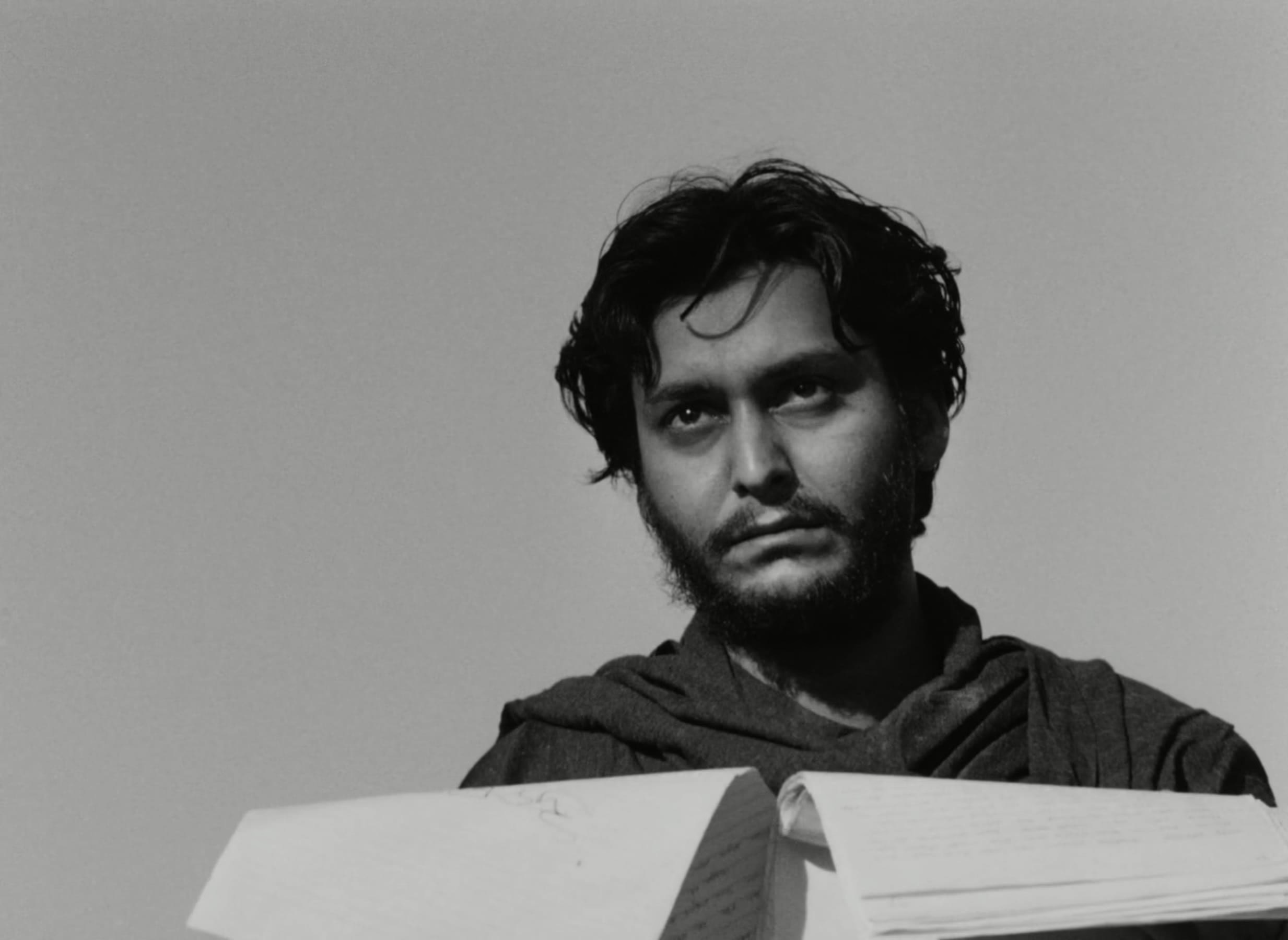
Satyajit Ray | 1hr 47min

Apu may have long left behind his pastoral childhood by the time he finishes studying in Kolkata, but like the rains that come with each monsoon season, the villages of rural Bengal seem curiously intertwined with his growth. Now a young adult struggling to find stable work, this hopeful graduate set about writing a novel manuscript about an impoverished boy who seeks formal education, sheds fixed beliefs, and explores a larger world than he ever comprehended. His nostalgic self-reflection is evident, revealing a complicated relationship with the land that both nurtured him and took his sister. Perhaps it is no coincidence then that a simple journey to attend a wedding in the country should reshape his future, nor that it will draw him back into time-worn traditions of duty he thought he had outgrown.
The sweeping plains and rivers of Khulna set the scene for this momentous occasion, where the bride Aparna and her family learn that her betrothed suffers from a serious mental disorder. They cannot go ahead with the marriage, yet according to Hindu tradition, she must be wed before the auspicious hour passes. As one of the few non-related guests, a bewildered Apu is consequently nominated as the substitute groom. Agreeing only on the condition that his friend Pulu will secure him a job, he anxiously marries Aparna in a ceremony richly adorned with flowers, candles, and fragrant smoke, thus beginning a chapter of domestic life that entirely redefines his sense of purpose.
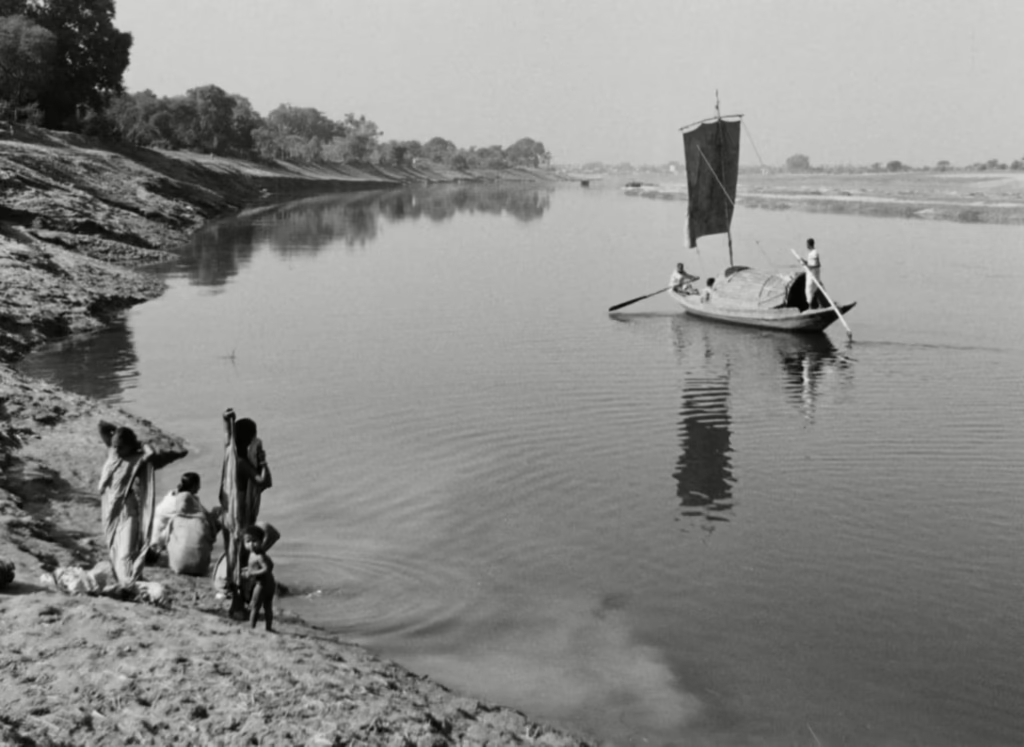
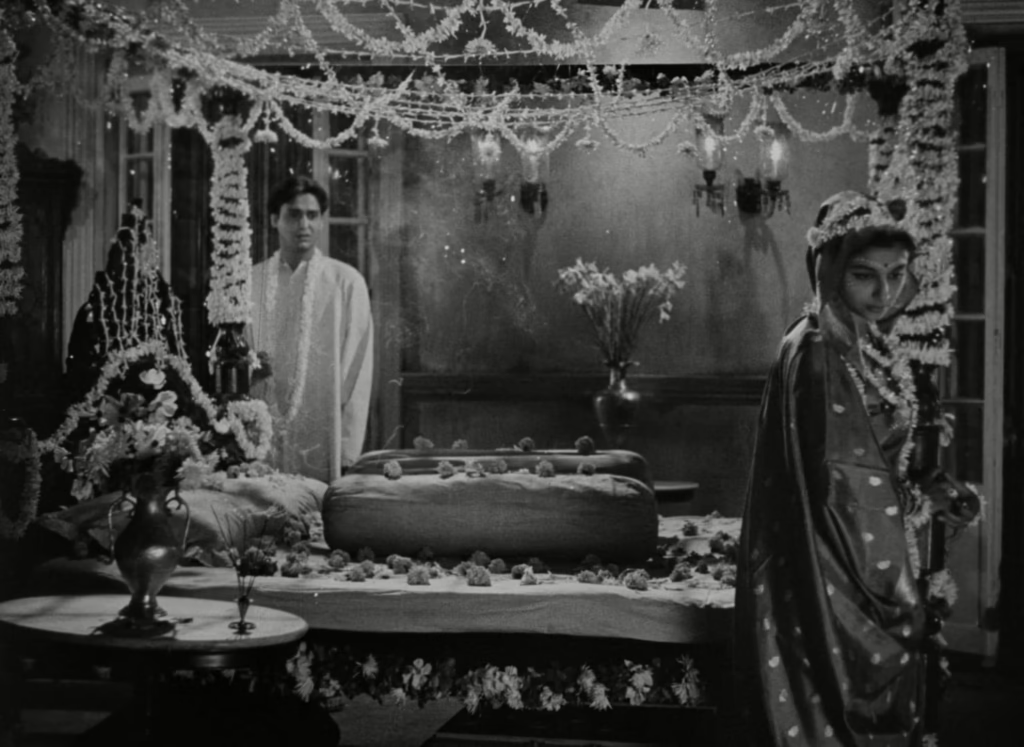
As the final piece of the Apu trilogy, Apur Sansar carries the honour of bringing this epic coming-of-age tale full circle, as well as finding resolution for the boy we have watched grow into a man. Satyajit Ray evidently understood the task at hand too, taking time before production to explore the faded grandeur of The Music Room before returning to Apu’s story with a fresh perspective. Where once there was the wide-eyed innocence of a child and the restless drive of a teenager, now stands an adult confronting moral responsibility, and grappling with the selfless choice to place love over ambition. Life’s ongoing cycles may continue through this modern India of smog and concrete, but only if those chasing progress may humble themselves before the earth’s timeless, seasonal rhythms.
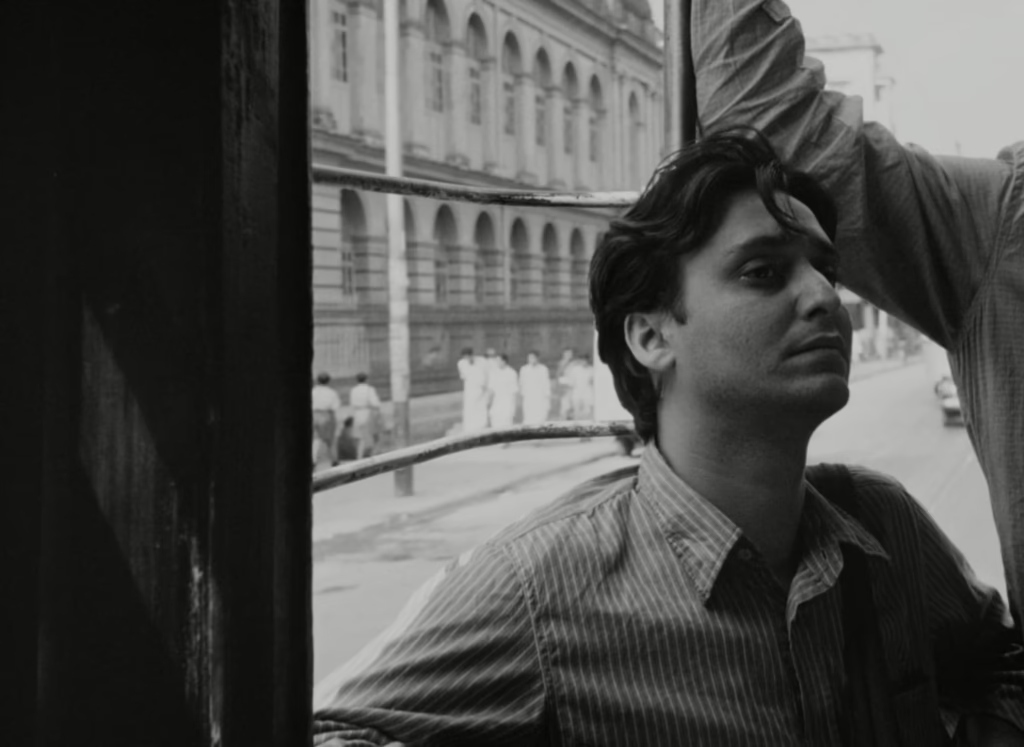
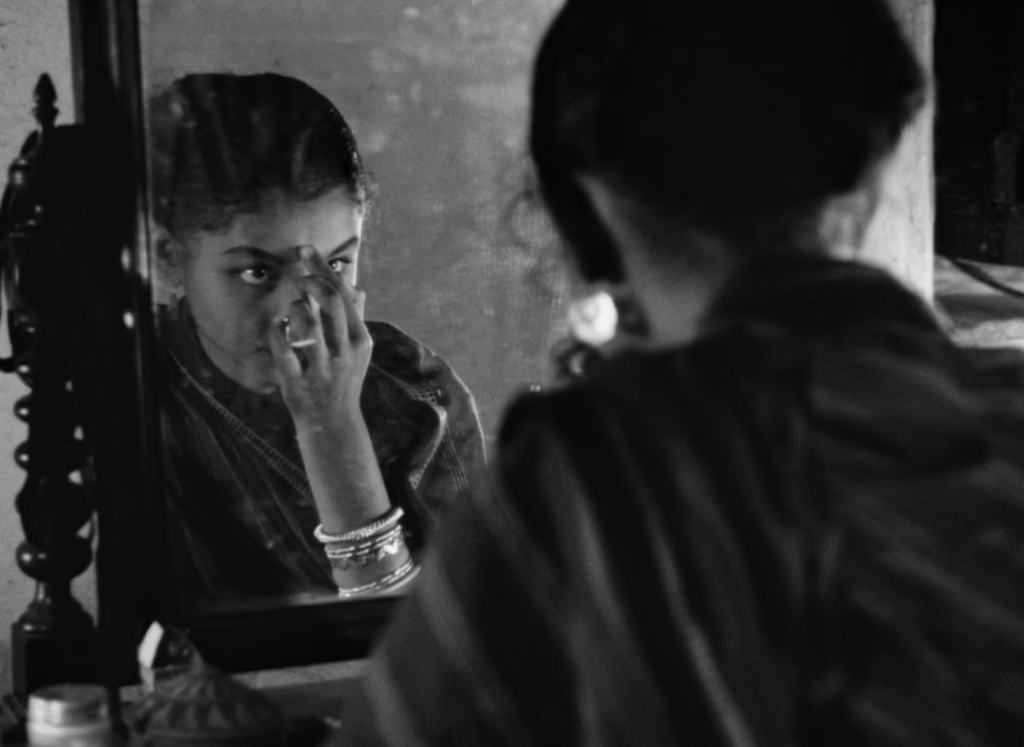
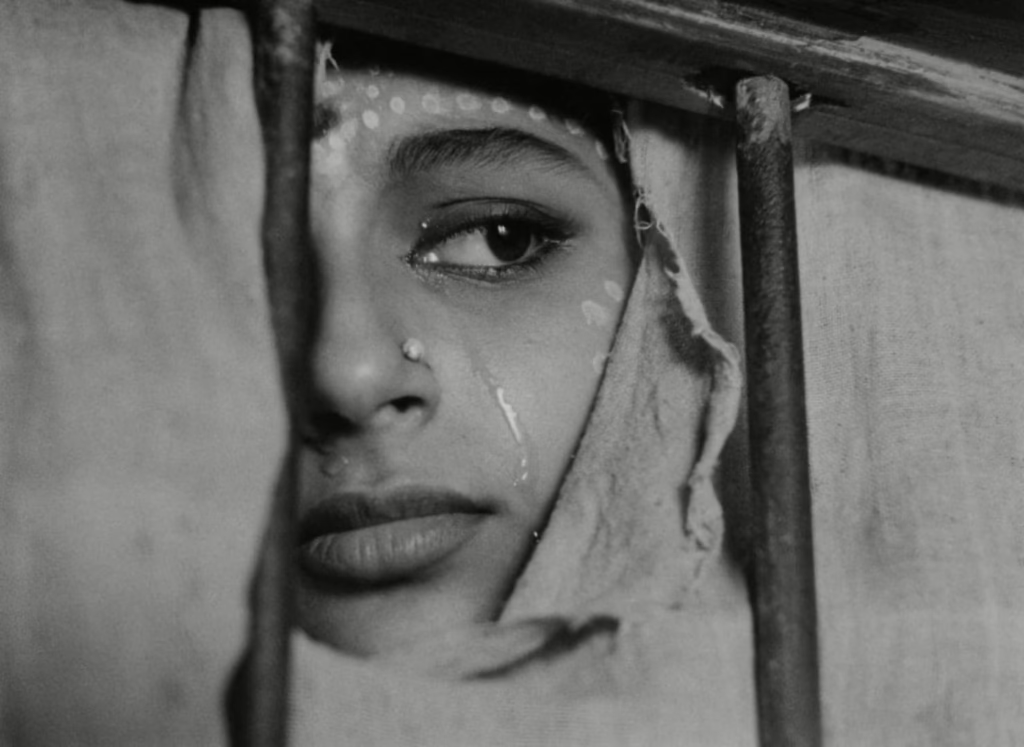
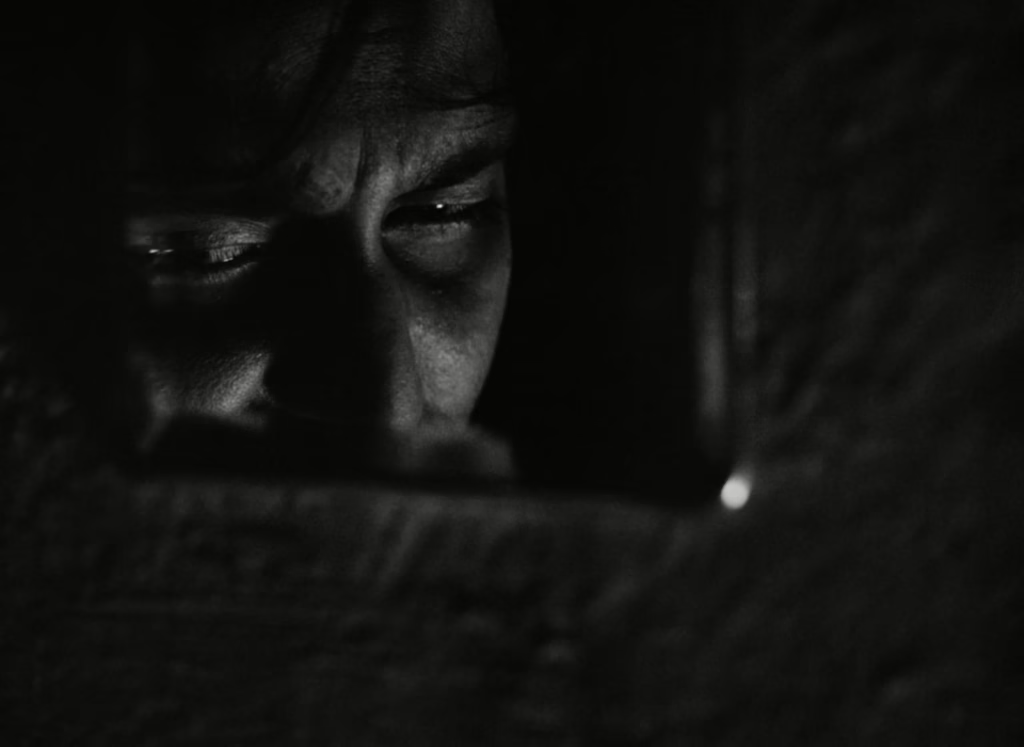
Before Apu awakens to this profound enlightenment though, Apur Sansar thoroughly immerses him in a landscape of urban claustrophobia unlike anything else we have seen in the series. Following his movement down the apartment building stairway, Ray’s camera captures the sheer density of these living conditions as neighbours going about their own chores, while outside steam trains noisily chug through the background. Pressures mount from all sides to make a good life in Kolkata, and when he later brings his bride back home, she too struggles to find happiness in its overwhelming congestion. Dirtied mirrors often draw focus to their pensive expressions in Ray’s mise-en-scène, though it is a simple hole in a makeshift curtain which most evocatively frames Aparna’s single, teary eye gazing outside, shifting from despair to silent acceptance of her new role as she watches a mother and child from afar.
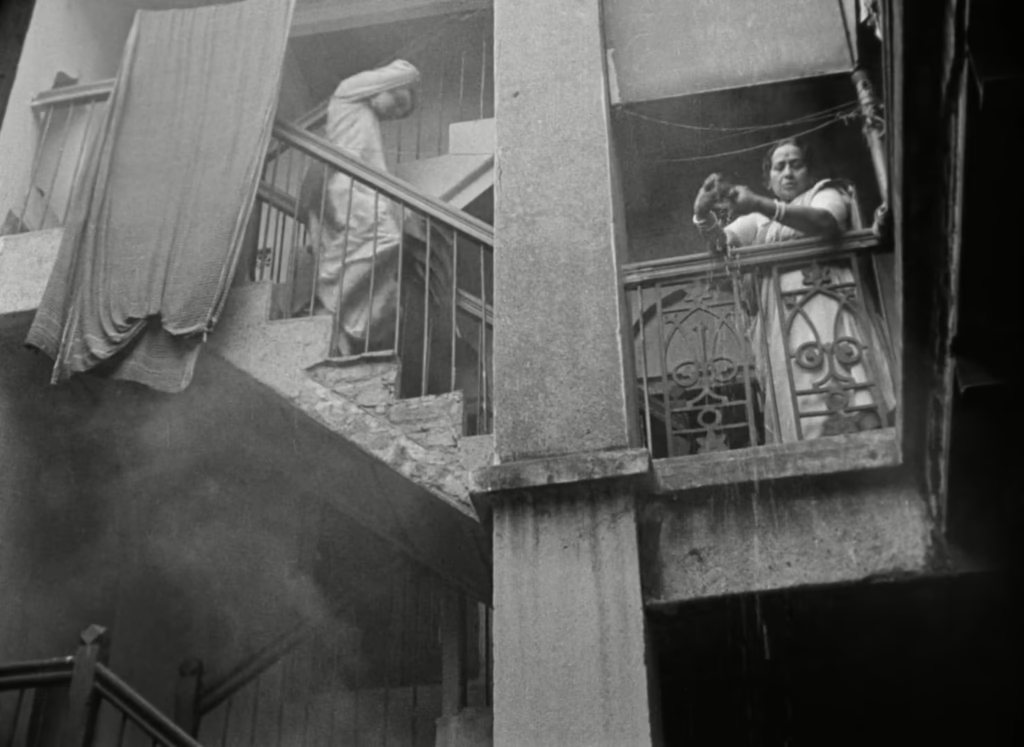
The oppressive realism of this city never quite fades from Ray’s bleak portrait, but nevertheless, happiness does gradually emerge in Apu and Aparna’s relationship. While he teaches her how to read and takes her on dates to the movie theatre, she reveals a lively sense of humour, playing friendly tricks and amusingly subverting the traditional gender dynamic. He barely even cares that his mind has wandered from writing since they married – she means much more to him than his novel, and his clerical job is enough to support their modest life anyway. When she falls pregnant and decides to stay with her family over the last few weeks, not even her absence can entirely dampen his spirits. Ray clutters the frame with fellow passengers aboard a tram where Apu reads her letters, and here in the thickest of crowds, he still can’t help beaming a smile that no one but him knows the reason for.
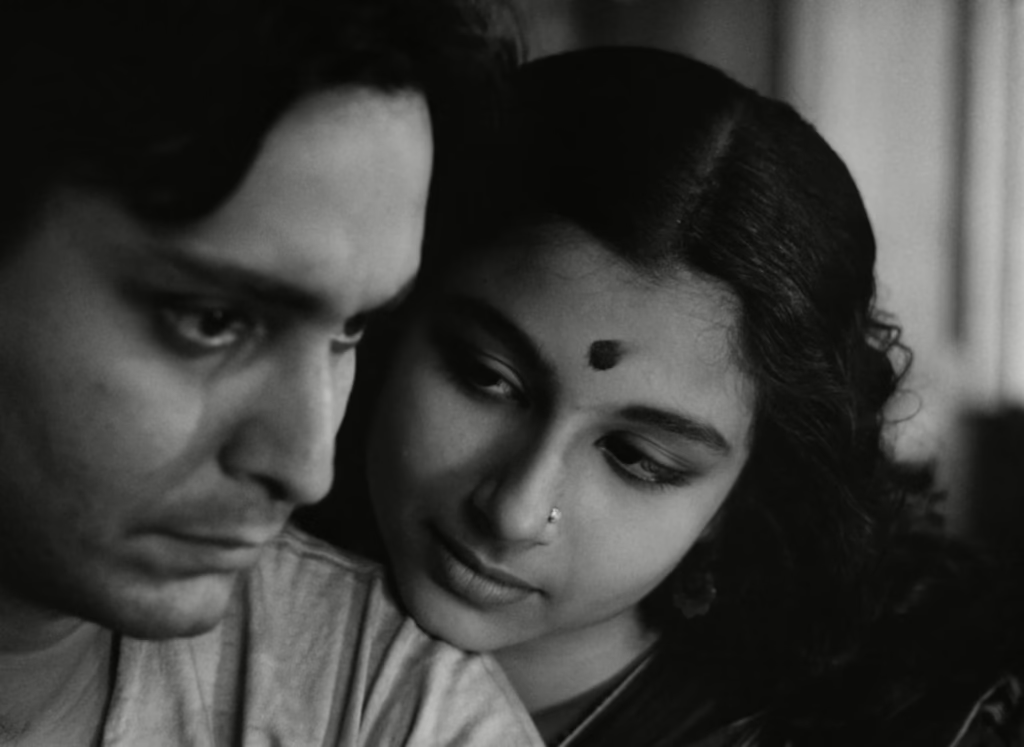
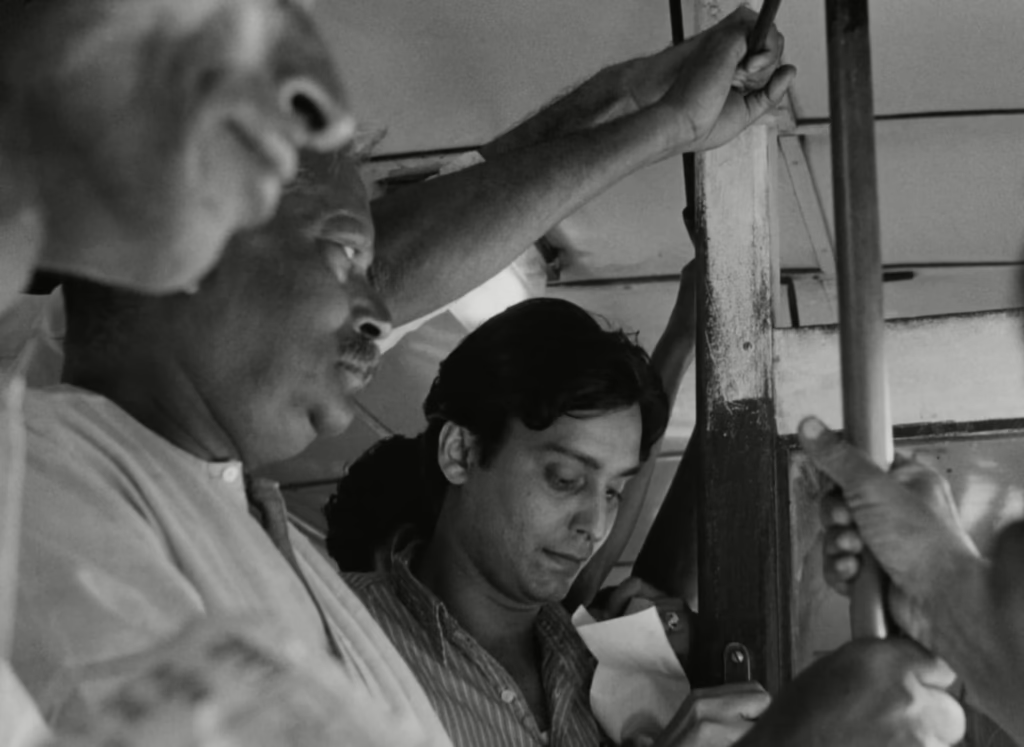
Still, we are not to forget those tragic stepping stones which moulded Apu into the man he is today, reminding us that his growth through grief is not yet complete. While his innocent mind struggled to comprehend the loss of Indir and Durga in Pather Panchali, and his adolescent self tried to suppress the pain of his parents’ death in Aparajito, the news that Aparna died in childbirth shatters Apu in a way that accumulates every sadness he has ever known. Darkness wraps around him as he lies in a catatonic state, too emotionally paralysed to meet his newborn son Kajal, and the harshness of the city itself even seems to mirror his broken spirit when he witnesses a pig killed by a passing train.
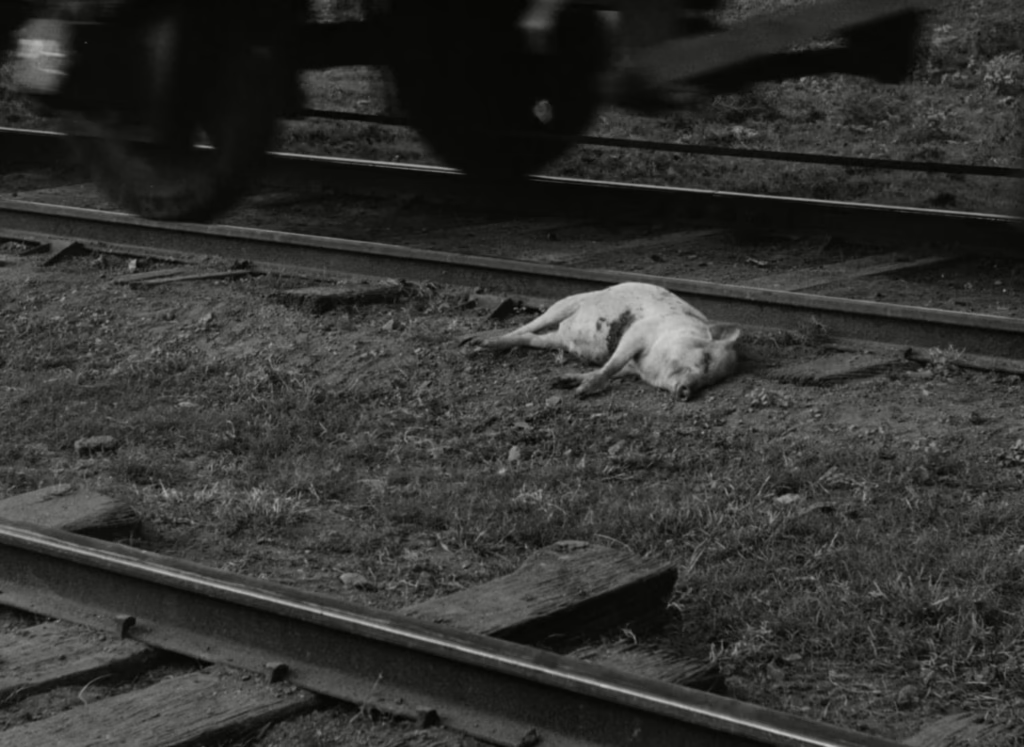
If there was ever a symbol for modernity’s violent intrusion upon nature, this is it, doubly serving as the final turning point in Apu’s decision to leave the city behind. Where he will go, he does not know, yet from here Ray carries us along his silent adventure into a wilderness that cradles his heartache. Up to this point in Apur Sansar, Ravi Shankar’s sitar-heavy score has grown increasingly layered as it develops earlier motifs in the trilogy, though here it takes a significant turn towards the ethereal as he traverses forests and coastlines. Western instruments such as piano and cello intermingle with the sitar, while a mystical flute accompanies his hike to the top of a cliff. Behind him, the pale moon almost fades into the grey sky, yet his awe is directed towards the hazy sunrise peering over the Bengal plains. As the flute’s heavenly melody passes to the dilruba, a traditional Indian bowed string instrument, he wistfully releases the pages of his beloved manuscript, and finally returns his story to the Earth on a cool, gentle breeze.

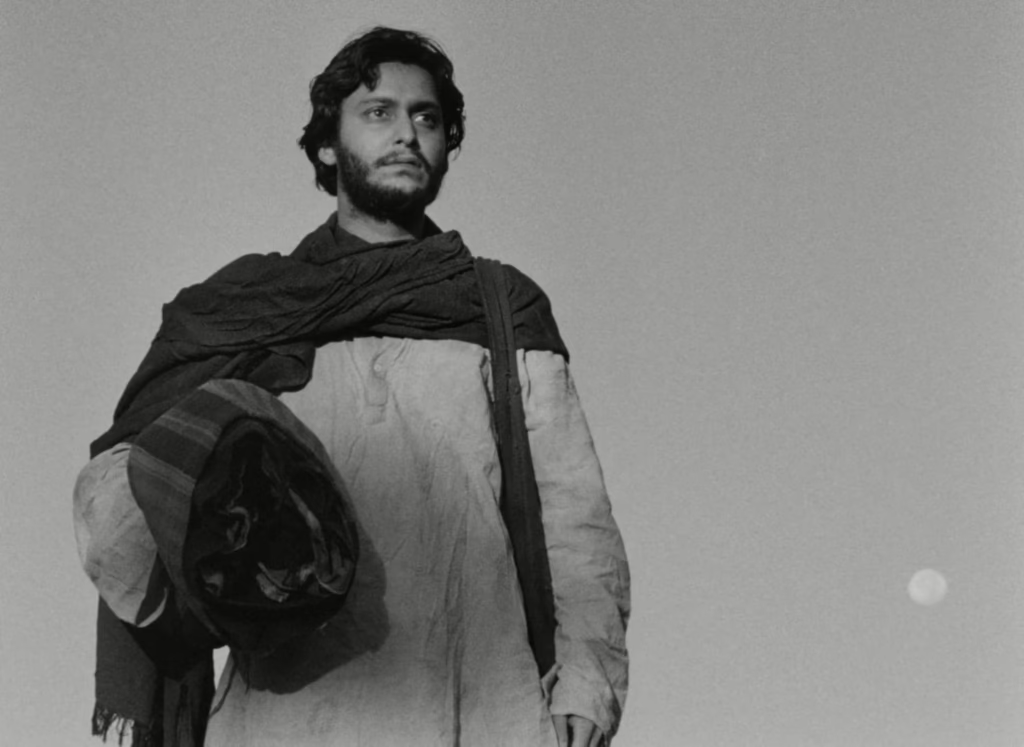
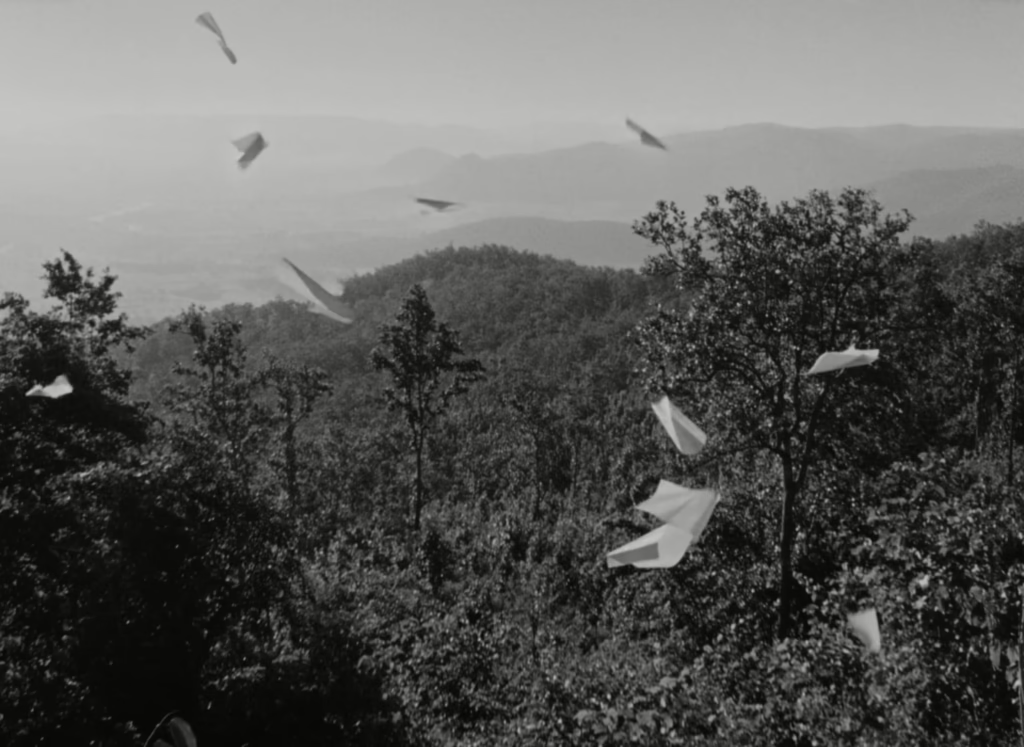
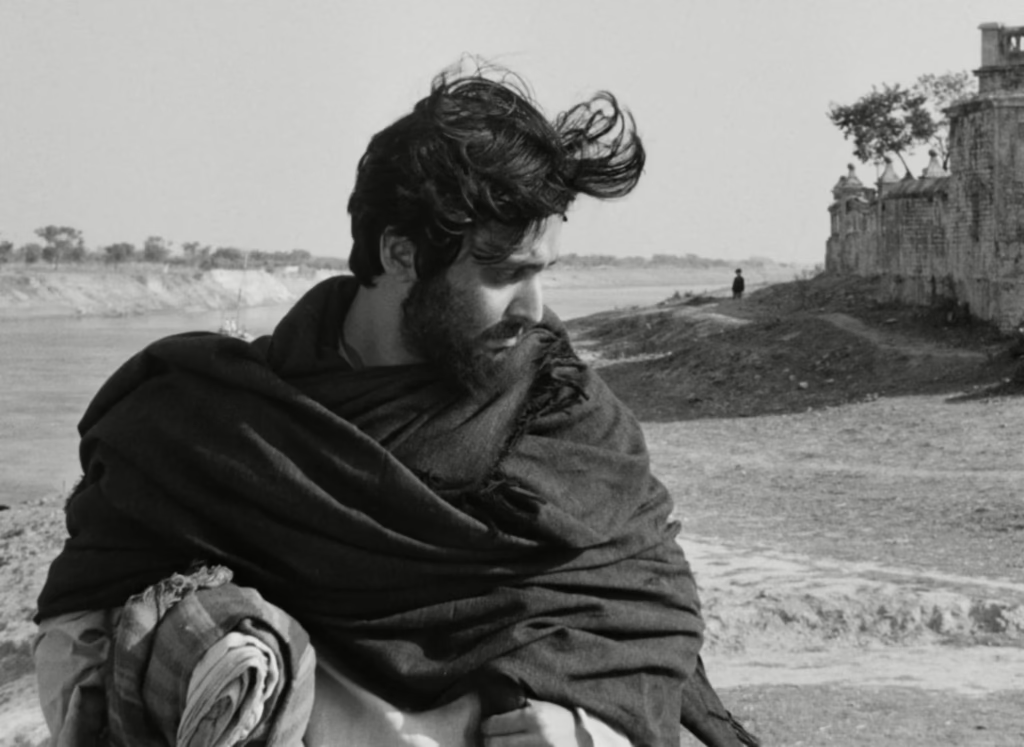
For Apu, Ray, and ourselves, this transcendent moment ushers in a peace that we haven’t truly known since Pather Panchali, though this newly enlightened man’s journey is far from over. Years slip by before we catch up with him again working in a coal mine, far from both the city and his own son who lives in the care of Aparna’s parents. It isn’t just shame that has kept him from seeing Kajal, but also a touch of resentment that he is the reason for Aparna’s death. Without his father though, the boy has grown unruly, and it takes a visit from Pulu to nudge Apu towards his paternal duty.
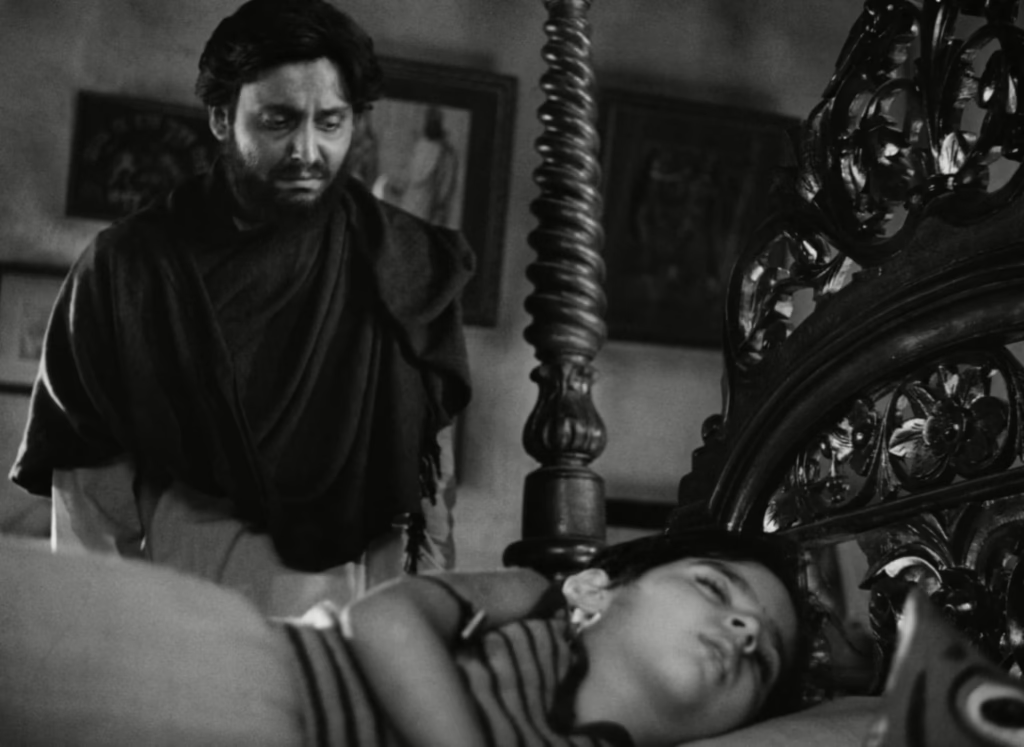
With a shaggy beard and eyes dulled by grief, his face bears the cumulative sorrow of a lifetime, as if one more loss might break him entirely. While we watch Kajal wake up from his sleep though, we are reminded of another familiar face, untouched by tragedy or disenchantment – the innocence of young Apu, alive in his son. Kajal’s wariness isn’t easily overcome, but just as Apu is ready to leave in resignation, Ray’s camera catches his tiny figure in the distance, silently staring.
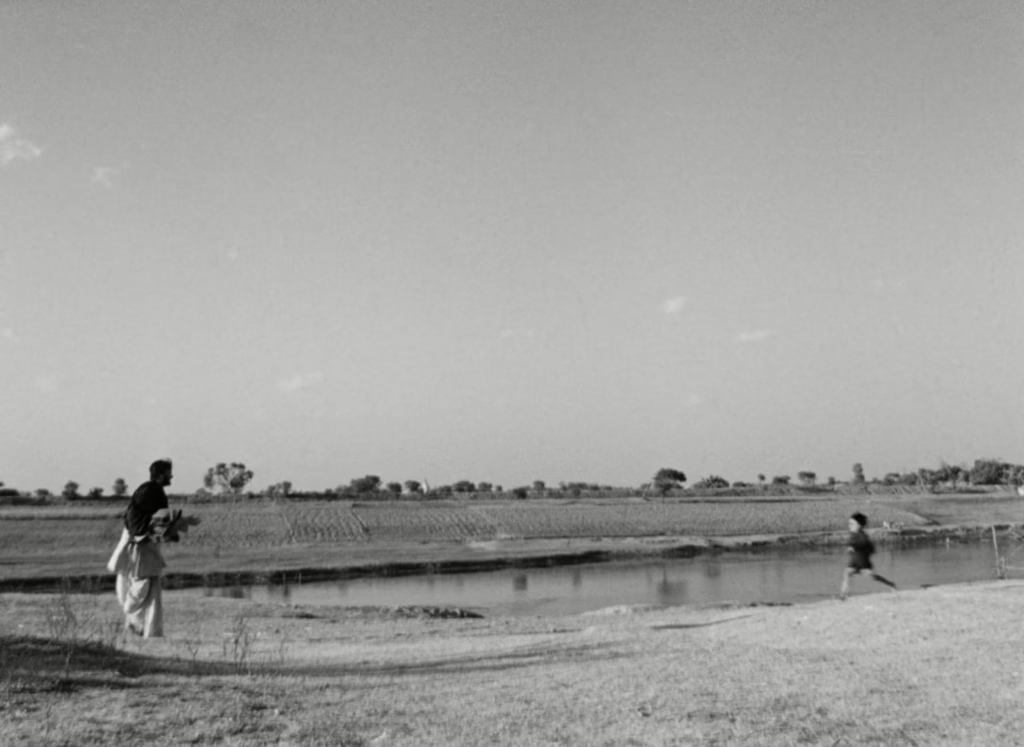
“Would you take me to my father?” he softly asks. “Of course,” Apu replies with a gentle smile. “Who are you?” the boy wonders, and for a brief moment, the questions hangs in the air.
“I’m your… friend.”
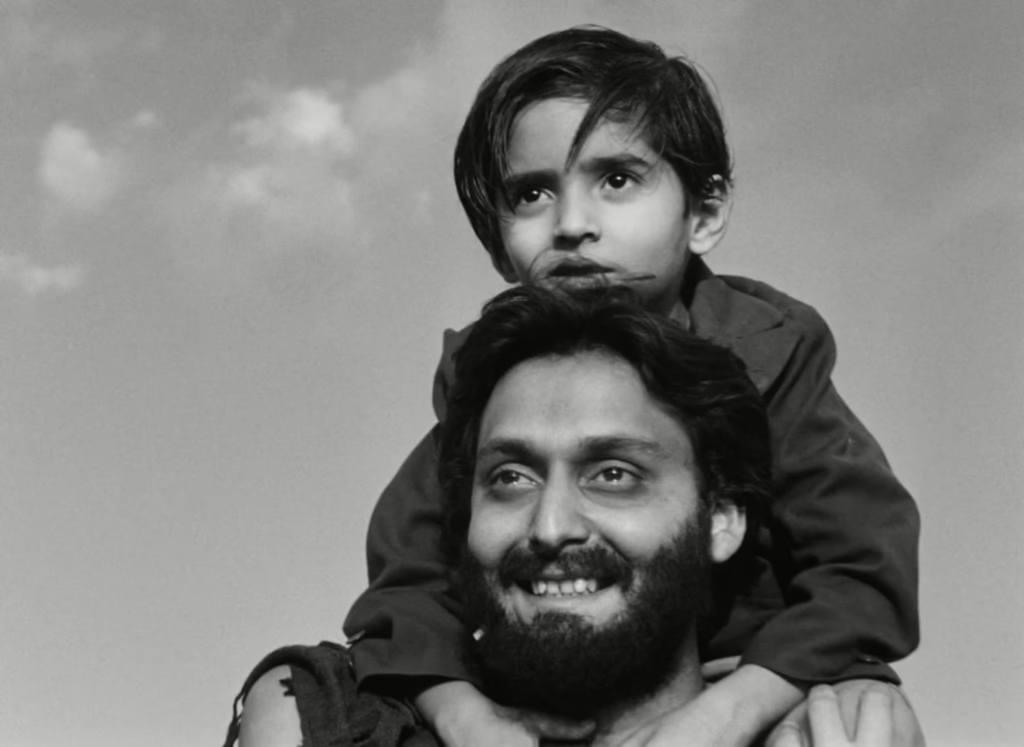
Not since Aparna was alive have we seen Apu smile like this, his face lit with a joy that returns as his son runs into his arms. Ever attuned to the subtle expressions of the human condition, Ray’s camera captures this reunion with tender naturalism, and a recognition that their bond far transcends the narrative scope of Apur Sansar. For us though, the journey that began with a boy watching trains in Pather Panchali now ends with a man walking forward, reconciled with time’s enduring, generational cycles, and carrying the future on his shoulders.
Apur Sansar is currently streaming on The Criterion Channel.