
Highly Recommend / Must-See

Hamnet (2025)

There is no reading of Shakespeare’s plays more intimate than that which considers his grief over his son’s passing, and as Chloé Zhao lyrically visualises this transmutation of pain into poetry in Hamnet, the very act of storytelling bridges the chasm between life and death.

Cobra Verde (1987)

Cobra Verde may not be as tightly focused as Werner Herzog’s grander masterpieces, yet in this grotesque nightmare of one bandit’s mission to revive Western Africa’s slave trade, it brutally exposes the barbaric machinery of empires built on the systemic commodification of suffering.

Star Wars: Episode III – Revenge of the Sith (2005)

For all the flaws that plague the Star Wars prequels, very few can detract from the operatic descent into darkness that Revenge of the Sith ushers in, seeing George Lucas embrace the melodrama, myth, and political allegory of his epic saga to craft its most tragic chapter.

Beau Travail (1999)

Claire Denis crafts a hypnotic meditation on masculinity, repression, and colonial alienation in Beau Travail, tracing one soldier’s obsessive jealousy within the French Foreign Legion, and rendering the human body a vessel of both discipline and desire.

Queer (2024)

Through the colourful, layered motifs that Luca Guadagnino weaves through the life of American expat William Lee, Queer delivers an unflinching fever dream that denies easy answers to his internal contradictions, constantly unravelling his capacity for love by his fear of being seen.

Maria (2024)

Opera singer Maria Callas’ astonishing talent is both her greatest gift and curse in Pablo Larraín’s impressionistic, melancholy biopic, simultaneously giving her reason to live and eroding her tormented soul as she wanders through the final week of her extraordinary life.

Fellini’s Casanova (1976)

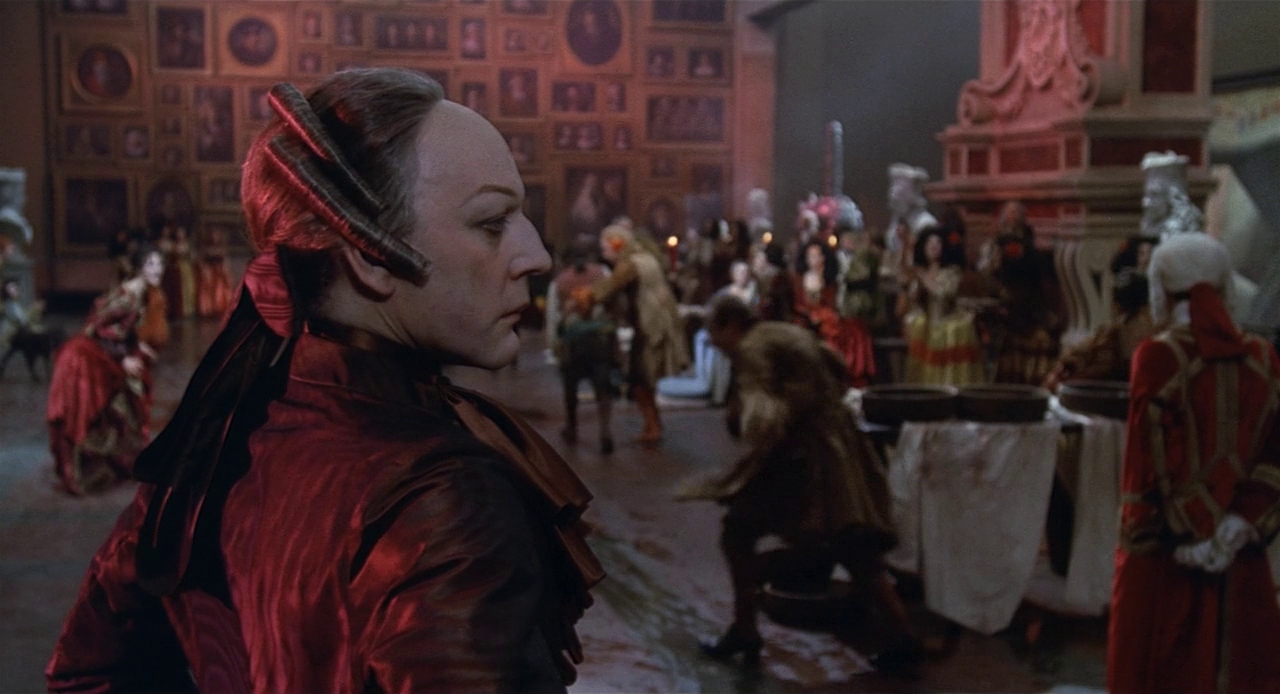
Though based on the autobiography of the historical Venetian adventurer and his expansive voyage through 18th century Europe, Federico Fellini’s reimagining of Casanova’s life manifests with demented surrealism, trapping this lonely man in cycles of absurd carnal exploits fuelled by a profound, existential emptiness.

El Conde (2023)

Pablo Larraín’s creative historical revisionism in El Conde transforms Chilean dictator Augusto Pinochet into a vampiric icon of fascism, continuing to feed on society’s most vulnerable in his old age while descendants, lovers, and organised religion seek to profit off his legacy, giving this monochrome political satire a viciously witty bite.

All These Women (1964)

Men are but faceless idols cycling in and out of fashion in All These Women, hiding with infatuated fanatics behind facades of highbrow culture, and pulling at least one absolute truth from Ingmar Bergman’s sumptuously irreverent satire – art has no real relevance to the narcissistic pretensions of artists.

Sawdust and Tinsel (1953)

Life is a circus that creates entertainment out of humiliation, Ingmar Bergman posits in Sawdust and Tinsel, and in his rich staging and screenwriting he needles its existential drama with a finer, wittier point than ever before, finding both sympathy and pity for its hapless fools doomed to eternal ridicule.

Scroll to Top