
Film Review

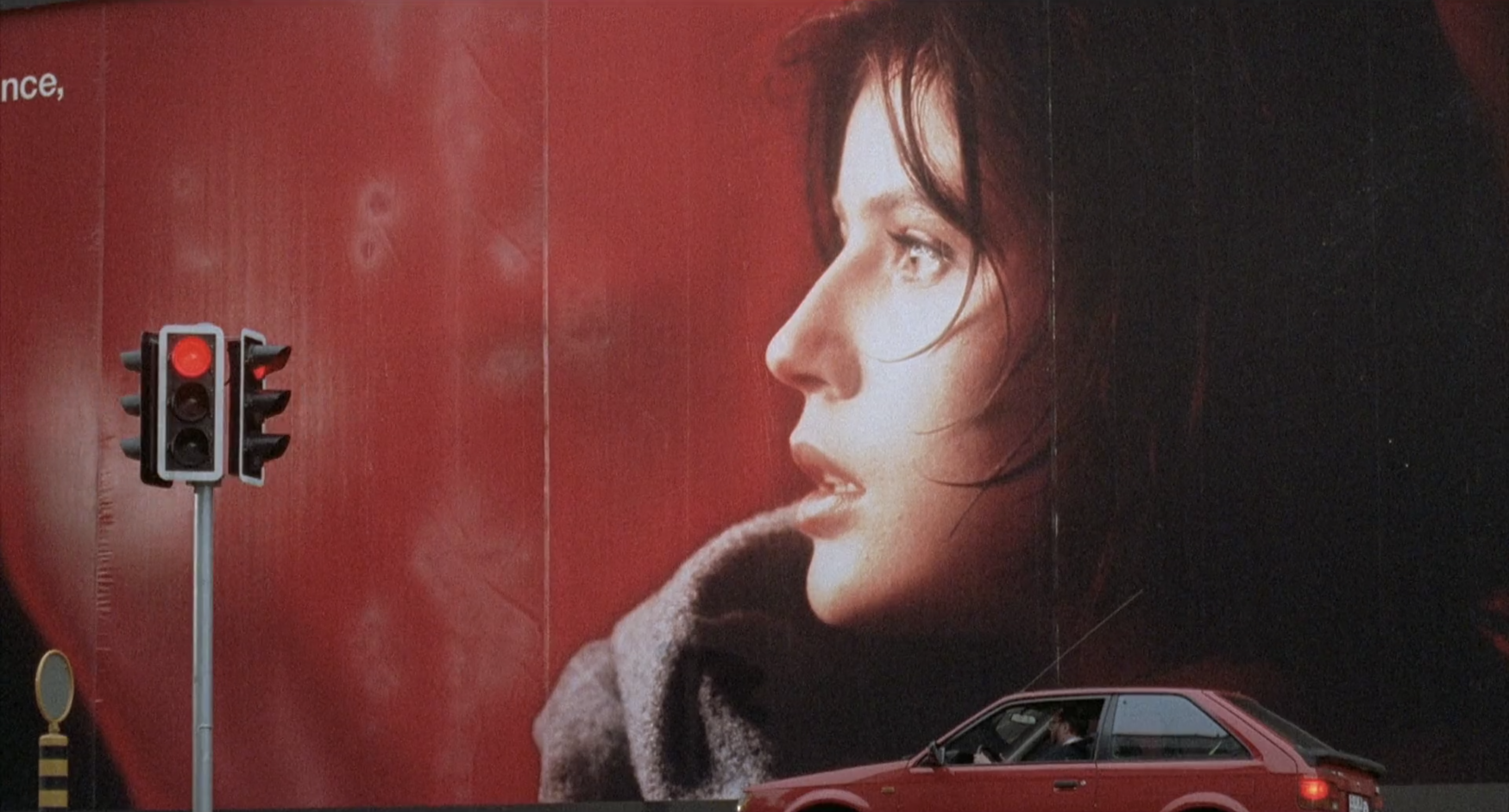
Three Colours: Red (1994)

Krzysztof Kieslowski lays heavily into the dramatic irony of his characters’ hidden interconnections in Three Colours: Red, saturating his beautiful mise-en-scene with a fiery warmth that unites neighbouring strangers in an invisible fraternity, their intertwining paths governed only by the irrational whims of chance.

Three Colours: White (1994)

Krzysztof Kieslowski’s dazzlingly light tones seek to visually restore neutrality and balance where neither can be found in Three Colours: White, lending a soft edge to the vaguely comical sensibilities of one man’s attempt to claw his way back up the ranks of society and pursue justice against his ex-wife.

Three Colours: Blue (1993)

The rich azure palette that pervades Three Colours: Blue in every shade imaginable beautifully sinks the film into a deep melancholy, as Krzysztof Kieslowski examines one young widow’s attempt to find emotional liberty from the ghosts of past traumas which continue to haunt her musically and psychologically.

My Night at Maud’s (1969)

My Night at Maud’s isn’t ready to deliver firm answers to its philosophical quandaries, and yet in this narrative built on a series of unlikely happenstances and cerebral discussions, Eric Rohmer also crafts an absorbing examination of fate, romance, and hypocritical egos as they fall under theological and secular perspectives.

Contempt (1963)

With a playfully postmodern approach to classical conventions of both mise-en-scène and Greek mythology in Contempt, Jean-Luc Godard aims his incisive wit towards the gods of storytelling themselves, while critiquing those who degrade history with visions of crude, dishonest entertainment.

Once Upon a Time in Anatolia (2011)

As an ensemble of men track down the body of a murder victim through the Turkish countryside, Nuri Bilge Ceylan languidly pulls together the stories of a suspect, a prosecutor, and a doctor in a meditation on generational sin and regret, using his archetypal characters and symbols to develop Once Upon a Time in Anatolia into a delicately existential fable.

Public Enemies (2009)

Public Enemies may not be the intensive study of opposing equals that Michael Mann has so effortlessly pulled off before, but in his superb staging and epic set pieces based in Depression-era America, it nevertheless becomes a compelling examination of an unjust system slowly squeezing out one of its most vocal dissidents – real-life bank robber, John Dillinger.

Polytechnique (2009)

In Denis Villeneuve’s tragic reconstruction of the 1989 Polytechnique Montreal massacre, he traps us inside a labyrinth of narrow corridors and bleak modernist architecture, following the immediate perspectives of two students whose fates will be forever intermingled with one violent, hateful man and his brief reign of terror.

Rushmore (1998)

There may not be a single Wes Anderson character more suited to his highly-curated affect than Max Fischer, as the slightly autobiographical characterisation of this ambitious school student imprints a comically organised style and structure upon Rushmore that matches the young filmmaker’s own idiosyncratic precision.

The Double Life of Veronique (1991)

The mystical coincidences that bind French music teacher Véronique and Polish choir soprano Weronika together in a causal relationship are elusive in their formal complexities, as Krzysztof Kieslowski edges us towards an emotional understanding of humanity’s interconnectedness in The Double Life of Veronique without ever fully letting us in on its magnificently abstract secrets.

Scroll to Top