
Richard Linklater | 1hr 40min

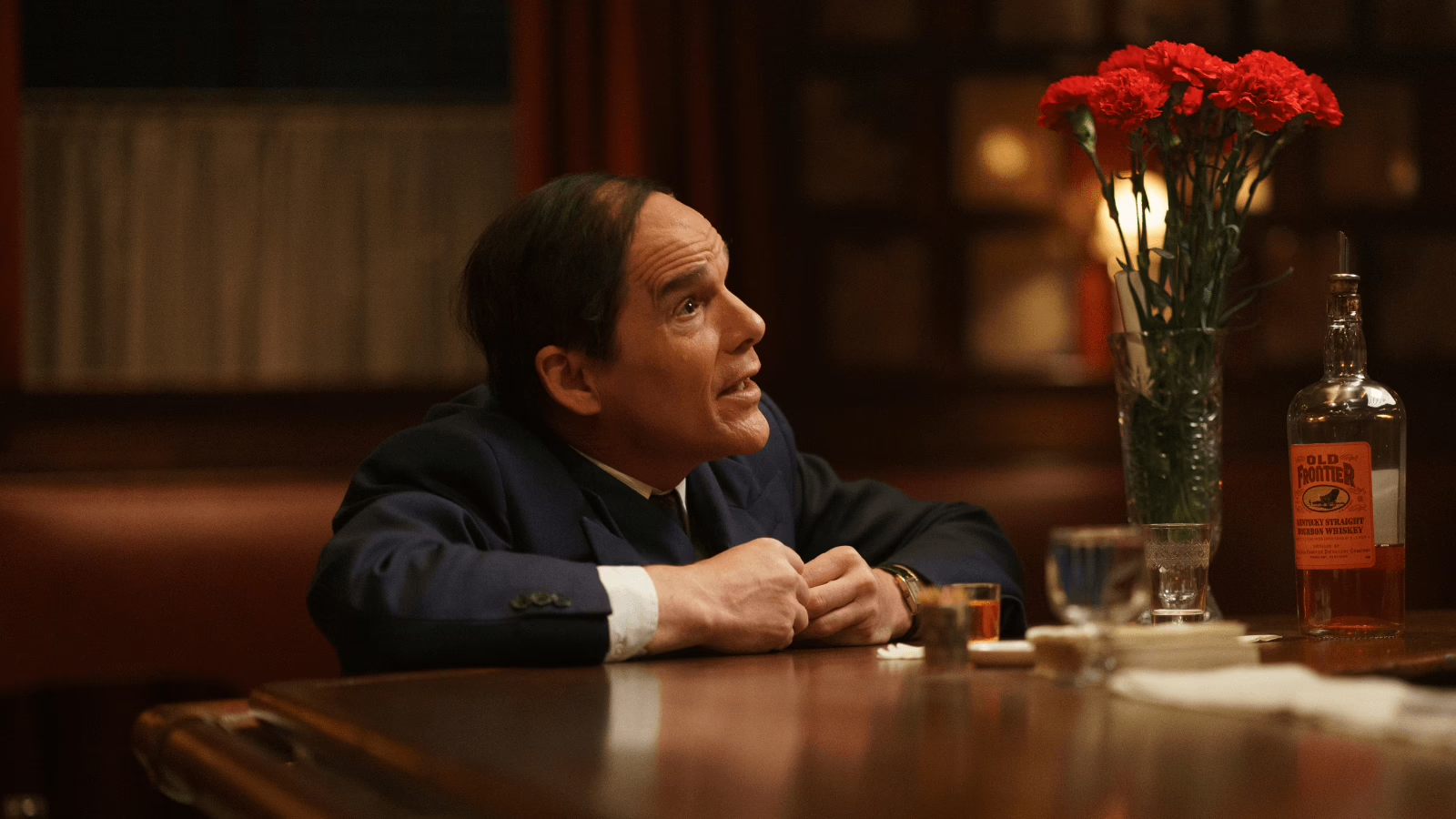
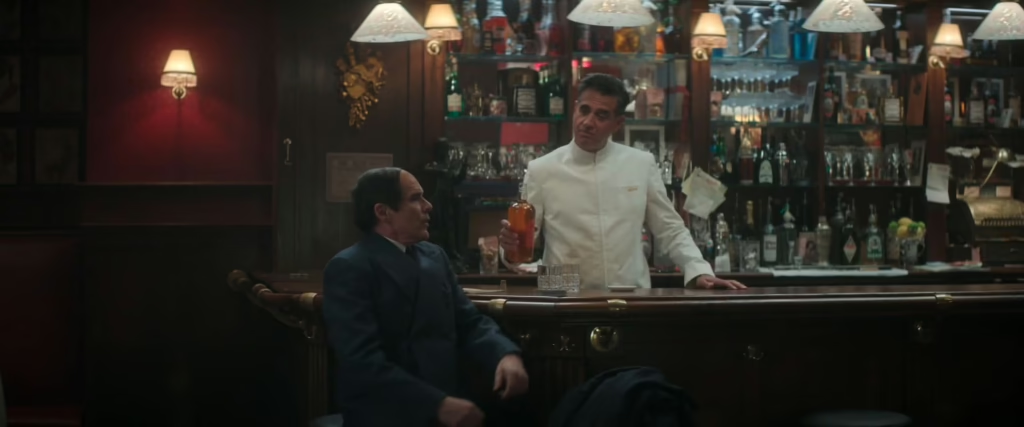
Broadway lyricist Lorenz Hart may hold great contempt for the musical Oklahoma!, harshly criticising its third-rate jokes and fraudulent nostalgia, yet jealousy courses beneath his barbed quips. “It was a 14-karat hit and it was a 14-karat piece of shit,” he sneers after slipping out early on opening night and retreating to Sardi’s restaurant across the street. There, he commiserates with the bartender and anyone willing to lend an ear, railing against the collaboration between his old composing partner Richard Rodgers and lyricist Oscar Hammerstein II – a pairing he regards as nothing less than a personal and artistic betrayal.
Together, Rodgers and Hart once defined the American songbook with standards such as ‘My Funny Valentine’, ‘Isn’t it Romantic?’ and of course the titular ‘Blue Moon’, yet that duo was never quite the household name that Rodgers and Hammerstein would one day become. In time, this newer partnership would go on to write smash-hit musicals such as South Pacific, The King and I, and The Sound of Music, though that bright, world-conquering future is not Richard Linklater’s narrative focus. With Hart witnessing the dawn of a new Broadway era and standing on the precipice of his own dwindling relevance, Blue Moon narrows in on that night where his wit, insecurity, and heartbreak all collide, obsessively projecting all his simmering resentments onto his friend’s tremendous success.
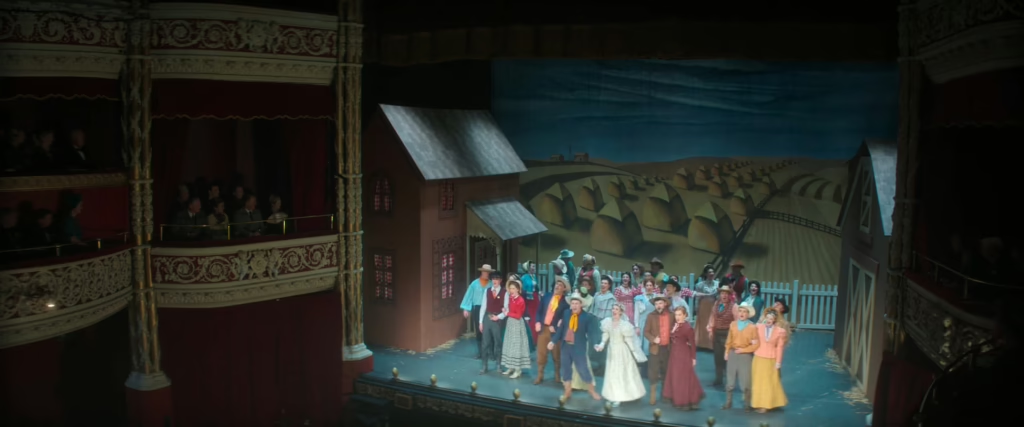
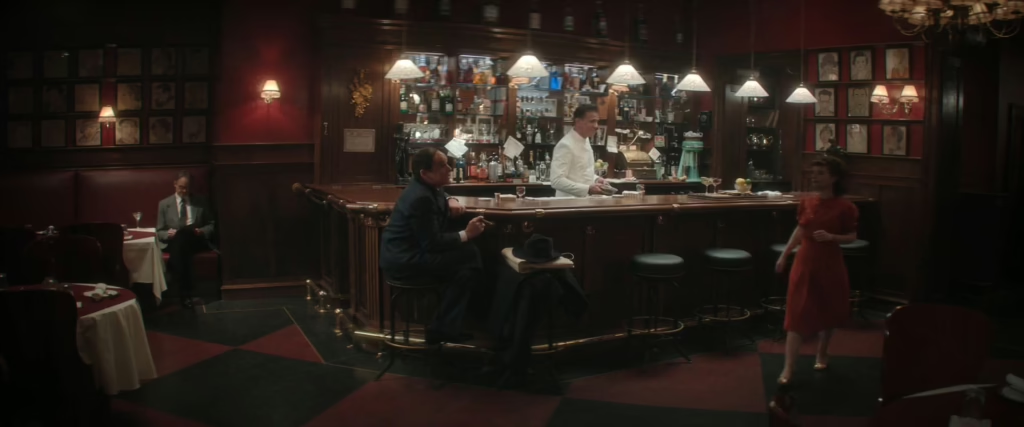
As a brilliant ego with a talent for self-sabotage, Hart himself makes for a magnetic centre of Linklater’s character study, teetering between caustic humour and self-loathing despair. Ethan Hawke is not typically a transformative actor, yet in adopting a 5-foot stature, slick combover, and flamboyant affectations, he is almost unrecognisable here. When the cast and crew of Oklahoma! finally gather at the restaurant, he is often staged separate from the crowd, and during strained conversations with Rodgers, we see just how diminished he is compared to Andrew Scott’s handsome, commanding presence. Oklahoma! is “The greatest musical in the history of American theatre,” he effusively declares to his friend right after panning it in private, and it isn’t hard to see how such insincerity only serves to deepen the rift between them.
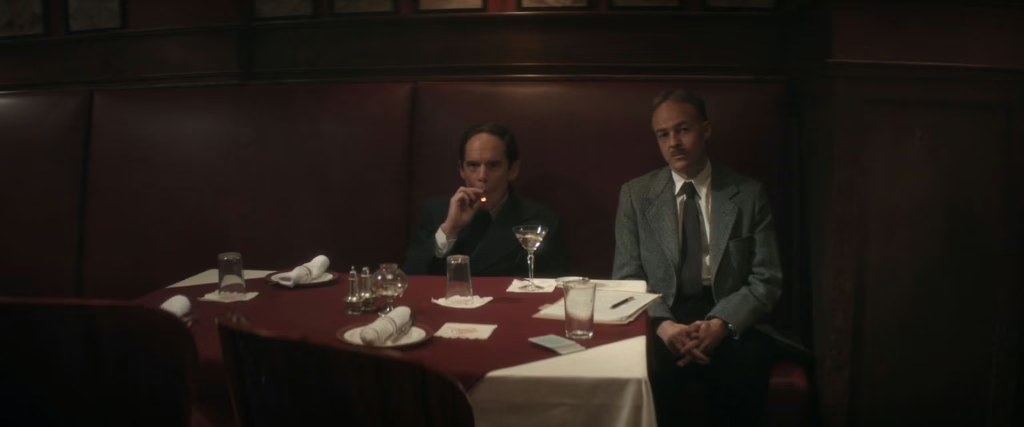
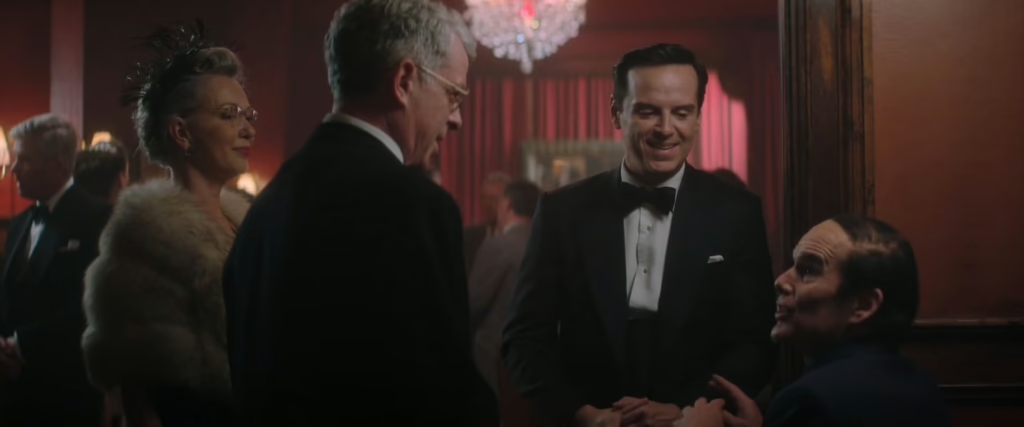
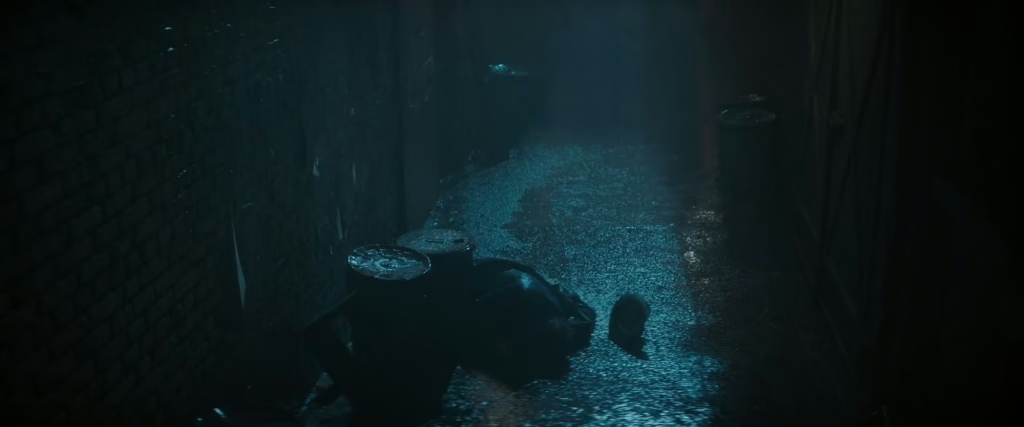
By beginning with a flash-forward to Hart’s drunken collapse in a rainy alleyway and his following demise, Linklater charges these interactions with a melancholy awareness of his death in seven months’ time, casting Oklahoma!’s opening night as the tremor of a decline in motion. Moreover, Blue Moon’s single-location design and real-time structure naturally lend the narrative a play-like intimacy, shaping its focused, pressurised atmosphere into a slow-burn chamber piece. These qualities may create a sense of stage-bound constraint, yet Linklater’s fluid camera at the very least prevents the film from drifting into inertia. With such a camp, mercurial character at the centre too, Blue Moon finds constant movement in his emotional whiplash, sustaining a dramatic tension that defies its minimal trappings.
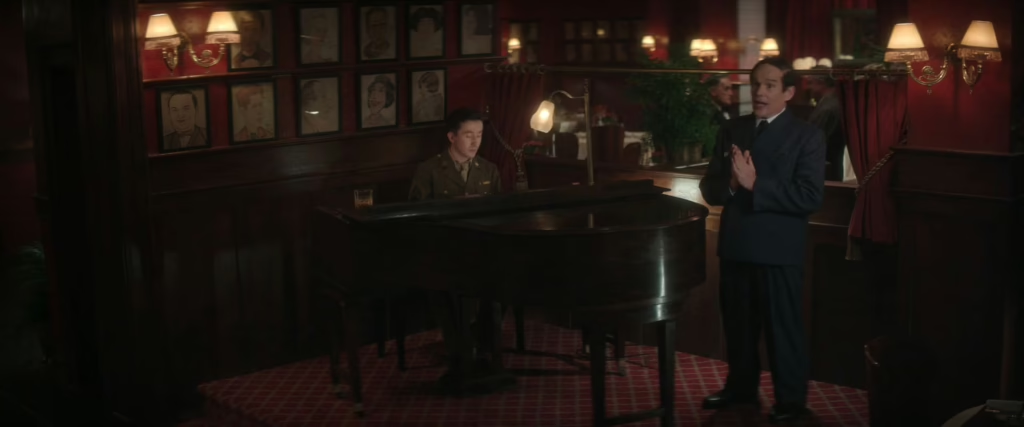
No doubt Linklater’s screenplay must be credited for this control as well, not only masking immense vulnerability beneath delightfully savage dialogue, but also recognising Hart’s enduring creative influence across generations. The lyricist’s random encounter with an aspiring director named George Roy Hill is a little contrived here, though his advice to focus on stories of friendship rather than love foreshadows a great future career, culminating in classic buddy films such as Butch Cassidy and the Sundance Kid and The Sting. The diegetic piano arrangements of Rodgers and Hart’s standards alongside evergreen classics such as ‘I Get a Kick Out of You’ and ‘As Time Goes By’ only further embed their music in the canon too, reaffirming the degree to which their collaborations are woven into the cultural bloodstream. Nevertheless, the lavish praise for Oklahoma! that fills this restaurant gnaws at Hart’s battered ego, slowly driving him back to the drink which he has tenuously abstained from, and will in time cost him his life.
At least on Rodgers’ part, it is clear that the friction between them has nothing to do with Hammerstein’s perceived superior talent. The fault lies purely with Hart’s self-destructive habits – his alcoholism, his unreliability, and the emotional labour which his partner no longer has patience for. Perhaps they have a shot at another future collaboration, but their inability to even settle on its basic direction reveals just how much Hart’s inner turbulence has compromised their creative chemistry. Now, he is merely left to wander the edges of Rodgers’ party, socially sidelined for his erratic behaviour, semi-closeted reputation, and desperation to be loved.
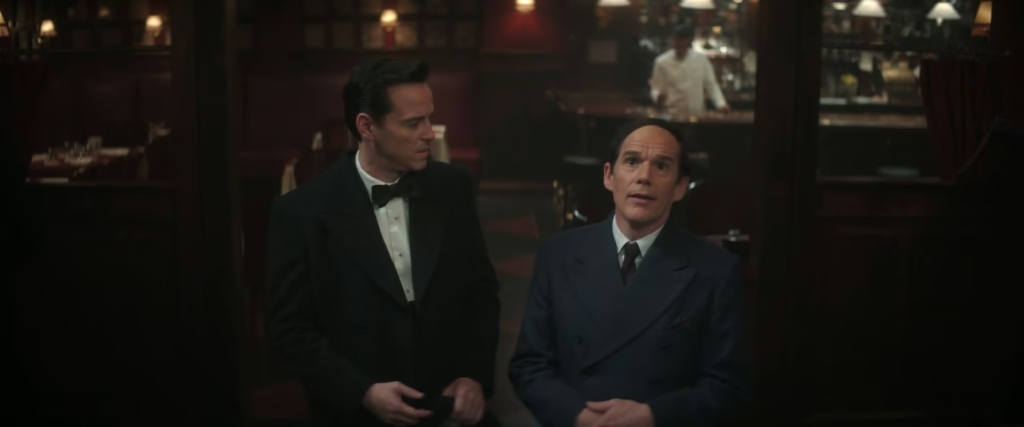
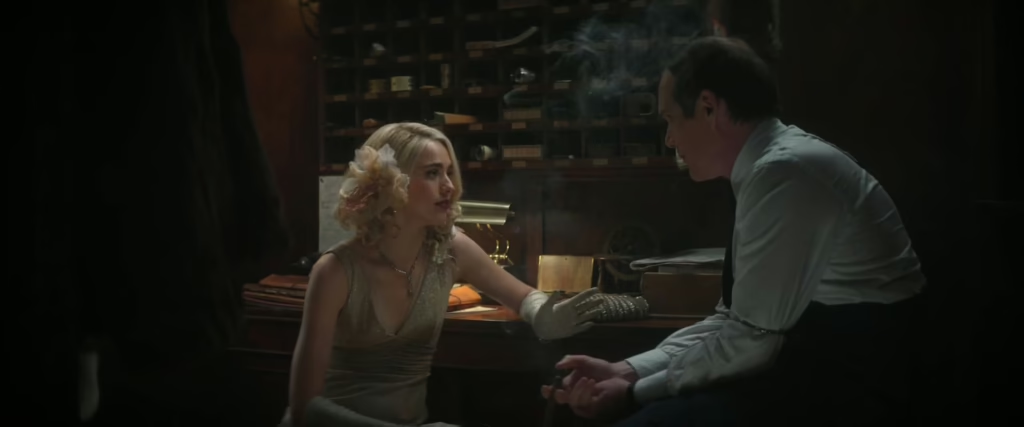
If Hart finds any vestige of purpose in this era of his life, then it is through the guidance he offers to his beautiful young protégé, Elizabeth Weiland. Her interests span poetry, set design, and costumes, and she admires him greatly, though his feelings evidently run far deeper. Her respect and gratitude simply doesn’t match his aching desire for intimacy, and when he observes a romantic spark in her meeting with Rodgers, the depth of his heartbreak becomes unmistakable. Partly because of his mercurial tendencies, and partly because of those idiosyncratic quirks woven into his very nature, this lonely, fading lyricist is left standing on the margins of his own life.
In such delicately rendered character dynamics, Blue Moon reveals a genius of contradictions, articulating the full sweep of romantic connection even as he stood forever outside it. As the title song settles over Sardi’s restaurant in the final minutes, we feel all that has slipped through his fingers – from love to legacy, and the simple comfort of belonging. Linklater’s touch sensitively bares the soul of this heartbroken poet, and through an intimate, mournful restraint, finds him haunted by luminous creations he could never truly inhabit.
Blue Moon is currently playing in cinemas.
Hey love this page by the way! Keep up the great work. Its my new go to since the Cinema Archives is no longer active. Curious when you think a 2025 page will be out?
Thanks James, glad I can fill that void! I think I would like to aim for April. There are a few important blind spots still left on my watch list, and there’s a screening of László Nemes’ film Orphan in March that I would like to get to.
Great! Looking forward to it and all the reviews in the meantime.
As someone who regularly vists the cinema archives despite their not being new stuff since February of last year, I have been looking into this website lately and I love it. Rather excited to see your 2025 list.
Thanks for dropping by dom, glad you enjoy my work here! I’m excited to start putting that page together, especially now I’ve found a huge masterpiece to sit at the top.