James Cameron | 3hr 17min

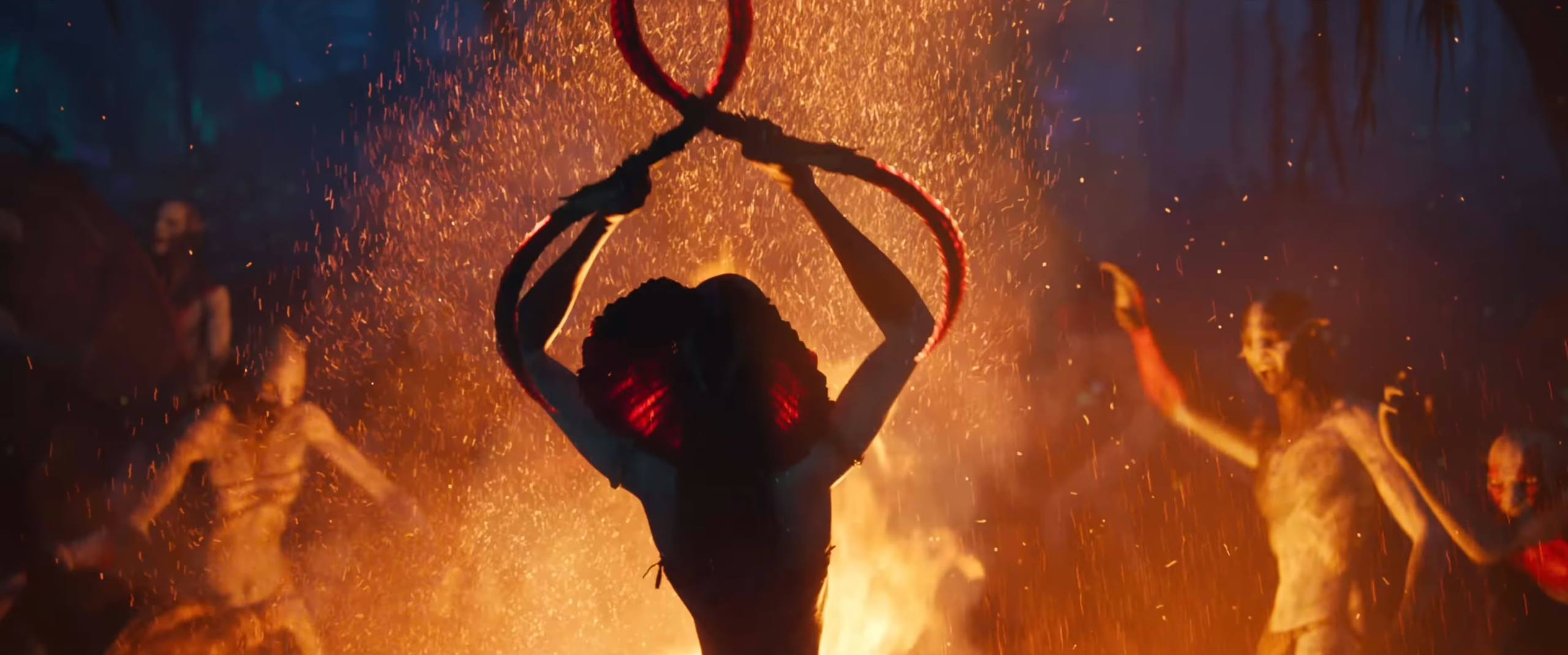
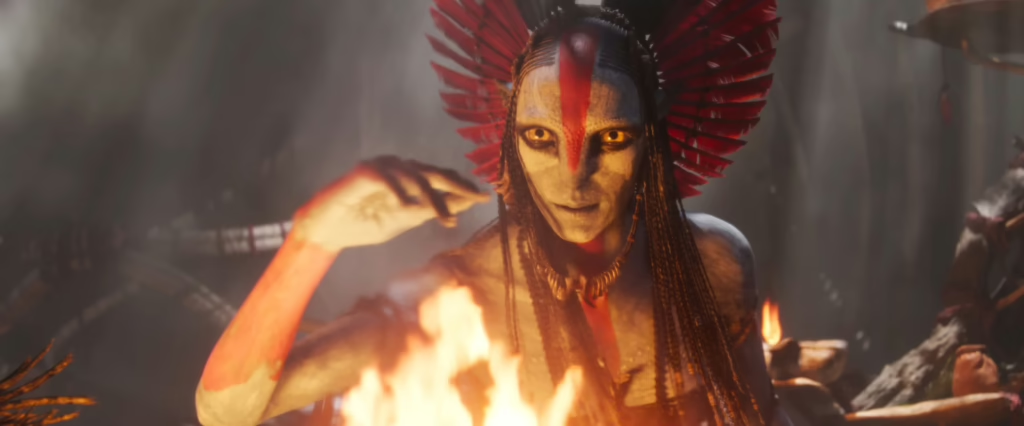
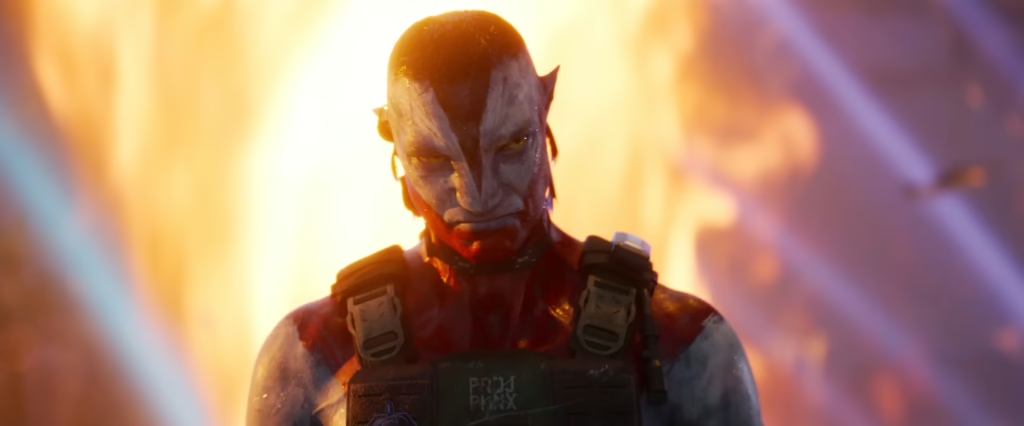
Within the charred, hollow husk of a Hometree, Varang and the Ash People worship the pure truth of fire. Once a peaceful clan that worshipped Eywa like the other Na’vi, they have since rejected the Great Mother ever since a volcanic eruption consumed their sacred grove and burnt their faith to cinders. Now, they believe that only destruction can birth strength, and with that power they seek to unmake the living world that James Cameron has spent decades carefully weaving. As Jake Sully and Colonel Miles Quaritch continue their fight for the soul of Pandora, Avatar: Fire and Ash introduces another force that blurs the lines between civilisations, deepening the question of survival through harmony or conquest at the heart of this epic, ever-evolving saga.
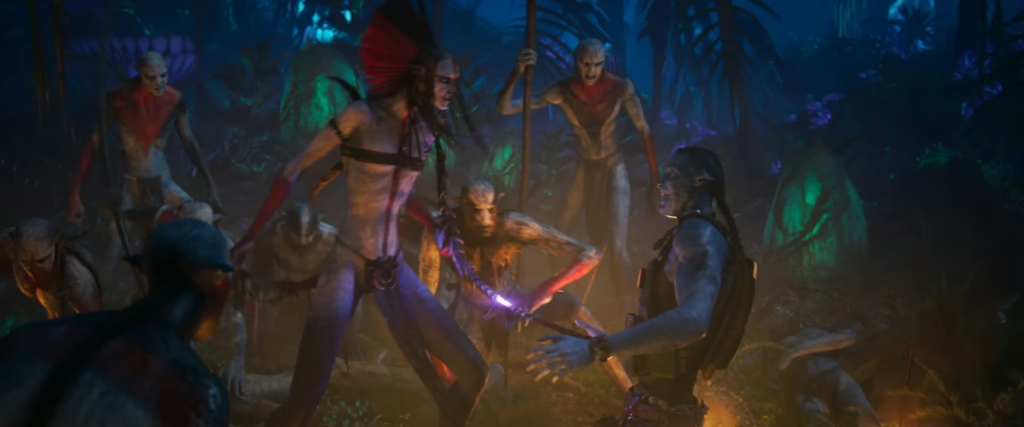
With Cameron now carrying the momentum to deliver new Avatar instalments on a regular basis, the series is poised to further expand its mythic, morally complex narrative. The arrival of Varang especially exposes a sinister fracture in a culture spiritually bound to the natural world, twisting the Na’vi neural queue into an instrument of torture and severing it as execution. While other clans in Fire and Ash defiantly resist humanity’s attempt to colonise Pandora, Varang and her people are intrigued by their weapons that“strike like lightning”, eagerly joining those whose gods are profit and power. Coated in white ash and streaked with crimson body paint, they often resemble ghouls haunting a scorched wasteland, exalting a culture steeped in death and adorned with bones. As Jake and his family uncover whispers of Eywa’s will through their spiritual trials, the war between the Na’vi and Sky People threatens to erupt through unholy pacts, drawing Fire and Ash to a primordial, cataclysmic reckoning.
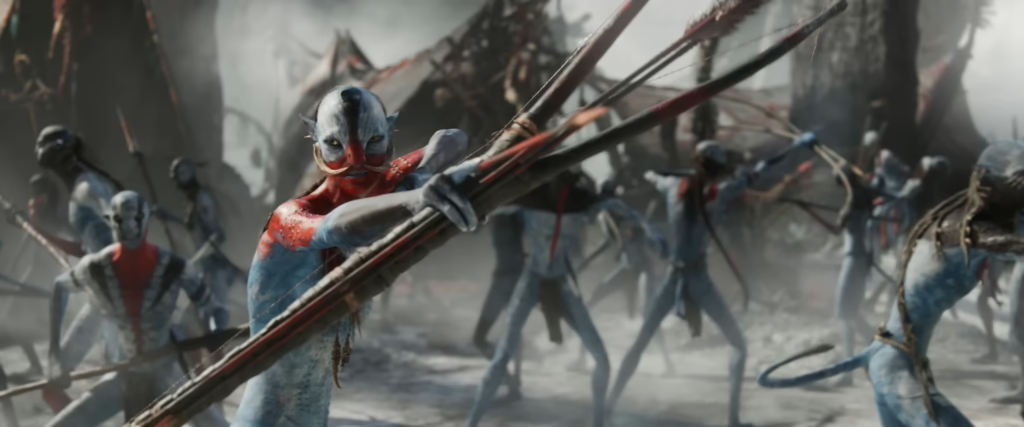
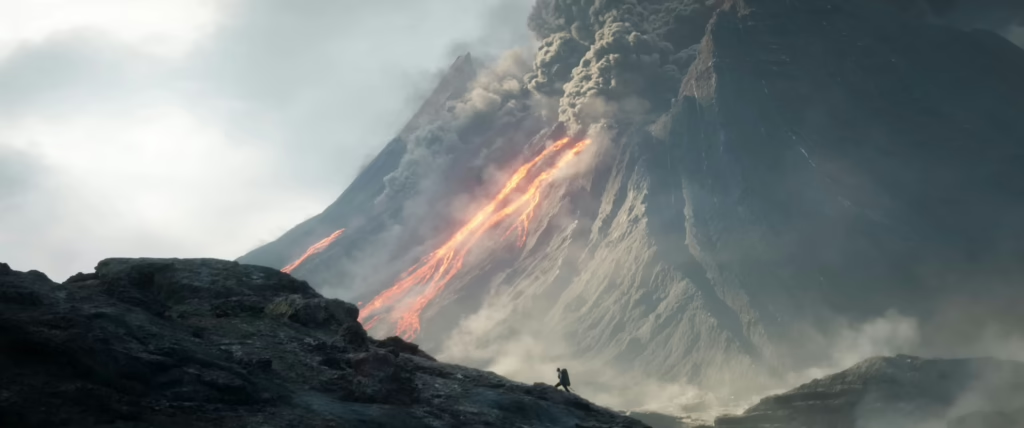
It is telling that many of Avatar’s harshest critics have succumbed to Cameron’s majestic storytelling with its third instalment, though this is evidently due less to any visual reinvention than its narrative development beyond foundational archetypes. Despite possessing the ethereal bioluminescence and oceanic spectacle that previously set new benchmarks for cinematic worldbuilding, Fire and Ash doesn’t quite push technical frontiers as far as before. As impressive as its hyper-realistic digital rendering of fire may be, the novel wonder of Avatar is slightly reduced, dimmed by familiarity.
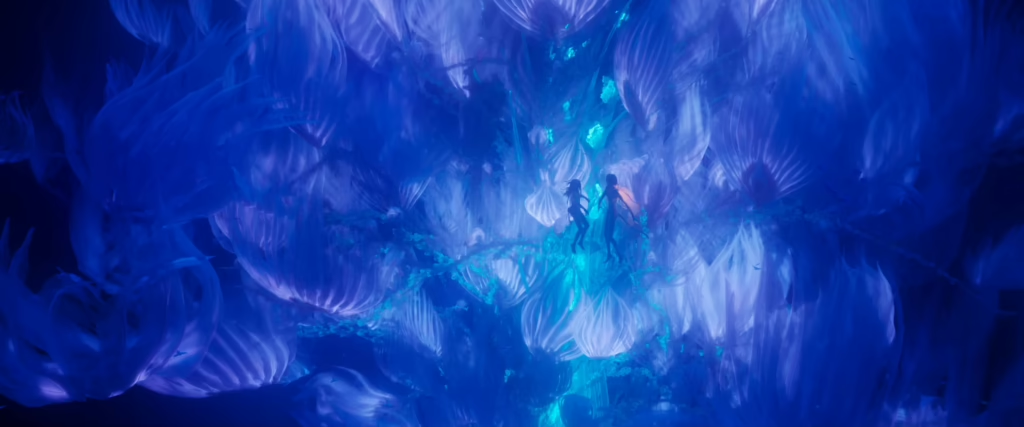
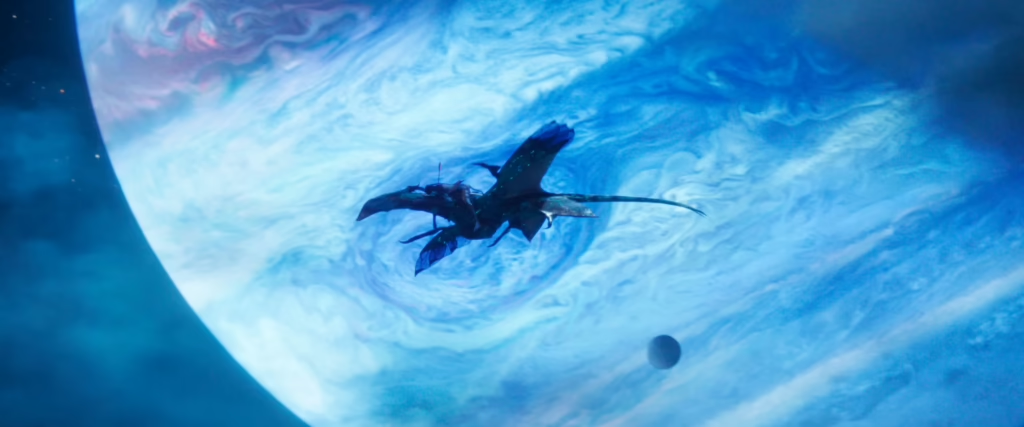
Even so, that spark of awe is still far from missing. Along with the newly introduced Ash People, the nomadic Wind Traders complete Cameron’s set of elemental clans, sailing through the air with colossal, flying creatures modelled after stingrays and jellyfish. An aurora-like vortex of purple, green, and blue ribbons spiralling skyward from the ocean is also established as a particularly mesmerising set piece early on, before later revealing itself to be a deadly force. Within this magnetic flux, the stage is set for a gravity-defying battle across floating platforms, thrillingly rendering metal weapons useless in the swirling, weightless chaos.
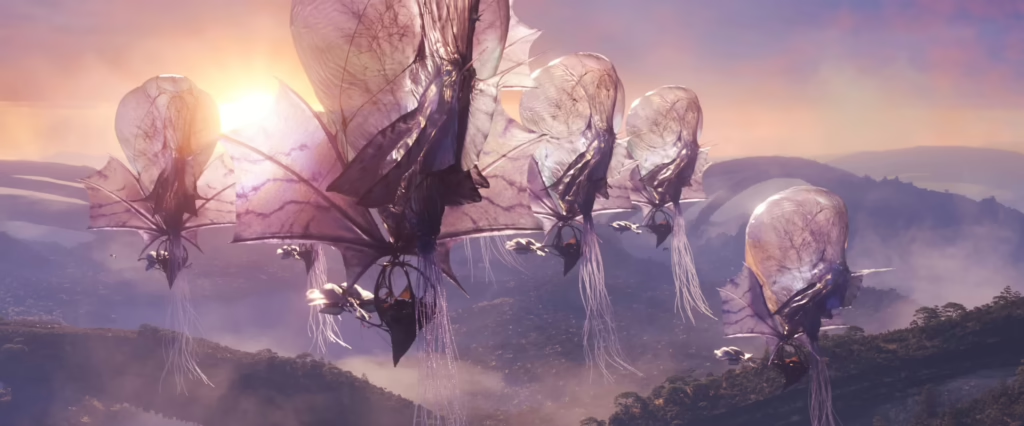
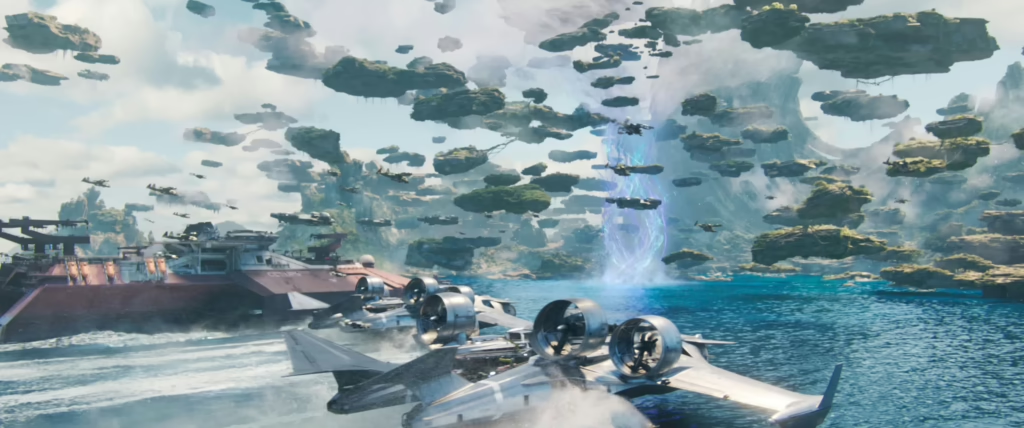
Indeed, Cameron’s aesthetic command of digital effects remains unmatched in scope and precision, and his character designs only continue to sharpen in Fire and Ash. Now acclimated to his Na’vi body, Quaritch holds a dark mirror up to Jake’s journey in the first Avatar, pursuing a profane assimilation that corrupts spiritual bonds for control. Where Varang and her clan are bathed in the warm glow of flames, the military base’s blinding, sterile floodlights align with Quaritch’s clinical vision of order, and Cameron unites both through a visual dialectic of extremes. Varang and Quaritch’s shift from distrust to romantic union purposefully echoes the beginnings of Jake and Neytiri’s own relationship too, effectively positioning both women as grieving warriors, and both men as reluctant allies.
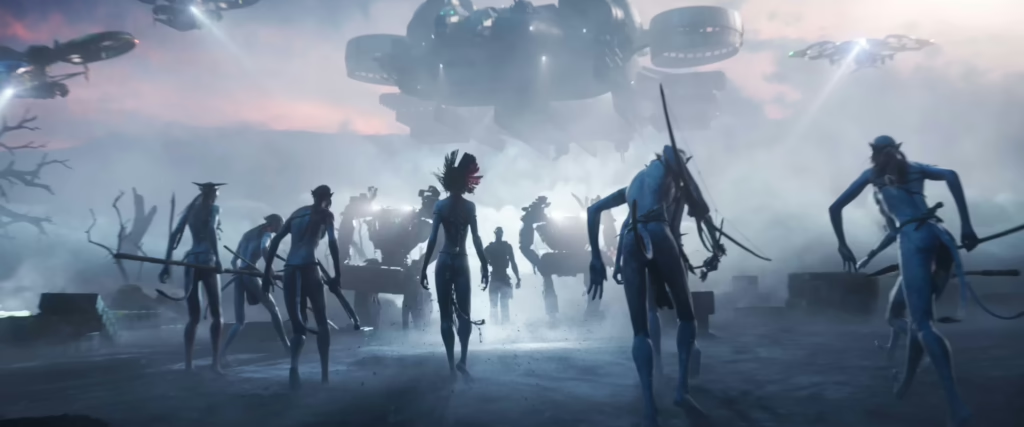
As the biological son of one and the adopted son of the other, Spider is the common thread which links Jake and Quaritch, bridging human and Na’vi worlds as a living contradiction. Early in Fire and Ash, Eywa grants him a divine gift that holds immense ramifications for the ongoing war, and forms the narrative crux of the film. The divide between those who regard this miracle with reverence and those who only see its weaponised potential feels irreconcilable, and although Quaritch does not entirely undergo a redemption arc, the groundwork is laid as Jake urges him to see how deep this interconnected world runs. That Quaritch’s standing in the human military should fall into question as well only further underscores Avatar’s central tension between loyalty and survival, forcing characters to weigh kinship against the brutal calculus of war.
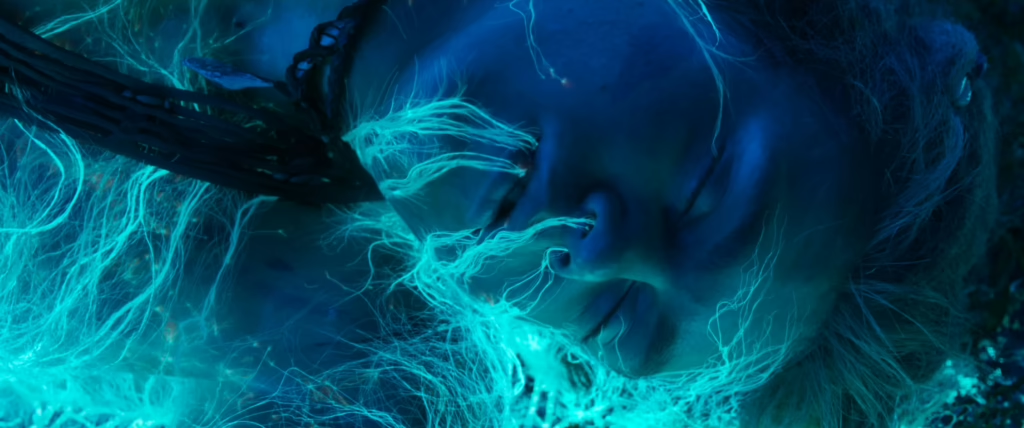
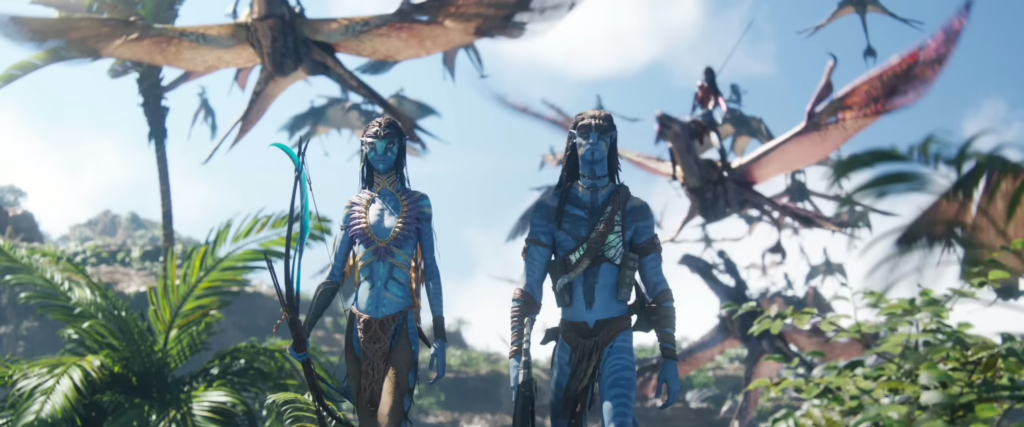
For Jake’s family too, the loss of Neteyram in The Way of Water has entirely reframed the fight for Pandora, sending each member on their own splintered arcs. While Jake channels his grief into relentless resolve, Neytiri lets her sorrow curdle into a searing hatred for the Sky People, even counting her own husband and children among them. Jake’s impatience with Eywa invites uneasy parallels with Varang too, yet as Spider, Lo’ak, and Kiri drift towards their destinies, Cameron also reveals the magnitude of her grace. Lo’ak’s attempt to rouse the whale-like tulkun recalls Merry and Pippin urging the Ents in The Lord of the Rings, though it is by far the least compelling subplot here, while Kiri is more thoroughly developed as a Messianic figure for Pandora.
Fire and Ash may retread a few familiar narrative beats from The Way of Water which keeps it from breaking wholly new ground, yet the shifting dynamics between allies and enemies in this blazing war effectively kindle an invigorating, mythic intensity. Evil transcends advanced weaponry and militaristic might here, exposing a merciless underside to the stubborn perseverance of life on Pandora which corrupts Eywa’s gift. As Cameron continues to forge this expansive tale of spirituality and survival through the elements, the threads of tradition which bind clans together are brutally tested, and we can only yield to wonder as we witness Fire and Ash’s primal, world-shaping spectacle ferociously ignite a crucible of faith and fury.
Avatar: Fire and Ash is currently playing in cinemas.