Dan Trachtenberg | 1hr 30min

It takes more than brute strength to defeat a creature as viciously powerful as a Predator. Across each film in this franchise, survival depends on ingenuity, resourcefulness, and adaptability, rewarding those who tactically exploit their environment while the reckless swiftly perish. As we witnessed in the historic Native American setting of Prey, it does not require advanced technology to outwit the alien species, yet only a scarce few warriors from eras past have ever bested them.
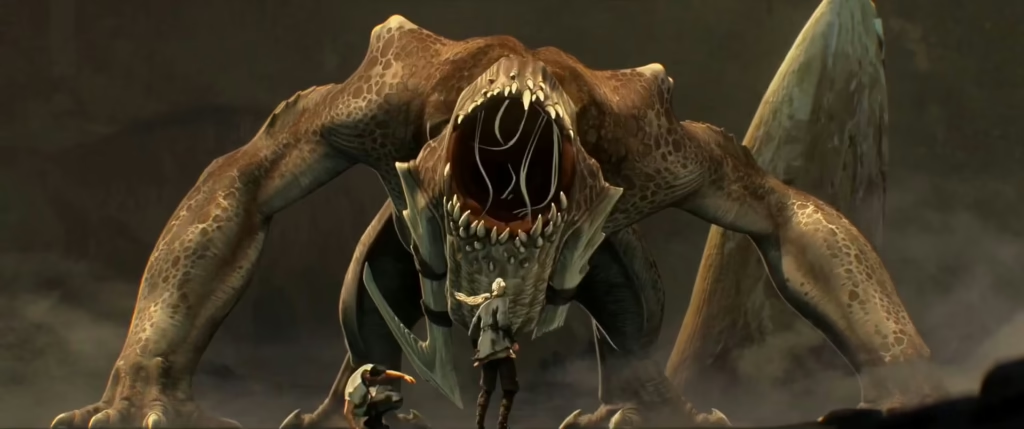
In Predator: Killer of Killers, that brave minority steps into the spotlight. They may be a diverse collective, yet between Nordic Vikings, Japanese samurai, and American war pilots, Dan Trachtenberg reveals a distinctly human tenacity. Across ages, they capitalise on their home ground advantage, and in turn exploit the Predator species’ greatest weakness – ritual-bound overconfidence, severely limiting their ability to adjust once the hunt turns against them. Trachtenberg names each episode after the human fighter’s weapon of choice, yet it is not the tool which secures victory against these ceremonial killers. Rather, it is the mind guiding it that outwits such a daunting foe, proving humanity to be uniquely quick to learn, and quicker to evolve.

Transitioning the Predator series from live action to animation, it is no wonder why Trachtenberg used a game engine to design the computer graphics. Whether set in a Viking battle or a World War II dogfight, these action set pieces embrace a stealth-action video game logic, where terrain, visibility, and resourcefulness trump raw power. There is a graphic novel realism to this aesthetic, rendering characters and their environments in 2D, and emphasising bold, expressionist shapes over photographic detail. Movements carry mass and momentum without appearing overly fluid too, grounding the violence in physical consequence, and maintaining a brutal tactility across swinging katanas and banking aircraft.
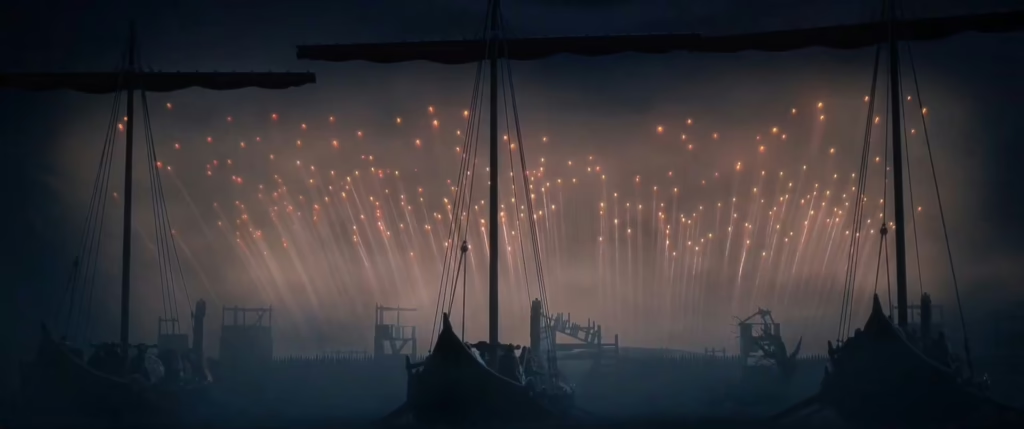
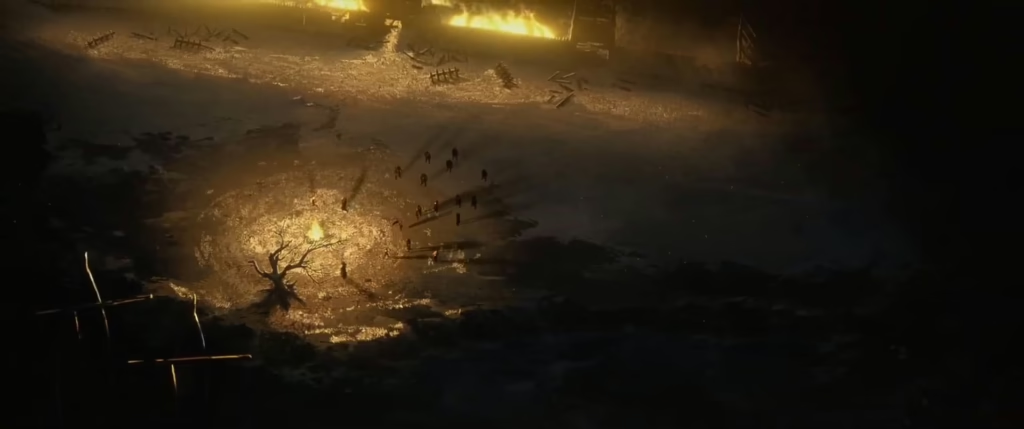
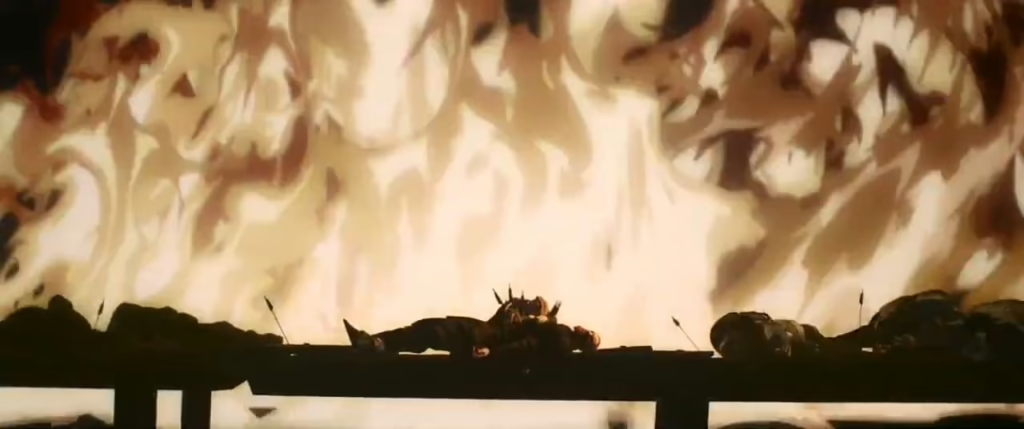
Viking warrior Ursa is the first in Killer of Killers to confront the alien hunter, helming an episode named after the razor-sharp shields she uses for both attack and defence. Like the two others who will soon face their own pursuers, she is in the thick of combat when it first lands, silently observing her intrepid onslaught and remarkable endurance. The animation is beautifully stylised as flaming arrows rain down against a deep blue sky, and a long take navigates a bloody, frozen battle at the gates of an enemy clan, though it is the parallel images of her kneeling over fallen loved ones that poignantly illustrate her deepest motivation.
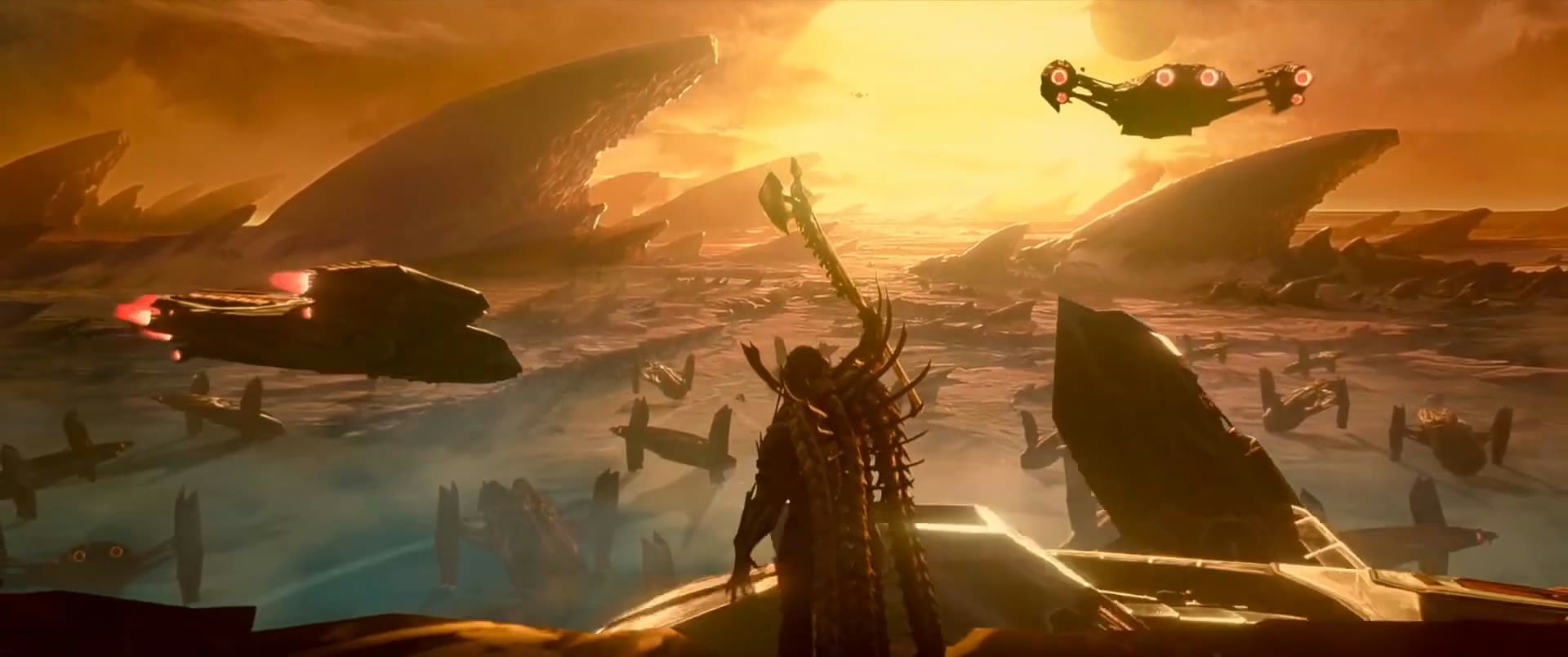
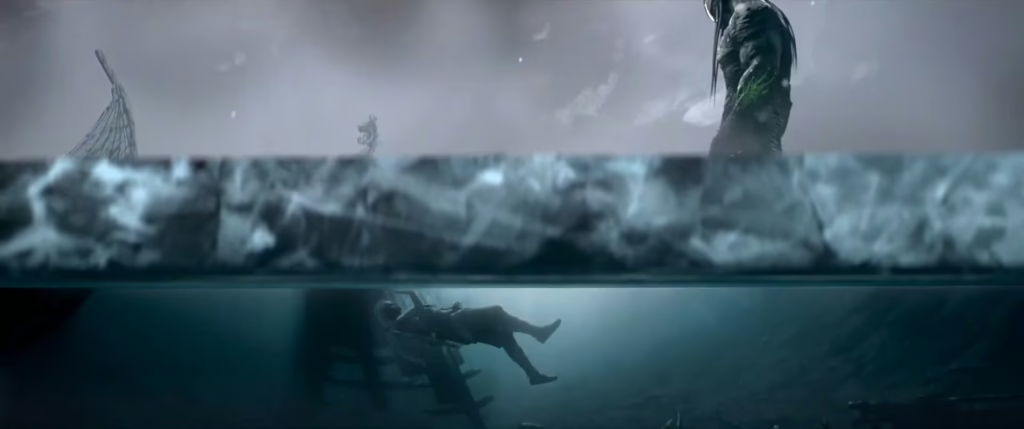
Ursa is no doubt fearless, yet when the Predator finally materialises, she does not let panic or arrogance cloud her mind. After witnessing the force of its weaponised sonic waves, tending to her injured son, and falling into an icy lake, she waits patiently beneath the surface to take it by surprise, condemning them both to its freezing depths. Only by turning its own power against it does she simultaneously secure her survival and its fatality – yet as this episode draws to a close, the dissolve that transports her to a mysterious, metal prison hints that her story is not yet done. Another human figure is here too, his back turned to the camera, and we soon learn his identity as Killer of Killers moves forward to Japan’s Edo period.

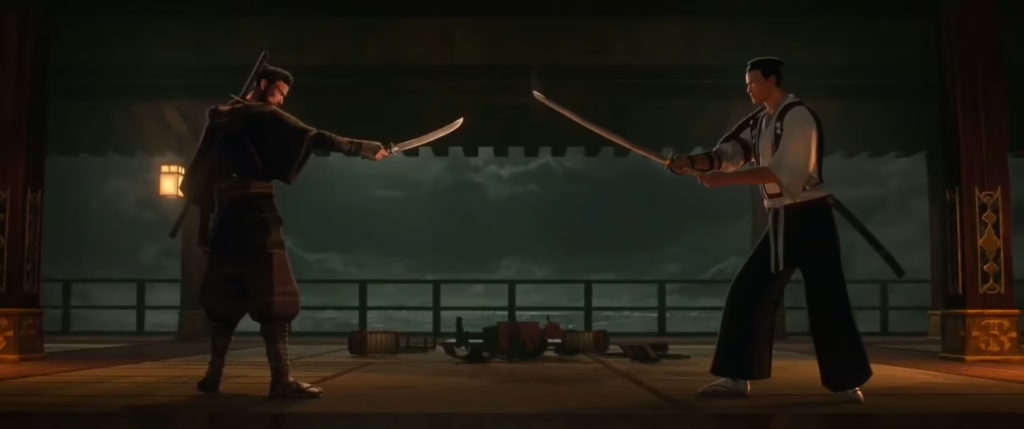
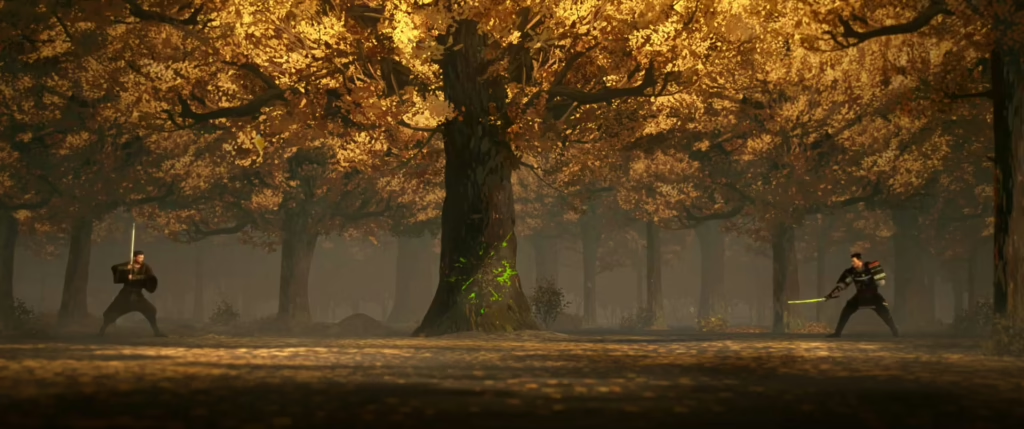
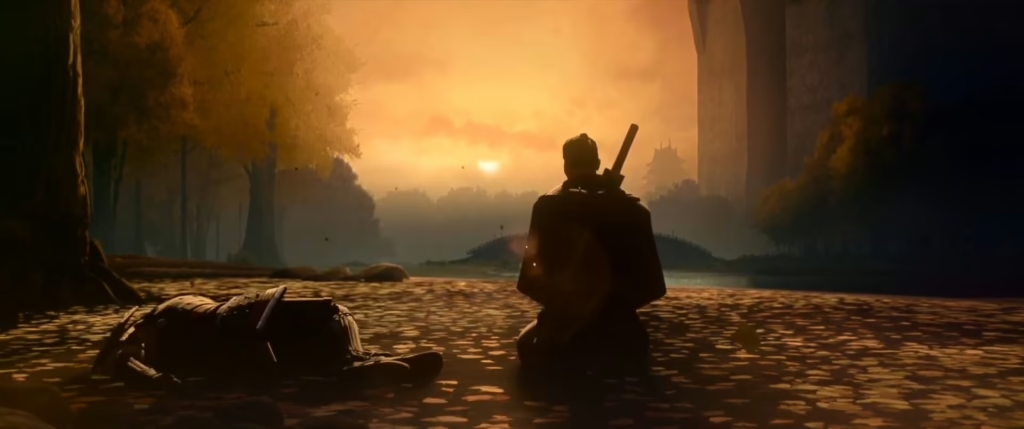
There, samurai Kenji seeks to vindicate himself before his brother Kiyoshi, who long ago beat him in a duel for their warlord father’s legacy. True to the patient, disciplined stealth of their fighting style, dialogue is almost entirely stripped from this episode, as Trachtenberg instead rests his storytelling on its visuals. Just as Ursa’s Predator mirrored the Vikings’ brute force, this one attacks with studied precision, dispatching guards like a ninja to reach the heart of the palace. This is evidently more than just a competition of strength or skill – by tactically prioritising cooperation over ego, Kenji and Kiyoshi silently assess their enemy’s weakness together, and pierce through its camouflage. Unfortunately, victory does not come without immense loss for the human warriors of Killer of Killers, and so Kenji is taken alone to the same alien prison where Ursa awaits.

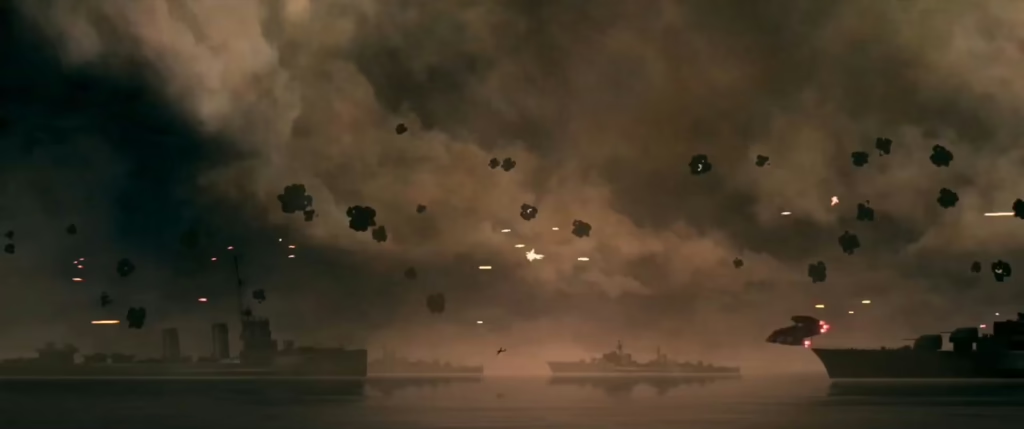
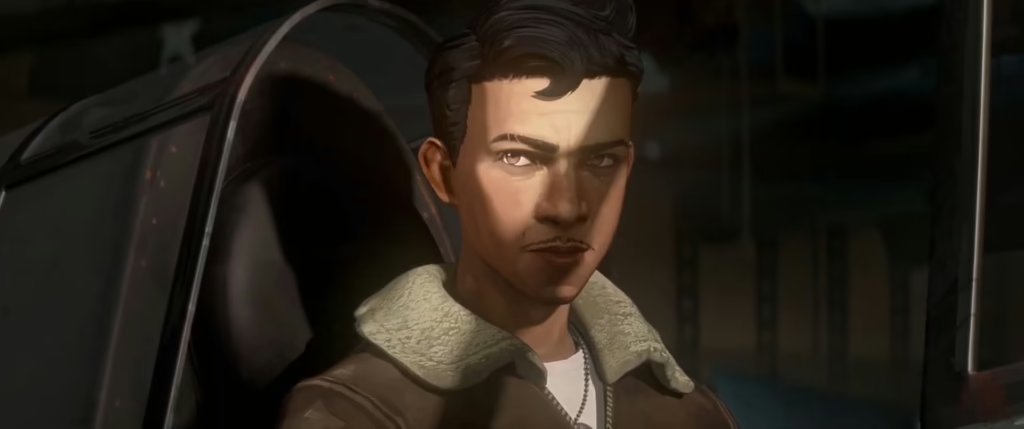
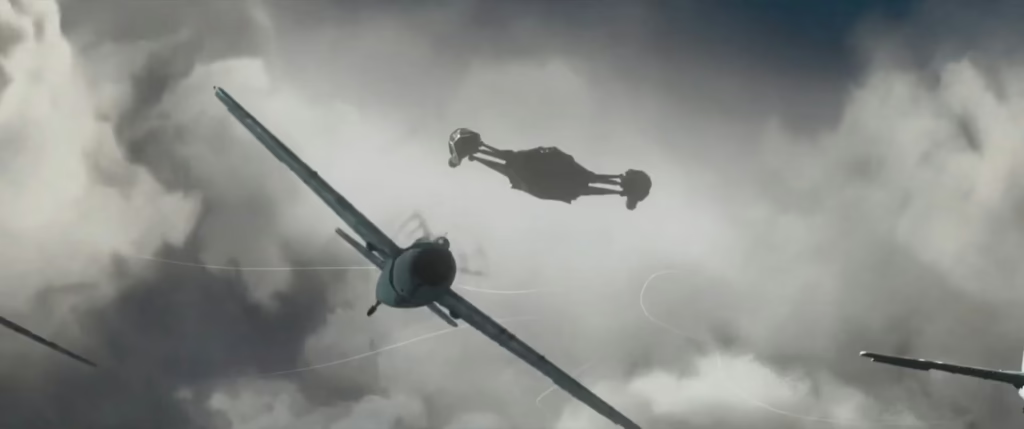
The third and final captive residing here belongs to a far more modern period, dominated by aerial warfare and long-range firepower in place of hand-to-hand combat. John Torres is slightly bitter that he has been drafted into the U.S. Navy as a mechanic rather than a pilot in World War II, yet when he witnesses the remnants of a unit demolished by an aircraft beyond their comprehension, he takes it on himself to join the hopeless, anachronistic dogfight against this beast. Evidently the Predator species adapts flexibly to their targets’ combat style, though even more impressive is Torres’ mastery of mechanical technology, cleverly repurposing tools of war and exploiting his adversary’s constrained perception.
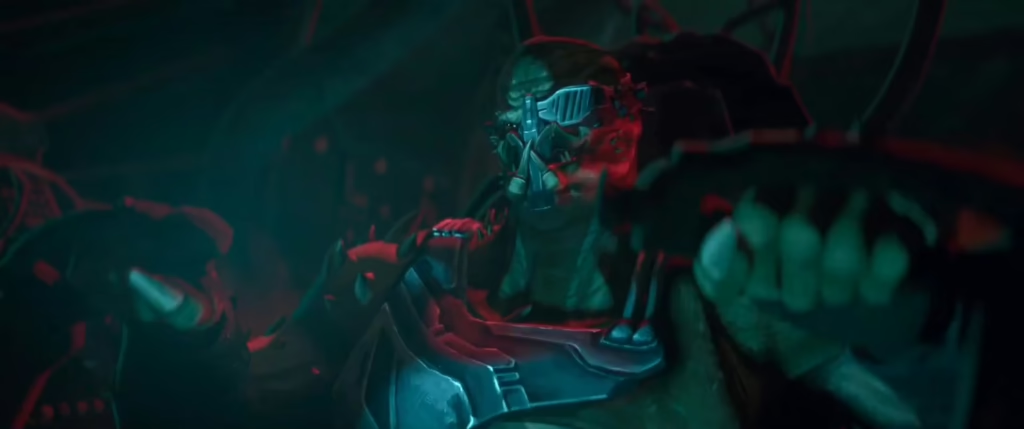
Emerging a victor, he too is transported to the detention chamber alongside Ursa and Kenji, where Trachtenberg reveals the fate of all those who have ever killed a Predator. In true gladiatorial fashion, they are pitted against each other for entertainment, and fitted out with explosive collars to inhibit an uprising. Here, Killer of Killers elucidates the distinctions between each warrior – Ursa fought for vengeance, Kenji fought for honour, and Torres fought to protect others, though each are driven by a deeply human purpose that transcends the Predator species’ detached fight for sport. These core instincts continue to guide their actions even when they are forced into this deadly game, proving that they are more than just a “Shield”, a “Sword”, and a “Bullet”, as they are so conveniently framed by their abductors.

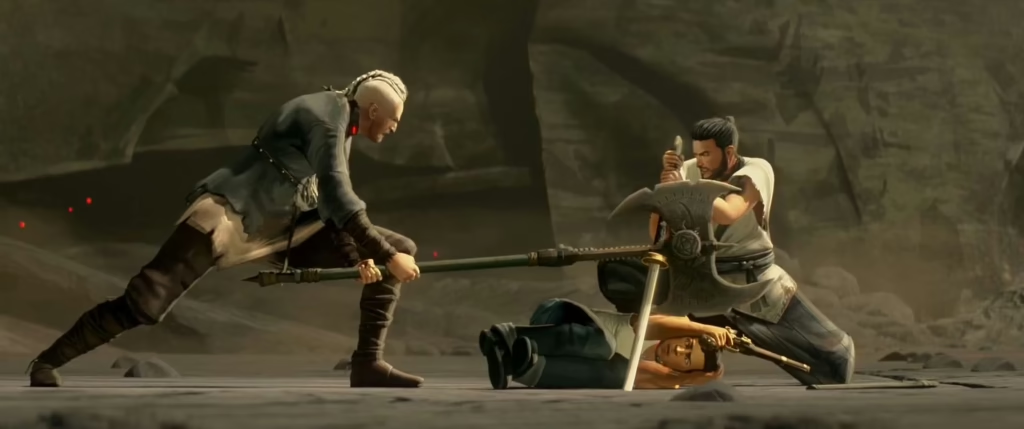
There is a strange lack of resolution to this concluding chapter in Killer of Killers. Much to the detriment of its narrative, Trachtenberg leaves the door a little too wide open to further sequels, undermining any finality in these character arcs. The end arrives abruptly, but at least not without a lasting impression of heroism, striking a vivid contrast between human courage and the Predator’s savage, remorseless hunt. That is the existential throughline that this series is founded upon after all, and by traversing centuries and civilisations, Trachtenberg honours the resilient heart of a people born to endure, adapt, and prevail across millennia.
Predator: Killer of Killers is currently streaming on Disney+.