
Phil Lord & Chris Miller | 2hr 36min

Eleven light years away from Earth, in the depths of outer space, there emerges a strange, improbable companionship. Dr. Ryland Grace’s backstory is perhaps a little underdeveloped in Project Hail Mary, hinting at a failed romance and years spent teaching high school science, yet there is a sense that his life never truly started until this interstellar suicide mission introduced him to worlds beyond his own. Even among the other scientists, his unpolished demeanour marks him as an ill fit for this top-secret assignment, so it is ironic indeed that he should find connection with an extra-terrestrial creature that shares none of his biology, language, or understanding of the universe. Nevertheless, these two isolated souls find in each other a mirror of themselves – physically as they initially mimic one another’s movements to establish a rudimentary trust, and then intellectually as problem-solving becomes the shared dialect through which their bond takes form.
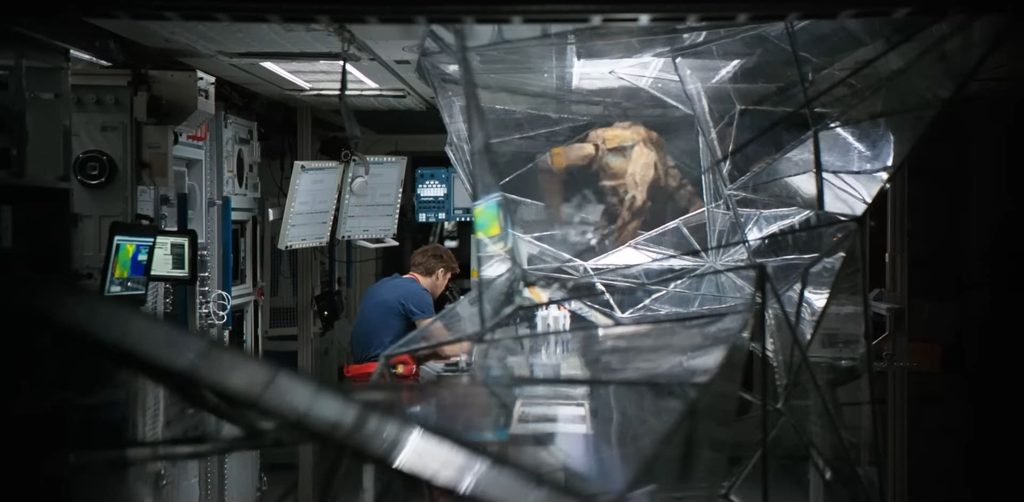
If there are any producers who can get such an ambitious, high-concept project across the line, then it is surely Phil Lord and Chris Miller, whose work on the Spider-Verse series has redefined the formal possibilities of mainstream animation. Now as they step back into the role of live-action directors however, they also bring a marked commitment to practical effects, minimising the use of green screens in favour of fully constructed, tactile immersion. Perhaps most impressive of all is the puppetry of the craggy, spider-like alien that Grace dubs Rocky, granting Ryan Gosling a responsive scene partner, and lending the character itself a visual credibility which even the most advanced CGI could not replicate. Although Rocky lacks anything resembling a human face, his rugged design and movement still establish remarkable emotional clarity, expressing humour, vulnerability, and curiosity through geological motion.

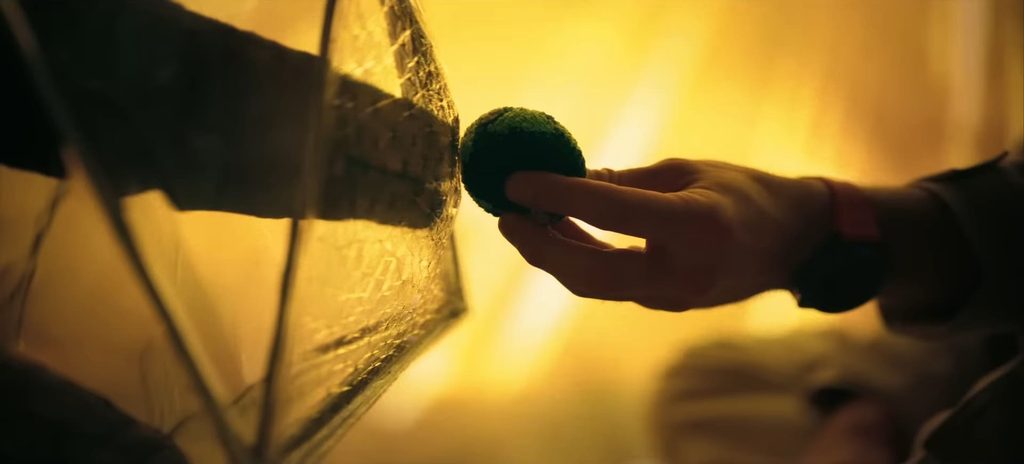
Much like Grace, Rocky too has been sent by his people to learn how to save his sun from a slow, parasitic depletion of its energy. Just as Grace’s crew passed away on the journey, Rocky’s were lost to radiation exposure from the astrophage – the alien micro-organisms threatening both their worlds. As such, both have arrived alone in the exosphere of Tau Ceti, hopeful that this planet may hold the answer to their mutual crisis. Understanding does not come easily, yet through trial-and-error translations plugged into a computer, cooperation begins to stabilise their aligned missions.
In adapting Andy Weir’s novel, Lord and Miller draw on a wide range of cinematic influences, beginning with the hard science fiction of Interstellar. By framing its tender study of human connection within an empirically grounded narrative, Project Hail Mary similarly uses scientific discovery as the primary vehicle for emotional expression, and further adopts the cosmic wonder of Close Encounters of the Third Kind and E.T. the Extra-Terrestrial. Although the interrogation of cross-species communication fails to reach Arrival’s formal precision, linguistic revelation underpins Grace’s deciphering of Rocky’s high-pitched drones, growls, and clicks, while Lord and Miller’s admiration of Gravity emerges in their rendering of space’s lethal, weightless expanse.
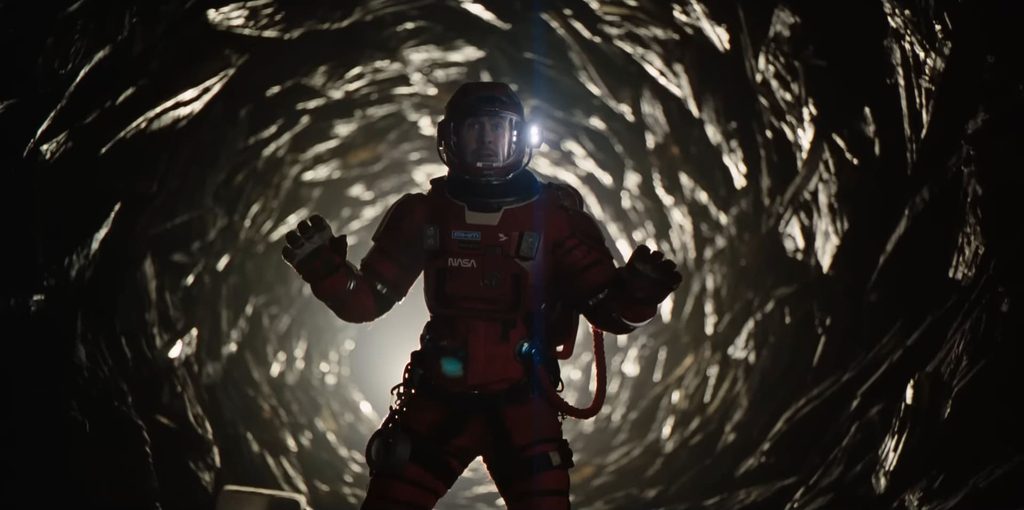
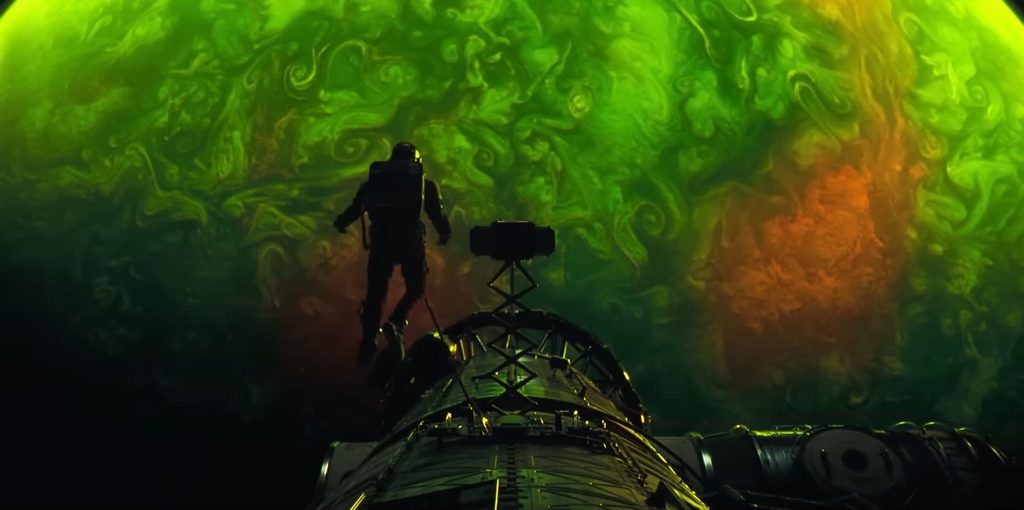
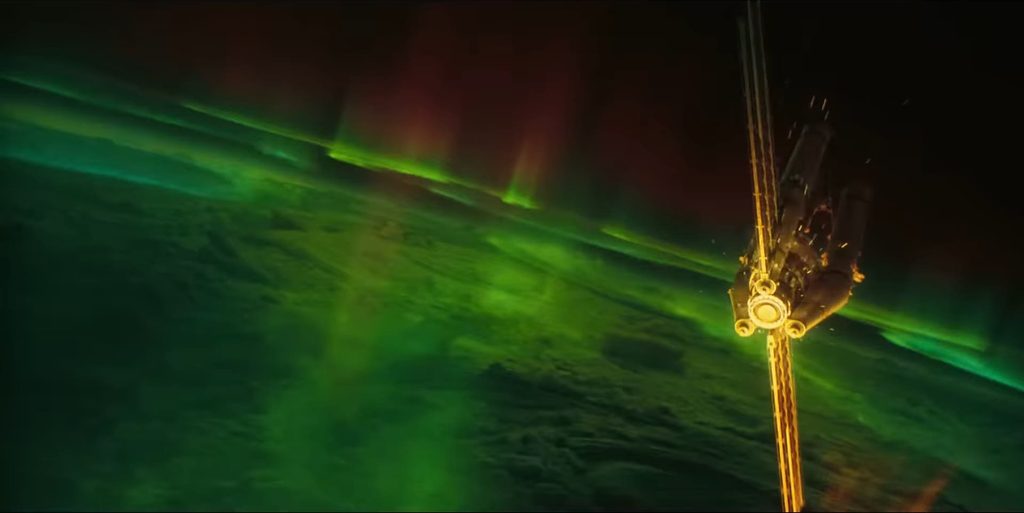
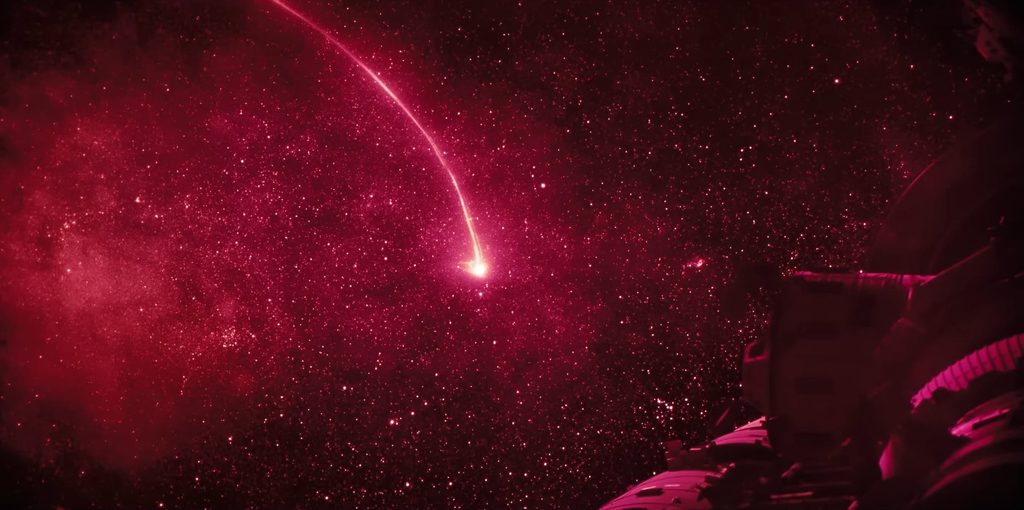
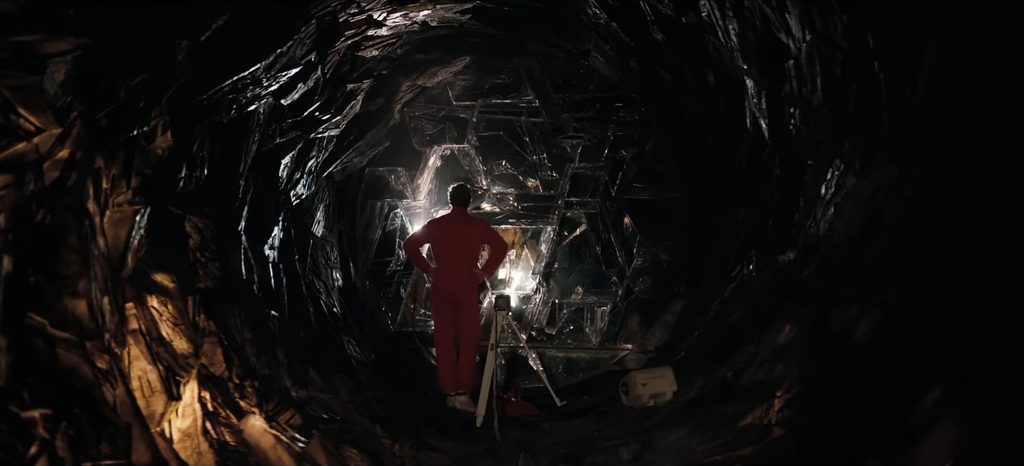
In purely cinematic terms however, Project Hail Mary largely pays homage to two great landmarks of the genre. The claustrophobic interiors of Grace’s ship are rendered in sterile, industrial designs that distinctly recall Alien and 2001: A Space Odyssey, flashing coloured lights in pulsating rhythms and funnelling shots through geometric corridors. Once we escape their confines however, Lord and Miller’s visuals become truly otherworldly, revealing a colossal spacecraft composed of intersecting beams and a seemingly organic tunnel bridging the airlocks between vessels. Rock, metal, and crystal serve as the primary materials of Rocky’s biological architecture, yet the film’s most breathtaking imagery is reserved for Tau Ceti itself, where green and orange gases swirl through the atmosphere and auroras light up the sky like neon echoes of Stanley Kubrick’s Stargate sequence.
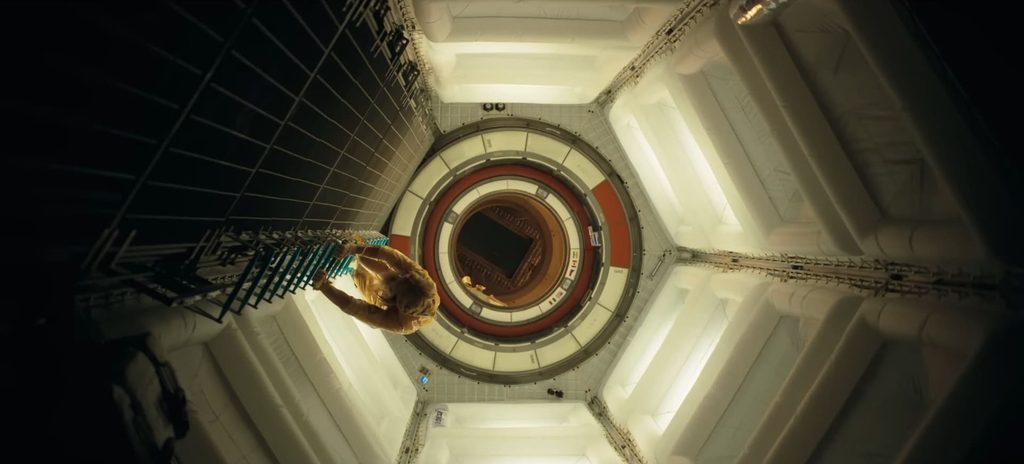
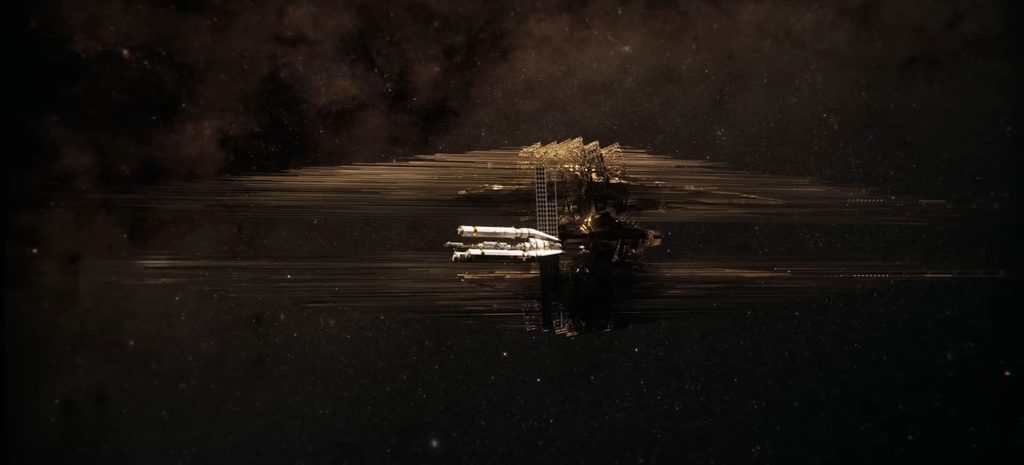
This is big-budget filmmaking at its most creatively assured after all, and Gosling is a natural fit for such an ambitious crowd-pleaser, leaning into the humorous, self-deprecating charm which he deploys so effortlessly. Although the run time for Project Hail Mary is slightly blown-out, Lord and Miller’s recurring flashbacks to Grace’s life on Earth impose a steady, parallel structure, allowing Gosling to oscillate between timelines differentiated by personal and epic narrative stakes.
Where Grace’s playful antics with Rocky offset the existential pressure of the mission, his tense dynamic with Sandra Hüller’s government official Eva during those flashbacks anchors the film in a bureaucratic urgency, while drawing a dry wit from her acerbic, deadpan manner. As walls break down between Grace and Eva though, it also begins to mirror Grace and Rocky’s relationship, and there Project Hail Mary recognises how much authentic connection is strained by the procedural imperatives of survival. Quite ironically, this friction does not cultivate the sort of bravery required for self-sacrifice either. Grace’s initial cowardice proves a devastating impediment, and it is only in witnessing the voluntary selflessness of another that he reconceives courage as a choice rather than duty.
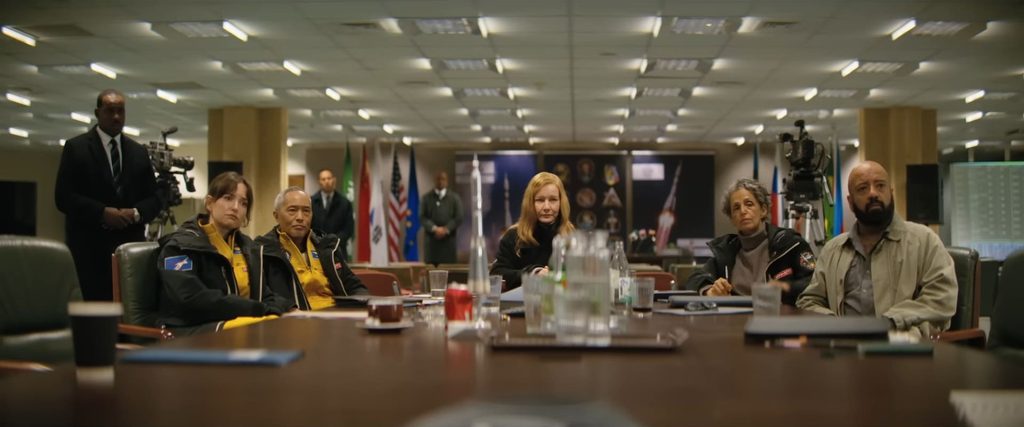
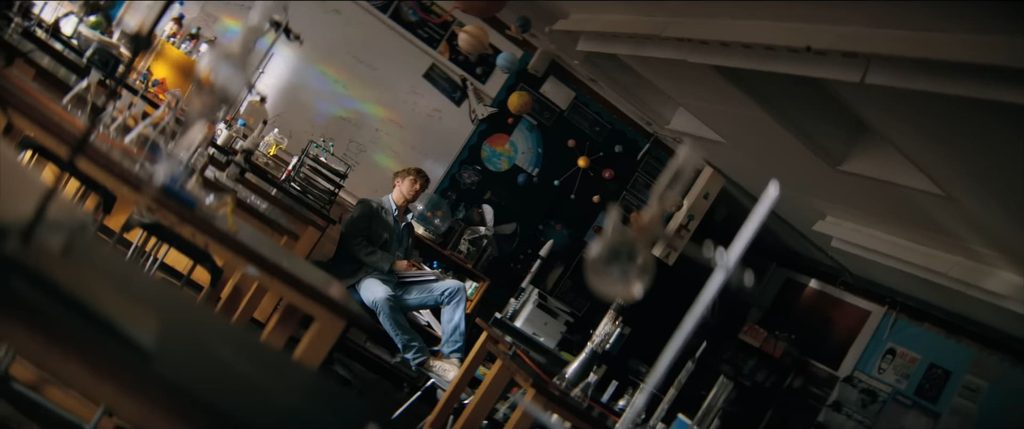
Project Hail Mary does not quite possess the formal rigour of its assorted inspirations, and this is particularly evident in its disjointed pop soundtrack, yet Lord and Miller otherwise strike a smooth tonal balance. Grace’s journey from Earth to outer space spans a broad emotional spectrum after all, and as he moves through states of confusion, recollection, and discovery, the camera angles keep shifting and spinning with his disorientated perspective. Of course, this is no surprise from such agile filmmakers, as comedy sits neatly alongside drama and sci-fi adventure in a restless blend of genres. When all is ultimately settled though, Project Hail Mary finds an unorthodox peace in new beginnings unshackled from obligation, and sustained instead by a chosen, reciprocal kinship.
Project Hail Mary is currently playing in cinemas.