Benny Safdie | 2hr 4min

Before Conor McGregor and Islam Makhachev became global icons of mixed martial arts, there were its sporting pioneers, proving the effectiveness of karate, boxing and jiu-jitsu in real competition. Among them, Mark Kerr entered as a dominant heavyweight wrestler, demonstrating the importance of grappling and ground control – though beyond the opening, low-res VHS tape recalling his triumphant debut, The Smashing Machine is not a film about revolution or victory. His journey is one of addiction and emotional fragility, slowly eroding any stable sense of self beyond the ring.
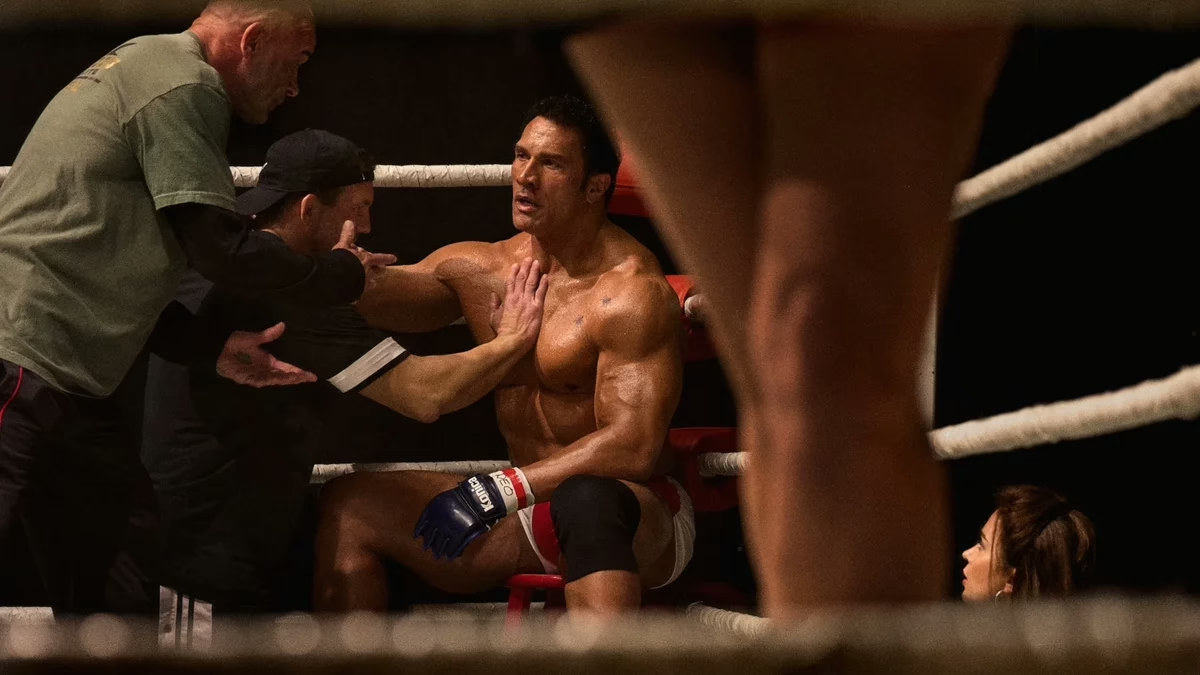
If this characterisation sounds as though Benny Safdie’s first solo film apart from his brother is weighed down by biopic convention, that is not a misreading. While Josh Safdie pursues a far more kinetic, distinctive vision of sporting struggle in Marty Supreme, Benny Safdie retreats to a familiar rise-and-fall arc, examining the pressure that professional competition imposes on Kerr’s personal life. At the very least, The Smashing Machine offers a gritty window into the physical and psychological toll of early MMA, understanding the brutality that Kerr exacts upon others as an extension of his own self-inflicted violence.

For Dwayne Johnson, this shift from commercial genre movies towards drama signals a far more nuanced investment than Safdie, piercing his leading man heroics with an unexpected vulnerability. While he remains a physically overwhelming force in the cage, outside he projects a much softer disposition, avoiding theme park rides that might upset his “sensitive tummy” and processing each defeat through inward sorrow than outward anger – at least until his insecurities are triggered by his wife, Dawn.
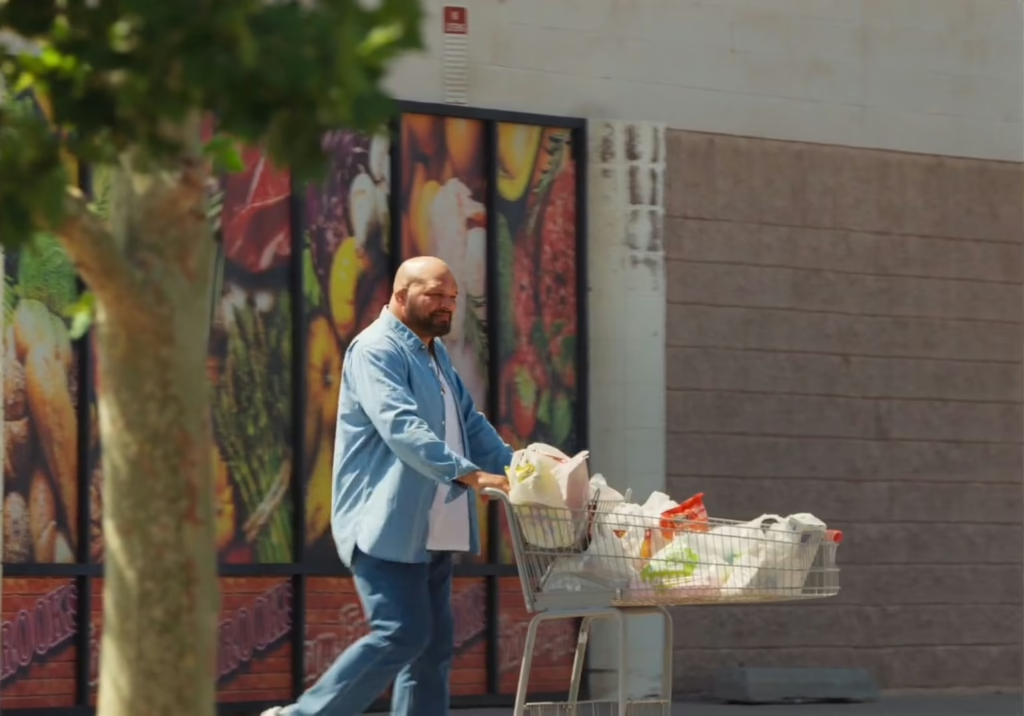
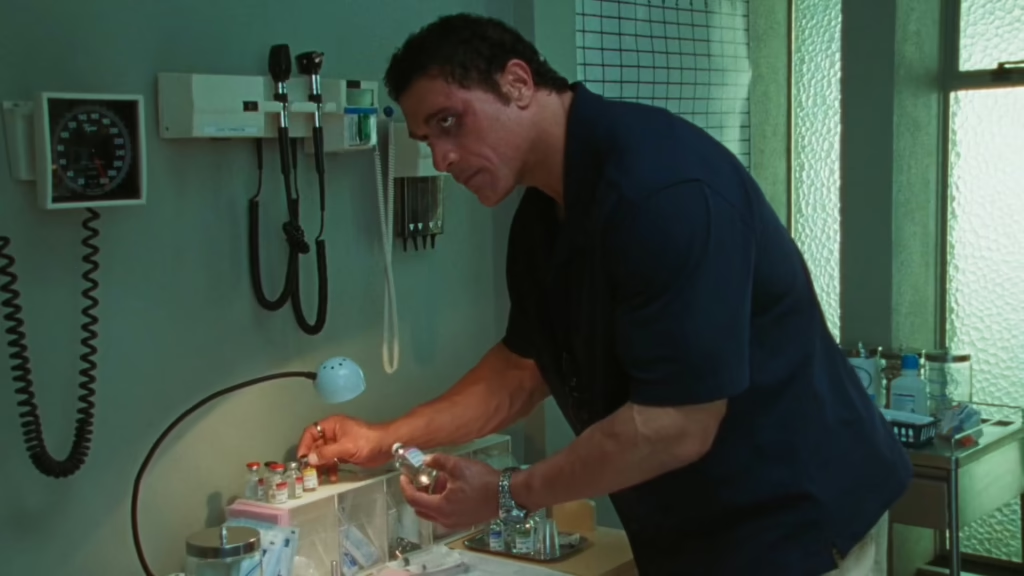
The marital arguments between these two bear long stretches of The Smashing Machine, erupting over common points of tension including Kerr’s dependence on painkillers, his reluctance to be a father, and his preference to travel overseas alone. The repetition becomes tiresome at points, yet every so often Safdie jolts us with the destructive ramifications of their conflicts, resulting in broken furniture, overdoses, and suicide attempts. Instability defines this relationship, and the further we trace Kerry’s drive to conquer his physical limitations through self-administered drugs, the more we recognise that his own fragility fuels both both his aggression and ambition.
Inside the ring too, Nala Sinephro’s score of syncopated jazz drums keeps us off-balance, carrying frenzied rhythms through gruelling matches while electric instruments intermittently align with strikes and kicks. Afterwards, the sound of crushing failure resonates through high-pitched drones as a tracking shot follows the back of his head to the locker room, where Kerr’s daze melts into sobbing self-pity. Through his careful layering of dissonant textures, Safdie curates a heavily subjective soundscape here, tethering us to a consciousness which oscillates between kinetic combat, drug-induced haze, and debilitating emotional collapse.
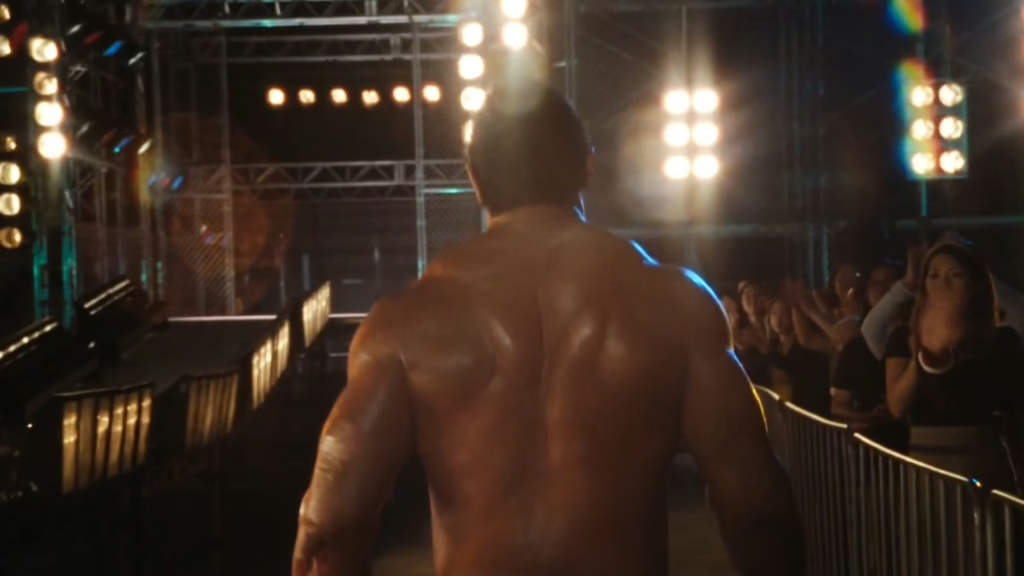
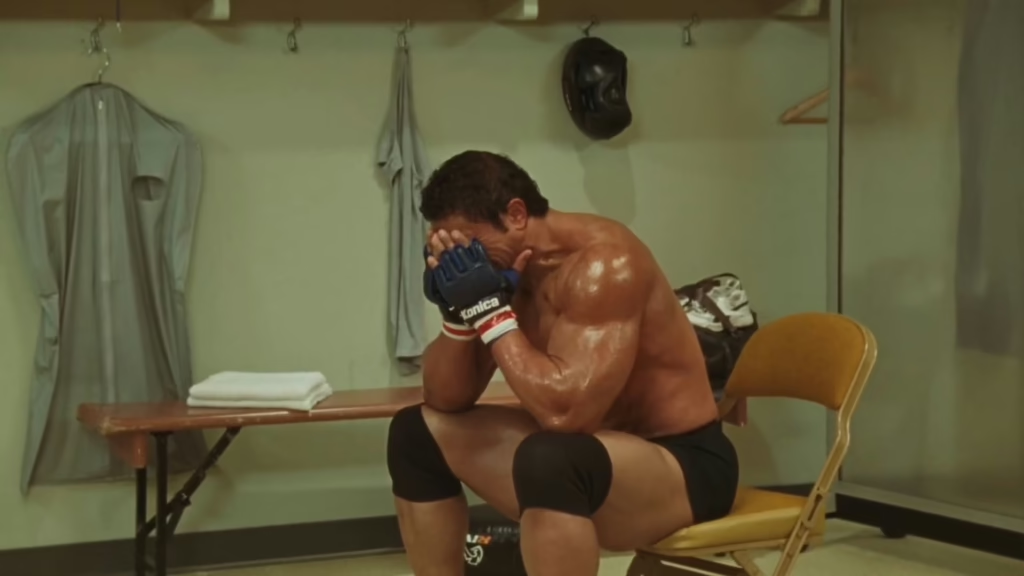
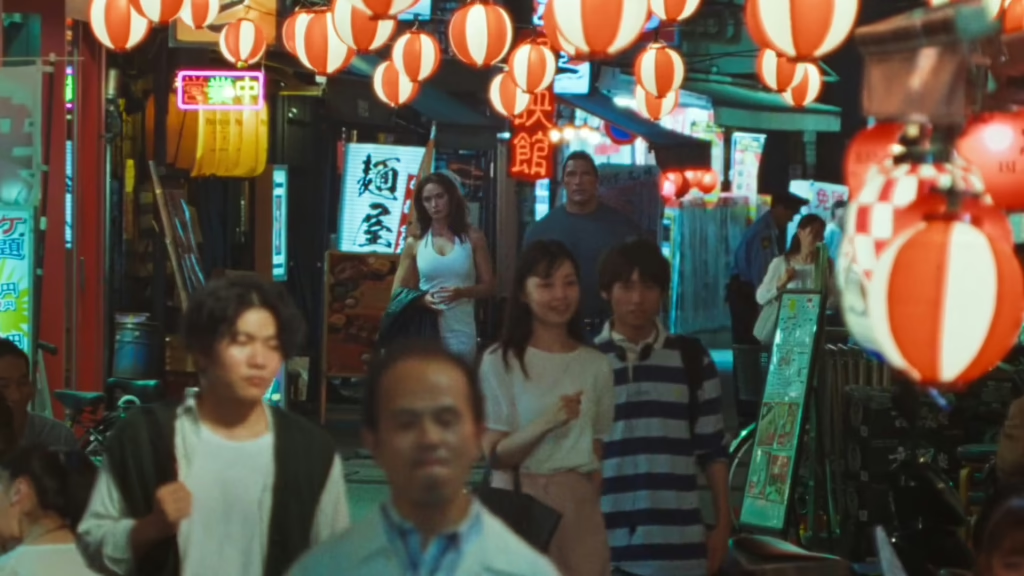
It’s when Kerr finally reaches the Pride Fighting Championships though where he is most visibly humbled, and where The Smashing Machine lovingly spotlights the brotherhood between MMA fighters. His relationship with Mark Coleman is often his most grounding relationship, and now as Coleman seeks to topple the Japanese fighter who eliminated his closest friend, Safdie’s editing intercuts between both – one locked in combat, and the other receiving stitches.
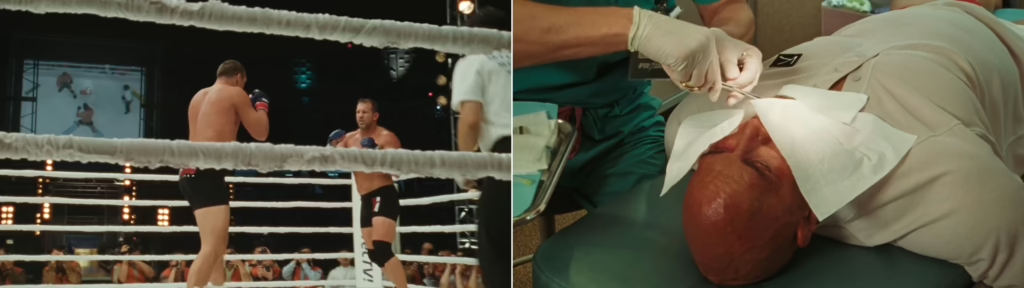
The contrast of energy between these men is immense, yet the sequence viscerally frames Coleman’s effort as a shared victory, symbolically awarding both the first Pride Grand Prix. Laying the foundations of MMA in mainstream culture was a collective struggle after all, and one laden with many sacrifices and errors. Far from mythologising Kerr’s contribution, The Smashing Machine treats his body as both an instrument and casualty of the sport’s formation, superseding its rote storytelling to illustrate the personal cost of MMA in intensely tactile, psychological terms.
The Smashing Machine is currently available to rent or buy on the Apple TV Store and Amazon Video.