
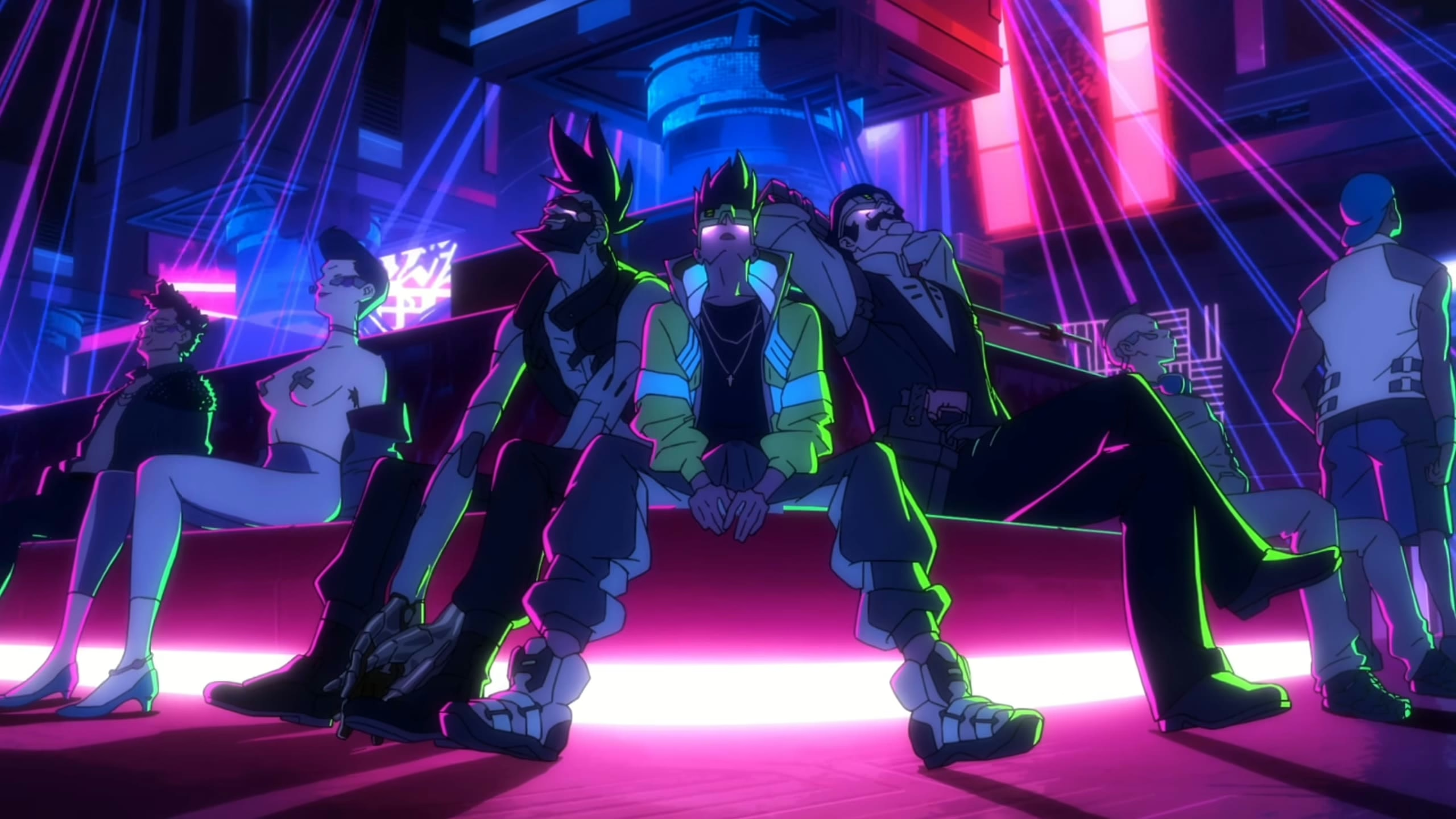
Hiroyuki Imaishi | 10 episodes (23-28 minutes)
This review was requested by Harry, who shared the following thoughts:
“A gem of sci-fi worldbuilding. Despite having so many directors there is a very consistent voice throughout when it comes to compositions and world building. One great shot every two minutes by my count.”

In the neon-lit underbelly of Night City, operatives who exploit its moral darkness may become agents of bureaucratic corruption, yet those who pursue their own self-fashioned depravity seldom escape its degrading influence. For David, completing his formal education at Arasaka Academy was always much more his mother’s dream than his own, so there is little keeping it alive when she is tragically killed in a drive-by shooting. Even when he joins a gang of black-market mercenaries, still he moulds himself in the image of its formidable leader Maine, while taking on dangerous assignments from shadowy fixer Faraday. Cybernetic implants certainly accelerate the path to power, though the further this newly inducted edgerunner strays from his mother’s guiding principles, the more he loses himself to the inhumanity arising within both this merciless city and his conflicted soul.
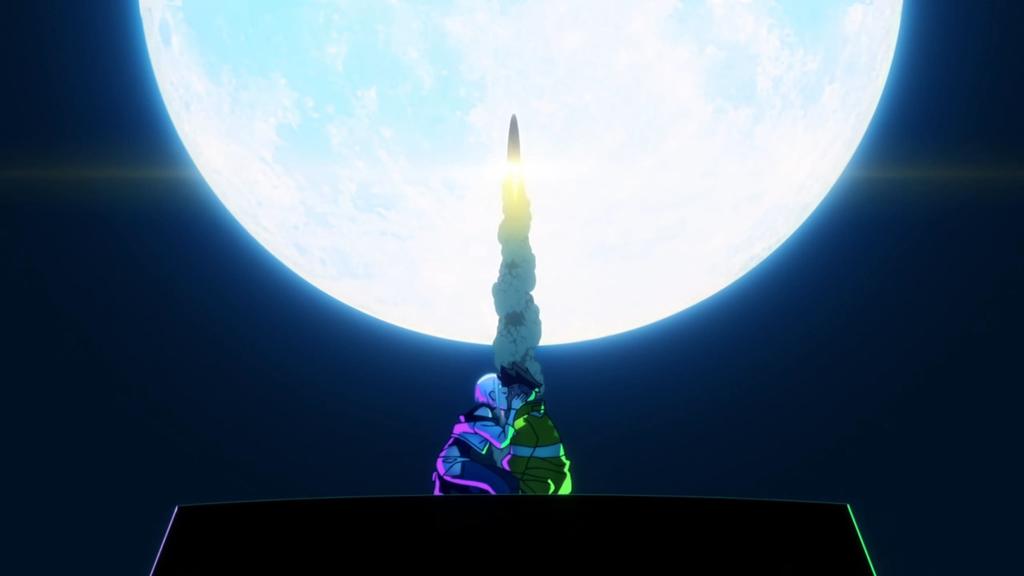
Especially once David falls for enigmatic femme fatale Lucy and learns of her allegiance to Maine’s crew of edgerunners, his destiny appears sealed, and his aimlessness becomes apparent. Where he seeks grounding from many parental figures across Cyberpunk: Edgerunners, her eyes are set on the moon, far from the electric glow and jagged skyline of Night City. Within a virtual reconstruction of its cratered surface, the two silently admire Earth from a distance, and later Hiroyuki Imaishi visually aligns it with their first kiss and a rocket blasting off. If there is anything at all which might redeem the most tainted of ambitions, perhaps it is this fragile connection, directing David and Lucy’s shared gaze toward a distant, uncorrupted world.

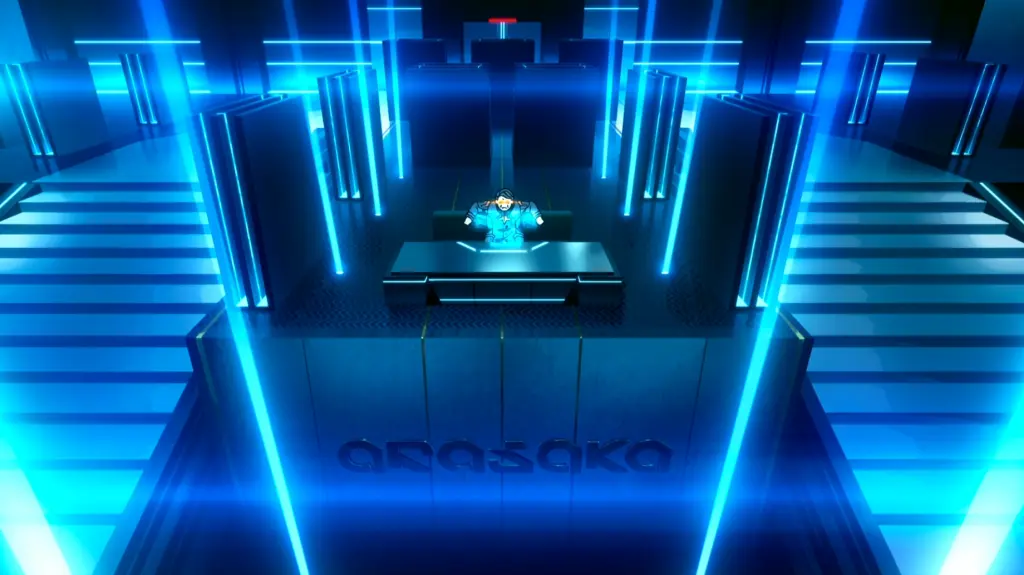
For now though, these edgerunners must survive under the oppressive shadow of Night City’s most powerful corporations – the tyrannical Arasaka, and their calculating rival Militech. Powered by his Sandevistan, a cybernetic spinal implant which grants superhuman speed, David executes high-stakes missions ordered by Militech to destabilise Arasaka’s operations. Efforts to trace the movements of senior executive Tanaka and intercept heavily armed convoys don’t always unfold according to plan, yet David’s transcendent physical powers are consistently awe-inspiring in action, rendering him a blur of pure reflex.
Much like The Matrix’s bullet time, the world appears to slow down whenever the Sandevistan is activated, though Cyberpunk: Edgerunners also pushes the effect further to illustrate its user multiplying across space itself. Brief flashes of x-rays reveal David’s cybernetic spine and neural implants under stress, punctuating the viscerally edited action as jarring reminders of his physical degradation, but it is the mental toll of this invasive technology which threatens the most damage. Cyberpsychosis is the inescapable endpoint for those who augment their bodies into oblivion, disconnecting synthetically enhanced individuals from their humanity, and drawing a symbolic likeness to drug addiction in its destructive allure.
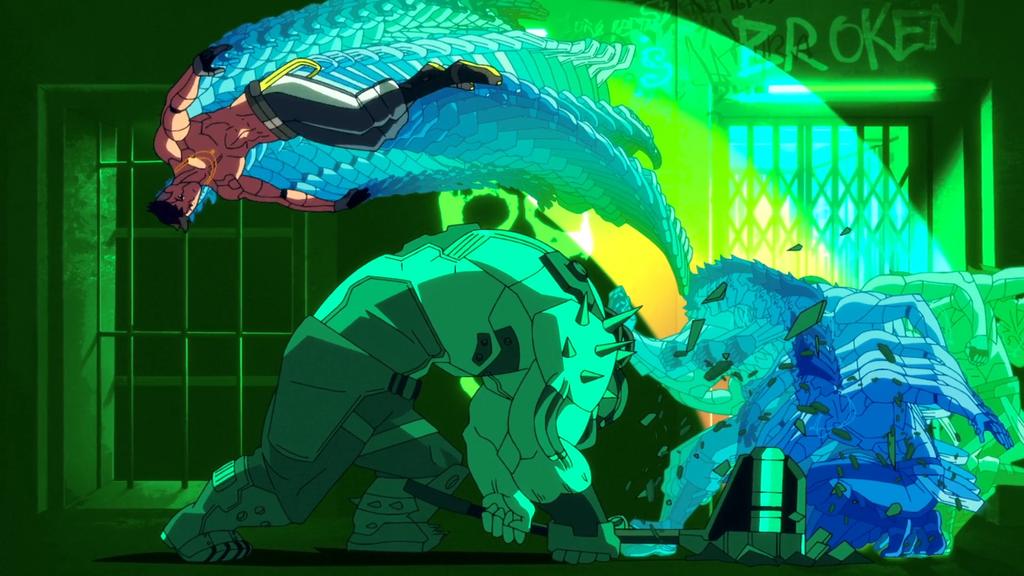

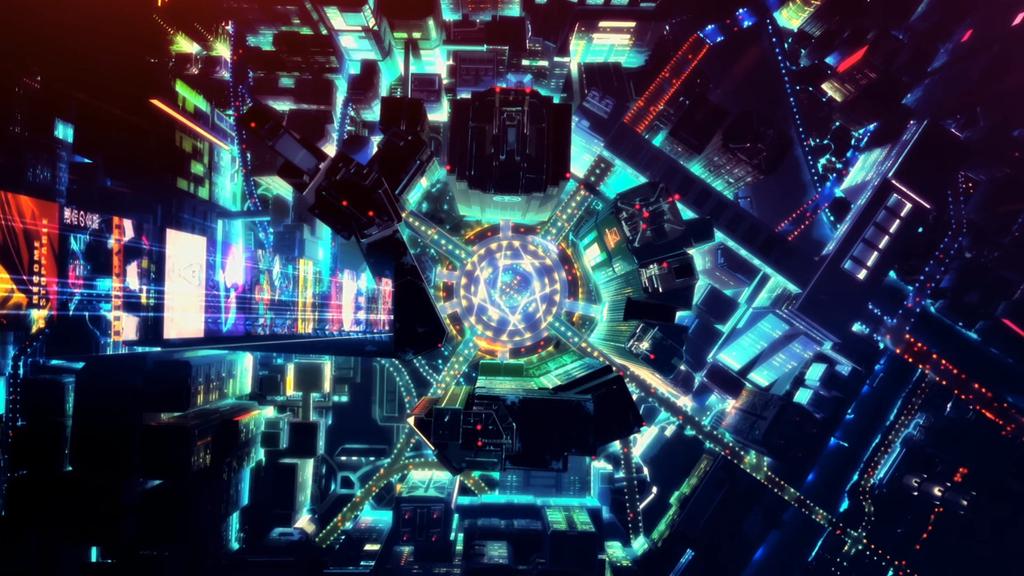
There’s no doubt that Imaishi leaves his hyper-stylised mark on the Cyberpunk franchise, mixing the dystopian futurism of Blade Runner and the kinetic animation of Ghost in the Shell to craft Night City’s intricate cybernetic detail. His serialised vision is epic, exploring its richly detailed cityscapes across ten episodes, yet Cyberpunk: Edgerunners nevertheless functions as a unified, cinematic work. David’s rise and fall holds his tragic destiny in sharp focus, yielding a more compact narrative than the open-ended sprawl of conventional television, and the sheer stamina of its visual storytelling leaves virtually no frame wasted.
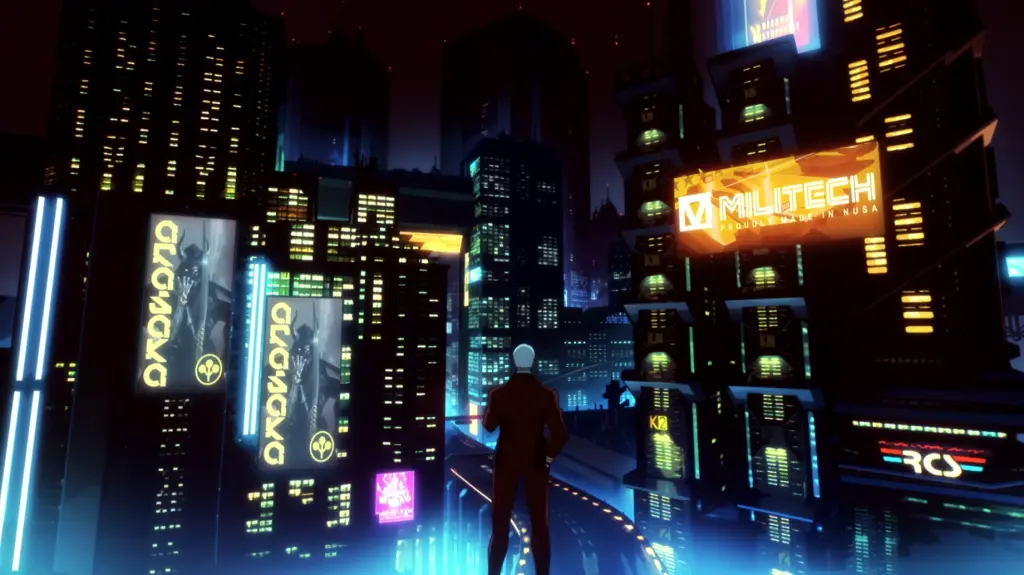
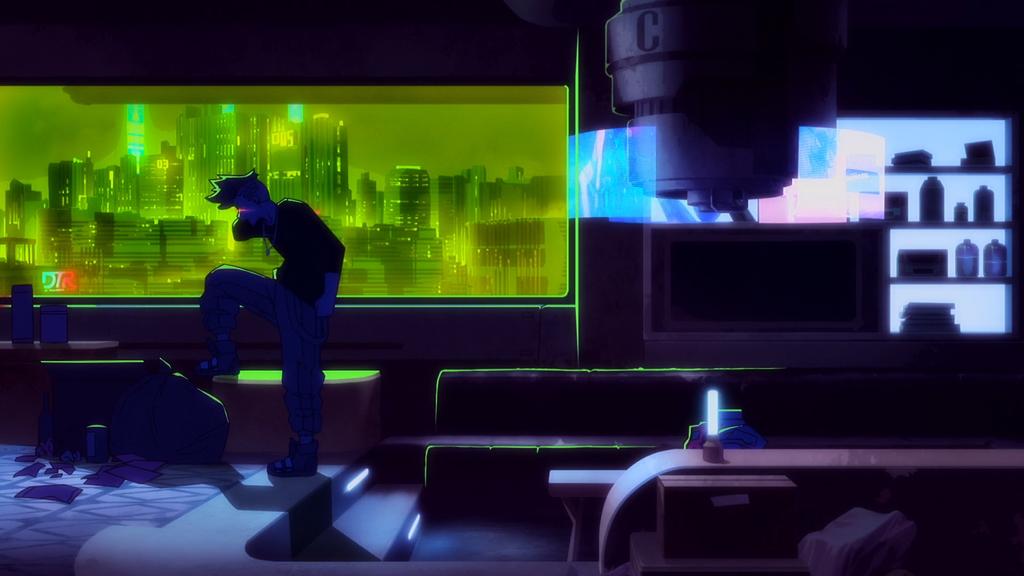
Throughout Night City, dingy fluorescent lights cast sickly green hues and neon signs cut through the urban darkness, though it is Imaishi’s contrasted colour palettes that most effectively amplify the atmospheric decay. In purple-washed scenes, bright yellow backlighting sharply outlines characters while green shadows spill onto the ground, and a feverish glow of teal and magenta envelops the grimy Ripperdoc clinic where David surgically upgrades his cyberware. Together, these chromatic extremes carry the city’s hallucinatory, over-saturated delirium through even the most muted conversations, accentuating its angular architecture and grotesque character designs. With Imaishi’s deep focus animation staggering characters’ faces throughout frames as well, he further intensifies his claustrophobically layered compositions, whether through raw, emotional expressions or bodily mutilation.
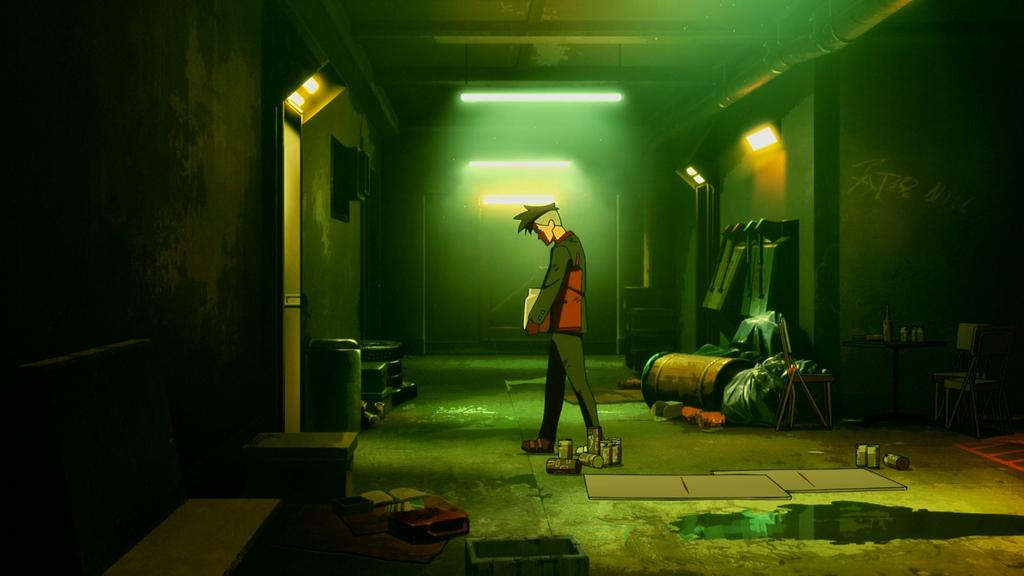
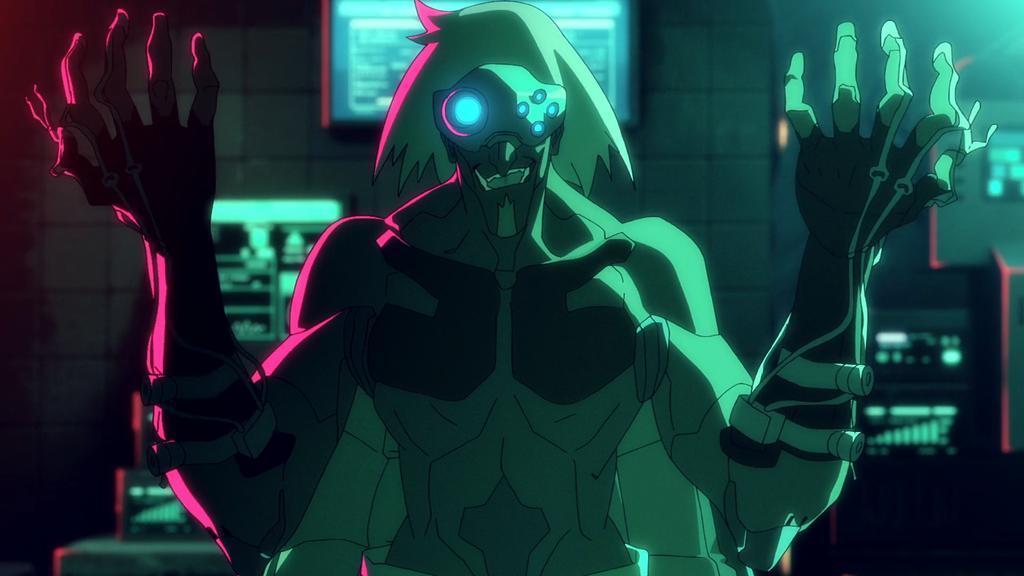

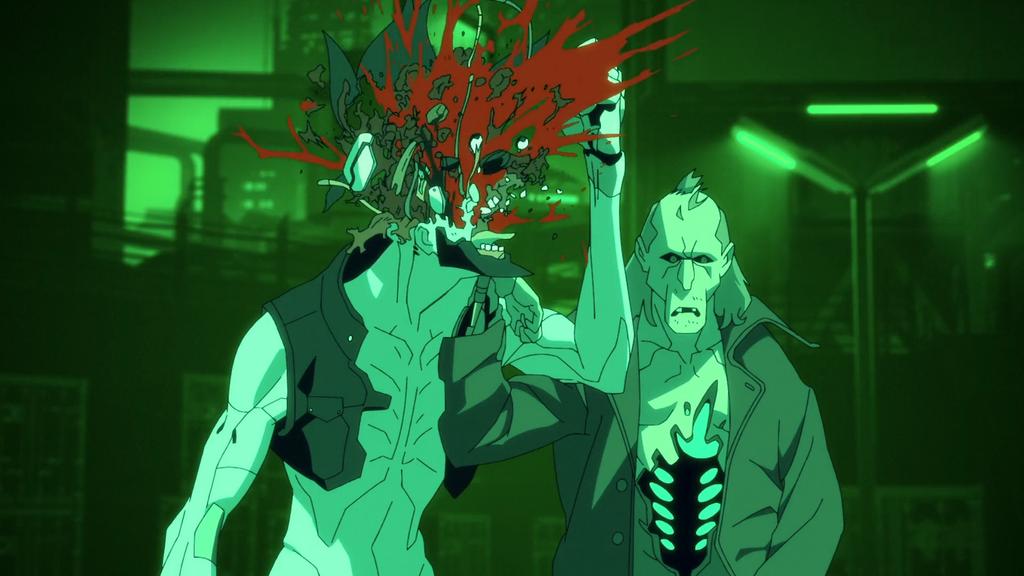
After all, Cyberpunk: Edgerunners revels obsessively in the intersection between technology and violence, studying the deterioration of a humanity that seeks to transcend its physical limitations. Night City is a hedonistic cesspool of self-indulgence, placating the populace through ‘braindances’ which allow illusory immersions into exaggerated pleasures and perversions. David is already deeply enmeshed with this technology when we first meet him, so each progressive step deeper into augmentation only further hastens the onset of cyberpsychosis, eroding the last vestiges of his innocence. He grows uncontrollably aggressive, eyes bulging and nose bleeding as Imaishi erupts his fights into balletic spectacles of gory, slow-motion brutality. Whether through fast-paced desert car chases or confrontations with cyberpsychos, these action sequences rigorously preserve the video game logic of Cyberpunk 2077, culminating in a final boss battle that serves as a nightmarish mirror to David’s darkest ambitions.


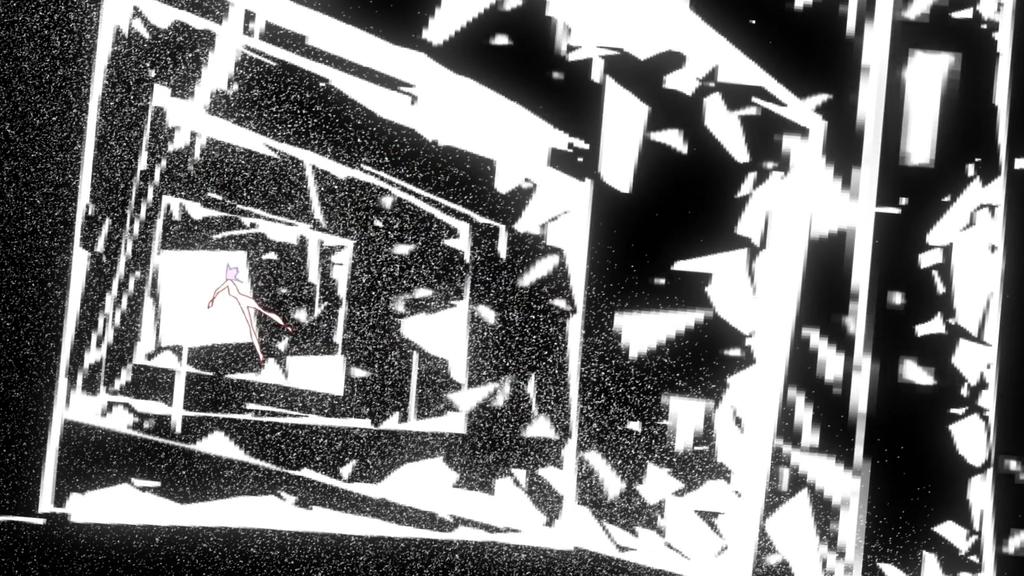
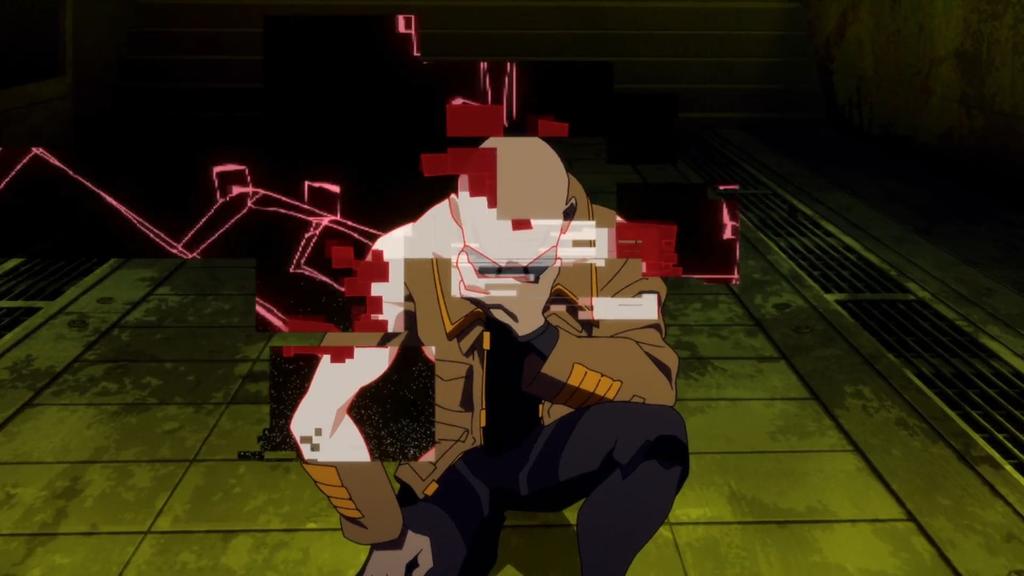
When every facet of technological innovation is pushed to its breaking point, this hyper-sensationalised world is the inevitable result, and Imaishi meticulously builds it like a living machine. This detail makes even more sense when we learn of a historic catastrophe which wiped the chaotic ‘Old Net’, necessitating its reconstruction into the tightly controlled, corporatised Net of the current era. Liminal virtual spaces between servers are rendered as boundless black voids, their only structures made up of white blocks that fray into starry pixels around the edges, and even Imaishi’s editing echoes its fragmented digital architecture with glitchy wipe transitions.
Perhaps if this vast, cybernetic setting were not so ravaging, then David and his crew might escape the various tragic conclusions to each of their journeys. Their makeshift family dynamics are the heart of Cyberpunk: Edgerunners after all, anchoring its digital sprawl and embellished violence in the unlikeliest human connections. Though David is in love with Lucy, the volatile, short-statured Rebecca nurtures her own affection for him, while Kiwi’s stoic exterior similarly masks a deeply protective care for the gang. Their group interactions are layered with loyalty, rivalry, and a fierce devotion that David often falls back on, yet which no number of cybernetic augmentations may entirely safeguard – especially against the fatalistic currents of Night City. Humanity’s desperate ambitions are no match for its darkest impulses, and in the pitiless, neon-drenched metropolis of Imaishi’s creation, preserving the purity of those desires may be the most impossible mission of all.

Cyberpunk: Edgerunners is currently streaming on Netflix.
Have a film you’d like me to write about next? Request a review here.
Great work Declan! Glad to see you appreciated this one. I would have hoped to see some more praise about the blocking but I think you nailed everything else impressive of note here.
You also nailed all the language/terminology for the setting here which is impressive because it feels like it throws a lot at you
Thanks Harry, this one wouldn’t have passed by my radar if you hadn’t put it out there.