
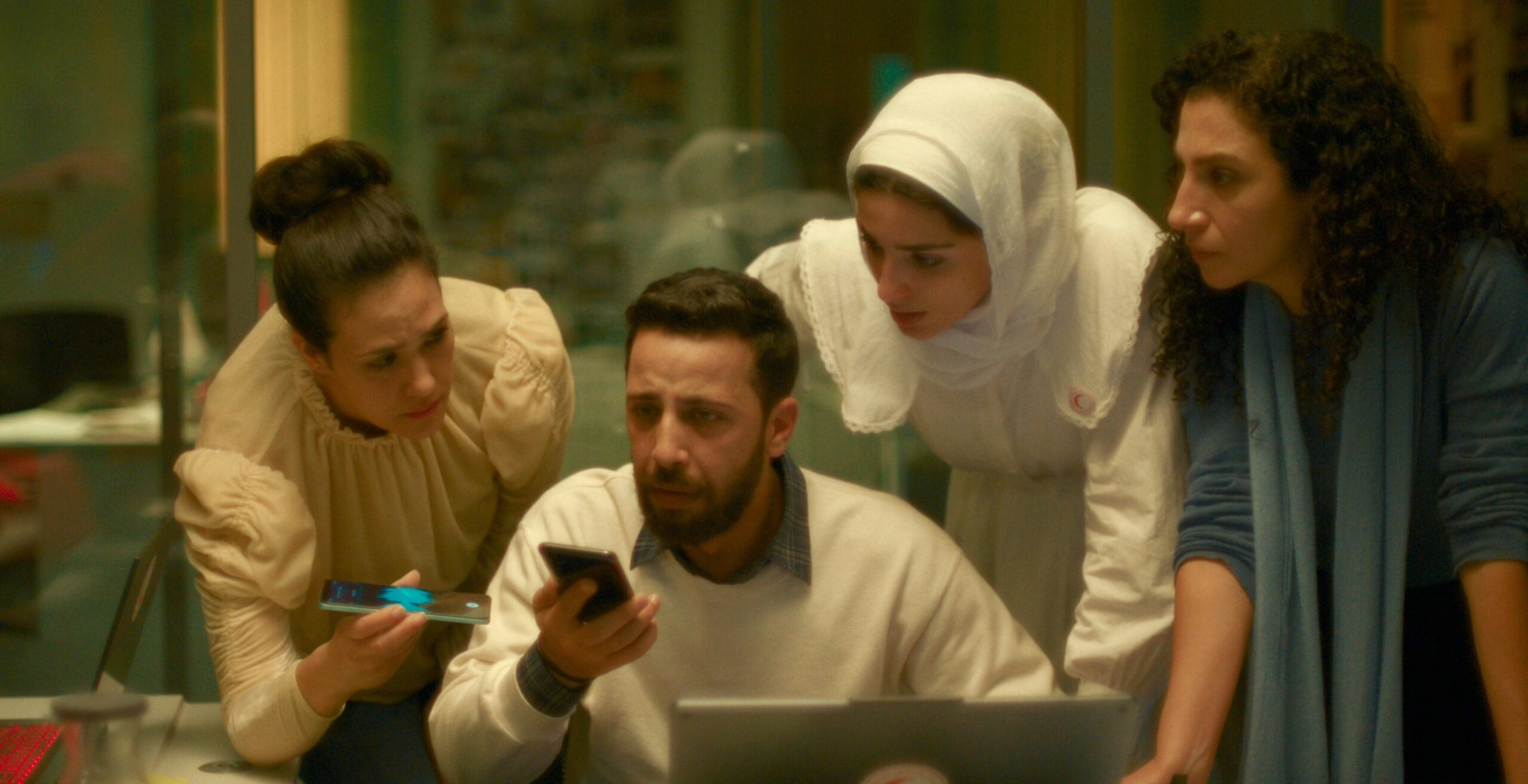
Kaouther Ben Hania | 1hr 30min

There is no feasible way to dramatise the story of five-year-old Hind Rajab without confronting the ethics of representation itself, especially given the ongoing violence that precipitated her killing. On 29 January 2024, she and six other family members were fleeing Gaza City when Israeli forces shelled their car, leaving her as the sole survivor. In the following hours, her voice was recorded through various calls made to the Palestine Red Crescent Society – and it is there, in that emergency call centre, where Kaouther Ben Hania anchors her rigorously procedural docudrama.
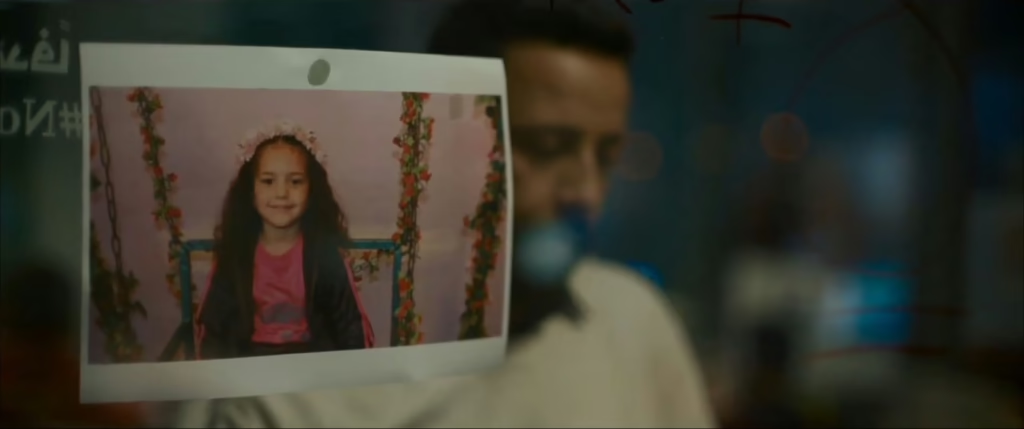
This harrowing anti-spectacle of war is void of any battlefield cross-cutting or soaring drone shots. Confined to a single location, The Voice of Hind Rajab renders combat as negative visual space, and instead narrows in on those distorted conversations between victims and dispatch personnel. Besides a few photos displaying Hind’s otherwise innocent childhood, this girl is only present through live audio transmissions – yet to recreate these recordings would be inauthentic. By using the raw files obtained from the call centre, Ben Hania rather foregrounds the human operators as witnesses of war, connecting this staged enactment to a tragic reality that requires no embellishment.
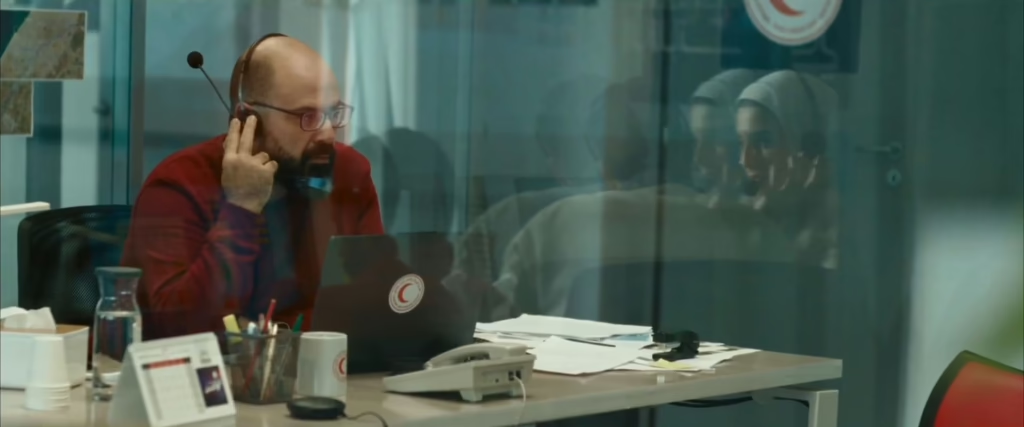
Beyond realism alone, this disembodied representation of Hind further reflects her political condition within a dysfunctional system limited by its own constraints. Bureaucratic processes hold a tight grip over Omar, the man who first picks up the call, as his boss Mahdi insists on establishing a safe route for the rescuers before dispatching them. Of course, this route must be approved by the very same army that killed Hind’s family and is currently threatening her life. Even for those reluctantly carrying out this protocol, such circular logic is impossible to comprehend, yet still it remains the only mechanism through which they might wield any influence. Prematurely sending in rescuers without clearance would endanger their lives too, Mahdi reminds Omar, and thus compassion must submit to the imperfect algorithm of survival.
Given how many calls each day end in fatality before a name is given, the operators’ efforts to salvage a single life from Israel’s violent invasion becomes a matter of stubborn resolve, holding this team to the urgent task at hand. Ben Hania’s narrative focus is equally relentless too in its tightly framed close-ups and long takes, discomfortingly locking us into claustrophobic perspectives, while her handheld camerawork imposes a pervasive instability that never fully comes to rest. In place of cuts, rack focusing efficiently shifts our view from Omar’s desk to Mahdi’s glass office behind him, adhering tightly to the real-time progression of events as stakes precariously mount. Even when Omar’s frustration reaches a furious breaking point, The Voice of Hind Rajab resists contrived tension, letting the operators’ reactions to this situation organically emerge as the primary source of dramatic intensity.
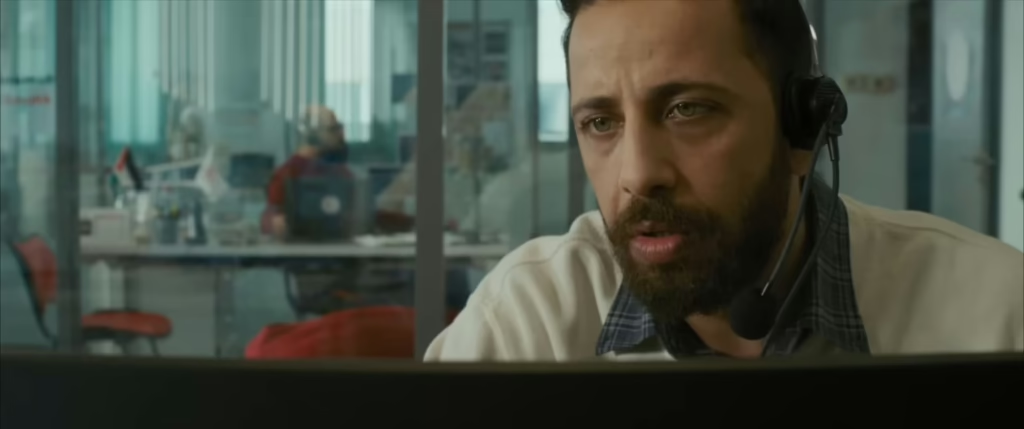
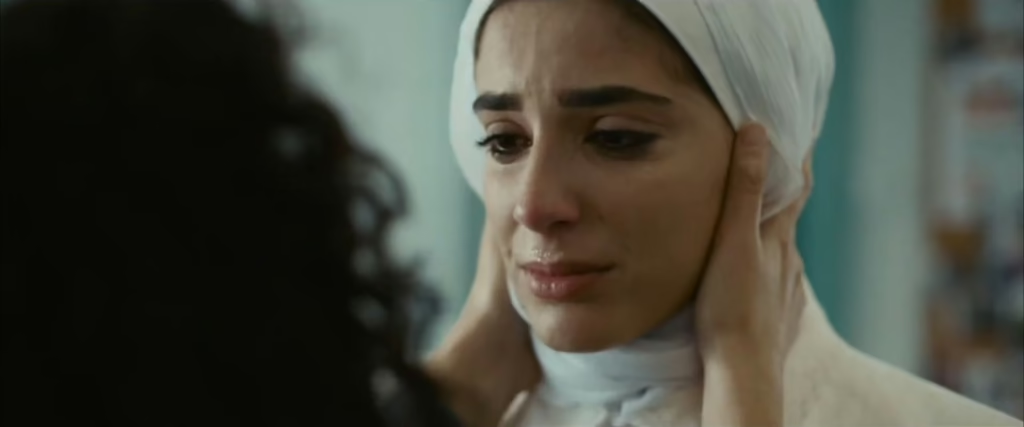
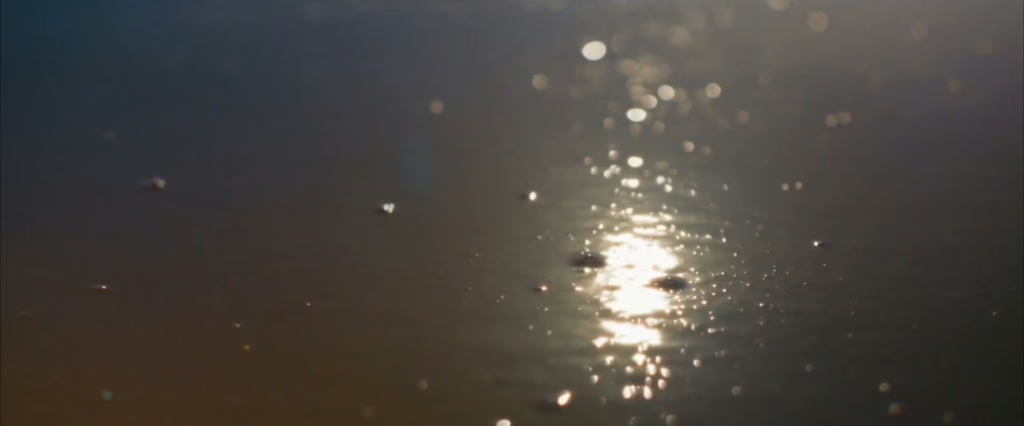
The lacking variation of cinematic technique may impose a certain inertia upon the storytelling, revealing a lack of formal ambition, yet its resulting monotony nevertheless subjects us to the same exasperations as these emergency workers. Often bearing witness to the last words of total strangers, they confront humanity at its most vulnerable, and carry a psychological toll that is at once immediate and immense. Their job is not without reward, as Omar’s coworker Rana fondly recalls the time she helped a ten-year-old deliver her pregnant sister’s baby, yet each triumph is ultimately overwhelmed by the enormity of suffering. A group meditation fleetingly escapes the office as Ben Hania fades to the sun’s reflection upon rolling tides, but even here the shot remains out of focus, as if unable to escape the immediate crisis.
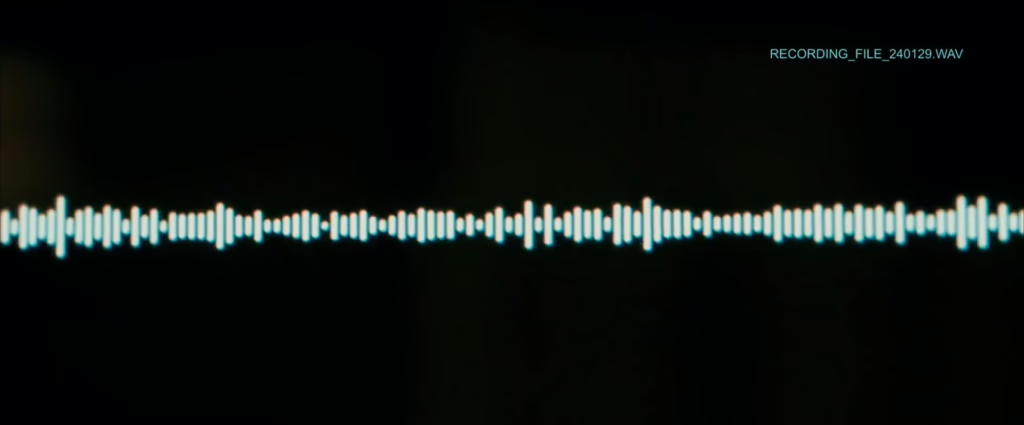
As it is, this dedicated team eventually finds themselves in a position of simply needing to keep Hind on the phone, while the rescue coordination unfolds beyond their control. The names of individual WAV files and their waveforms are often displayed onscreen, connecting each back to a procedural reality, though it is the content of these calls which elevates them beyond administrative data. Terror and panic bleeds through compressed audio recordings, and despite the team’s comforting lie that her family is merely sleeping, she is not so naïve as to believe them. All they can do while she desperately begs for help is to tearfully assure her that aid is almost there, and try to occupy her with mundane questions about school.
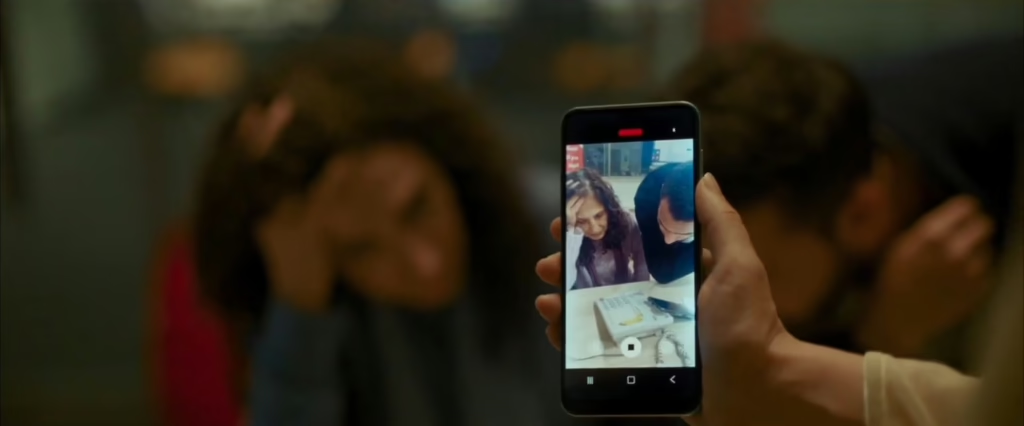
When Ben Hania recreates a video recorded on Omar’s phone and then includes that phone in the frame, she further embeds The Voice of Hind Rajab within its documentary reality, setting this reconstruction against the real footage as it is captured. With the film drawing towards its end though, that boundary is fully demolished, departing from her dramatisation to present raw, archival footage of the catastrophic aftermath.
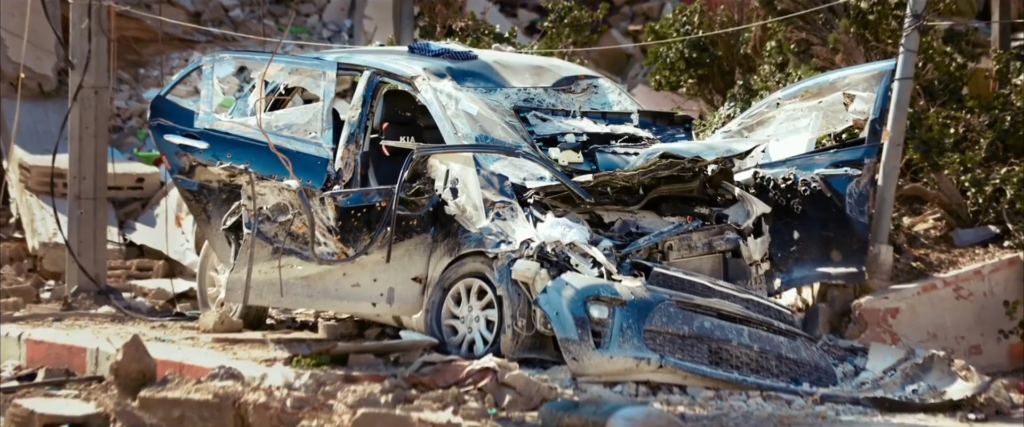
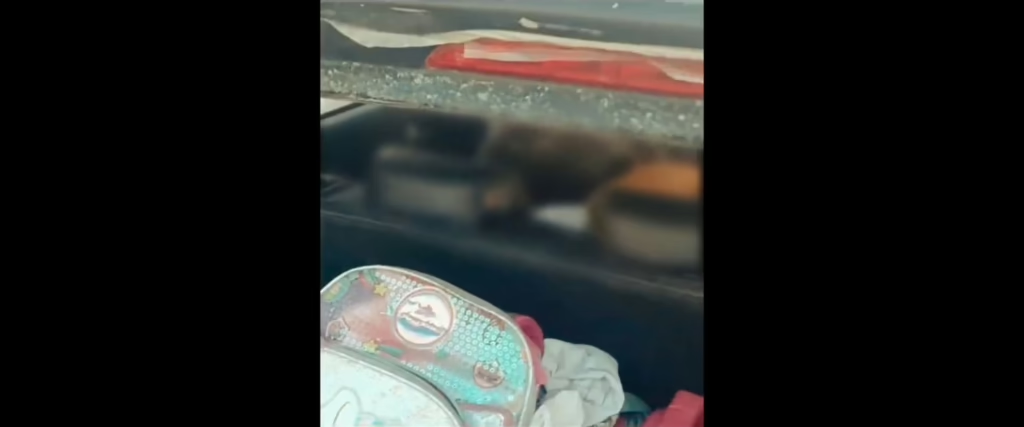
An explosion cut the phone line just as the ambulance arrived on the scene, we learn, taking the lives of two paramedics. When the Israeli forces withdrew twelve days later and the wreckage was finally inspected, Hind’s death was also tragically confirmed. As we peer inside the wrecked vehicle, we glimpse a colourful backpack – and perhaps there is no single image in the film more wrenching than this. Still, it is predominantly in those preceding moments that we are removed from the visual presence of war whereThe Voice of Hind Rajab most urgently closes the distance between victim and observer, and through the subsequent act of bearing witness that we confront the scale of trauma beyond our immediate, limited perspective.
The Voice of Hind Rajab is currently playing in theatres.
If I remember correctly, this movie is currently tied for the highest rated movie of 2025 on Letterboxd with a 4.4/5 (the other being Chainsaw Man Reze Arc and Nirvanna the band the show the movie, but i don’t count the latter since it was in festivals before it’s full release in February and I only count full releases in specific country or limited release)
Now anyways, great post as always and this is going in my watchlist
Wow, that’s pretty surprising to me. As much as I liked it, I wouldn’t really have it near my top 10 or even 20 of the year.