Emerald Fennell | 2hr 16min

If there was ever any wonder as to how provocateur Emerald Fennell might conceive sensual desire in Wuthering Heights, then it is resolved immediately in the first few seconds. There, the sound of moaning and creaking underscores a black screen, suggesting some sort of sexual encounter – until the opening shot violently corrects that assumption. These are the last gasps of a man being slowly, torturously hung to death, she reveals, and whose terminal erection provides much amusement to the gathering crowd of peasants. Sex is not something to be sanctified in her adaptation of Emily Brontë’s Gothic novel. It is a grotesque, destabilising impulse that society obsesses over for its deviant spectacle, degrading all those involved through cruelty, voyeurism, and a morbid appetite for exposure.
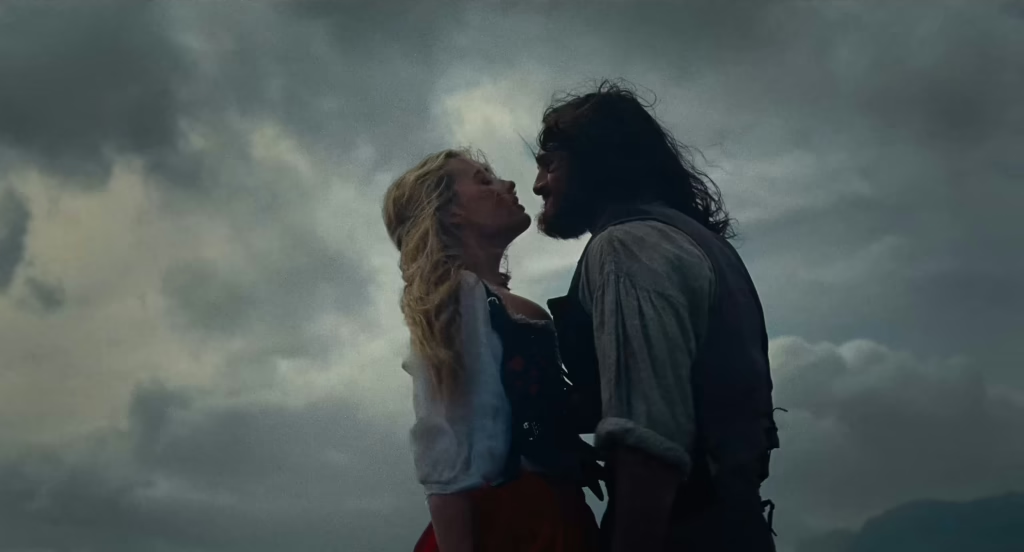
Perhaps this is why criticisms that Fennell superficially romanticises Catherine and Heathcliff’s dysfunctional relationship ring so false. She does not seek to psychoanalyse these characters as subjects of clinical dysfunction, but rather embroil us in their obsession, fusing desire with repulsion on a pathological level. By excising major subplots that trace the generational fallout of their actions, she takes enormous artistic liberties to centre the vicious power plays between these lovers, though never without losing sight of the magnetic attraction threaded throughout. For those who watched Saltburn, this should be no surprise – Wuthering Heights is not the first time she has dramatised psychological warfare waged among social classes, each locked in a mutually corrosive fixation. Quite crucially, Catherine and Heathcliff’s toxic attachment does not make sense unless we first comprehend the intensity of their addiction.
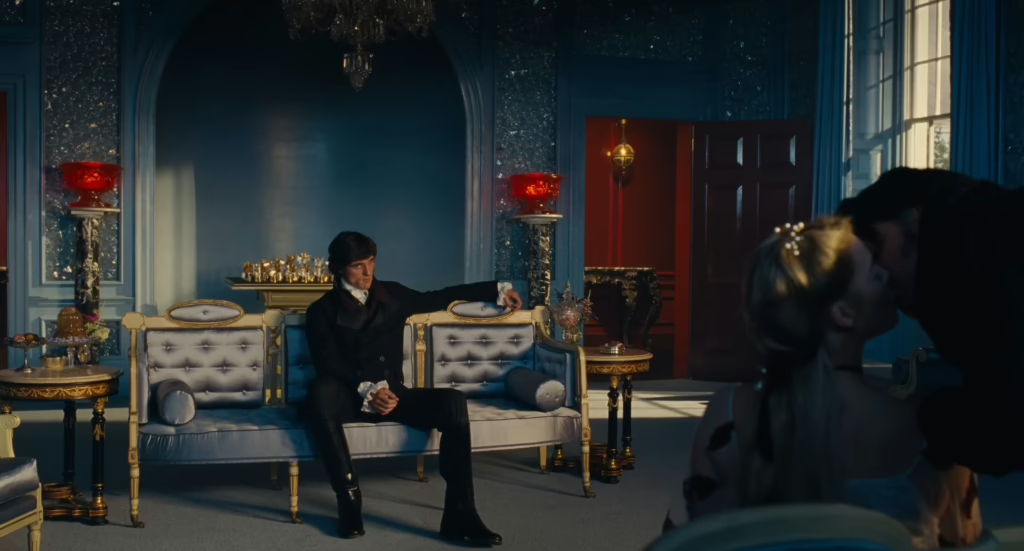
Fennell’s controversial choice to lightly filter this psychological period drama through a modern filter only further heightens the transgression at play, pushing against the rigid social codes of 18th century North Yorkshire. Charlie XCX is not the first name that comes to mind as a composer for Wuthering Heights, yet in moments of elation, her Gothic pop soundtrack viscerally mirrors Catherine’s own emotional transcendence from this setting. Running beneath its electronic drones, layered string arrangements, and breathy vocals, a dark, obsessive tension resonates, teetering between ecstasy and ruin – and the anachronisms don’t end there. From its haute couture-infused costuming to hyper-stylised interiors, Fennell’s Wuthering Heights dwells in a timeless, sensory dreamscape, feverishly untethering Catherine and Heathcliff from the bounds of historical orthodoxy.
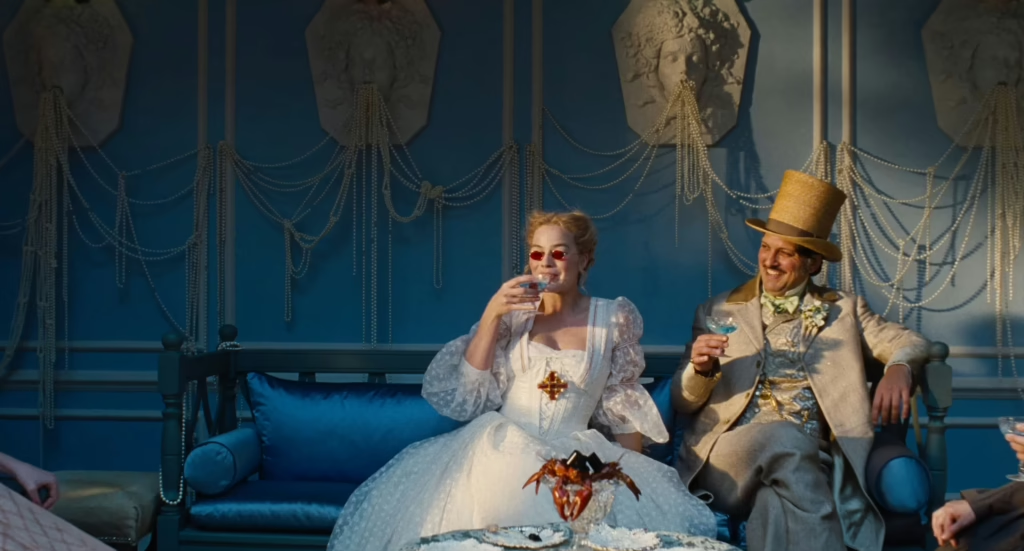
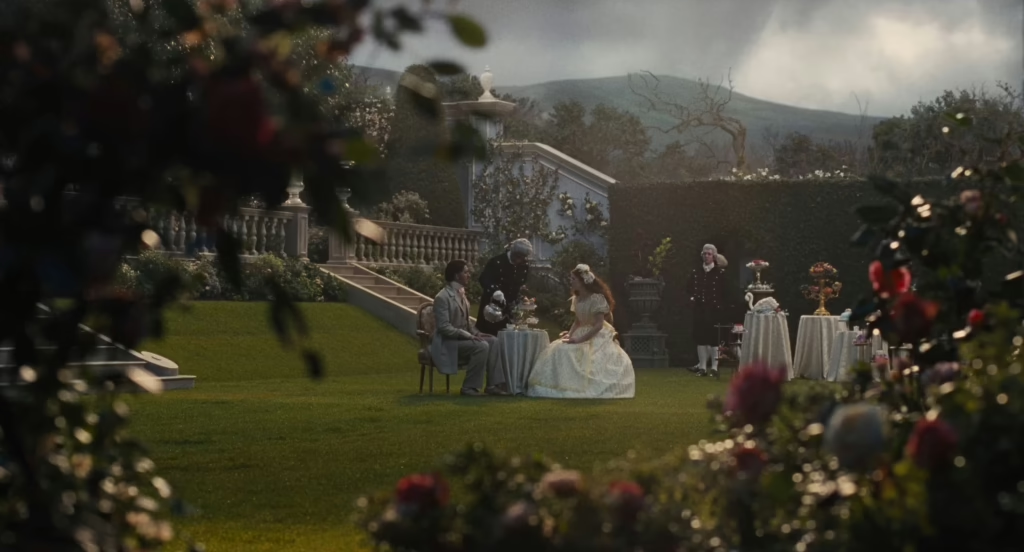
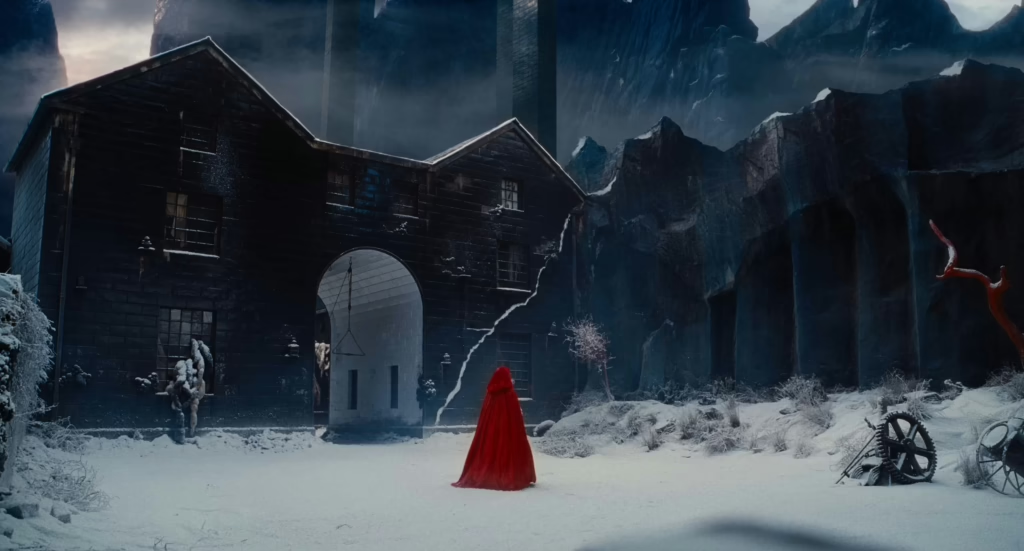
Indeed, the world that these passionate lovers inhabit largely rejects any notion of period authenticity. While landscapes are often shot handsomely on location upon the windswept Yorkshire moors, exteriors of the two main estates display an expressionist artifice, built on soundstages which consciously abandon material realism.
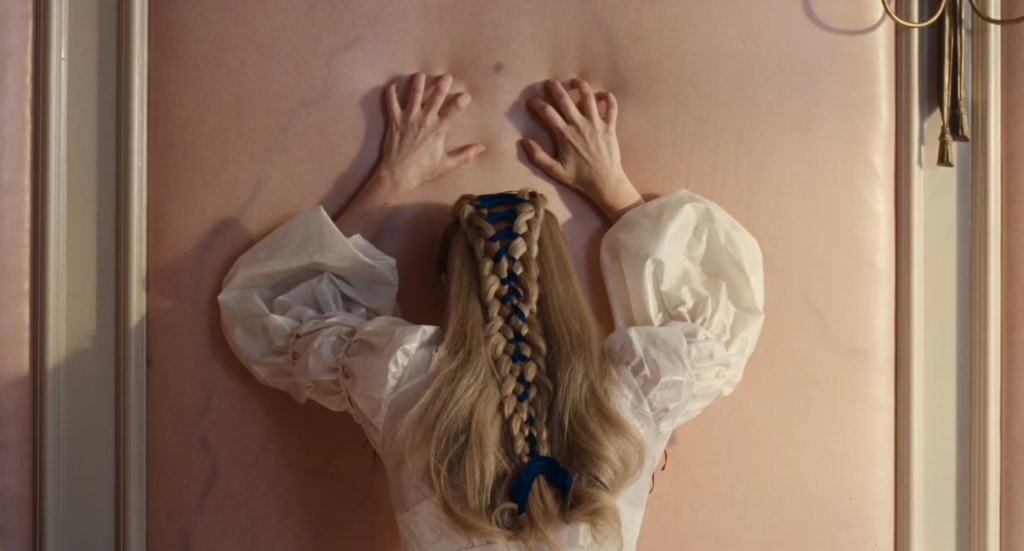
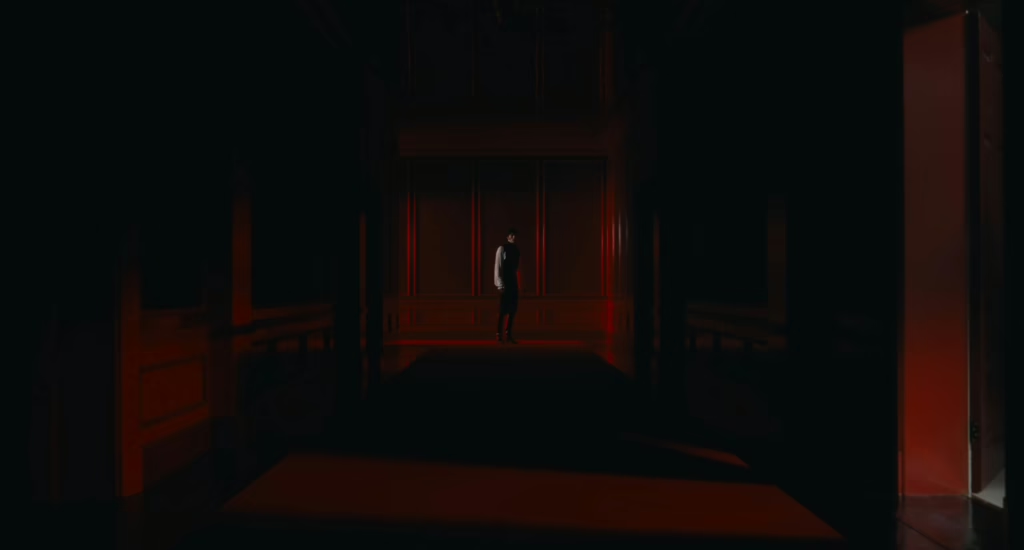
Thrushcross Grange especially embraces this visual excess, as Fennell introduces its vivid hallways and rooms through a tracking shot not unlike Saltburn’s, and continues to unnerve us the longer we scrutinise its curiosities. There, the dollhouse owned by Catherine’s sister-in-law Isabella miniaturises the manor itself, even imprisoning tiny doll versions of each resident within its eerily accurate confines. Where Catherine’s family home of Wuthering Heights sinks into an earthen darkness, Thrushcross Grange appears eerily modelled after the human body, its fireplace erupting into a cascade of hands and her bedroom wallpaper purposefully resembling her own skin. Freckles and veins faintly decorate its pink surface, and when the doctor treats her sickness with leeches, they crawl up the pale façade as if feeding on an extension of her flesh.
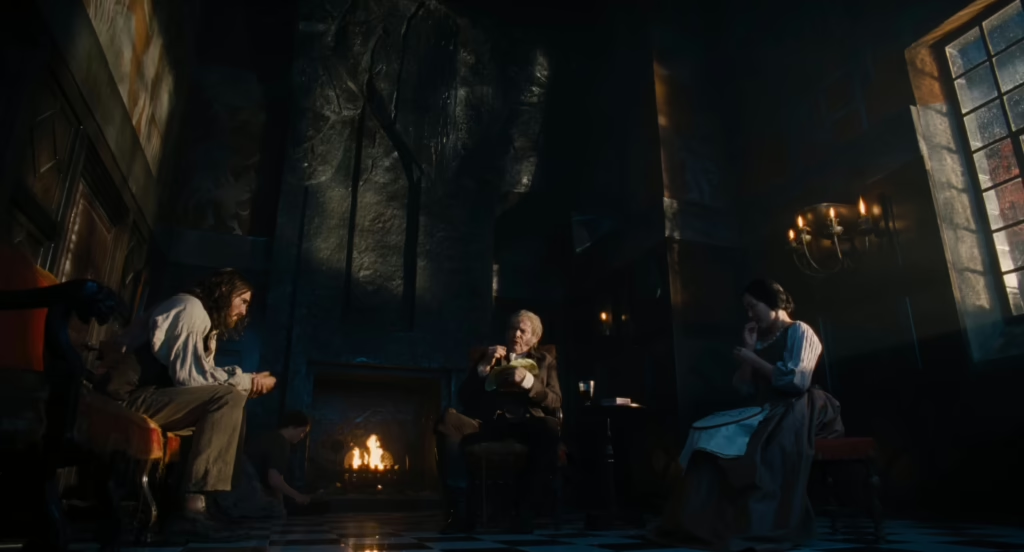
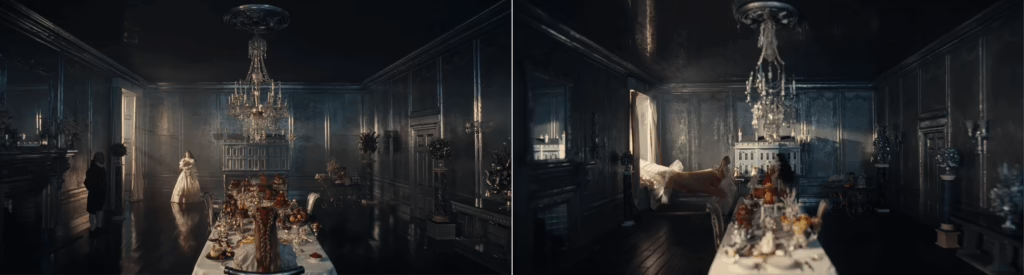
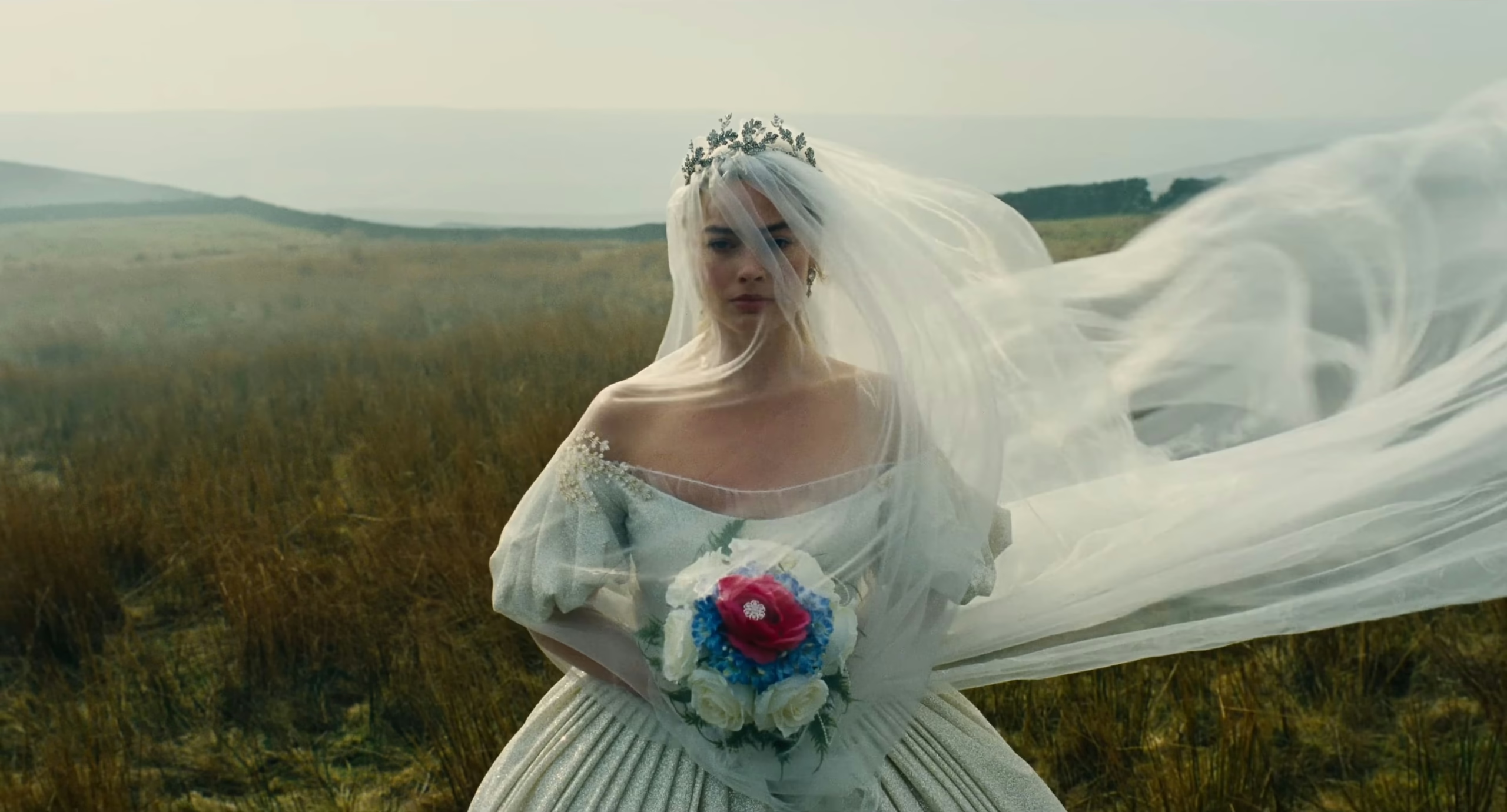
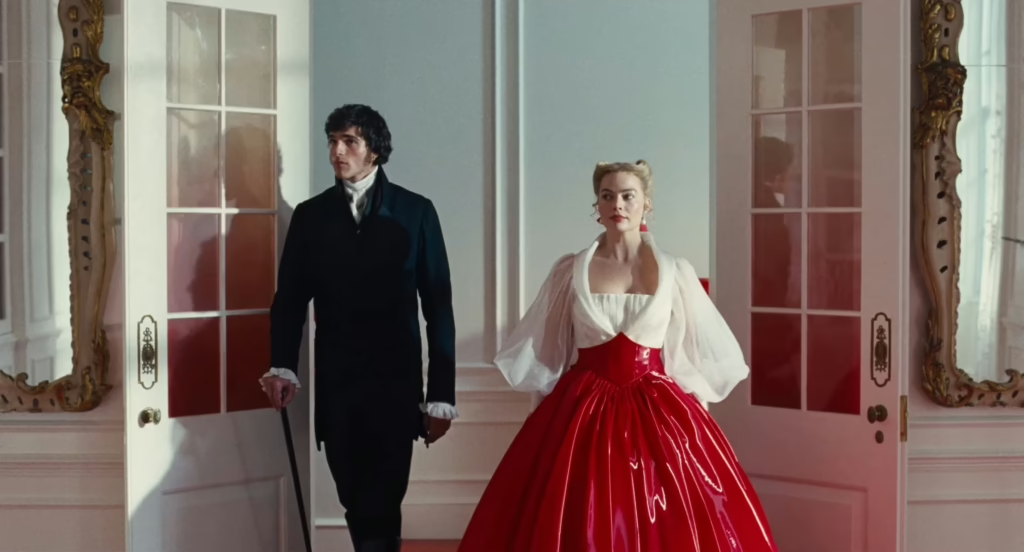
Most striking of all Fennell’s stylings though is her aggressive insistence upon the colour red, saturating the frame through blazing sunsets and embroidered upholstery, and frequently cloaking Catherine in an incendiary declaration of her desire for Heathcliff. Her vibrant dresses almost seem to melt into polished scarlet floors, though against the green palettes of her wealthy husband Edgar Linton and the bourgeoise’s calm, aestheticised order, she burns like a passionate flame. Even when she glides through the misty moors in her white wedding dress, still she carries crimson accents in her bouquet and hair ribbon, unable to let go of old obsessions. Offering a macabre counterpoint to this motif however, the discomforting sight of blood as it seeps from wounds and follows cracks in cobblestone is never far from view, reinforcing the suffering that inevitably comes with unrestrained longing.

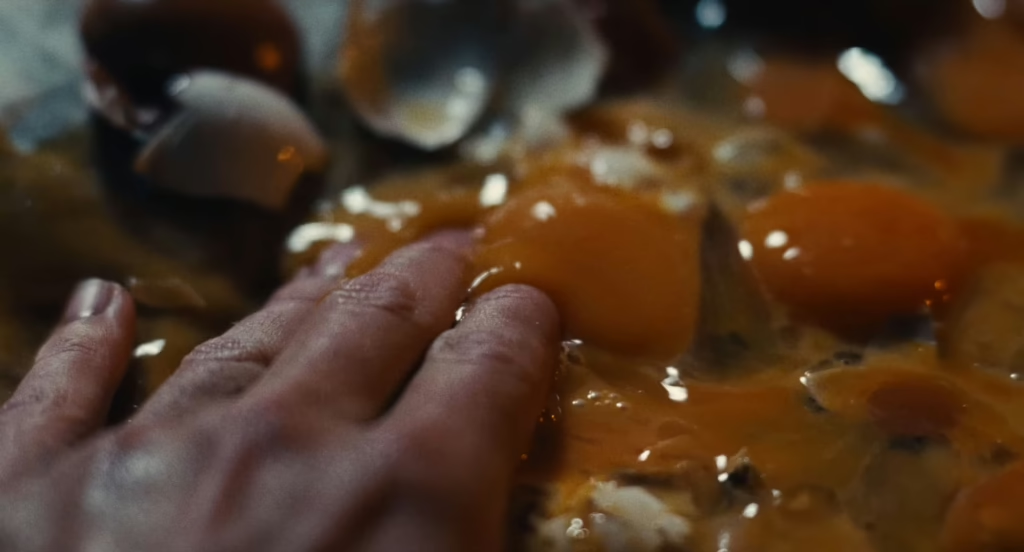
Fennell no doubt aims to draw a visceral response in this juxtaposition, and as the camera grows hyper-sensitive to Catherine and Heathcliff’s yearning, its extreme close-ups also become increasingly invasive. The fingering of egg yolk early on is erotically ambiguous in its suggestiveness, and when Catherine finds herself poking around in the wet mouths of dead fish and fixating on snail mucus, the film’s tactile obsessions become overtly abject. By the time self-mutilation comes into play, it is evident that Fennell’s exploration of the body transcends mere eroticism – pleasure and pain are indistinguishable for those stripped to their most vulnerable states.
Therein lies the driving force behind Wuthering Heights’ relentless pursuit of sensation and connection. The respected status of Catherine’s family among the landed gentry makes the prospect of loving a lowborn man all the more tantalising, and the sheer longevity of their friendship dating back to childhood effectively nurtures an enduring, instinctive attachment. Though she denies any conscious domination over him, she subconsciously regards him as a pet, having named him upon his arrival as a boy – so when he mysteriously returns one day after an extended absence, his newfound wealth and social ascendancy entirely inverts the power dynamic.
From there, Wuthering Heights fully consummates the jealous desire between lovers, scratching an itch for domination that only deepens their mutual torment. Melodrama and sadomasochism form the basis of psychological games as they conduct secret affairs, mutilate dolls, and lure others into pet play as rituals of submission and mastery. “Do you want me to stop?” Heathcliff rhetorically asks Isabella multiple times as he explains how he will seduce and abuse her, yet just like Catherine, she is a slave to her own infatuation.
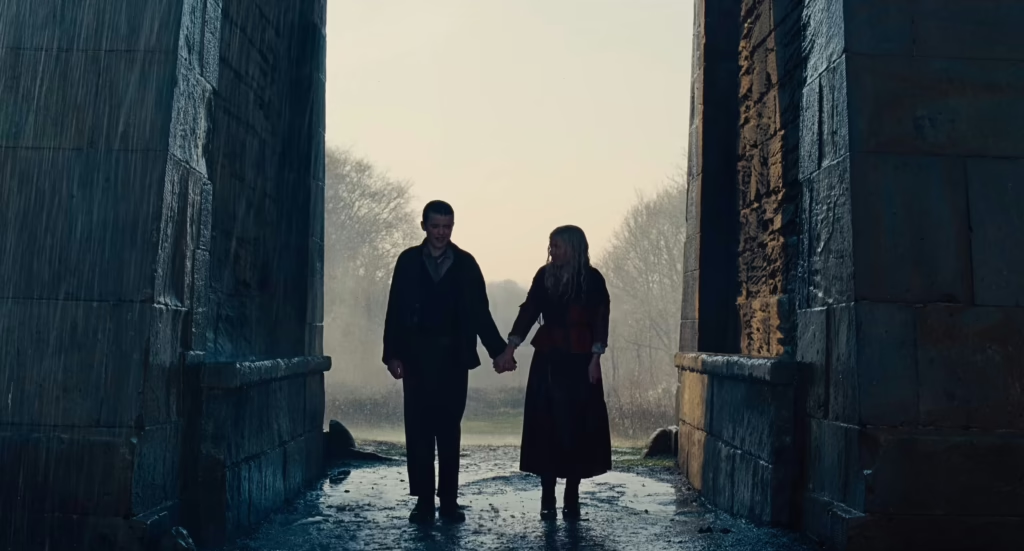
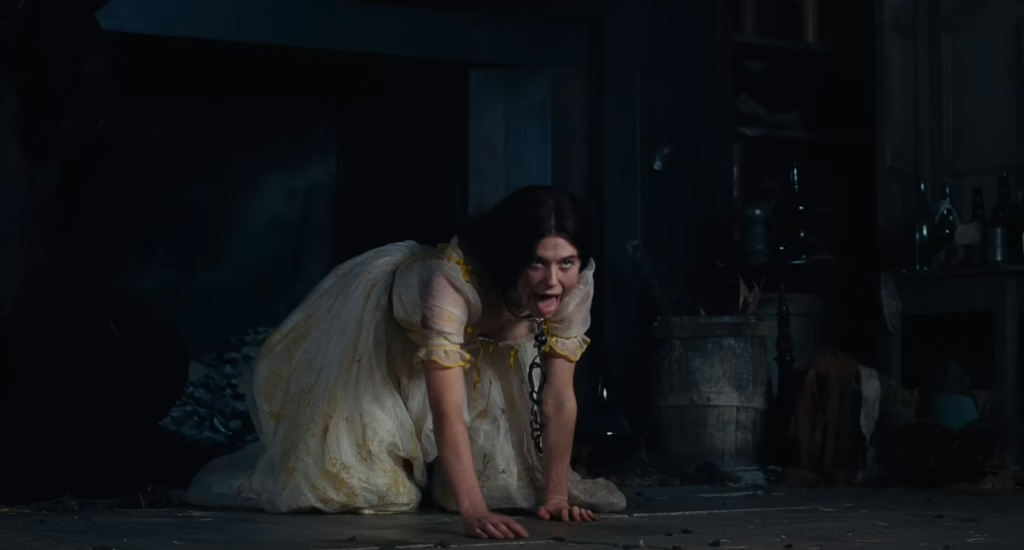
Though the chemistry between Margot Robbie and Jacob Elordi is palpable, Fennell never lets it soften the film’s vision of desire as anything less than self-ruinous. Their intimacy is a feedback loop of sordid craving, undermining the idealistic notion of romance as a redemptive fantasy, and degrading the integrity of bodies, spaces, and social structures alike. Fennell was never going to convince those who reverently cling to Brontë’s novel of its provocative potential, yet in her ravishingly grotesque compositions and choreography, Wuthering Heights lays bare the convulsive hearts responsible for their own primal, fevered torture.
Wuthering Heights is currently playing in theatres.