Kleber Mendonça Filho | 2hr 40min

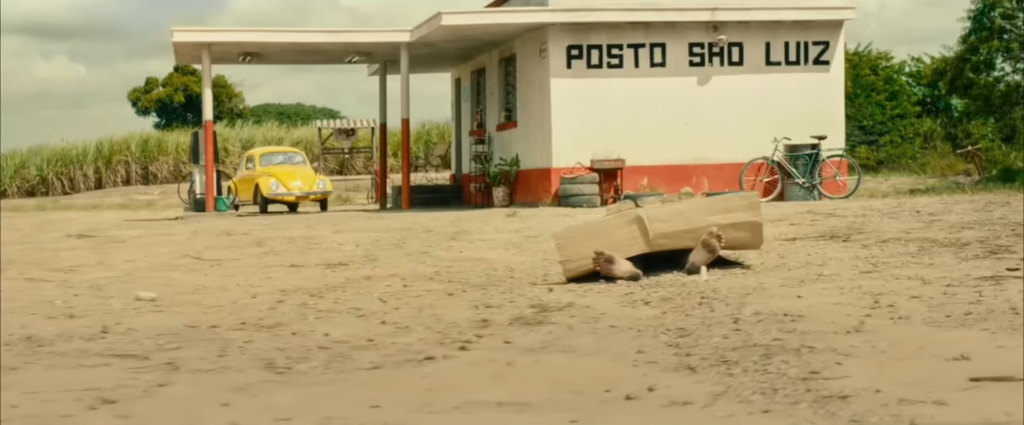
When Armando Solimões pulls over to refuel on his way to Recife, he discovers a dead body lying on the parched, dusty ground, loosely covered by a tattered sheet of cardboard. The man was a thief, the gas station attendant informs him, shot dead a few days ago for stealing from the shop. The police arrive a few moments after Armando, and although we expect some sort of investigation, the stray dogs that come sniffing for meat appear far more interested in this grim scene than any officers of the law. To them, Armando’s registration is seemingly the far greater concern, overshadowing the dismal reality of this extrajudicial homicide. There, at the beginning of Armando’s perilous story, The Secret Agent reveals the indifferent, bureaucratic cruelty of Brazil’s authoritarian regime – the first of many such injustices to come.
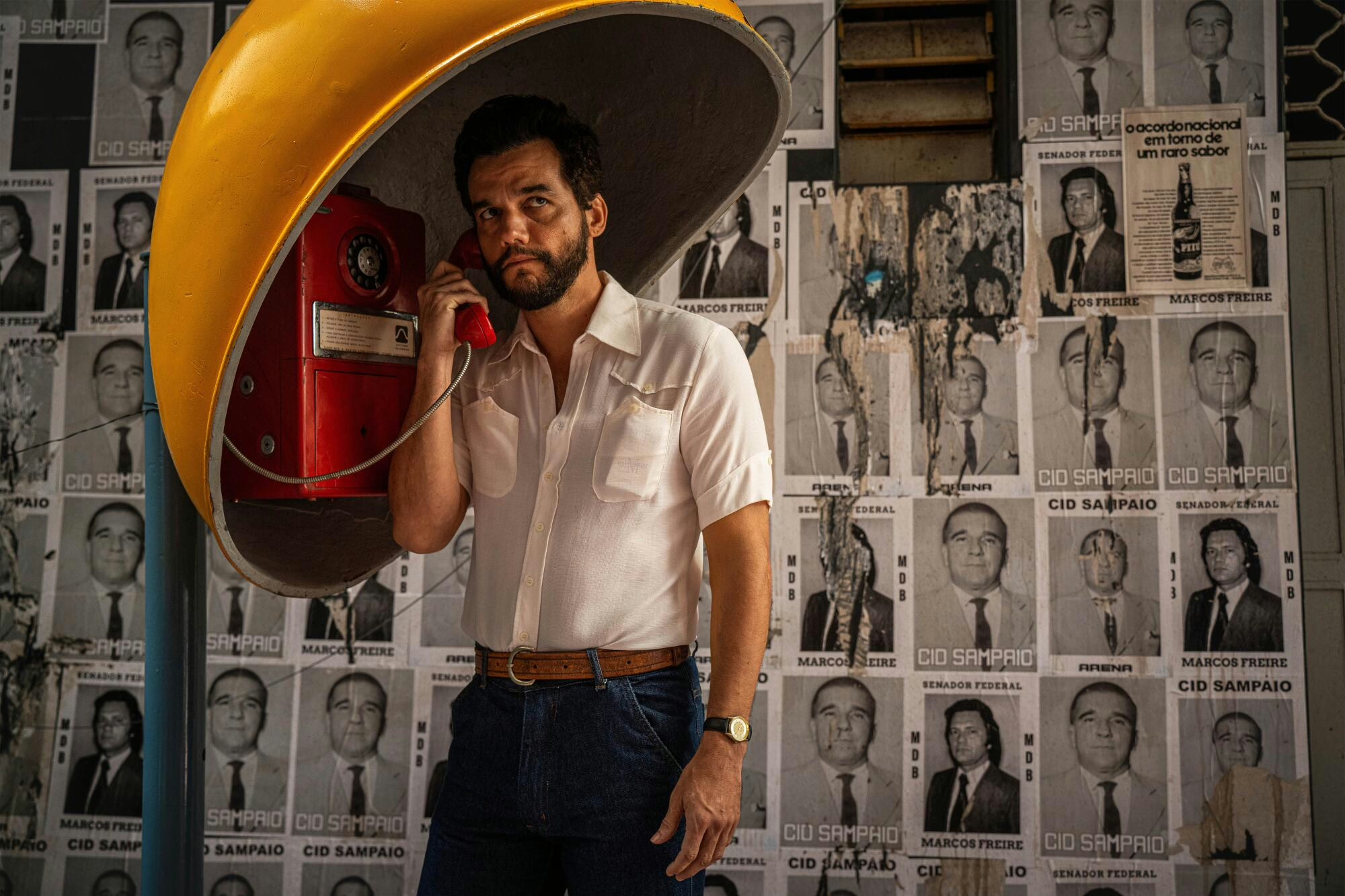
It is fortunate indeed that this former academic possesses such an airtight alias to escape the police’s suspicions, largely thanks to the dissident network in Recife. There is no life for him back home in São Paulo since corrupt businessman Henrique Ghirotti dried up his university’s research funding, nor since the passing of his wife Fatima. Though he tells his son Fernando that she was taken by illness, there is a lingering suspicion that more nefarious forces were at play, especially after we learn that Ghirotti has sent a pair of merciless hitmen to hunt Armando down. Working in an identity card office under the name Marcelo, he navigates each day with cautious vigilance, and Kleber Mendonça Filho rigorously expands this sprawling landscape of oppression and resistance to expose the military dictatorship that suffocated 1970s Brazil.
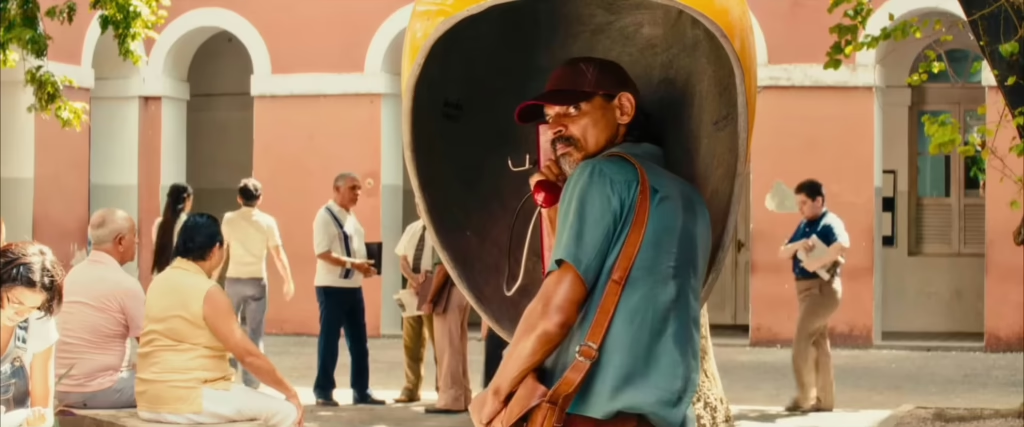
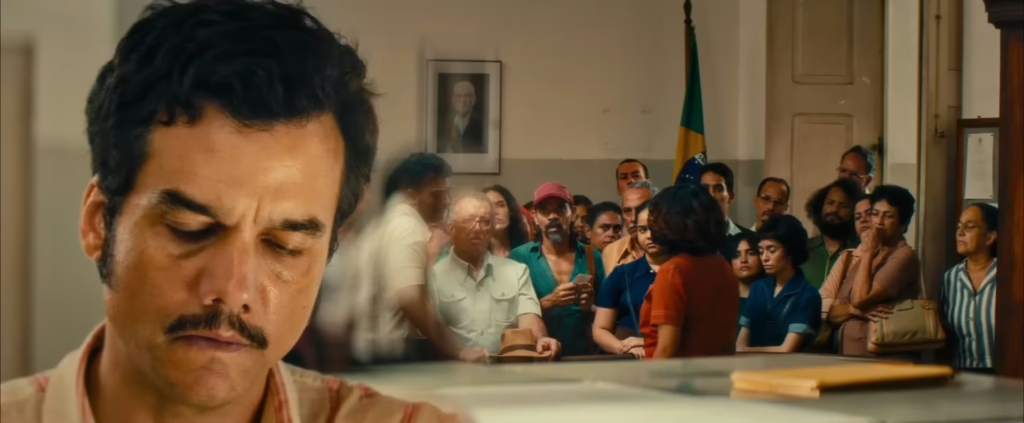
The Secret Agent’s widescreen format sets a vast stage for this tense political drama too, shifting from authentic reconstructions of Recife’s sun-bleached architecture to raw, intimate close-ups of faces. Mendonça’s split diopter lenses and deep focus cinematography excel in illustrating complex power dynamics, fluidly manoeuvring fraught interactions between dissidents and authorities, while its warm, saturated colour palette imposes a weathered tactility that masks this world’s viciousness. Rarely is a character isolated in a frame as the camera’s sole focus – they are almost always subjects of a larger context, and through wide-angle lenses, Mendonça underscores their precarious positions across vibrant cityscapes and sterile offices.
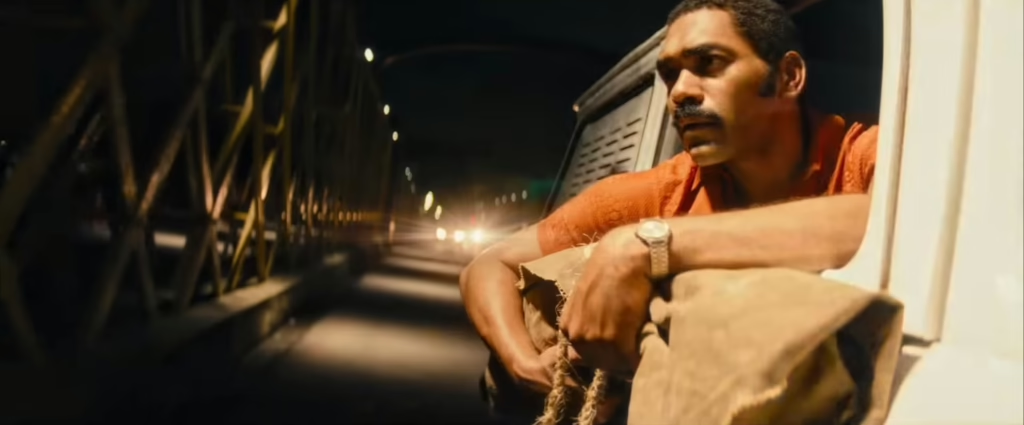
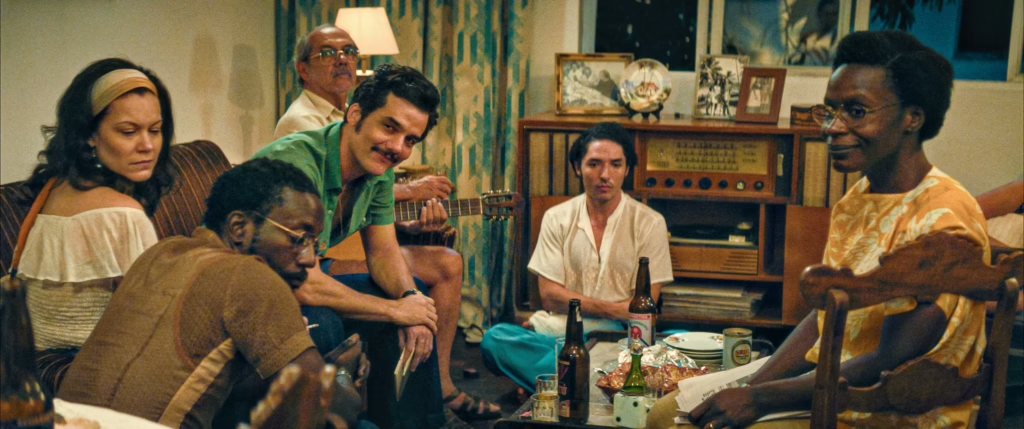
Just as significantly, the sheer scope of this ensemble instils The Secret Agent with a complex depth, covering a large expanse of its period setting without sacrificing its sharpened focus. Armando may be our troubled protagonist, yet Mendonça’s omniscient perspective freely leaps between narrative threads, following the stepfather-stepson hitman duo on his tail, stories of ostracised refugees, and even an amusingly macabre subplot regarding a ‘hairy leg’.
Once attached to a political victim whose body was dumped in the ocean, later swallowed by a shark, and eventually retrieved from its belly, this limb is curiously traced through universities and morgues before coming to life as an urban legend. The Secret Agent’s realism briefly gives way to heightened B-movie aesthetics as it hops through parks at night, kicking queer cruisers and insurgents who gather under the cover of darkness, though Mendonça’s experimental interlude is not to be taken literally. Bound by strict government censorship, the Brazilian media employed this grotesque metaphor to represent that which it could not explicitly acknowledge – the unreportable police brutality inflicted against marginalised communities.
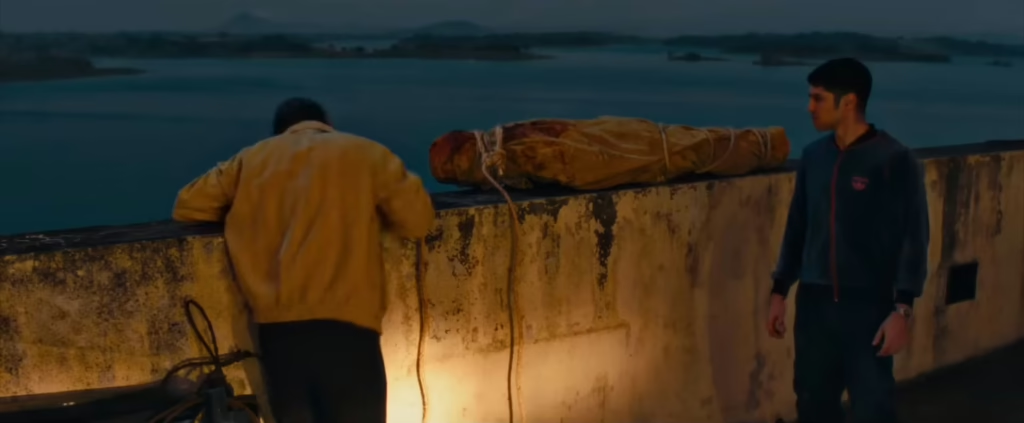
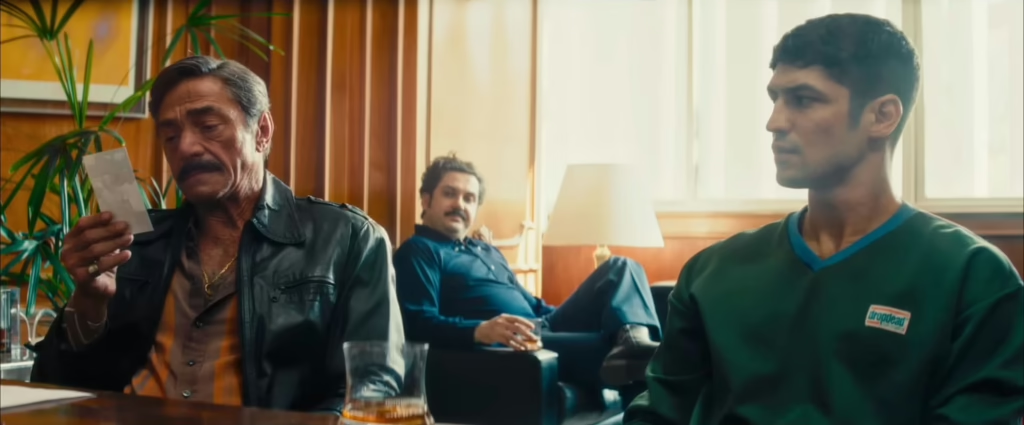
As far as Armando is concerned however, he must simply keep his head down and avoid suspicion, though this is no simple task. Working closely under the watchful eye of corrupt police chief Euclides, the pressure to stay undetected is immense, and he makes it no easier for himself by holding so tightly onto his past. At the identity card office, he is determined to find some documentation of his late mother, while his personal connection to Fernando and father-in-law Alexandre risks exposure. Set around the time Jaws premiered in Brazil, pop culture’s shark obsession symbolically melds with the nation’s broader political anxieties, and Armando too senses a predatory threat lurking just out of sight.
When Mendonça does finally tie his narrative’s frayed threads together, they converge in a tangled conflict of confused loyalties and dramatic irony, tightening the noose on all involved. As hitmen close in on Armando, Armando manipulates Euclides, and Euclides confronts the hitmen, we observe the dictatorship chaotically devour its own weapons, while flutes and percussion frantically skitter through Latin folk-inflected rhythms.
Mendonça’s editing is taut, and the violence bloody, yet The Secret Agent does not drive this crescendo towards any visceral, cathartic conclusion. Instead, flashforwards that have been laced throughout finally take over, recontextualising Armando’s story in the cold light of historical study. Documented records of his life are sparse, and most that have been preserved are limited by political distortion, making it a chore for present-day scholars to reconstruct any complete truth. Even more tragic though are the faded, indifferent memories of the living, many preferring to move forward than dredge up the forgotten past. Perhaps it is easy to separate oneself from such trauma by reducing it to statistics, yet cultural memory persists in The Secret Agent’s dialogue between record and recollection, studying lost expressions of grief and resistance that survive only in those persistent, elusive reverberations left behind.
The Secret Agent is currently playing in cinemas.