
Bong Joon-ho | 2hr 12min

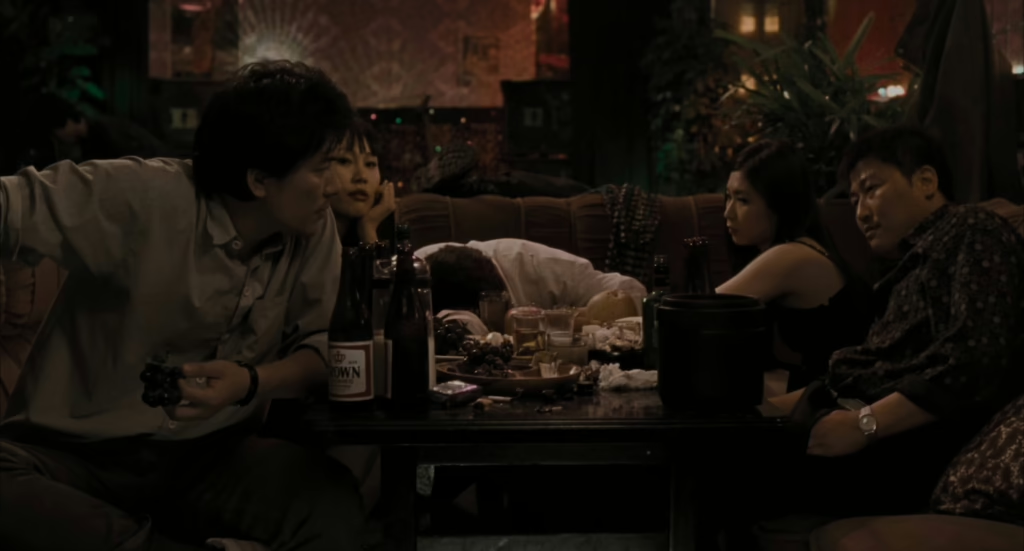
The pairing of local police officer Park Doo-man with city detective Seo Tay-yoon is fertile ground for personal conflict in Memories of Murder. Assigned to the murder case of a young woman discovered just outside town in a gutter, the two immediately reveal their clashing styles of investigation, running Park’s preference for intuition and aggression against his counterpart’s commitment to procedure. As they blow off steam in a karaoke club of flashing lights, young escorts, and intoxicated customers, Bong Joon-ho steadily zooms in on Park’s resentful tirade, suggesting this “Seoul city bumpkin” would be more at home among American detectives who spend too much time analysing the facts. “Korean detectives investigate with their feet,” he drunkenly declares, and therein lies the ideological friction between these men.
“Brainy geeks like you can go the hell to America.”
At least Park and Seo are united in their dogged pursuit of truth, though given the taxing nature of the killer’s repeated homicides, so too does this persistence crush them under the weight of disillusionment. For Bong, Memories of Murder is a direct response to those Hollywood crime movies which find closure through heroic victories of justice, and instead strands us with a pair of under-resourced detectives navigating landscapes of mud, rain, and bureaucratic failure. The serial killer may represent some abstract embodiment of moral corruption, but this violent perversion is clearly rampant in Bong’s portrait of a nation corroded by authoritarianism and cultural decay.
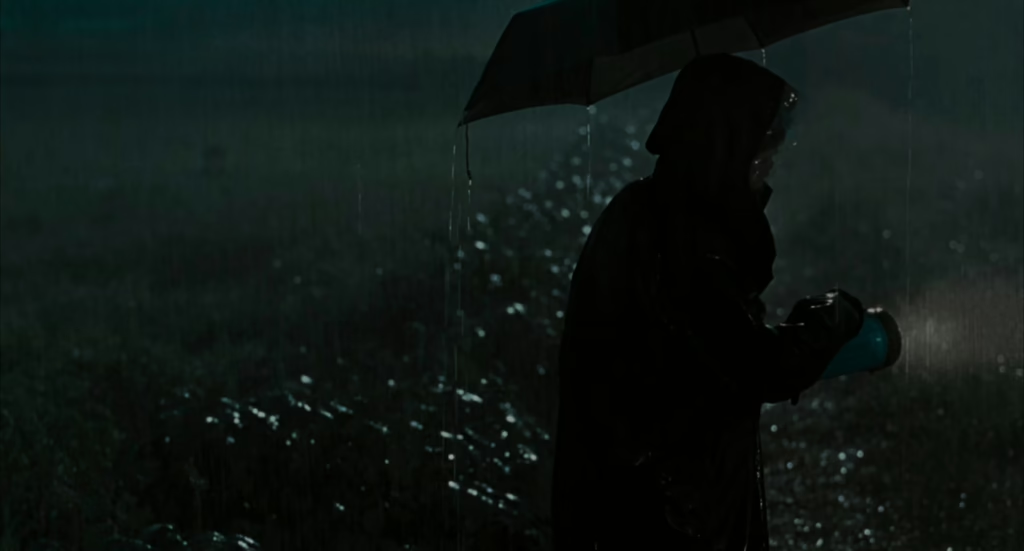
Memories of Murder is set in the final years of Korea’s 1980s military dictatorship after all, and although its impact on the plot is only tangential, it suffuses this small town with a paranoia that reaches across every street corner and home. Civil unrest storms the streets, drawing away police reinforcements that might have otherwise helped to catch the culprit, while regular lockdowns and blackouts impose an eerie darkness upon Park and Seo’s investigation. The red accents which pierce Bong’s desaturated palette are among the few hues to draw our eye, serving as a recurring motif of lust and violence, and seemingly becoming the subject of the murderer’s fascination. This blazing colour marks his chosen victims, and therefore we too feel a creeping sense of dread whenever the camera catches a hint of its lurid gleam.
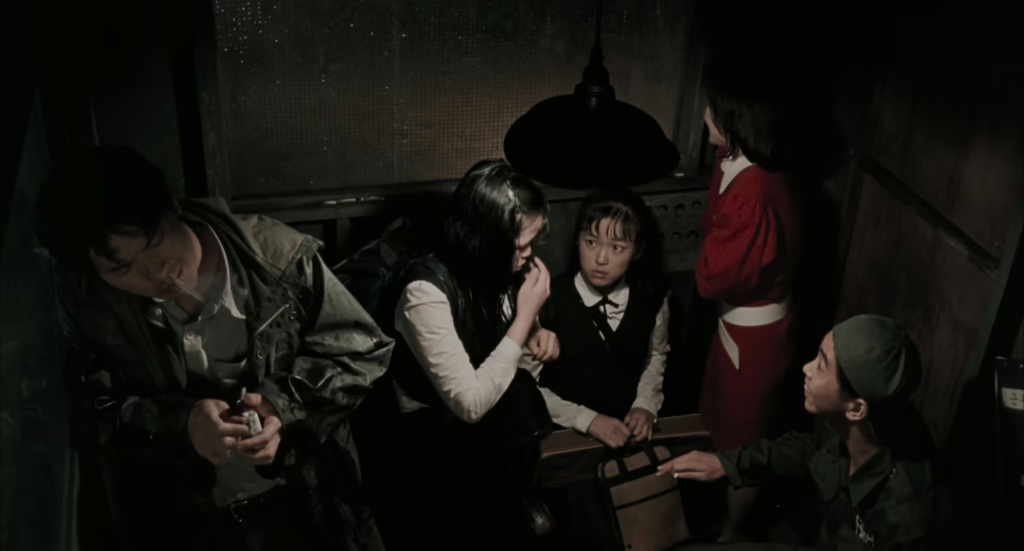
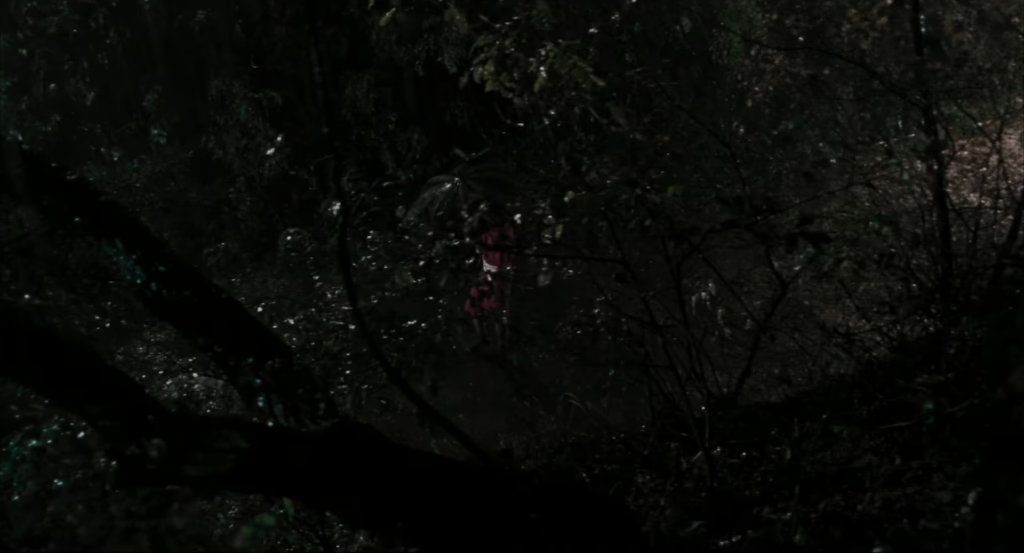
At the very least, the killer’s repeated behaviours give Park and Seo patterns to latch onto, allowing them to make some headway. He only strikes when it’s raining, and only when the sentimental ballad ‘Sad Letter’ is playing on the radio – consistently requested by a mysterious listener from the Terung District, as it turns out. So too are the details of each rape and murder repulsively similar, sadistically inserting foreign objects into the women’s vaginas, and leaving their bodies tied up in rice paddies.
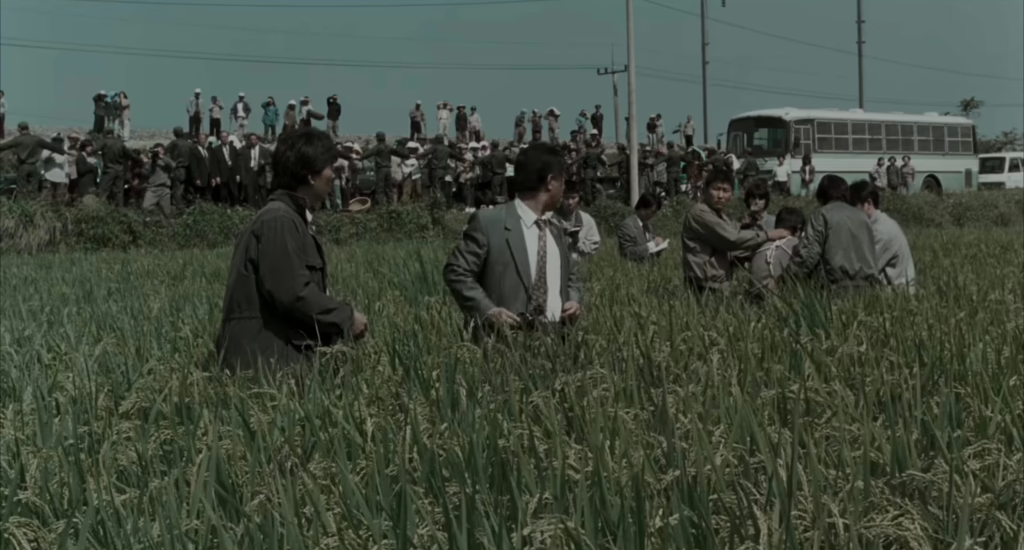
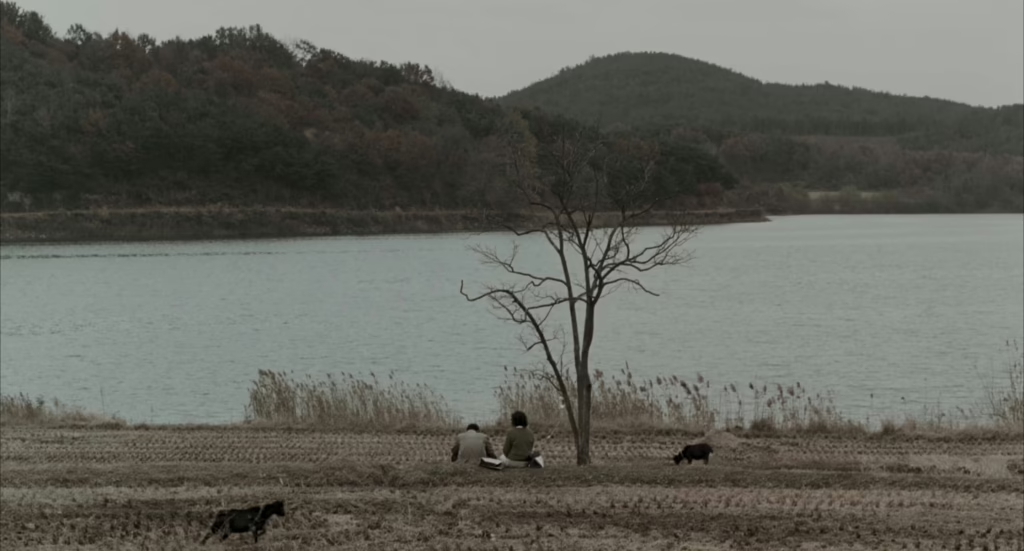
As a result, these vast fields emerge as a haunting refrain through the film, featuring some of Bong’s most powerfully unsettling photography to date. Golden seas of long, waving grass beautifully bookend this narrative, hinting at brighter days that lie just beyond its immediate scope, though his landscapes otherwise conjure far bleaker terrains in the overwhelming greens, greys, and browns. With fog and rain falling over these paddies as well, Bong’s elemental textures underscore the persistent, moody dread, taking on a particularly visceral intensity in the crane shots and tracking shots that sweep across their muddy expanse. These are the environments where unspeakable crimes unfold after all, even bordering on horror as we follow a young woman walking at night, and alarmingly recognise the faint imprint of a head emerging from the stalks behind her.
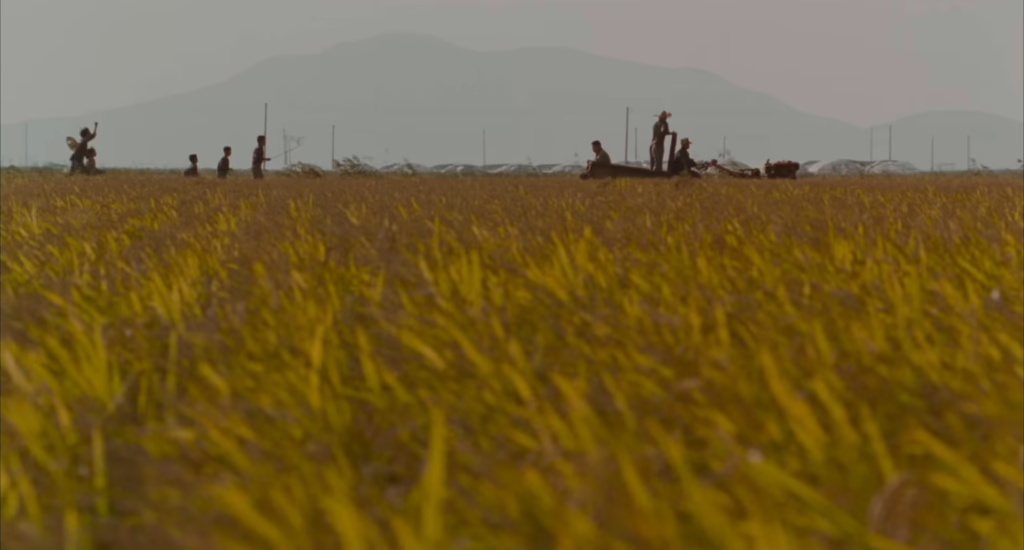
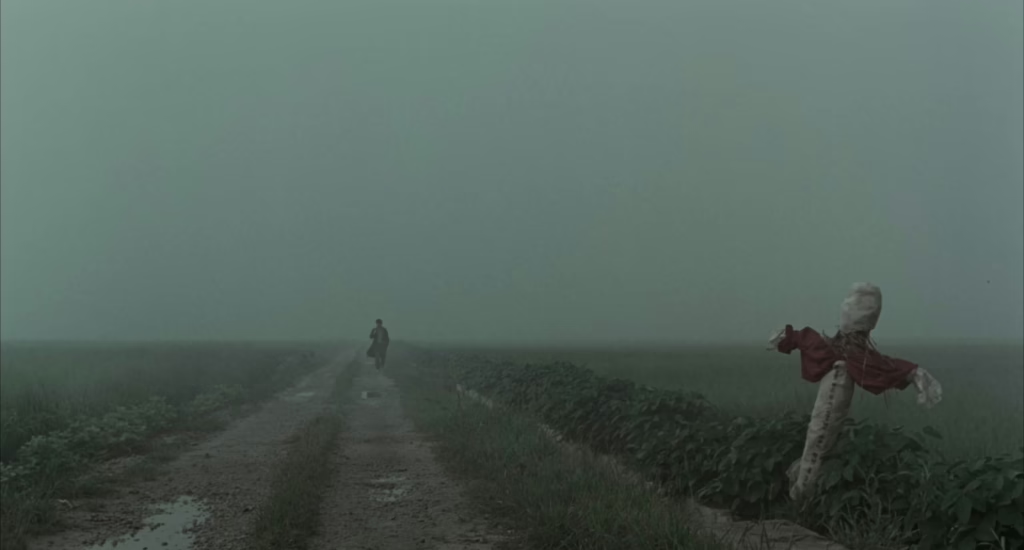
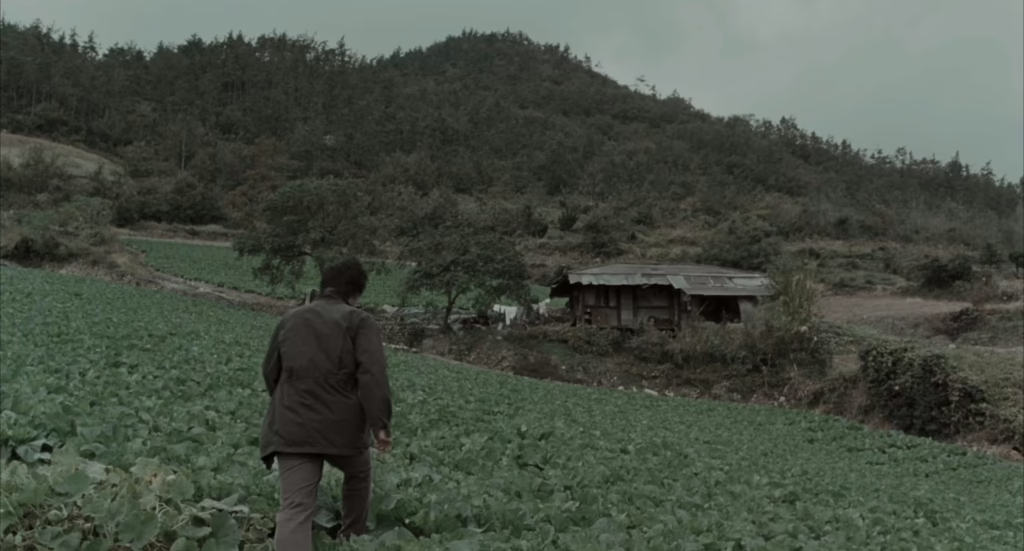
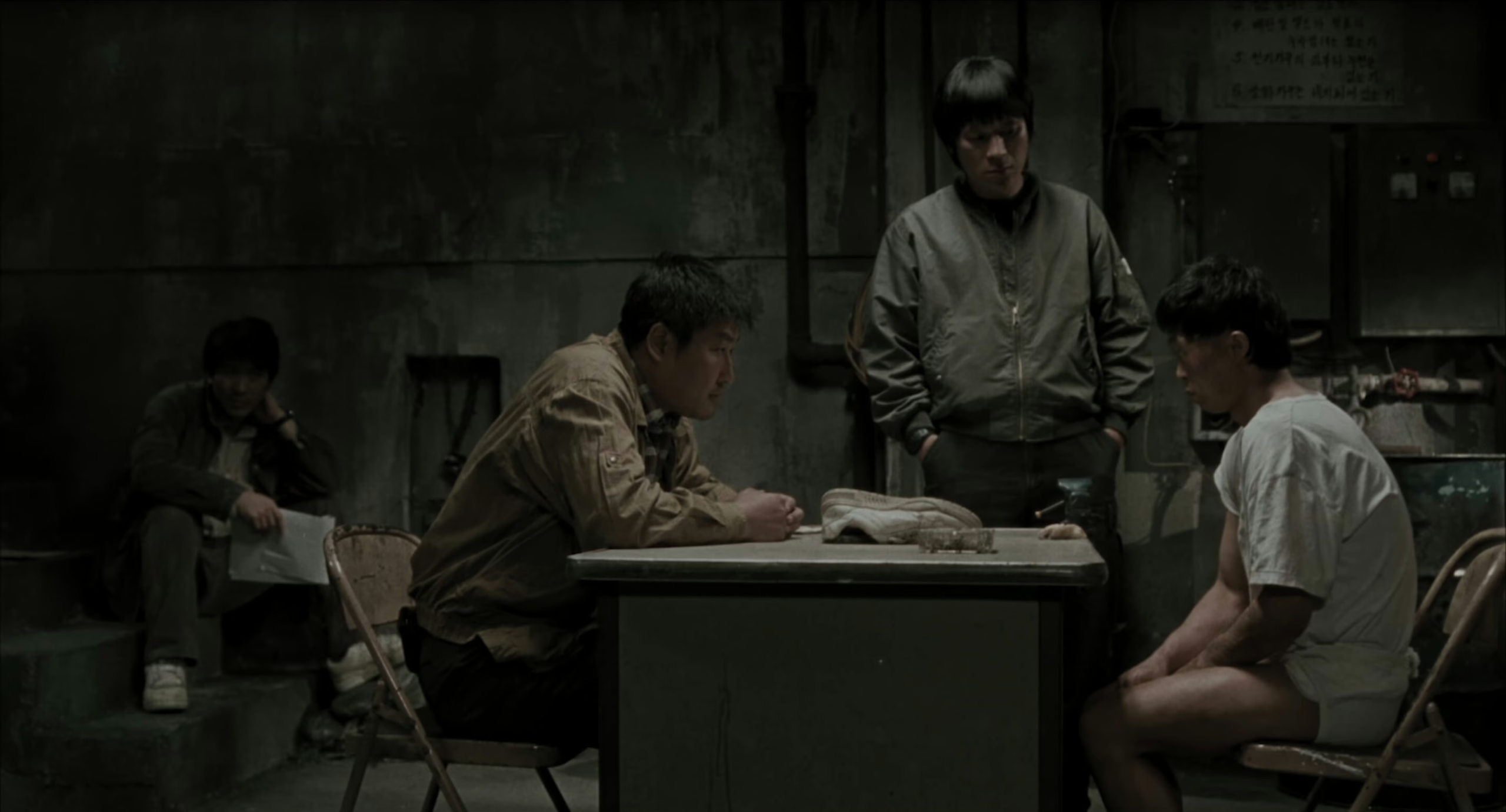
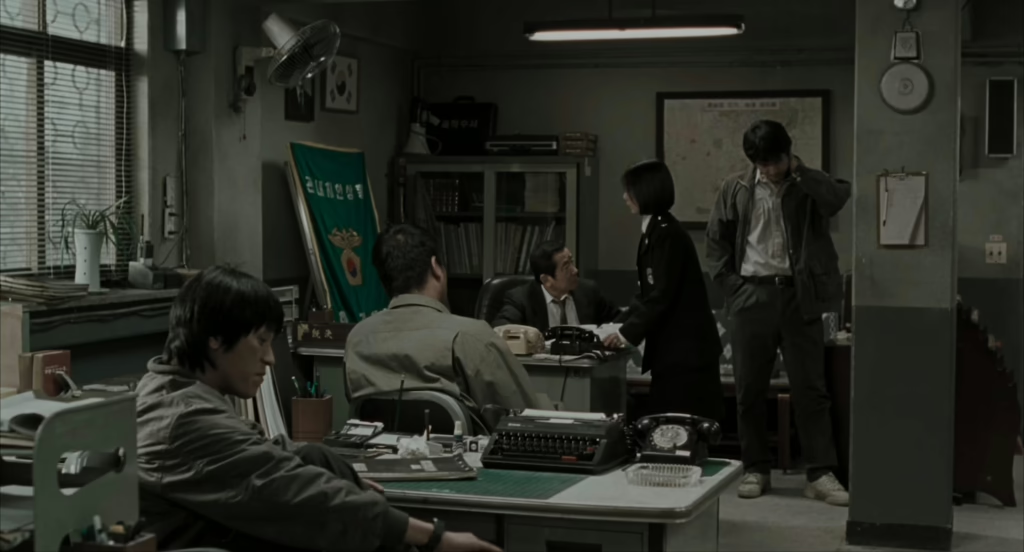
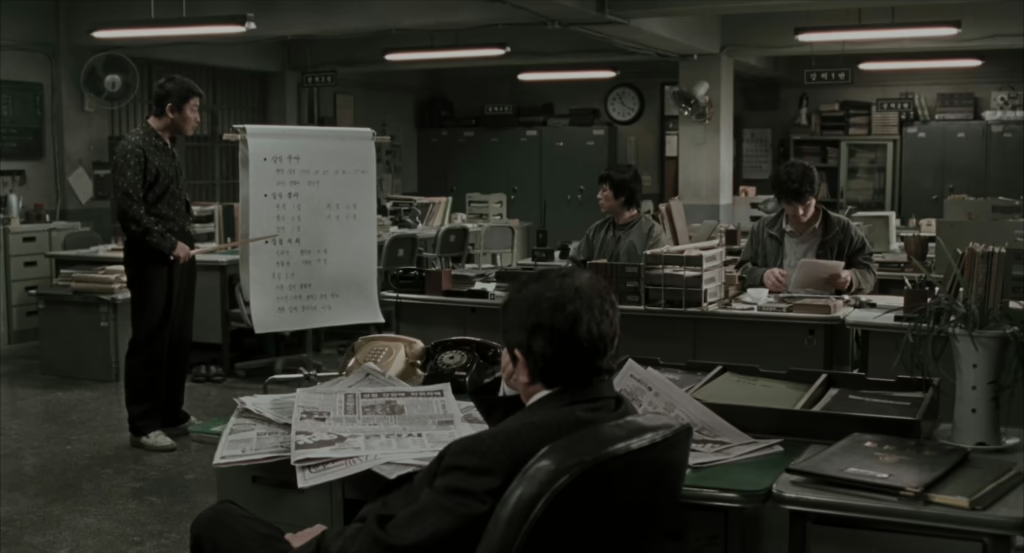
Considering the visual triumph of blocking on display as well, Bong orchestrates this procedural with remarkable precision, choreographing movement that grasps at order in commotion. An unbroken take captures Park’s solo attempt to handle a chaotic crime scene early on, losing patience with civilians carelessly trampling over evidence, while his later arrest of a young suspect similarly dissolves into anarchy against a police barrier separating the rice field from a crowd of onlookers. This depth of field is crucial to Bong’s staging, especially evoking Kurosawa’s mastery of layered compositions in scenes that draw tension between Park, Seo, and the subjects of their interrogation. Even in the precise arrangement of faces, alliances and divisions are starkly illustrated, and distil emotional gravity into subtle, expressive details through close-ups.
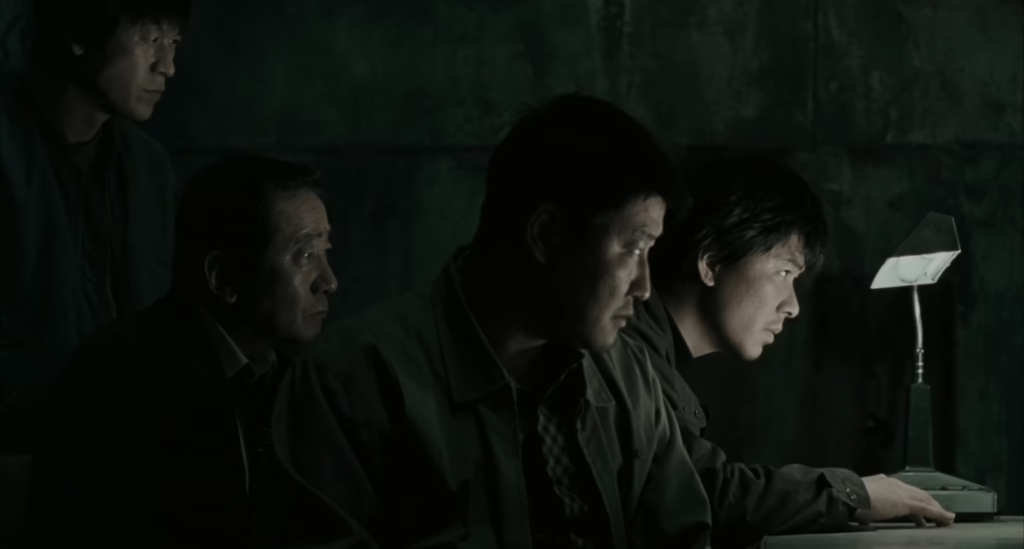
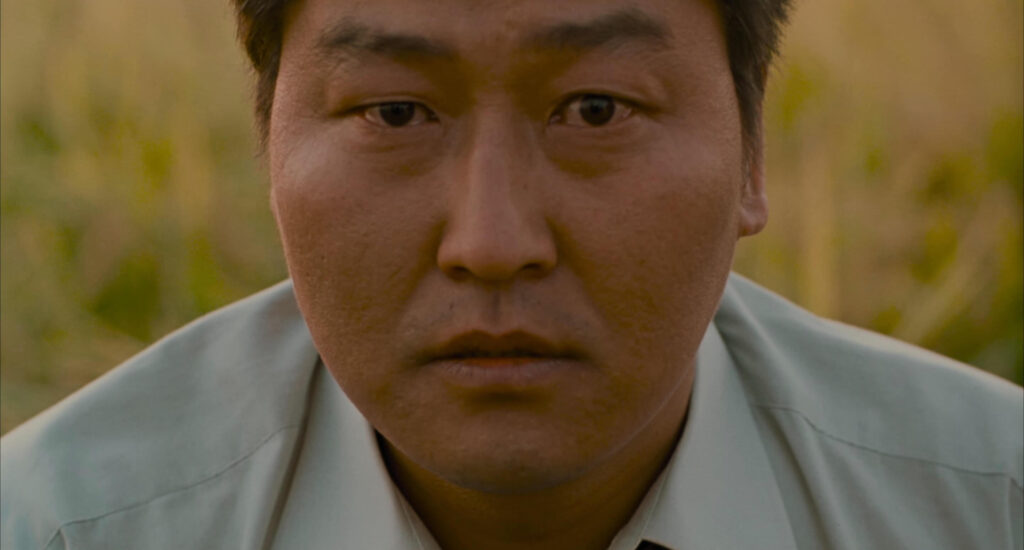
It is Song Kang-ho who especially benefits from these tightly framed shots, tempering Park’s physical dominance into subdued, melancholic stillness. Bit by bit, the constant defeat of leads that spiral into dead ends wear away at his forbearance. One intellectually disabled man who was spotted stalking the first victim is absolved by the nature of his webbed fingers, while another who was found pleasuring himself to women’s underwear in the woods fails to match a survivor’s description, despite his confession. Identified as the radio listener who consistently requested ‘Sad Letter’, a young man named Hyeon-gyu thus appears to be the likeliest suspect of all – yet when a forensic DNA test returns inconclusive results, our detectives are finally driven to the brink of their patience.
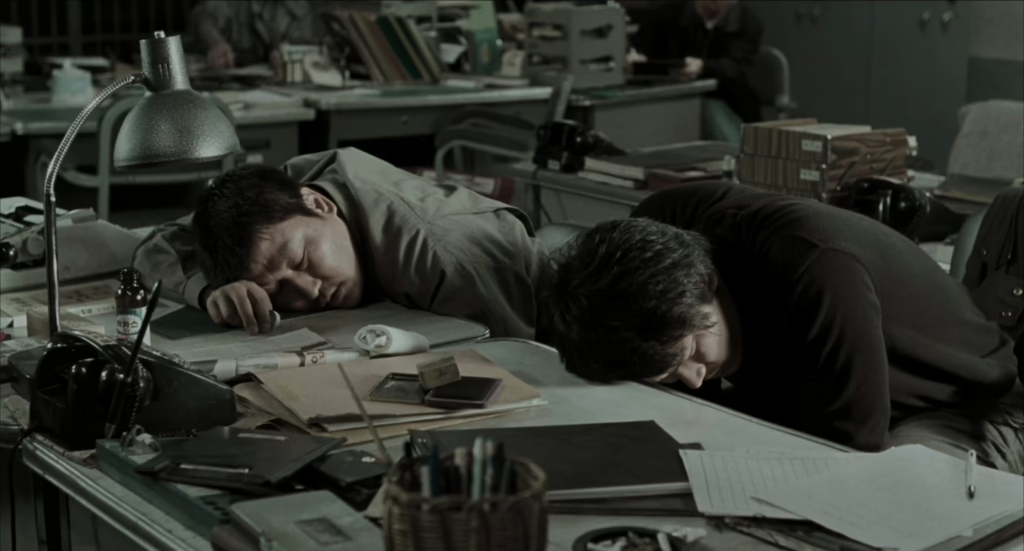
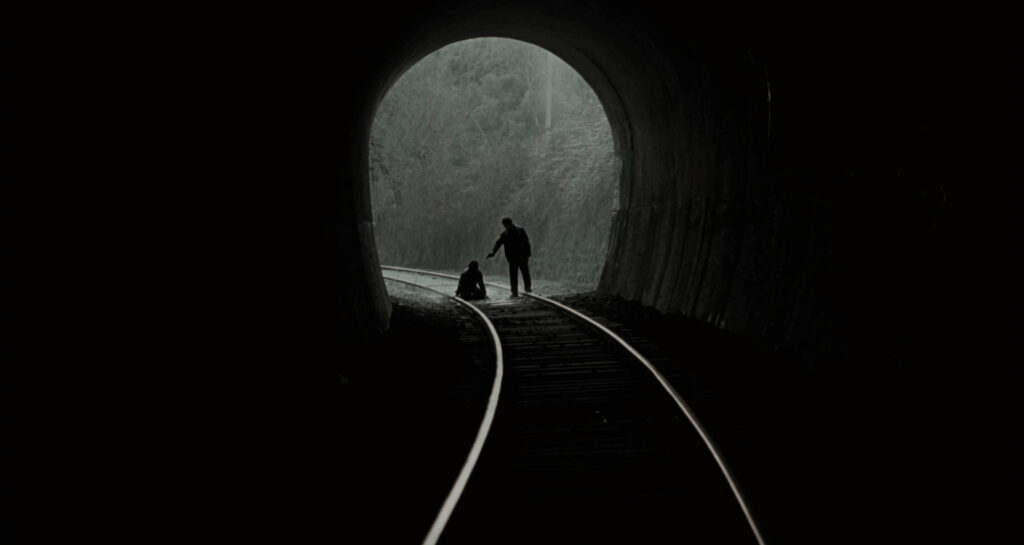
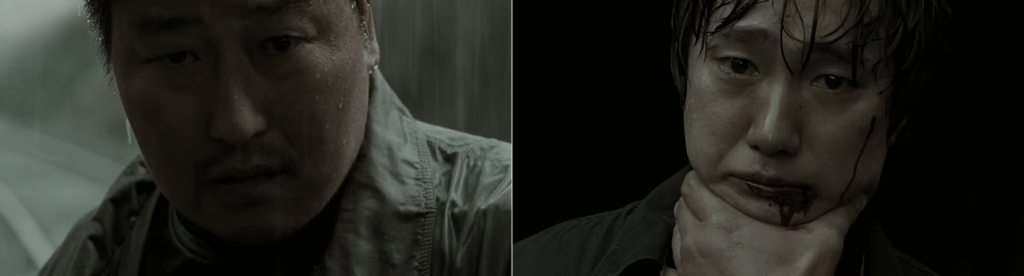
As Park’s volatile temperament dampens over the course of Memories of Murder, we simultaneously witness Seo unravel, effectively setting both on inverse arcs. Brute force may be necessary to crack Hyeon-gyu’s calm composure, Seo eventually relents, but it is their total failure to prove the suspect’s guilt which ultimately shatters his resolve. Framed within the dark arch of a train tunnel and set against a backdrop of pouring rain, he holds a pistol to Hyeon-gyu’s head, standing at the focal point of one of Bong’s single greatest compositions. Of all people, it is the once-combative Park who placates the situation, drained of faith in both the justice system and his own aggressive methods of investigation. As the DNA results are shredded by a passing train and dissolve in the rain, so too does Hyeon-gyu disappear into the darkness, never to be seen again.
Bong made no secret that he drew heavy inspiration from Korea’s Hwaseong serial murders here, which at the time of filming remained unsolved. As such, the visual and narrative parallels between Memories of Murder and Zodiac are notable, though Bong’s film notably precedes David Fincher’s by four years. There is no real resolution for the detectives, victims, or grieving loved ones in either story, and by jumping ahead to an epilogue set seventeen years later, Memories of Murder only exacerbates the lingering, discomforting ambiguity.
Returning to the golden, grassy fields of the opening scene, Park peers into the gutter which once hosted the body of the killer’s first victim, only to be interrupted by a young girl passing by. “A while back, a man here was looking into that hole,” she recounts. “He remembered doing something here a long time ago.” Who is this spectre that has avoided capture all these years, Park wonders. What does such a monster even look like, he asks.
“Just ordinary.”
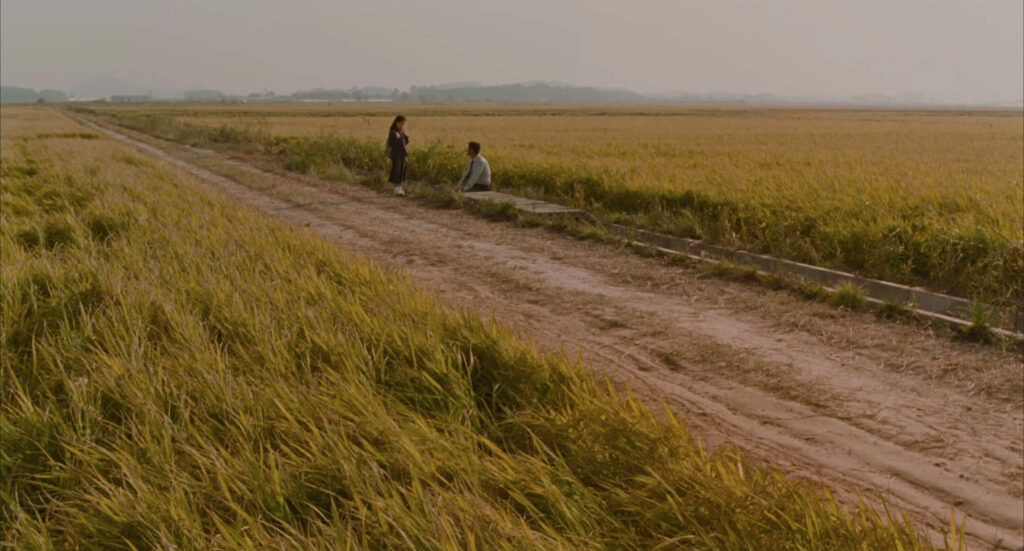
For Bong, evil is not cloaked in grotesque deformity or flamboyant villainy. It is a face we pass by in the street, indistinguishable from those around it. Years of obsessive pursuit amount to little in Memories of Murder, except perhaps in laying bare the institutional obstacles that render justice almost impossible. With the killer’s face forever obscured, it is rather Park’s unsettled gaze towards the camera that resonates in the final few seconds – and all at once, we too find ourselves confronting the elusive, nameless horror of a world with no answer to atrocity.
Memories of Murder is currently streaming on Kanopy, and is available to rent or buy on Apple TV, YouTube, and Amazon Video.