
Yasujirō Ozu | 1hr 53min

Given Yasujirō Ozu’s notorious privacy as a public figure, it is impossible to speculate with any certainty the reason why he never married. Considering that he was supposedly expelled from his boarding school for writing love letters to another boy, it is conceivable that he was a queer man living in conservative times. Alternatively, perhaps he simply valued his mother over any romantic attachment, seeing that he lived with her his entire life. His films never featured any self-insert characters, yet they were nonetheless a medium through which he pondered Japan’s longstanding cultural traditions, simultaneously cherished for their beauty and resisted for their constraints.
With this personal context in mind, An Autumn Afternoon becomes all the more fascinating as Ozu’s last film in an incredibly prolific career – not that he necessarily knew it would be at the time. His decline from throat cancer was sudden, culminating in his death a year after his mother on his sixtieth birthday, and thus leaving this film as his final testament to the enduring purpose and duties of family life. In its observations of the ageing Shūhei’s reluctant attempts to marry off his daughter Michiko, Late Spring’s narrative conflicts are specifically recaptured here, though set against a 1960s backdrop which reveals the advance of Western modernity into Japanese civilisation.
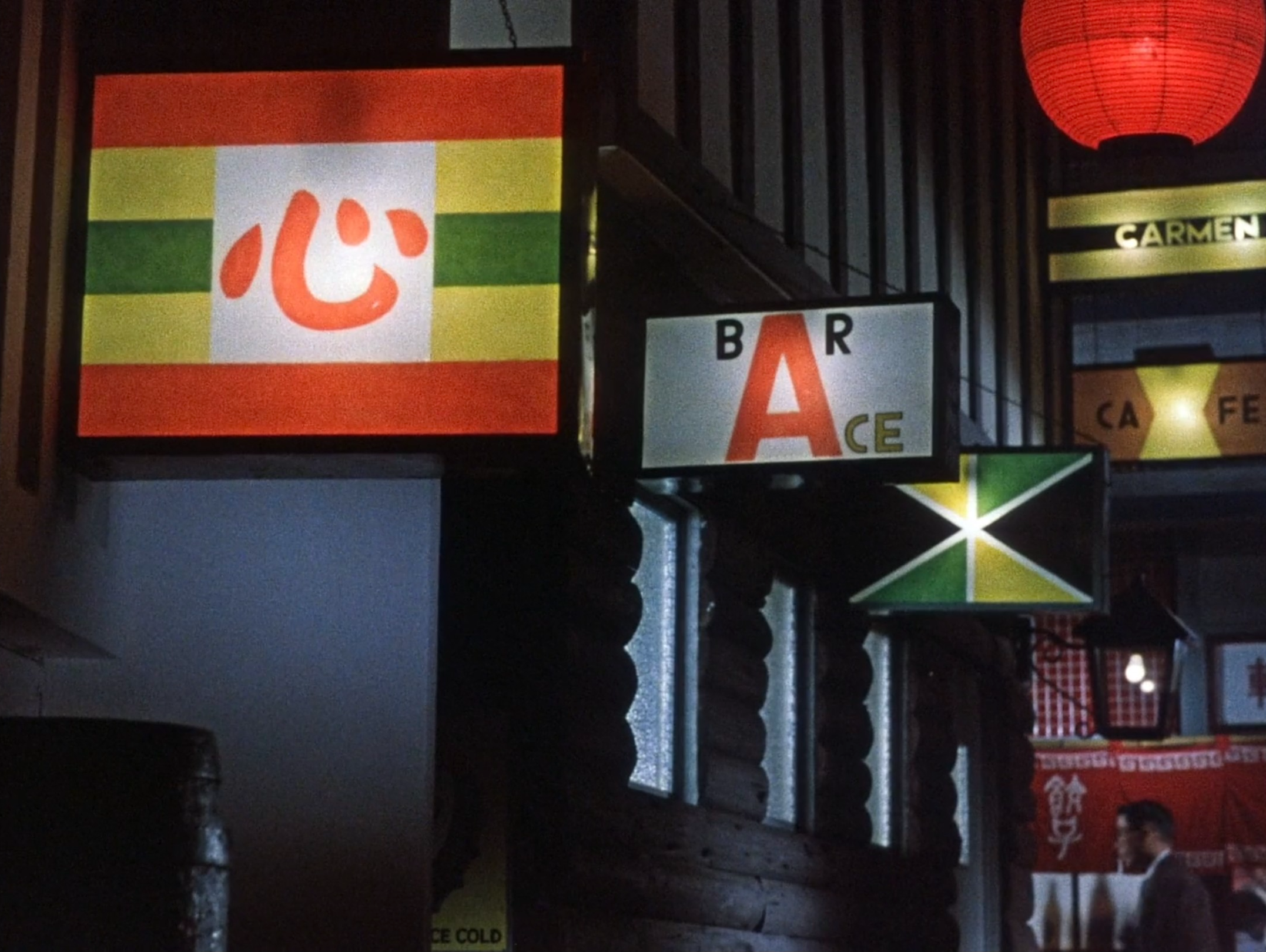
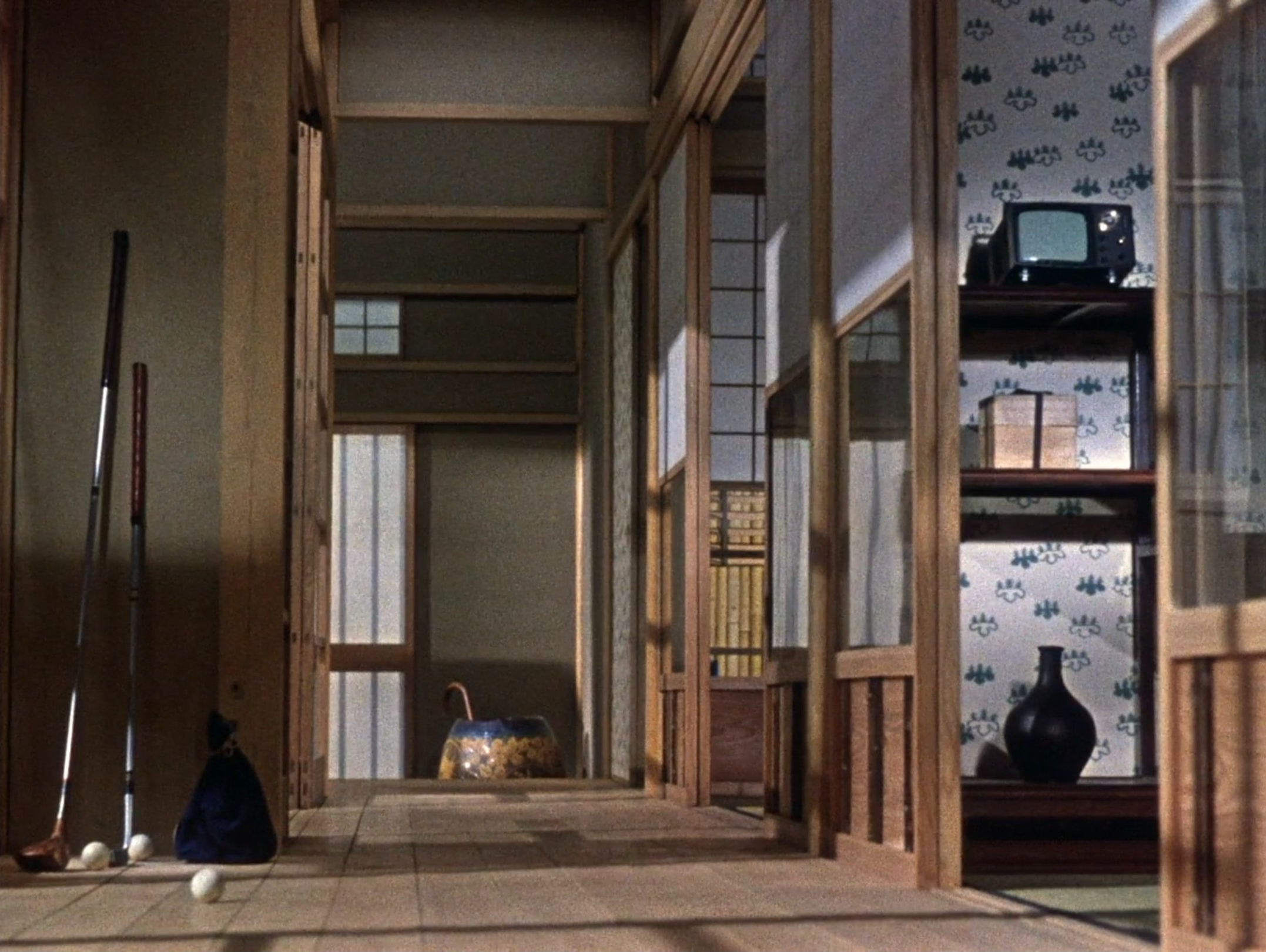
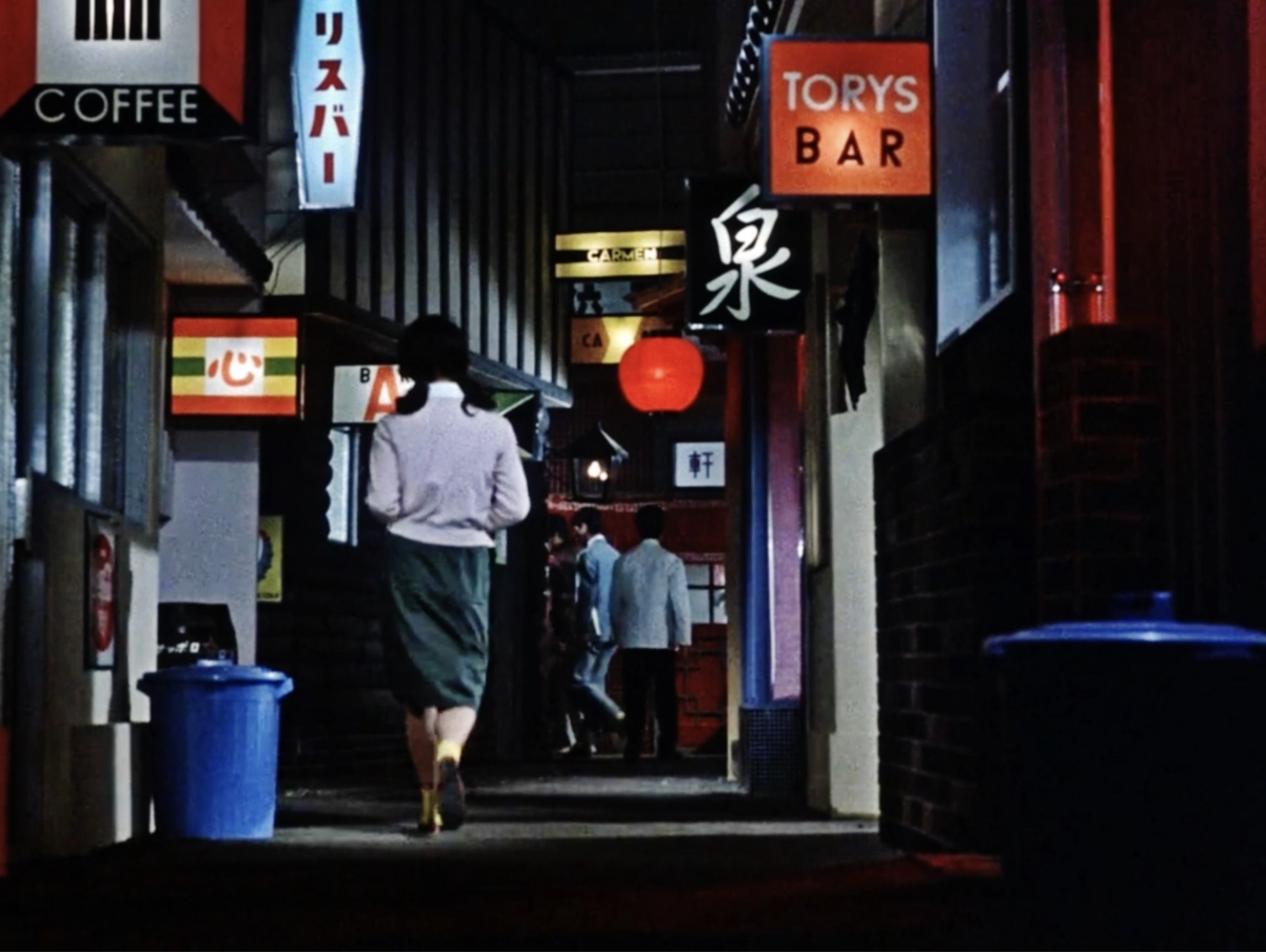
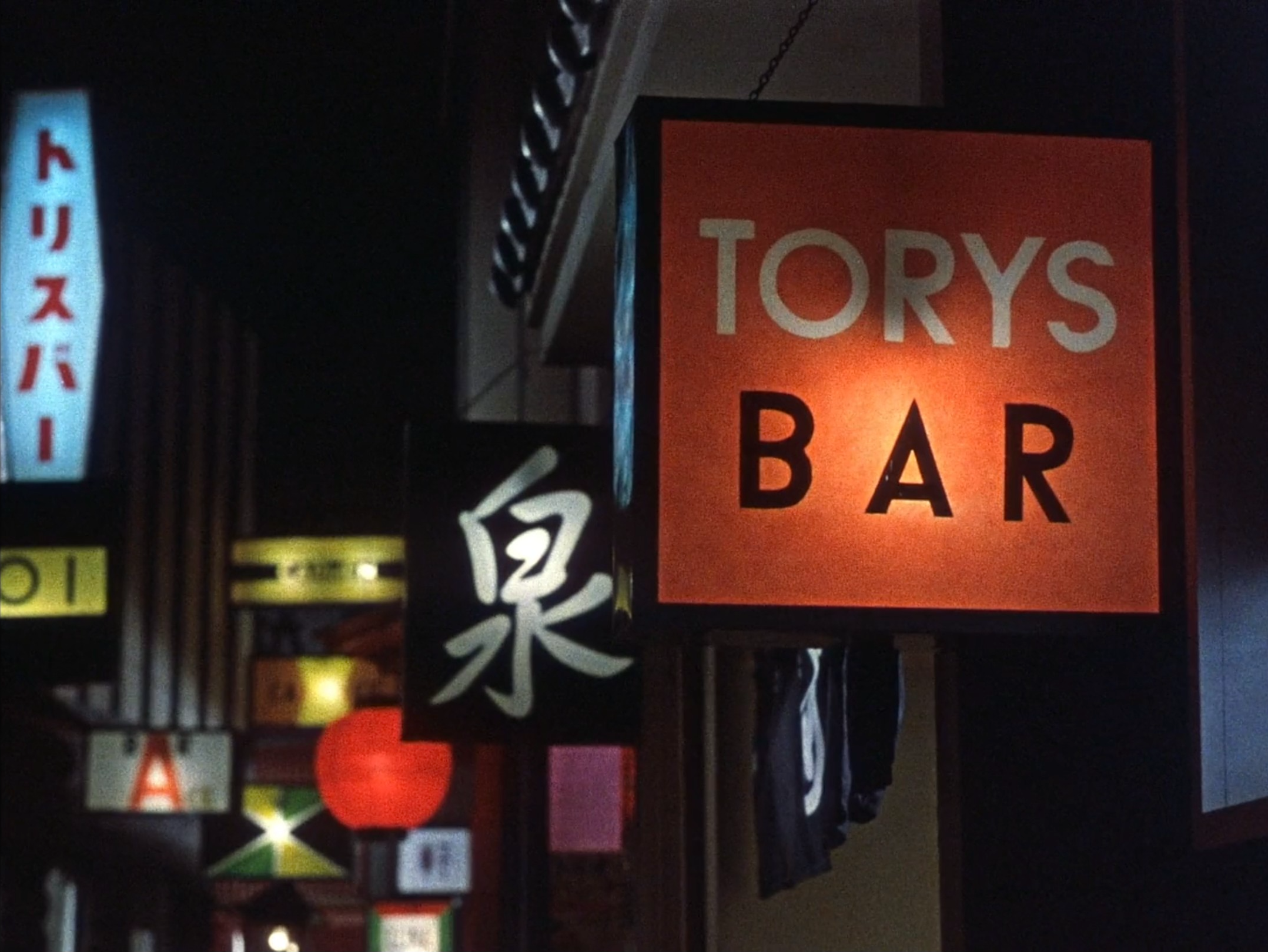
The pillow shots introducing the restaurant where Shūhei drinks with his friends consistently bathe in flashing signs and vibrant graphics, irreverently illuminating the shift to America and Europe’s market capitalism. Commercial indulgences are an immutable part of these characters’ lives, filling Shūhei’s companions with alcohol to the point of excess, and sparking arguments in his son Kōichi’s marriage over a set of golf clubs he wishes to purchase. Later, those same clubs are integrated into one of Ozu’s trademark hallway shots among other neatly curated household items, economically tying off this subplot and signalling a broader cultural shift towards consumerism.
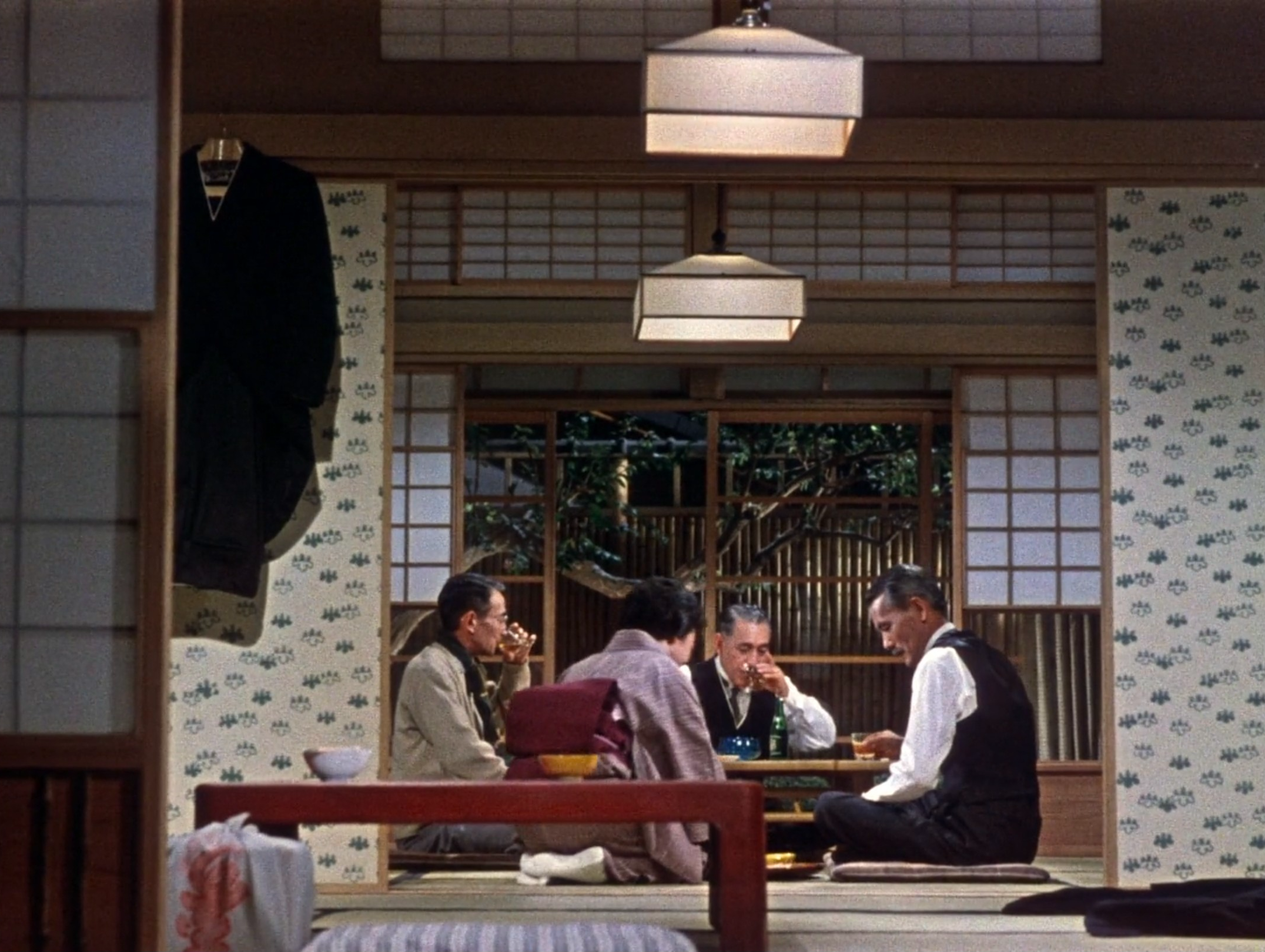
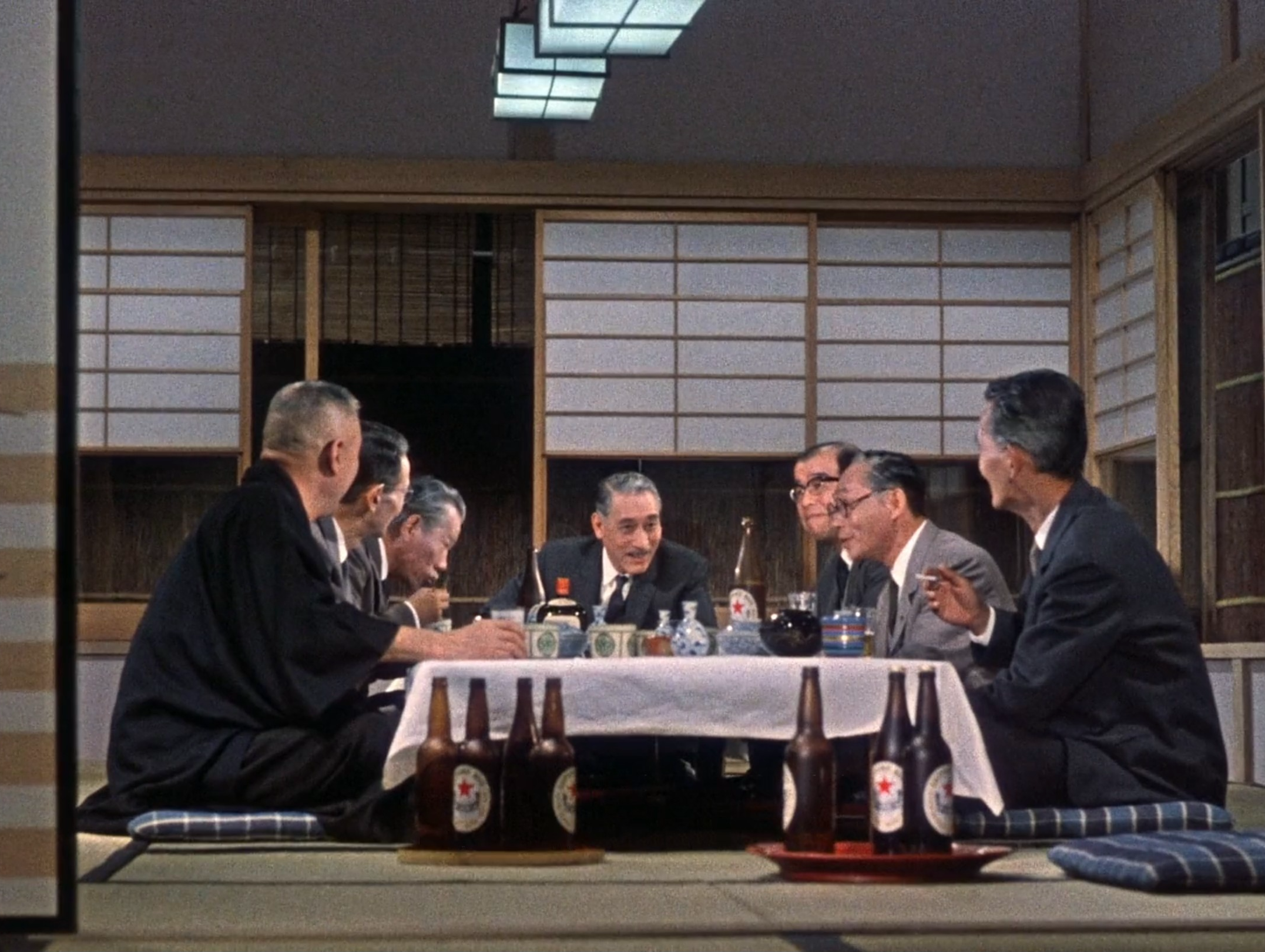
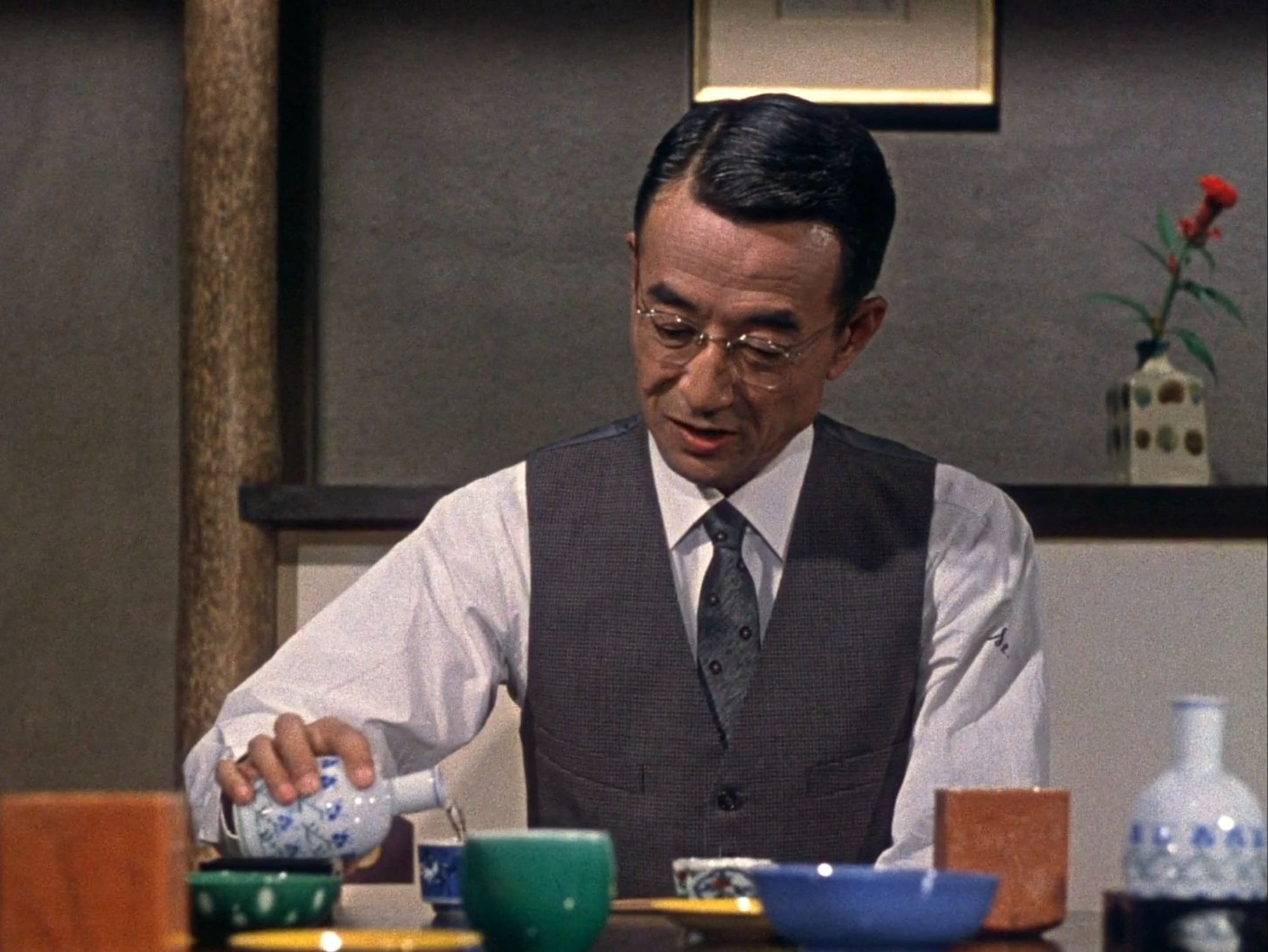
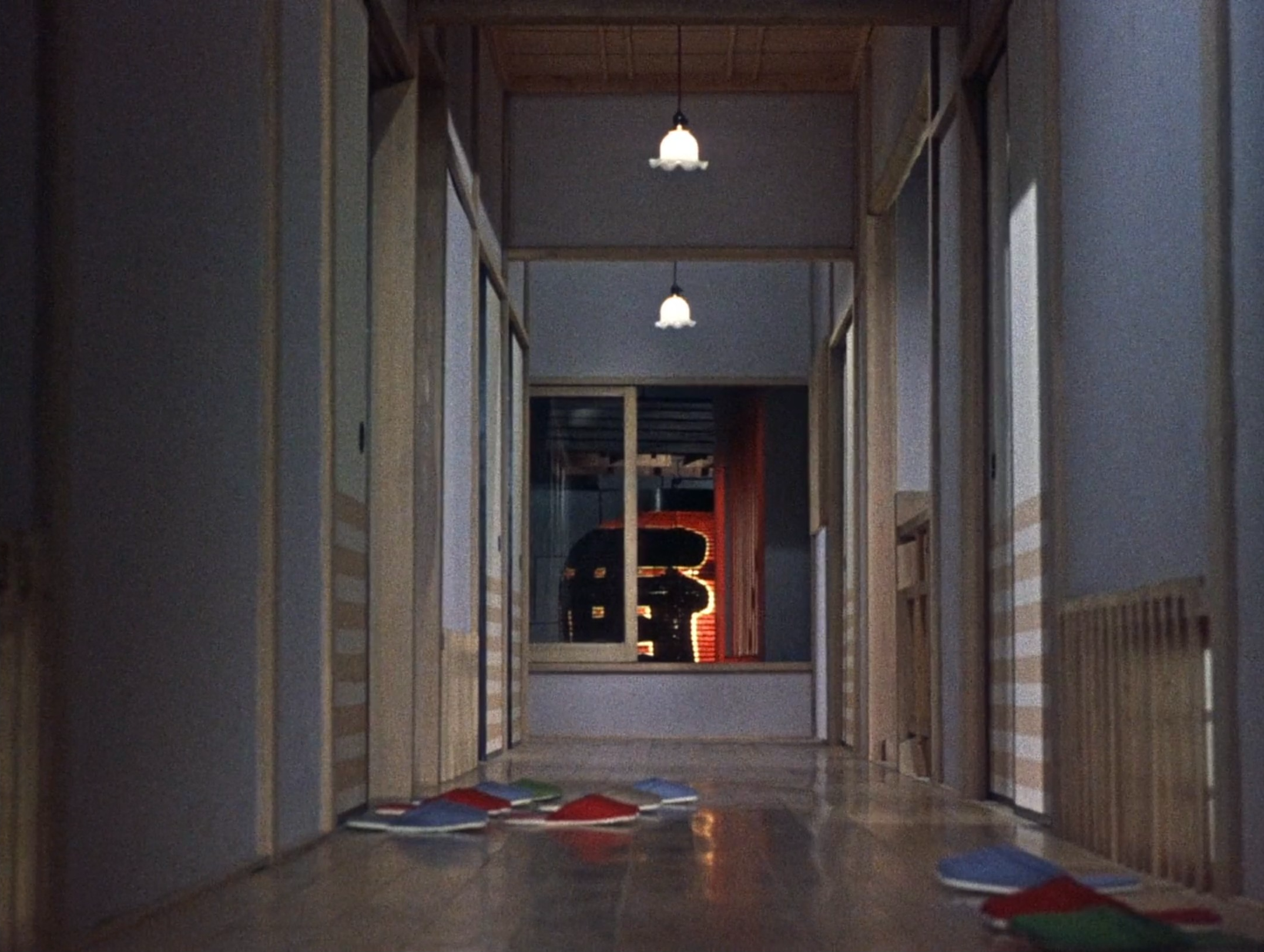
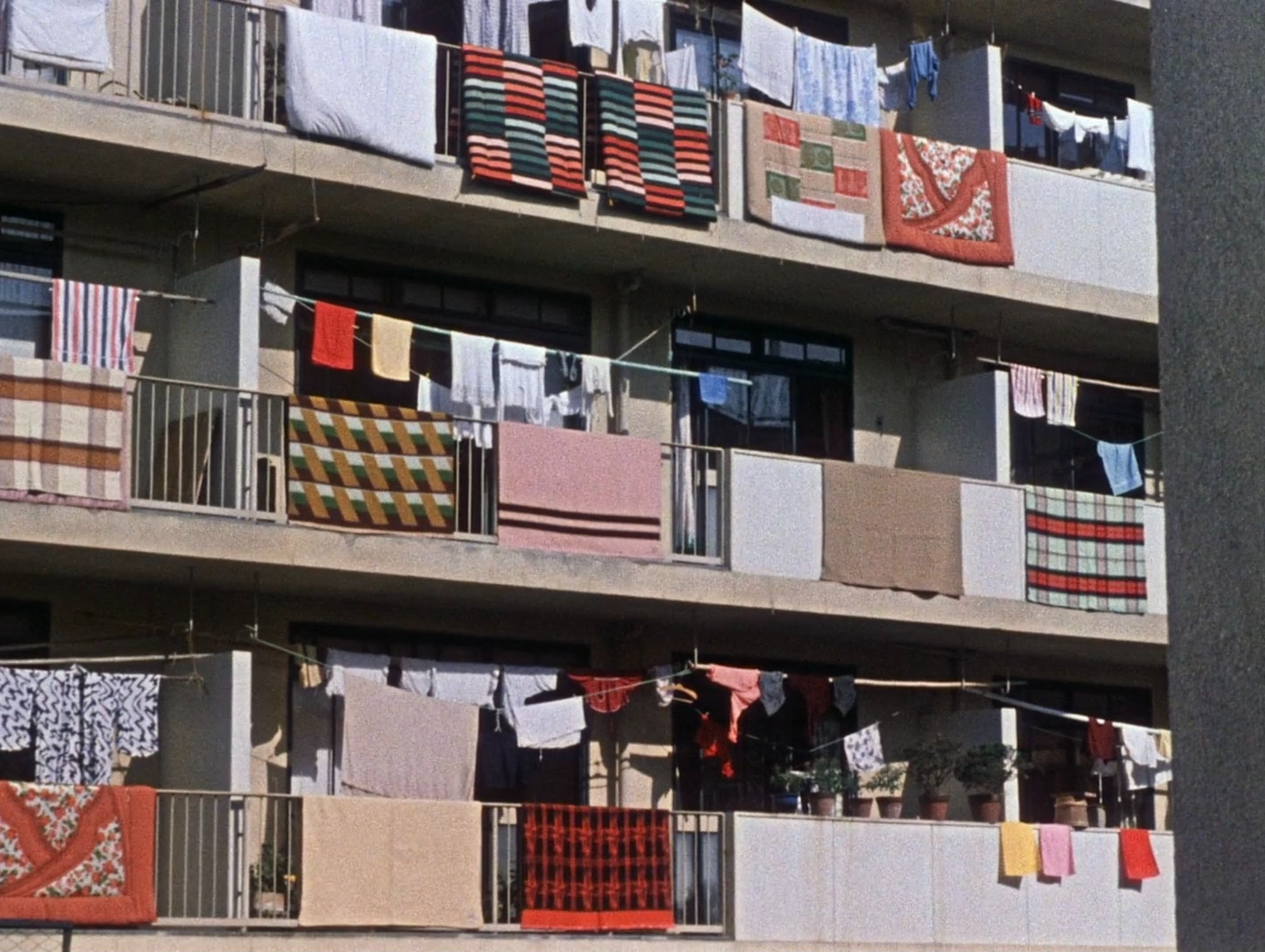
Above all else though, the colour cinematography which Ozu had begun using four years prior in Equinox Flower is employed with full mastery in An Autumn Afternoon, vividly accentuating the organised patterns and contrasts that he had already perfected in black-and-white. While the interior architecture is handsomely captured with patterned wallpaper around shoji doors, it is more frequently the small pieces of décor which inject bursts of primary colours, each set with absolute precision. At the restaurant, frames of Shūhei and his friends are lined with a full rainbow assortment of ceramic cups and saucers, while an impeccably composed wide shot leads a line of yellow bar stools towards an alleyway washed in neon red lighting. Even when there are no humans in sight, every vivid detail points to their persistent presence, adorning pillow shots with embroidered rugs draped over apartment balconies and empty slippers outside closed doors.
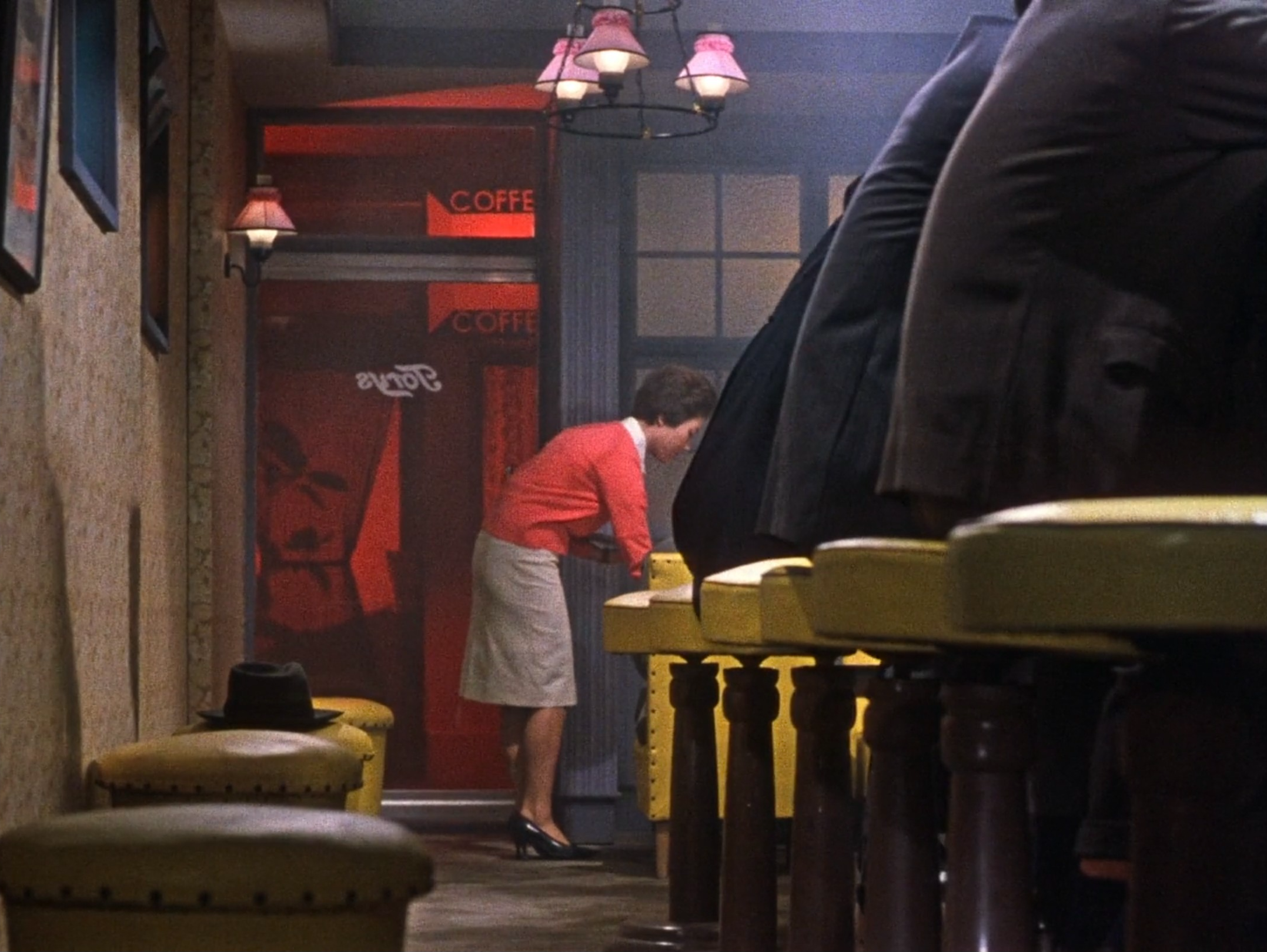
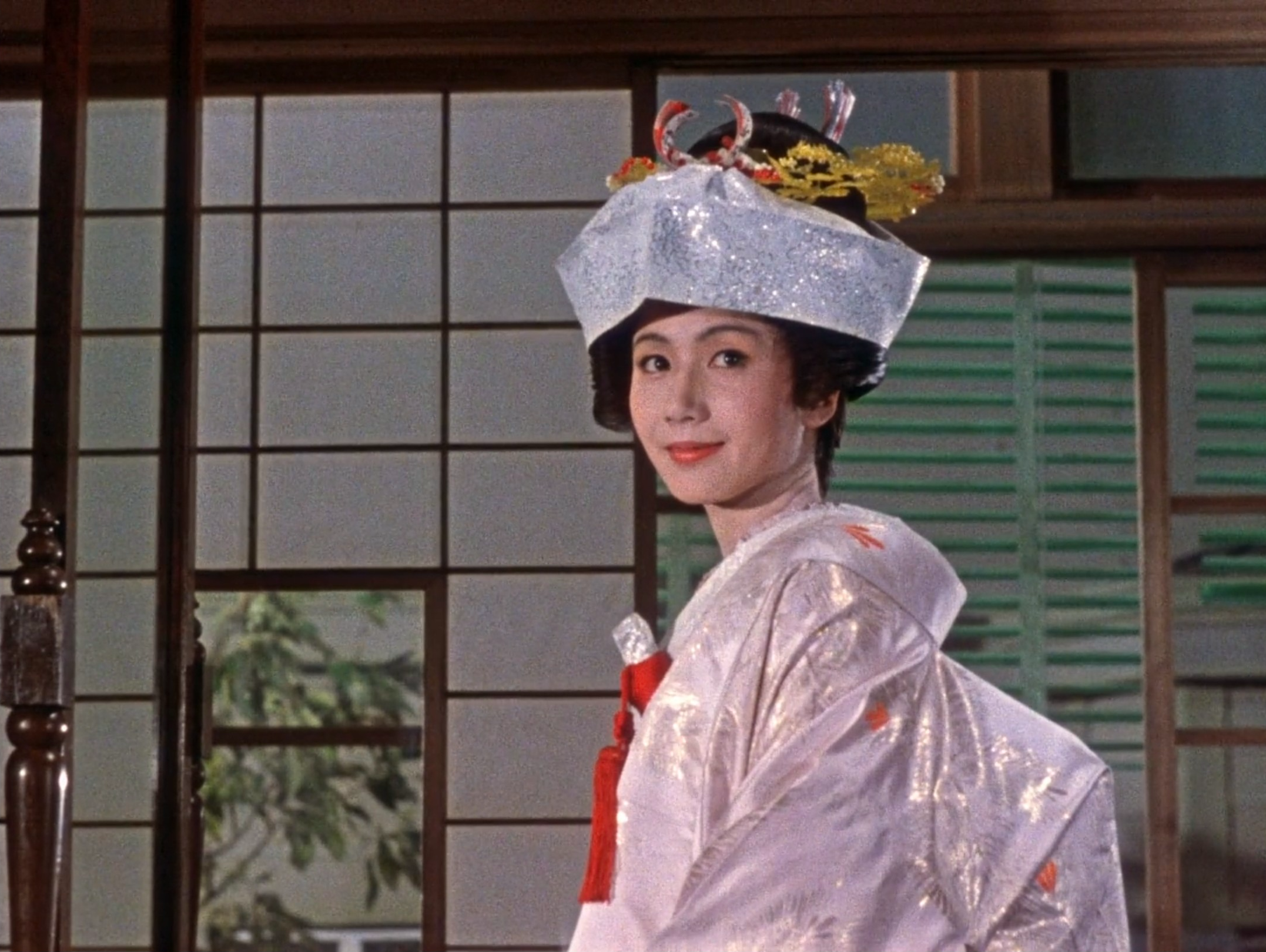
Most crucially, it is Ozu’s pairing of red and white which suggests a uniformity between Japanese tradition and industry in An Autumn Afternoon, mirrored between the striped smokestacks and steel drums of the very first shot. This palette continues to punctuate the mise-en-scène in sweaters, lanterns, and signs, before boldly arriving in Michiko’s elaborate white wedding gown and headdress accented with notes of crimson.
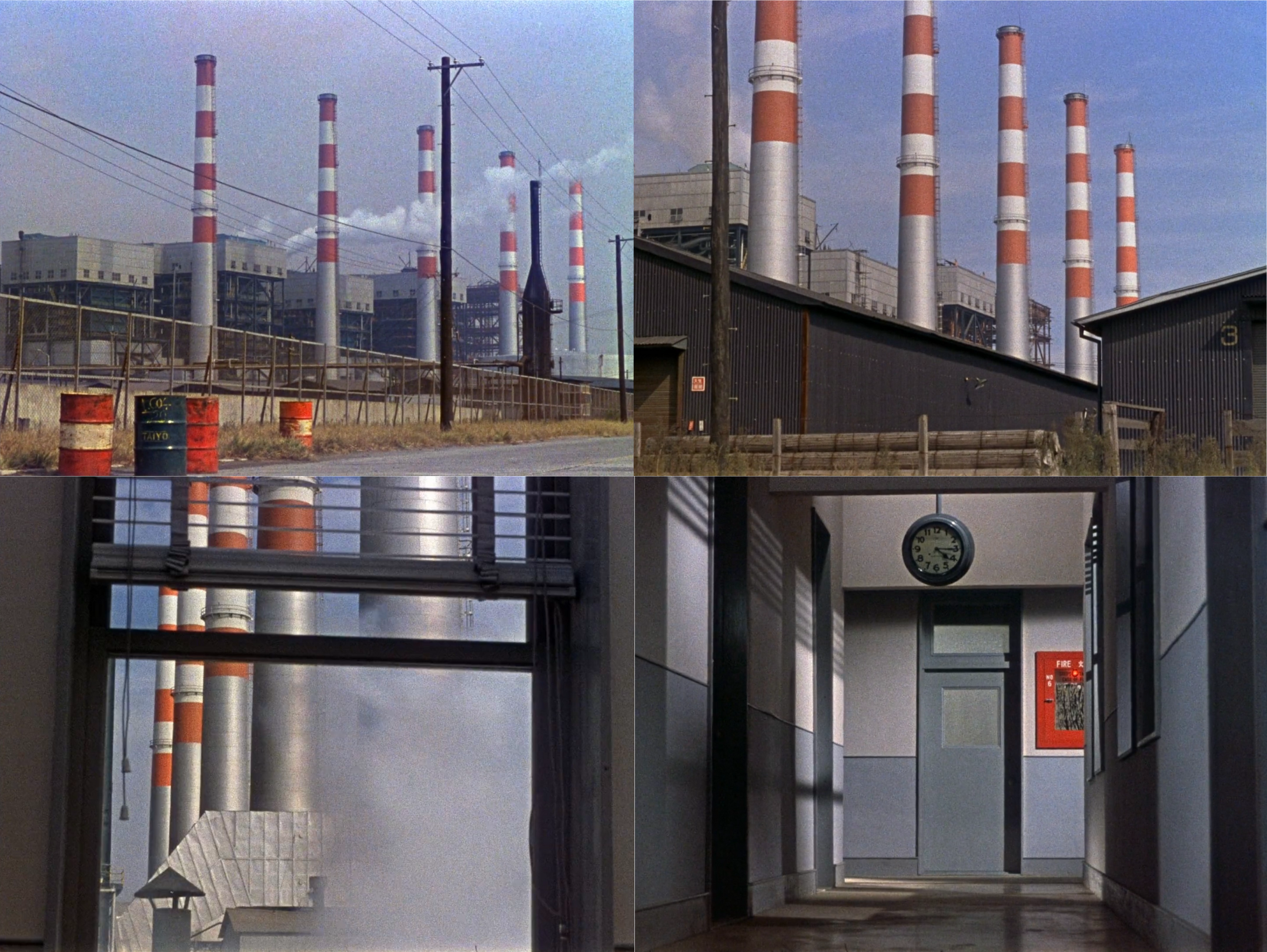
Visual patterns such as these gracefully connect the public and private lives of Ozu’s characters, further revealing their unity in pillow shots that gradually shift from exteriors into enclosed spaces. Rather than relying on the kind of establishing shots a more conventional director might use, this approach maintains a consistent flow in the editing, providing Ozu with a visual shorthand whenever we return to a familiar location – the smokestacks outside Shūhei’s office, for instance, or the restaurants near Tory’s Bar.
Narratively, this formal poetry echoes through characters who mark shifts in the social order, highlighted by the two instances of current and former naval officers mockingly performing patriotic military anthems. Though Japan’s national spirit had been shattered by its defeat in World War II and replaced with scathing cynicism among younger generations, Shūhei continues to mourn its loss, and sorrowfully responds in private with songs of floating castles guarding the Land of the Rising Sun.
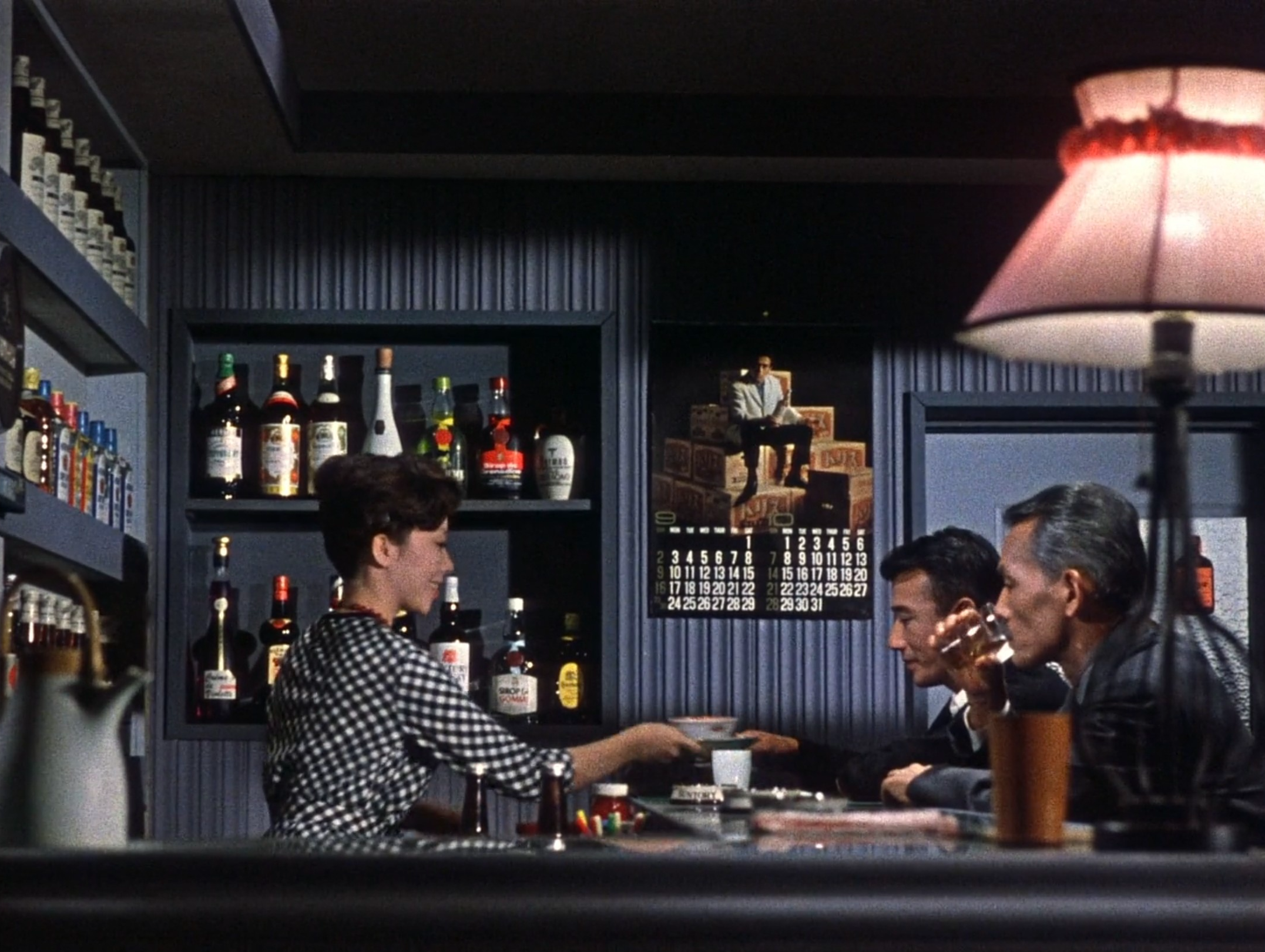
Through the character of the Gourd as well, a respected teacher who mentored Shūhei in Chinese classics, Ozu continues to reckon with Japan’s changing culture, imagining the future that awaits Shūhei if Michiko never marries. Not only has the Gourd’s middle-aged daughter become a lonely spinster due to his desire to keep her close, but his own life has also fallen into disarray, limiting both their prospects. By resisting change, he is now condemned to run a cheap noodle shop, and must endure daily humiliation from disrespectful customers.
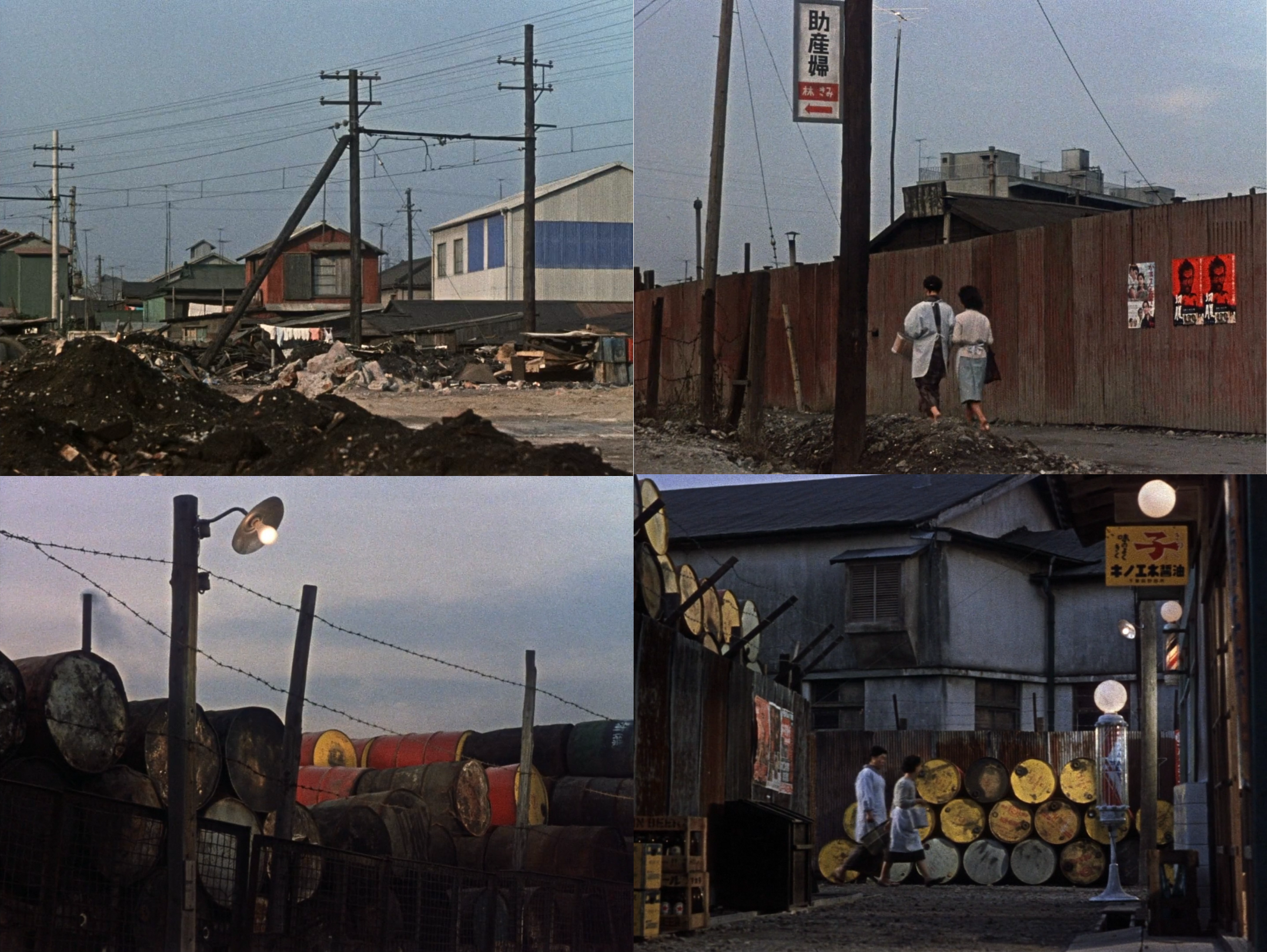
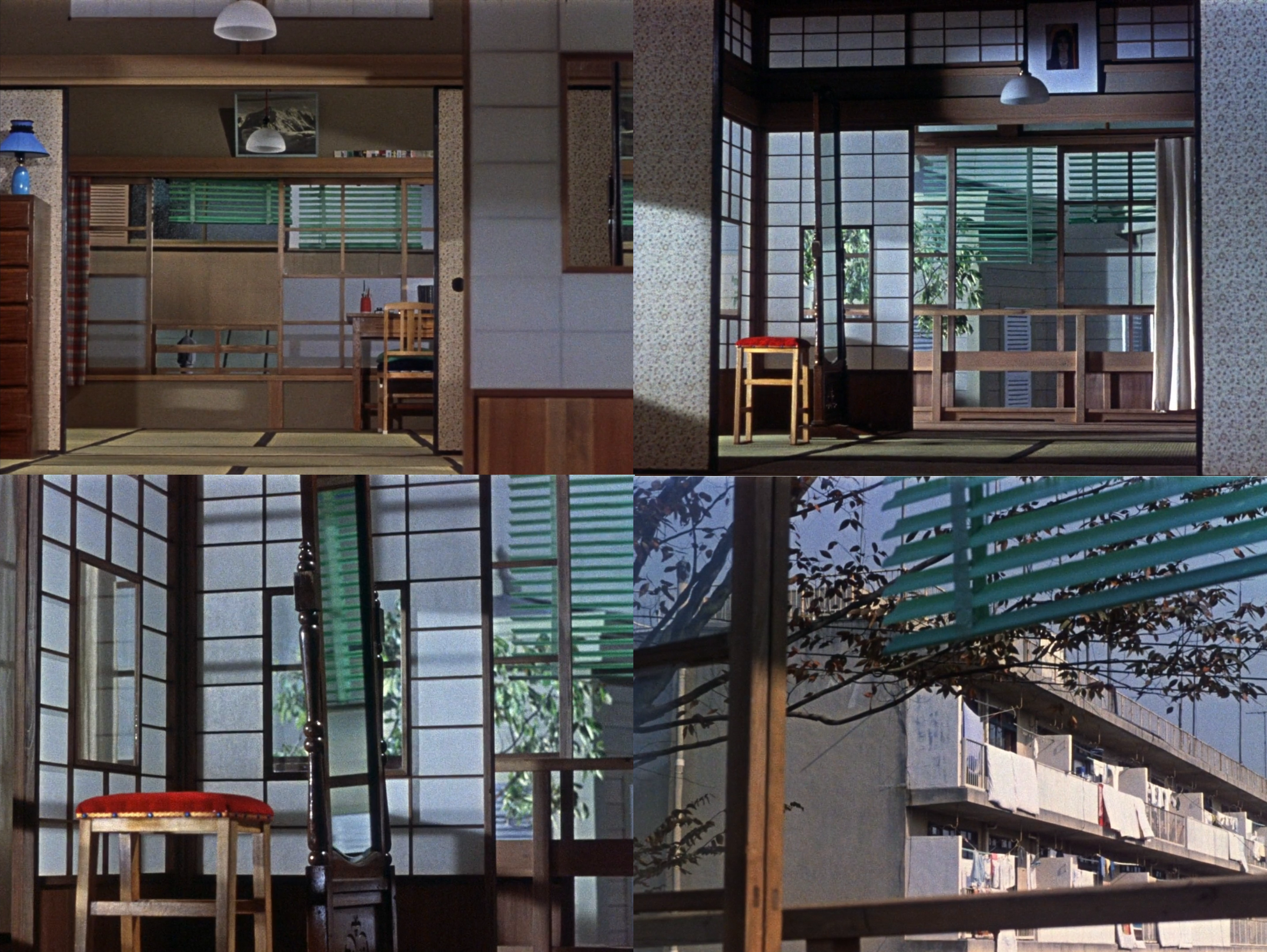
Having learned the Gourd’s most painful lesson, the catalyst for the second half of An Autumn Afternoon’s narrative is set in motion, spurring Shūhei to secure a husband for Michiko. The fact that Ozu entirely omits her wedding and even the identity of her groom though is telling of his narrative preoccupation, privileging the intimate rhythms of family life over the spectacle of ceremonial events. Instead, after the characters have departed to send her off, his camera lingers in their vacant house with a standing mirror, Venetian blinds, and a red-cushioned stool. These domestic items carry no dramatic weight on their own, yet quietly evoke Michiko’s absence, and eventually disappear from view as the montage moves just outside the window.
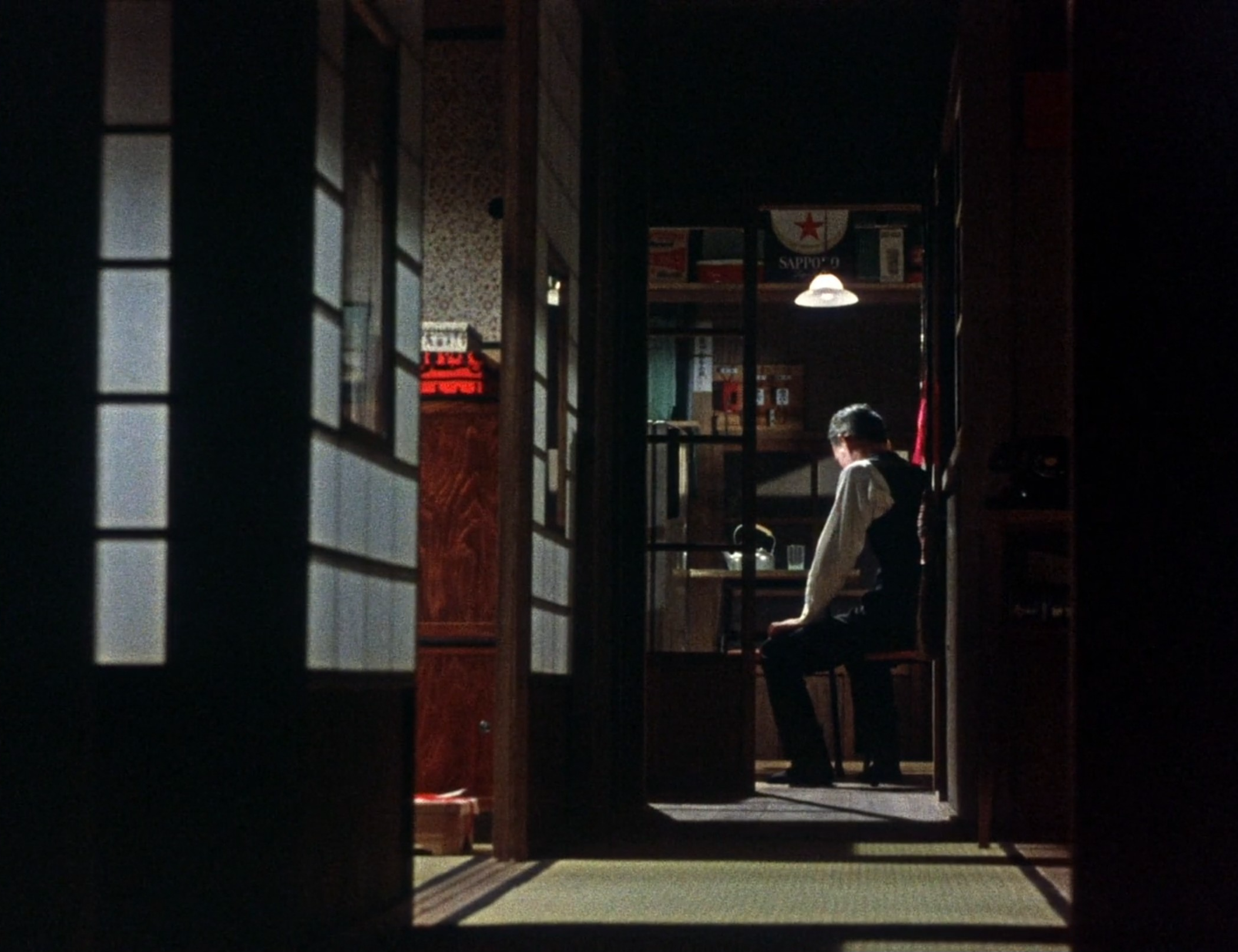
When Shūhei finally returns home as an empty nester, Ozu frames him in the distant, wooden corridor of a beautifully composed hallway shot, his back turned to the camera and partially shadowed. Although Ozu never inserted explicit self-representations into his films, Shūhei’s poignant resignation to change is one the ageing director knows too well, having spent the past thirty-five years chronicling Japan’s enormous cultural shifts on camera. If his life’s work is a cinematic suite testifying to the ongoing tension between tradition and progress, then An Autumn Afternoon makes for a tender final movement, resonating formal harmonies across generations and savouring an enduring, resilient faith in their shared humanity.
An Autumn Afternoon is currently streaming on The Criterion Channel.
You must watch Coup de Chance. It is excellent. But not widely seen because of the controversies surrounding Allen.
It’s also just very difficult to track down. Where did you watch it?
In a theatre in April. It is available on Prime Video, no? I could be wrong.
Not in Australia, possibly in other regions.
Pingback: The 50 Best Film Editors of All Time – Scene by Green